
Trending Analysis: September Jobs Report as a Lose-Lose Scenario for Markets
Unlock More Features
Login to access AI-powered analysis, deep research reports and more advanced features
About us: Ginlix AI is the AI Investment Copilot powered by real data, bridging advanced AI with professional financial databases to provide verifiable, truth-based answers. Please use the chat box below to ask any financial question.
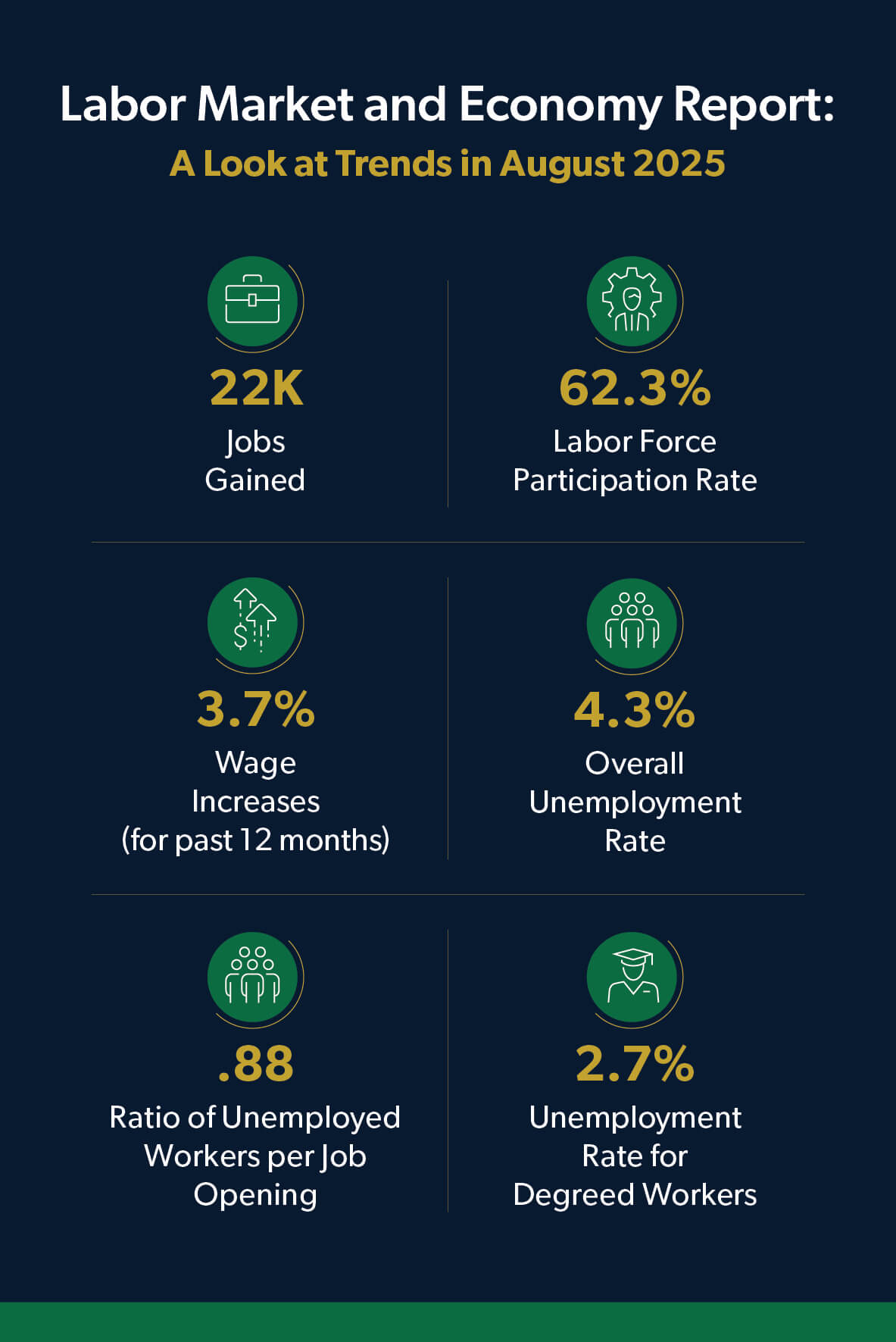
The trending topic centers on a Reddit post arguing the September Jobs Report presents a no-win scenario: weaker growth sparks rate cut hopes but recession fears, while stronger growth reduces rate cut expectations [1]. This aligns with weak labor data: August saw only 22k jobs added, with goods sectors (construction/manufacturing) losing 25k [2][5]. Downward revisions to leisure/hospitality (-176k) and professional services (-158k) amplified concerns [4]. Sector divergence is notable: remote work (7.8% of postings) grew while retail (-30%) and manufacturing (-27%) declined [3].
- Cross-Domain Impact: The no-win narrative fuels debates over Fed policy priorities (inflation control vs stimulus) [1][3].
- Sectoral Shifts: Remote work growth widens opportunity gaps between knowledge workers and on-site production staff [3].
- Data Credibility: The White House’s criticism of BLS data methods raises reputational risks for the agency [4].
- Risks: Market volatility around the official report release [3], sectoral headwinds for retail/manufacturing [2], BLS reputational risk [4].
- Opportunities: Remote work expansion benefits knowledge sectors [3], healthcare/leisure remain resilient [2].
The discussion highlights market uncertainty tied to the September Jobs Report. Key data points include August’s 22k jobs, sectoral losses in goods production, and growth in remote work. The no-win scenario reflects conflicting investor expectations for Fed policy. No investment recommendations are provided.
Insights are generated using AI models and historical data for informational purposes only. They do not constitute investment advice or recommendations. Past performance is not indicative of future results.
About us: Ginlix AI is the AI Investment Copilot powered by real data, bridging advanced AI with professional financial databases to provide verifiable, truth-based answers. Please use the chat box below to ask any financial question.