
Treasury Secretary Bessent Warns of Sectoral Recession Amid Fed Policy Tensions
Unlock More Features
Login to access AI-powered analysis, deep research reports and more advanced features
About us: Ginlix AI is the AI Investment Copilot powered by real data, bridging advanced AI with professional financial databases to provide verifiable, truth-based answers. Please use the chat box below to ask any financial question.
Related Stocks
This analysis is based on the Forbes report [1] published on November 2, 2025, which reported Treasury Secretary Scott Bessent’s assessment that some sectors of the U.S. economy are in recession or at risk of entering one.
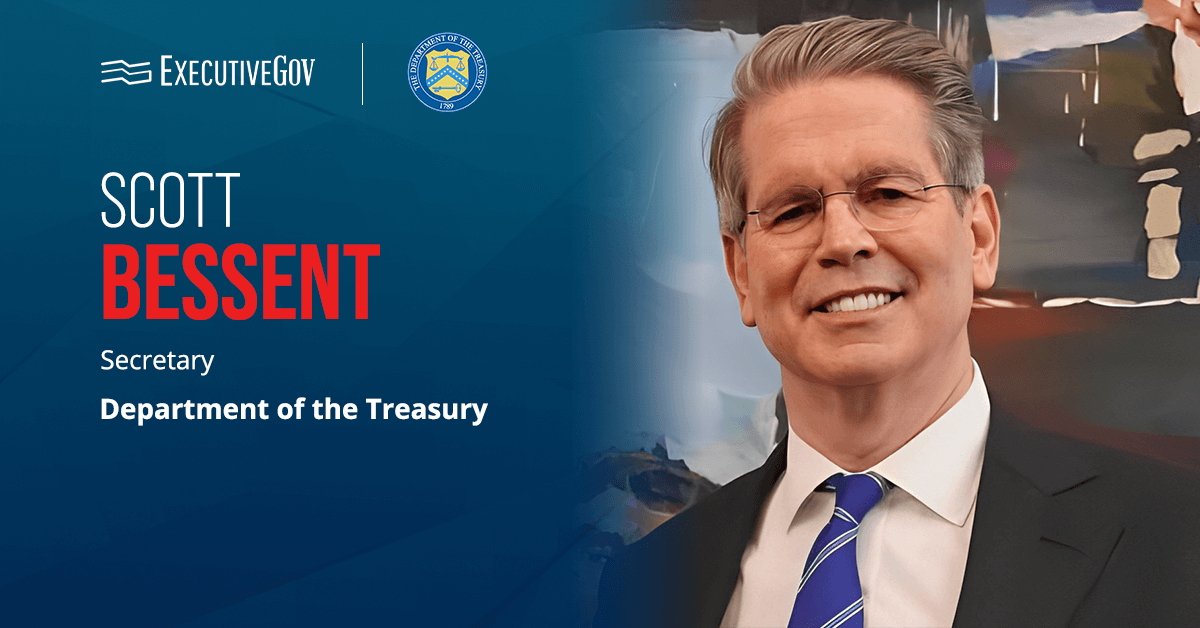
Treasury Secretary Scott Bessent’s economic assessment on November 2, 2025, reveals significant concerns about sector-specific recessions, particularly in housing, while highlighting growing policy tensions between the Treasury Department and Federal Reserve [1][2]. Speaking on CNN’s “State of the Union,” Bessent specifically identified the housing market as being in recession and warned that other sectors could follow without more aggressive Fed rate cuts [1][3].
The housing sector data strongly supports Bessent’s assessment. The SPDR S&P Homebuilders ETF (XHB) has declined 6.52% over the past 30 trading days, falling from $112.36 to $105.03 [0]. Major homebuilder D.R. Horton (DHI) has suffered even more significant losses, dropping 10.81% from $167.15 to $149.08 over the same period [0]. These declines reflect the impact of elevated borrowing costs, with the 10-year Treasury yield remaining at 4.10%, keeping mortgage rates high despite recent Fed cuts [0].
Bessent’s comments came just one day after newly appointed Federal Reserve Governor Stephen Miran warned in a New York Times interview that high interest rates could trigger a recession [1][2]. This coordinated messaging suggests growing concern within the administration about the economic impact of sustained high rates. However, it also reveals significant policy tensions, as both officials are advocating for faster monetary policy easing despite the Fed’s recent quarter-point rate cut and signals that December cuts are not guaranteed [2].
The current situation reveals deep divisions within the Federal Reserve about appropriate monetary policy. Governor Miran dissented from the FOMC’s recent 25-basis-point cut, favoring instead a 50-basis-point reduction [3]. This public dissent indicates significant disagreement within the Fed about the pace of monetary easing, potentially undermining market confidence in policy consistency.
Bessent emphasized that high interest rates are creating “distributional problems,” disproportionately affecting lower-income consumers who have more debt than assets [3]. This insight suggests the recession risk is not uniform across the economy but concentrated in sectors and demographics most sensitive to borrowing costs. The housing market’s weakness reflects this dynamic, as higher mortgage rates particularly impact first-time homebuyers and lower-income households.
A critical factor complicating economic assessment is the ongoing government shutdown, which has prevented the collection and reporting of key economic data [2]. This data vacuum means policymakers and investors are making decisions without reliable GDP, employment, and inflation figures, increasing uncertainty about actual economic conditions and potentially leading to policy missteps.
-
Policy Misalignment: The public disagreement between Treasury and Fed officials could undermine market confidence and complicate policy coordination [2][3]. When high-level officials send conflicting signals about economic policy, it can increase market volatility and reduce the effectiveness of monetary policy transmission.
-
Housing Market Spillover: A prolonged housing recession could have broader economic implications through construction employment, related industries, and consumer wealth effects [0][3]. The housing sector’s interconnectedness with the broader economy means its weakness could be a leading indicator of more widespread economic challenges.
-
Data-Driven Decision Making: Without reliable economic data due to the shutdown, both policymakers and investors face increased uncertainty [2]. This information gap makes it difficult to accurately assess economic conditions and may lead to inappropriate policy responses.
-
Fed Policy Signals: Watch for additional Fed officials’ comments and the December FOMC meeting guidance [2][3]. The extent of internal disagreement will be crucial for understanding future monetary policy direction.
-
Government Shutdown Resolution: Monitor negotiations to end the shutdown and restore economic data collection [2]. The return of reliable economic data will be essential for accurate economic assessment.
-
Housing Market Indicators: Track mortgage rates, home sales data, and homebuilder stocks for signs of stabilization or further deterioration [0][3]. The housing sector’s performance will be a key indicator of broader economic health.
-
Treasury Market Movements: Monitor 10-year Treasury yields as they directly impact mortgage rates and broader borrowing costs [0]. Yield movements will be crucial for understanding the transmission of monetary policy to the real economy.
The combination of Treasury Secretary Bessent’s sectoral recession warnings and Fed Governor Miran’s similar concerns highlights significant economic challenges, particularly in interest-sensitive sectors like housing [1][2]. The housing sector’s performance data supports these concerns, with major homebuilder stocks experiencing double-digit percentage declines and elevated Treasury yields maintaining pressure on mortgage rates [0].
The policy tensions between Treasury advocacy for more aggressive rate cuts and the Fed’s more cautious approach, combined with the critical data gaps created by the government shutdown, create a complex environment for economic assessment and policy-making [2][3]. The distributional nature of the economic impact, with lower-income consumers disproportionately affected, suggests that any recession may be uneven across sectors and demographics [3].
Market participants should be aware that the current combination of policy disagreements, data deficiencies, and sector-specific recessions may significantly impact market stability and economic forecasting accuracy. The housing sector’s weakness could be a leading indicator of broader economic challenges, particularly if interest rates remain elevated for an extended period [0][2][3].
Insights are generated using AI models and historical data for informational purposes only. They do not constitute investment advice or recommendations. Past performance is not indicative of future results.
About us: Ginlix AI is the AI Investment Copilot powered by real data, bridging advanced AI with professional financial databases to provide verifiable, truth-based answers. Please use the chat box below to ask any financial question.