
Mohamed El-Erian Interview: Declining December Fed Rate Cut Prospects and Credit Market Analysis
Unlock More Features
Login to access AI-powered analysis, deep research reports and more advanced features
About us: Ginlix AI is the AI Investment Copilot powered by real data, bridging advanced AI with professional financial databases to provide verifiable, truth-based answers. Please use the chat box below to ask any financial question.
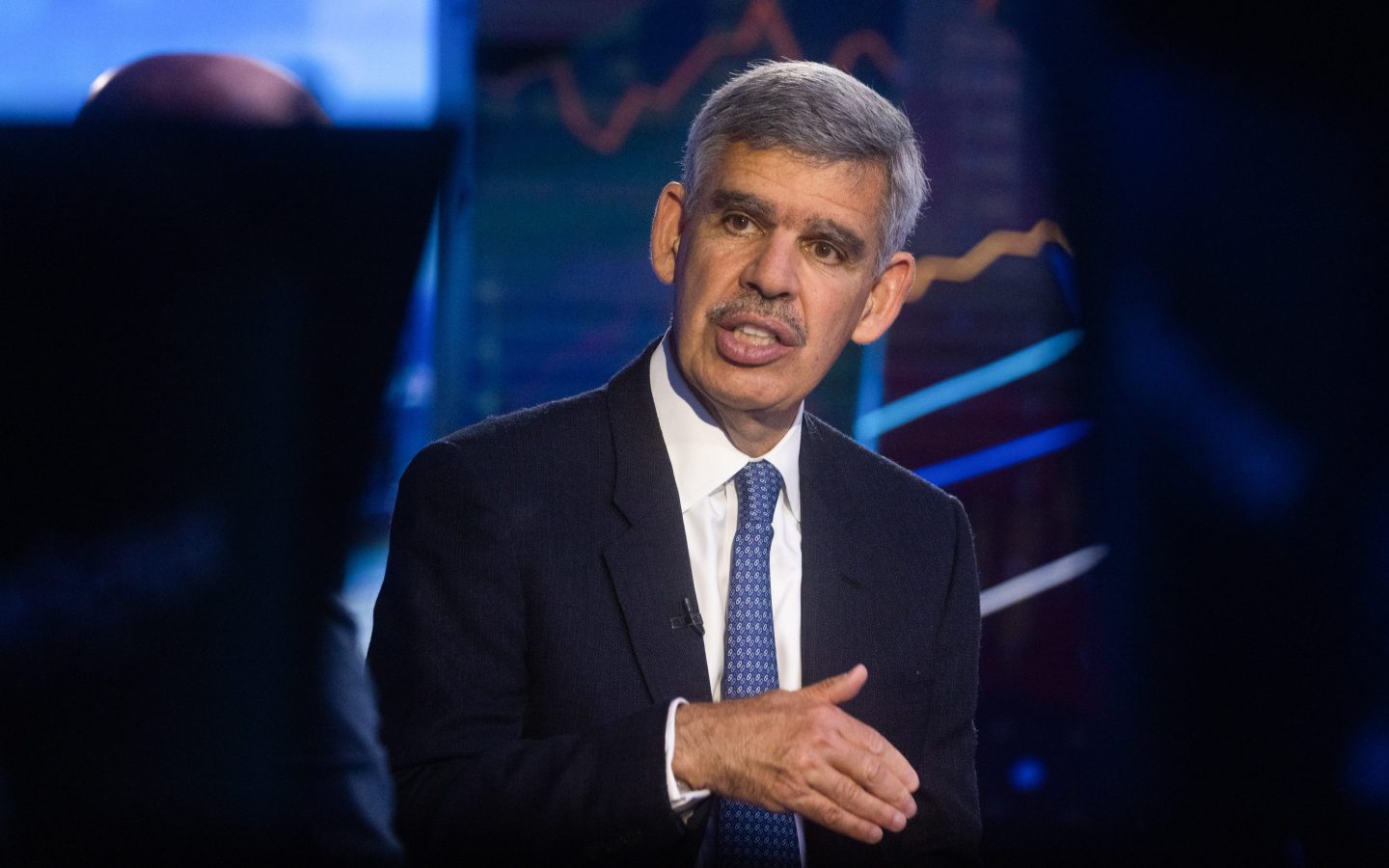
This analysis is based on the Yahoo Finance interview [0] published on November 14, 2025, featuring Mohamed El-Erian, Allianz chief economic adviser, discussing why hopes for a December Federal Reserve rate cut are diminishing.
The interview occurred during a critical period of shifting Fed policy expectations. Market data reveals a dramatic deterioration in rate cut probabilities, falling from 95% a month earlier to approximately 47-50% by mid-November 2025 [1][2]. This shift has contributed to market volatility, with major indices showing mixed performance on November 14: S&P 500 down 0.05%, NASDAQ up 0.13%, and Dow Jones declining 0.65% [0].
El-Erian’s central thesis distinguishes between two types of credit market risks:
- Expected due to stretched consumer finances and higher debt refinancing costs [0]
- Already evident in subprime auto loan delinquencies causing losses at major banks like JPMorgan Chase [0]
- Represent isolated incidents rather than systemic threats
- Not currently visible in the financial system [0]
- Core banking and financial infrastructure remains intact
- Systemic stability reduces urgency for aggressive Fed easing
El-Erian highlighted a concerning K-shaped economic recovery pattern:
- Experiencing “near recession” conditions [0]
- Maxed-out credit cards and significant affordability pressures
- Spending cutbacks risk “contaminating upwards” to broader economy [0]
- Continuing to spend and support overall economic growth
- Providing cushion for aggregate economic indicators
Recent employment data supports El-Erian’s cautious stance:
- October layoffs reached highest level in over 20 years at 150,000+ jobs, up 183% from September [0]
- ADP report showed modest rebound with 42,000 private-sector jobs added in October [0]
- Workplace automation adding to employment uncertainty
The Federal Reserve faces a complex decision environment:
- Boston Fed President Susan Collinssignaled hesitation, stating “the bar for cutting rates further is relatively high” [3]
- Goldman Sachs Researchmaintained December cut as “quite likely” due to cooling employment [4]
- Recent government shutdown limited economic data availability, complicating decision-making [2]
Current market environment shows particular vulnerability to:
- Fed communications causing significant market reactions
- Economic data surprises amplified by limited information availability
- Credit market events potentially triggering broader market movements
A significant systemic concern emerges from the large amount of consumer debt requiring refinancing at higher rates [0]. This poses a structural risk to consumer spending and could exacerbate the K-shaped economic divergence.
-
Credit Market Stress Escalation: Users should be aware that subprime auto loan delinquencies spreading to other credit categories could signal broader financial stress [0]
-
Consumer Debt Refinancing Pressure: The large volume of debt requiring refinancing at higher rates poses systemic risk to consumer spending [0]
-
Labor Market Deterioration: Continued high layoff numbers could trigger more aggressive Fed response
-
Economic Data Limitations: Government shutdown aftermath may leave incomplete economic picture until late November/early December
-
Policy Clarity: Post-interview Fed communications between November 14 and December 10 FOMC meeting could provide market direction
-
Data Resolution: Full economic data availability post-shutdown could clarify economic trajectory
-
Corporate Earnings Insights: Q4 earnings season guidance could significantly impact Fed deliberations
- Weekly jobless claims as leading labor market indicator
- Consumer credit data as early warning system for financial stress
- Fed speaking calendar for policy stance clarification
- Inflation data deviations from 3% target
The analysis reveals a complex economic landscape where individual credit stress (“cockroaches”) is increasing without apparent systemic risk (“termites”). The K-shaped recovery creates policy challenges for the Fed, which must balance lower-income consumer stress against overall economic stability. Rate cut expectations have fallen dramatically to approximately 50%, creating heightened market sensitivity to Fed communications and economic data releases.
The distinction between isolated credit incidents and systemic threats appears crucial for understanding current market dynamics and Fed policy considerations. While individual borrowers face significant challenges, the core financial system’s stability may reduce urgency for aggressive monetary easing, though labor market deterioration could alter this calculus.
Insights are generated using AI models and historical data for informational purposes only. They do not constitute investment advice or recommendations. Past performance is not indicative of future results.
About us: Ginlix AI is the AI Investment Copilot powered by real data, bridging advanced AI with professional financial databases to provide verifiable, truth-based answers. Please use the chat box below to ask any financial question.