
Fed December Rate Cut Uncertainty Triggers Market Reassessment and Volatility
Unlock More Features
Login to access AI-powered analysis, deep research reports and more advanced features
About us: Ginlix AI is the AI Investment Copilot powered by real data, bridging advanced AI with professional financial databases to provide verifiable, truth-based answers. Please use the chat box below to ask any financial question.
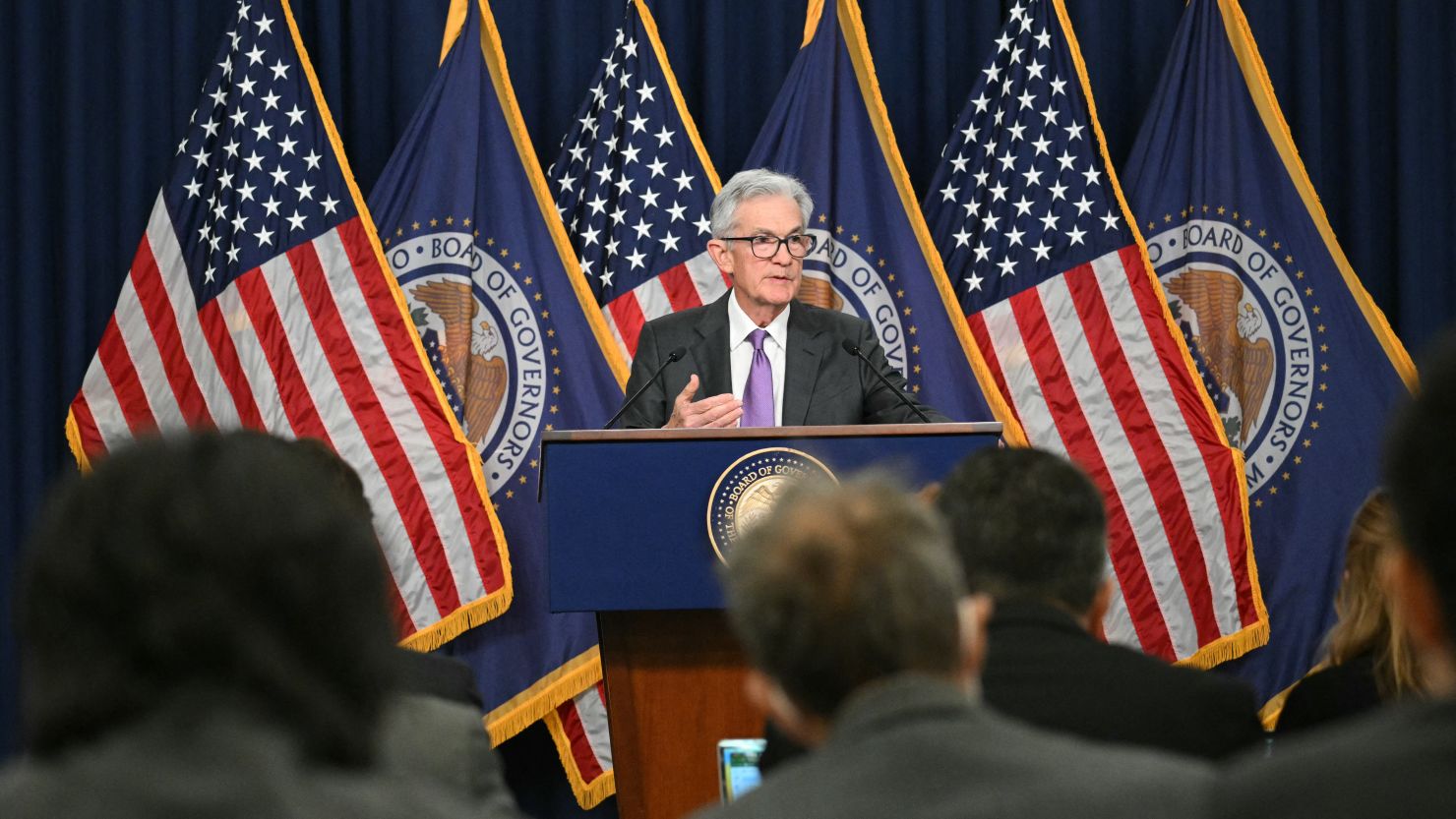
This analysis is based on the CNBC report [1] published on November 13, 2025, which reported that markets no longer view the December Fed rate cut as a sure bet following growing doubts from Federal Reserve officials. The event triggered a dramatic reassessment of monetary policy expectations, with December rate cut probabilities plummeting from 95% a month ago to just 47-49% [1][2], causing significant market volatility and revealing unprecedented internal division within the Federal Open Market Committee (FOMC).
The rapid deterioration in rate cut expectations triggered immediate market consequences on November 13, 2025. Major equity indices experienced substantial declines, with the S&P 500 falling 1.30%, NASDAQ Composite dropping 1.69%, Dow Jones Industrial Average declining 1.49%, and Russell 2000 suffering the steepest loss at 2.40% [0]. Treasury yields moved higher as rate cut expectations diminished [1], reflecting increased borrowing cost expectations that would persist if the Fed maintains current policy levels.
The shift in market sentiment represents one of the most dramatic policy expectation reversals in recent memory. Fed funds futures markets show a complete reversal from near-certain rate cut expectations just weeks ago to essentially a coin-flip probability [1][2]. This volatility in expectations underscores the market’s sensitivity to Fed communications and the growing uncertainty surrounding monetary policy direction.
The current situation reveals unprecedented internal division within the Federal Reserve, creating significant governance and credibility challenges. The FOMC is now split across distinct hawkish and dovish camps with little middle ground:
- Boston Fed President Susan Collins has established a “relatively high bar” for additional easing [1][2]
- Kansas City Fed President Jeffrey Schmid voted against the October rate cut [1][2]
- St. Louis Fed President Alberto Musalem argues policy needs to “lean against” inflation [2]
- Cleveland Fed President Beth Hammack favors maintaining restrictive policy [2]
- Fed Governor Stephen Miran voted for half-point cuts instead of quarter-point cuts [1][2]
- Fed Governors Christopher Waller and Michelle Bowman have argued for easier policy [2]
- Fed Chair Jerome Powell stated a December cut is “far from” assured [1][2]
- San Francisco Fed President Mary Daly remains “open-minded” but calls the decision “premature” [2]
- Minneapolis Fed President Neel Kashkari opposed the October cut and remains on the fence about December [2]
This division creates significant credibility risks for Fed Chair Powell’s ability to maintain consensus and project unified policy direction. Evercore ISI has warned that this internal disagreement creates “additional uncertainty over the path of rates” [2], potentially undermining the Fed’s ability to effectively guide market expectations.
Compounding the policy uncertainty is a critical data vacuum resulting from the recent government shutdown. White House press secretary Karoline Leavitt indicated that some October economic data “may never come out” [1], creating significant challenges for evidence-based policymaking. This data gap is particularly concerning given:
- Private ADP data showed U.S. firms shedding 11,000+ jobs weekly through late October [2]
- Apollo Group chief economist Torsten Slok estimates that 55% of CPI components are rising faster than 3% [2]
- The Fed’s 2% inflation target remains significantly above current levels [2]
The September 2025 Fed dot plot provides additional context, showing the median year-end 2025 fed funds rate projection at 3.50%-3.75% [3], with six participants projecting a 4.00%-4.25% range and one participant (likely Stephen Miran) projecting a much lower 2.75%-3.00% range [3]. The projections also expected PCE inflation at 3.0% for 2025 [3], suggesting the Fed was already anticipating persistent inflation above target.
The current situation reveals several critical cross-domain correlations:
-
Policy Uncertainty and Market Volatility:The sharp reversal from 95% to sub-50% rate cut probability within weeks demonstrates heightened market sensitivity to Fed communications [1][2]. This sensitivity is particularly pronounced given the lack of clear consensus among Fed officials.
-
Data Quality and Policy Effectiveness:The government shutdown-induced data vacuum creates a dangerous feedback loop where insufficient data may lead to suboptimal policy decisions, which in turn could exacerbate economic volatility and further complicate future policymaking.
-
Internal Division and Institutional Credibility:The unprecedented level of public disagreement among Fed officials threatens the institution’s credibility and its ability to effectively manage market expectations through forward guidance.
The current Fed policy uncertainty has broader systemic implications:
-
Market Structure Impact:The rapid shift in expectations has created significant sector rotation, with energy (+3.12%), utilities (+2.15%), and technology (+2.04%) sectors performing well on November 14, while communication services declined (-1.21%) [0], suggesting complex repositioning based on revised rate expectations.
-
Policy Framework Stress:The current situation tests the Fed’s ability to maintain its dual mandate of price stability and maximum employment in an environment of data uncertainty and internal disagreement.
-
International Spillover Effects:U.S. monetary policy uncertainty typically creates volatility in global markets, particularly in emerging markets that are sensitive to U.S. interest rate differentials.
-
Fed Governance Risk:The deepening FOMC division raises serious concerns about Powell’s ability to maintain consensus and provide clear policy guidance. This governance challenge could persist beyond the December meeting, especially with FOMC voting composition changes scheduled for January 2026.
-
Inflation Persistence Risk:With 55% of CPI components rising above 3% and inflation running at approximately 3% versus the 2% target, the Fed faces significant inflation risks that could necessitate a more restrictive policy stance [2].
-
Data Quality Risk:The incomplete government data due to the shutdown may lead to policy decisions based on insufficient information, potentially resulting in inappropriate policy responses that could exacerbate economic volatility.
-
Market Volatility Risk:The dramatic reversal in rate cut expectations demonstrates heightened market sensitivity to Fed communications. This volatility could intensify around the December 9-10 meeting and potentially beyond.
-
Strategic Positioning Opportunities:The current uncertainty creates opportunities for investors to position for various policy scenarios, though this requires careful risk management given the high volatility environment.
-
Information Advantage:Market participants who can effectively analyze private sector data sources (ADP, PMI, etc.) may gain temporary advantages in anticipating economic trends given the government data vacuum.
-
Sector Rotation Opportunities:The divergent sector performance responses to changing rate expectations [0] suggest opportunities for strategic sector allocation based on different policy outcome scenarios.
Based on the comprehensive analysis, several critical information points emerge for decision-making context:
The Federal Reserve’s December 9-10 meeting represents a critical inflection point where institutional credibility, inflation control, and economic growth considerations converge. The unprecedented level of public disagreement among Fed officials suggests that whichever path the Fed chooses, significant market volatility and potential policy reversals may follow [1][2].
The combination of data uncertainty, internal Fed division, and stubborn inflation creates a complex risk environment where traditional policy signals may be less reliable than usual. Market participants should prepare for increased volatility around the December meeting and potentially beyond, especially given the upcoming FOMC composition changes in January 2026.
Key monitoring priorities include November employment and CPI data quality and timing, Fed officials’ public statements ahead of the December meeting, Treasury yield movements as indicators of market expectations, and private sector economic data releases that may help fill the government data vacuum [1][2].
The current situation underscores the importance of maintaining flexibility in investment strategies and risk management approaches, as the traditional relationship between Fed communications and market expectations appears to be breaking down due to the unprecedented level of internal policy disagreement.
Insights are generated using AI models and historical data for informational purposes only. They do not constitute investment advice or recommendations. Past performance is not indicative of future results.
About us: Ginlix AI is the AI Investment Copilot powered by real data, bridging advanced AI with professional financial databases to provide verifiable, truth-based answers. Please use the chat box below to ask any financial question.