
Federal Reserve December Rate Cut Analysis: Shifting Policy Expectations and Market Impact
Unlock More Features
Login to access AI-powered analysis, deep research reports and more advanced features
About us: Ginlix AI is the AI Investment Copilot powered by real data, bridging advanced AI with professional financial databases to provide verifiable, truth-based answers. Please use the chat box below to ask any financial question.
This analysis is based on the Yahoo Finance report [4] published on November 14, 2025, which reported that the likelihood of a Federal Reserve rate cut at the December meeting is shrinking, with officials expected to disagree on the appropriate policy path forward.
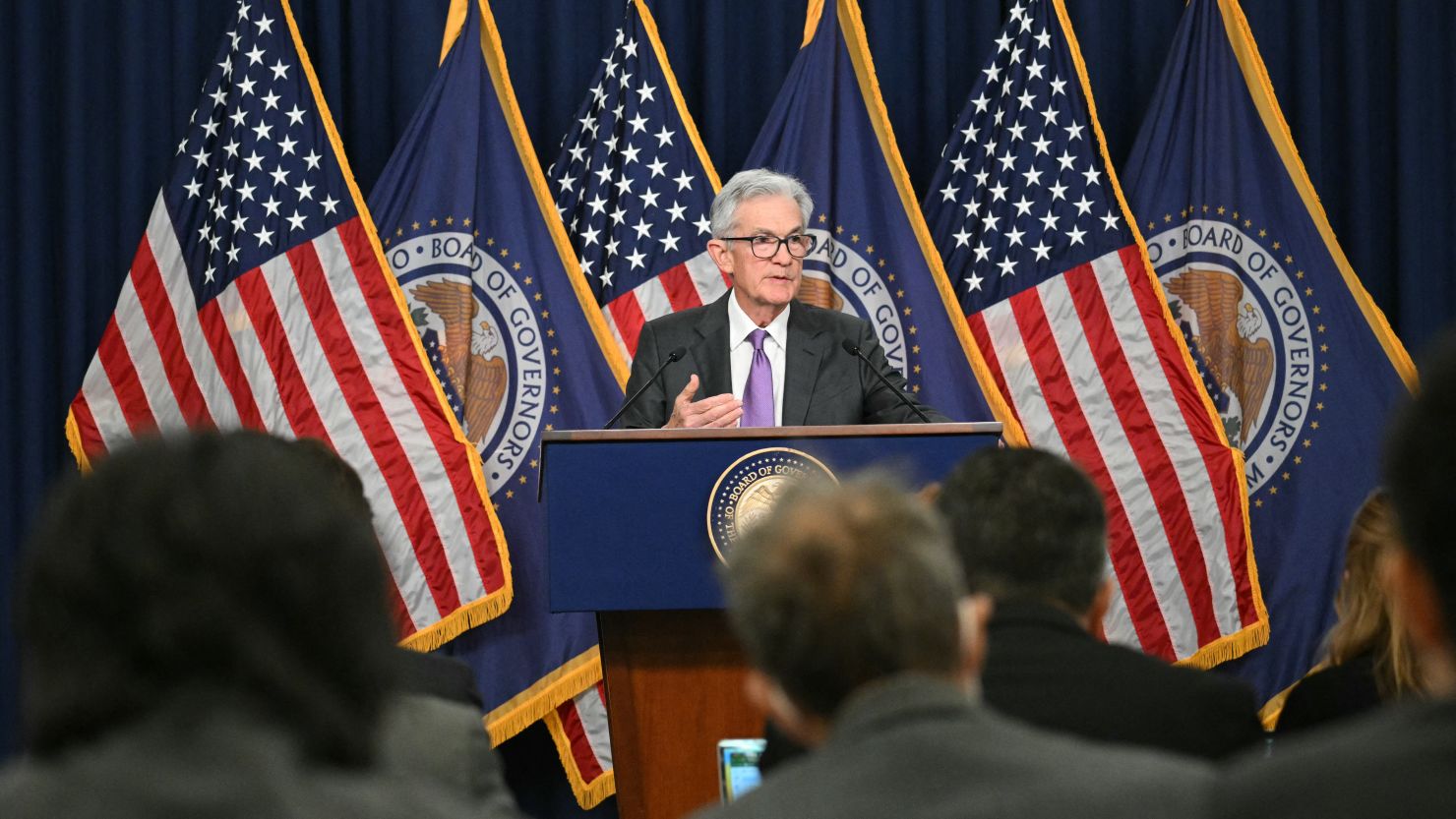
The Federal Reserve faces an unprecedented level of internal disagreement as the December 2025 meeting approaches, creating significant market uncertainty and volatility. Market-implied probability of a December quarter-point cut has collapsed from 95% a month ago to approximately 47-50% currently [1][2][3][5], representing one of the most dramatic shifts in rate cut expectations in recent months.
This policy uncertainty has immediate market consequences. As confidence in a December cut diminished, stocks slumped while Treasury yields moved higher [1]. The CME FedWatch tool now shows futures markets pricing in a funds rate of 3.775% by year-end, compared to the current 3.87% level [1]. Recent market performance reveals the impact of this uncertainty, with the Russell 2000 declining notably (-4.05%) while major indices showed mixed results, highlighting growing divergence between large-cap and small-cap performance [0].
The Fed’s internal divide has crystallized into distinct factions. The hawkish camp, including Susan Collins (Boston Fed), Raphael Bostic (Atlanta Fed), and Jeffrey Schmid (Kansas City Fed), advocates keeping rates steady citing inflation concerns and uncertainty from tariffs [1][2]. Meanwhile, the dovish faction, including Stephen Miran, Christopher Waller, and Michelle Bowman, generally supports further easing [1].
Complicating the decision-making process is a significant data vacuum created by the recent government shutdown. Critical economic reports were delayed, with the White House indicating some October data may never be released, leaving Fed officials effectively “flying blind” [1]. This data reliability risk raises serious concerns about the Fed’s ability to make optimal policy decisions.
The Federal Reserve’s December meeting presents three potential scenarios: a hold (probability increasing from current ~50%), a “hawkish cut” as a potential compromise, or a cut with dovish guidance (probability decreasing but still possible) [1]. Decision-makers should monitor Fed speaking calendars, post-shutdown economic data quality, inflation indicators, and labor market clarity when available.
The combination of Fed policy disagreement, data uncertainty, and leadership transition creates a potentially volatile environment for financial markets. Current market positioning shows defensive sector rotation and small-cap underperformance, reflecting growing economic uncertainty [0]. Treasury market stability despite reduced cut expectations suggests longer-term inflation concerns may be driving bond market dynamics [0].
Critical monitoring priorities include shifts in Fed communication from Powell and key voting members, assessment of post-shutdown data reliability, market sentiment indicators, sector rotation patterns, and Treasury yield curve dynamics for economic signals [1].
Insights are generated using AI models and historical data for informational purposes only. They do not constitute investment advice or recommendations. Past performance is not indicative of future results.
About us: Ginlix AI is the AI Investment Copilot powered by real data, bridging advanced AI with professional financial databases to provide verifiable, truth-based answers. Please use the chat box below to ask any financial question.