
NQ Futures vs CFDs: Capital-Efficient Trading Alternatives and Risk Analysis
Unlock More Features
Login to access AI-powered analysis, deep research reports and more advanced features
About us: Ginlix AI is the AI Investment Copilot powered by real data, bridging advanced AI with professional financial databases to provide verifiable, truth-based answers. Please use the chat box below to ask any financial question.
Related Stocks
Reddit discussion reveals critical insights from traders attempting to use CFDs as NQ futures proxies:
- Execution Discrepancies: Multiple users report CFDs do not match futures tick-for-tick, with wider spreads and slippage making scalping particularly risky 1
- Broker Transparency Issues: CFD brokers rarely disclose their data sources or futures matching methods, creating uncertainty about correlation quality 1
- Real-World Performance: OP confirmed scalping attempts on CFDs resulted in poor execution and erratic wicks not present in CME data, validating theoretical concerns 1
- Timeframe Limitations: Consensus indicates CFDs can work for longer timeframes but expect execution discrepancies; not ideal for precise scalping strategies 1
- Pricing Method Risks: Some CFDs calculate from spot prices rather than futures, causing wilder moves compared to thick futures markets 1
Comprehensive analysis reveals multiple CFD broker options with varying capital requirements and risk profiles:
- Lowest Entry: IQ Option ($10), OctaFX ($25) 2
- Mid-Range: Pepperstone ($100-$200), Plus500 ($100), CMC Markets ($200) 3
- Established: IG Markets ($300) with stronger regulatory oversight 4
- Professional Grade: Interactive Brokers and Saxo Bank offering potentially superior CME correlation but higher capital requirements 5, 6
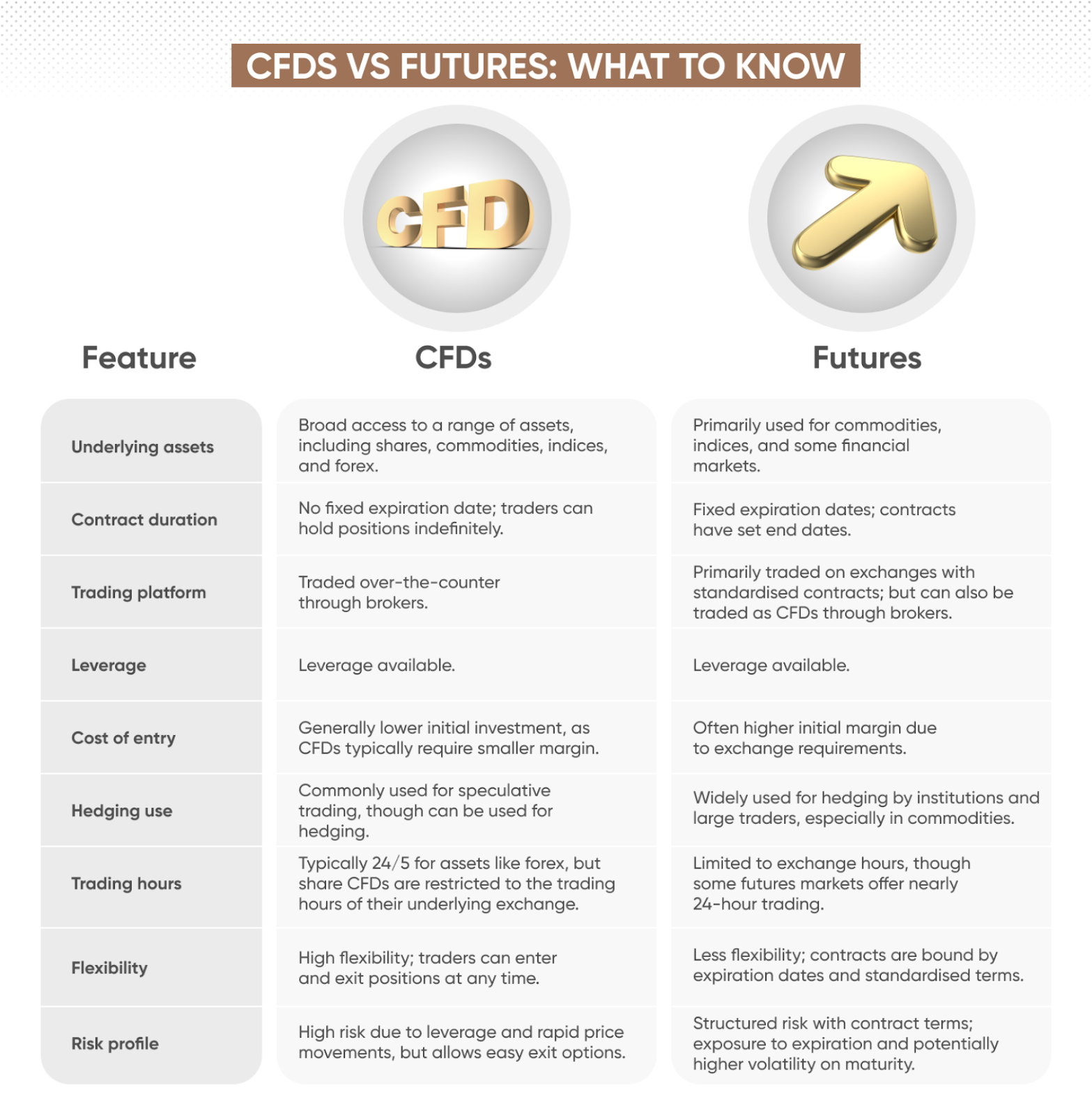
- Counterparty Protection: CME futures benefit from clearing house guarantees eliminating default risk, unlike CFDs exposing traders to broker solvency 7, 8
- Cost Structure: CFDs incur overnight financing costs and spread widening not present with futures contracts 9
- Liquidity Advantages: Futures benefit from centralized exchange depth versus broker-dependent CFD liquidity 10
- CME Group offers Micro E-mini contracts at 1/10 the size of standard E-mini contracts, providing regulated futures access with reduced capital requirements 9
- For Capital-Constrained Traders: CFDs offer entry points as low as $10 but accept execution risks and higher costs
- For Strategy Development: Use CFDs only for longer timeframe testing; scalping strategies require futures access
- Regulatory Consideration: Established brokers (IG, Plus500, CMC) provide better protection but still lack futures’ clearing house guarantees
- Counterparty exposure to broker insolvency
- Execution slippage and spread widening during volatile periods
- Overnight financing costs eroding returns
- Limited regulatory protection compared to exchange-traded products
- Test strategies with minimal capital using established CFD brokers
- Access NQ exposure where regulatory constraints prevent futures trading
- Utilize longer timeframes where execution discrepancies have reduced impact
- Transition to Micro E-mini futures as capital allows for improved risk management
Insights are generated using AI models and historical data for informational purposes only. They do not constitute investment advice or recommendations. Past performance is not indicative of future results.
About us: Ginlix AI is the AI Investment Copilot powered by real data, bridging advanced AI with professional financial databases to provide verifiable, truth-based answers. Please use the chat box below to ask any financial question.