
Fed Hawkish Shift Triggers Major US Stock Market Sell-Off
Unlock More Features
Login to access AI-powered analysis, deep research reports and more advanced features
About us: Ginlix AI is the AI Investment Copilot powered by real data, bridging advanced AI with professional financial databases to provide verifiable, truth-based answers. Please use the chat box below to ask any financial question.
Related Stocks
This analysis is based on the FXEmpire report [1] published on November 14, 2025, which documented Federal Reserve policymakers’ coordinated hawkish messaging that triggered the steepest U.S. stock market decline in over a month. The event represents a fundamental shift in monetary policy expectations, with December rate cut odds collapsing from 95% a month ago to just 49.4% [1], causing broad-based selling particularly concentrated in rate-sensitive technology stocks.
The market reaction was swift and severe across all major indices, with technology stocks bearing the brunt of the decline:
- S&P 500: Dropped 88.98 points (-1.3%) to close at 6,737.49 [0]
- Nasdaq Composite: Fell 392.28 points (-1.69%) to 22,870.36, marking its steepest decline in a month [0][2]
- Dow Jones Industrial Average: Declined 716.7 points (-1.49%) to 47,457.22 [0]
- Russell 2000: Suffered the biggest percentage loss, dropping 58.63 points (-2.4%) to 2,382.98 [0]
The Technology sector fell 1.57%, with notable declines in Tesla (TSLA) dropping 6.64% to $401.99 and NVIDIA (NVDA) declining 3.58% to $186.86 [0]. The sell-off was broad-based but particularly affected rate-sensitive sectors, with Utilities (-3.11%), Consumer Cyclical (-2.87%), and Real Estate (-2.37%) posting the largest losses [0].
The coordinated messaging from Fed officials suggests a deliberate effort to temper market expectations. Boston Fed President Susan Collins warned of a “relatively high bar” for additional easing, while San Francisco Fed President Mary Daly adopted a neutral stance despite her typically dovish reputation [1]. This represents a significant shift from the Fed’s previous communication strategy and may indicate growing concern about market exuberance or inflation remaining stickier than anticipated.
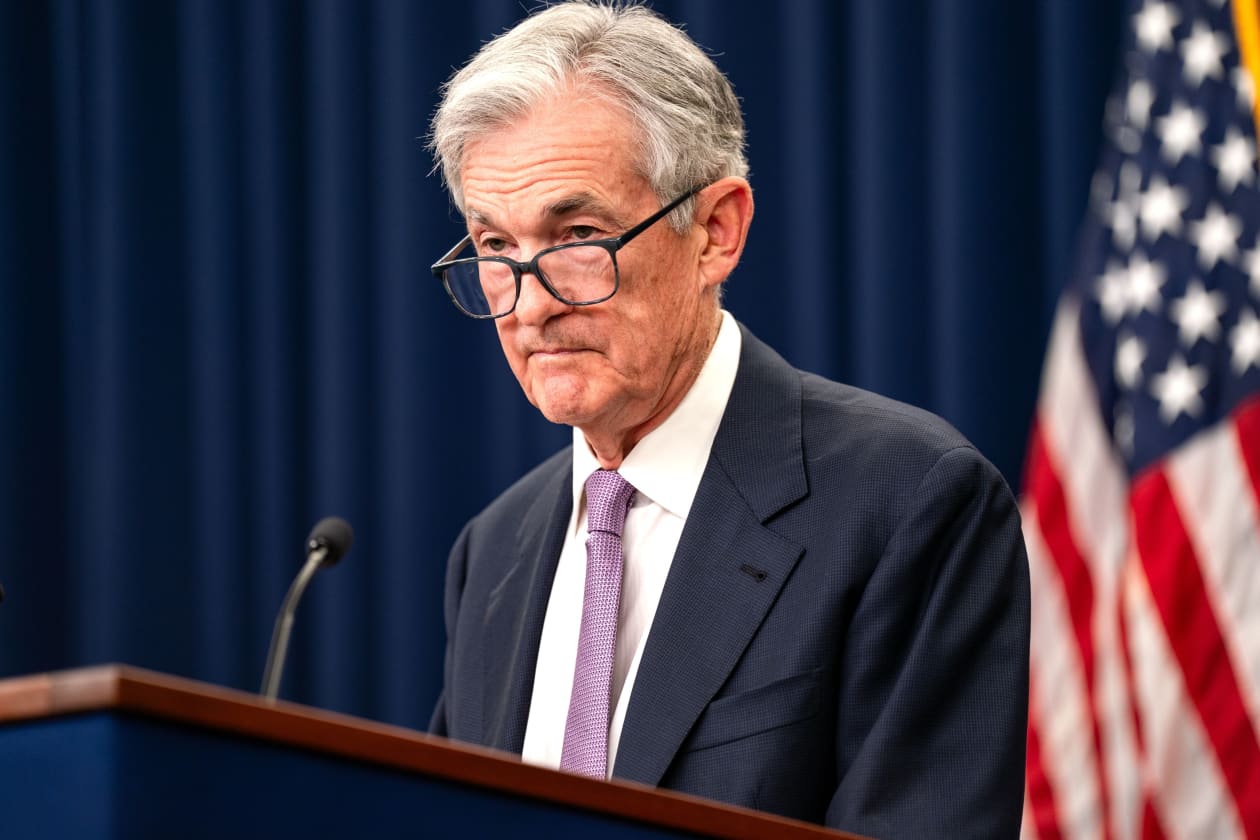
The market reaction was amplified by the recent 43-day U.S. government shutdown, which created an “information vacuum” for economic data [2]. Fed Chair Jerome Powell likened the situation to “driving in the fog” and indicated policymakers would “slow down” in response [2]. This data void makes it particularly difficult to assess the true state of the economy, with October inflation data publication remaining in doubt and the employment report lacking jobless rate data due to missing household survey data [2].
The market decline reflects growing concerns about elevated valuations. The S&P 500’s forward price-to-earnings ratio stood at 22.8x as of Wednesday, well above its 10-year average of 18.8x [2]. This suggests the market was particularly vulnerable to any shift in monetary policy expectations. The rapid repricing of rate cut expectations indicates markets are now pricing in uncertainty rather than certainty for year-end easing, with the “hawkish cut” scenario gaining traction [2].
-
Interest Rate Sensitivity: The disproportionate impact on technology and growth stocks demonstrates the continued high correlation between these sectors and interest rate expectations, validating concerns about valuation sustainability in a higher-for-longer rate environment.
-
Defensive Sector Rotation: The outperformance of Consumer Defensive (+0.87%), Basic Materials (+0.08%), and Healthcare (+0.06%) sectors [0] indicates a classic risk-off rotation pattern, suggesting institutional investors are positioning for increased volatility.
-
Technical Levels Under Pressure: The Nasdaq is testing critical technical levels, with analysts warning that a confirmed breakdown below trendline resistance could trigger a 10% correction targeting the 550 level [1].
The coordinated Fed messaging represents a potential shift in the central bank’s approach to managing market expectations. Rather than gradually preparing markets for policy changes, the Fed appears to be using more direct communication to prevent market exuberance from building ahead of what may be a more restrictive policy stance heading into 2026.
-
Technical Breakdown Risk: The Nasdaq’s proximity to critical support levels increases the probability of a more severe correction if these levels fail to hold [1].
-
Data Dependency Risk: With economic data gaps from the government shutdown, any unexpected data releases could trigger outsized market reactions [2].
-
Policy Uncertainty: The divergence between individual Fed officials’ statements and the lack of clear committee guidance creates additional uncertainty [1].
-
Defensive Sector Strength: The relative outperformance of defensive sectors may present opportunities for portfolio rebalancing toward lower-volatility investments [0].
-
Valuation Adjustment: The market correction could create more attractive entry points in quality technology companies that were previously overvalued [0][2].
-
Information Advantage: Investors with access to alternative economic data sources may gain temporary advantages during the official data vacuum [2].
Based on the analysis, the critical information for decision-making includes:
- Policy Shift: Federal Reserve officials have signaled increased resistance to December rate cuts, with odds falling from 95% to 49.4% [1]
- Market Vulnerability: Elevated valuations (S&P 500 P/E at 22.8x vs 18.8x 10-year average) suggest markets were primed for correction [2]
- Data Constraints: Government shutdown has created significant gaps in economic data, making policy assessment more difficult [2]
- Sector Impact: Technology and rate-sensitive stocks suffered the largest declines, while defensive sectors showed resilience [0]
- Technical Levels: Major indices are testing critical support levels, with potential for further downside if these fail [1]
The market’s focus will increasingly shift to 2026 expectations, with the Fed’s “dot plot” likely to receive more attention than the immediate rate decision [2]. Decision-makers should monitor upcoming Fed speeches and any economic data releases for additional clarity on policy direction.
Insights are generated using AI models and historical data for informational purposes only. They do not constitute investment advice or recommendations. Past performance is not indicative of future results.
About us: Ginlix AI is the AI Investment Copilot powered by real data, bridging advanced AI with professional financial databases to provide verifiable, truth-based answers. Please use the chat box below to ask any financial question.