
Jim Cramer's Experiential Economy Warning: Consumer Spending Weakness Analysis
Unlock More Features
Login to access AI-powered analysis, deep research reports and more advanced features
About us: Ginlix AI is the AI Investment Copilot powered by real data, bridging advanced AI with professional financial databases to provide verifiable, truth-based answers. Please use the chat box below to ask any financial question.
Related Stocks
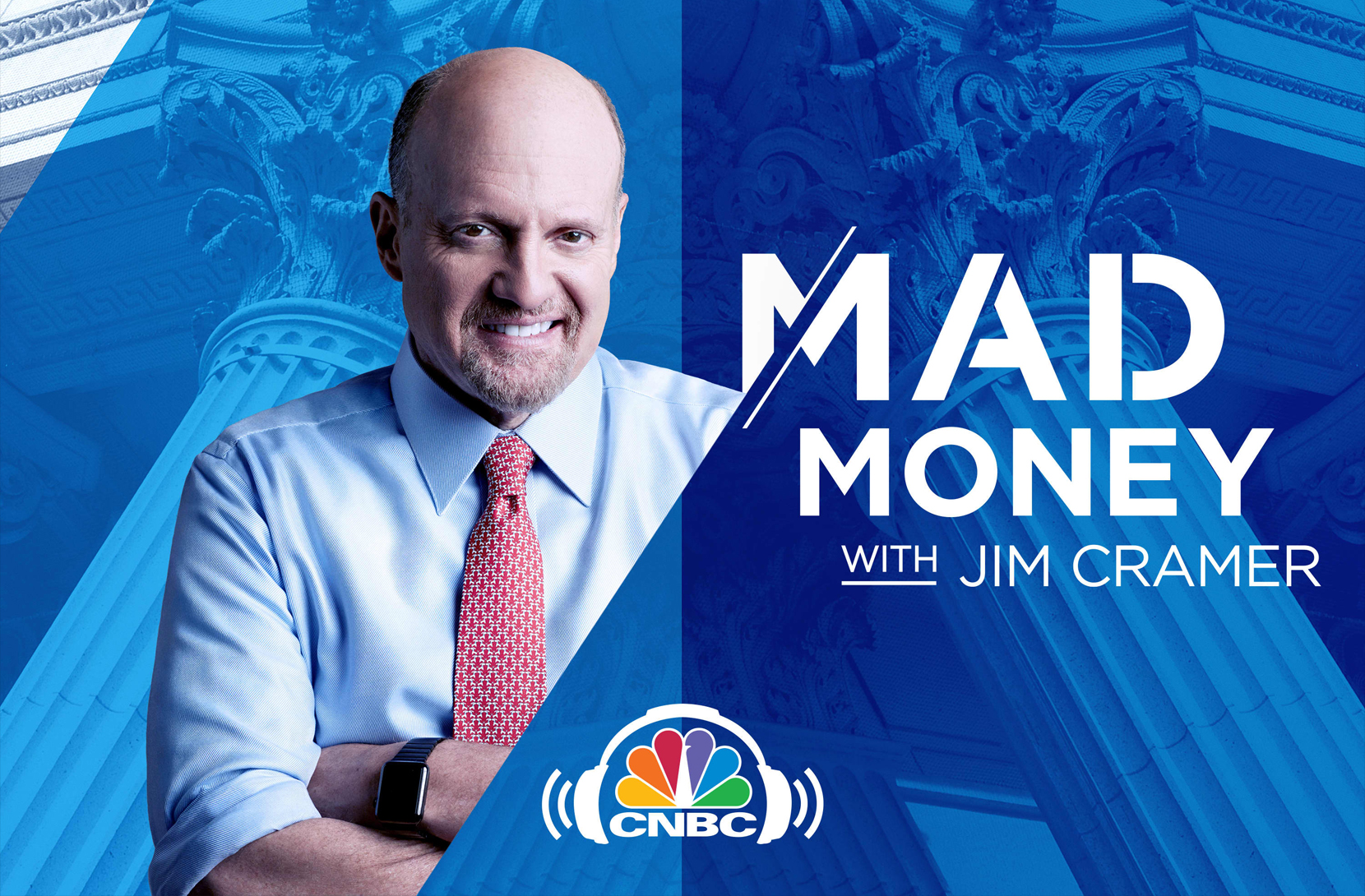
This analysis is based on Jim Cramer’s November 13, 2025 “Mad Money” segment on CNBC, where he expressed concerns about weak data and earnings in the experiential economy space [1]. Cramer’s warning appears validated by significant market weakness in experiential economy stocks, with the Consumer Cyclical sector posting the worst performance among all major sectors at -2.87% [0]. The data suggests a potential consumer trading-down phenomenon, with premium experiential offerings underperforming while value-oriented options show resilience.
Cramer’s concerns about the experiential economy are strongly supported by quantitative market data. On November 13, 2025, the Consumer Cyclical sector experienced a
Individual experiential economy stocks demonstrated pronounced weakness over the past 30 trading days:
- Carnival Corporation (CCL): Declined9.86%to $26.14 with elevated volatility (2.62% daily standard deviation) [0]
- Booking Holdings (BKNG): Fell6.86%to $5,075.61 despite its premium positioning [0]
- Disney (DIS): Dropped3.95%to $107.61, underperforming broader market indices [0]
- Starbucks (SBUX): Largely flat at-0.07%to $86.44 but experienced high volatility (1.97% daily standard deviation) and traded below its 20-day moving average [0]
- McDonald’s (MCD): Demonstrated resilience with a2.90%gain to $307.58 [0]
While aggregate consumer spending data shows growth from $16,345.80 billion in Q1 2025 to $16,445.70 billion in Q2 2025 [2], this masks significant sectoral divergence. The stark performance contrast between premium experiential offerings (CCL -9.86%, BKNG -6.86%) and value-oriented options (MCD +2.90%) suggests consumers may be reallocating discretionary spending toward more affordable alternatives.
The market weakness occurred during a broader market decline, with major indices posting significant losses:
- S&P 500: -1.30% to 6,737.49 [0]
- NASDAQ Composite: -1.69% to 22,870.36 [0]
- Dow Jones Industrial Average: -1.49% to 47,457.22 [0]
- Russell 2000: -2.40% to 2,382.98 [0]
The Russell 2000’s outsized decline suggests particular weakness in smaller-cap experiential economy companies, further validating Cramer’s sector-wide concerns.
The divergent performance patterns reveal a critical insight:
Several technical indicators support Cramer’s concerns:
- Elevated Volatility: SBUX (1.97% daily volatility) and CCL (2.62%) show increased uncertainty [0]
- Volume Patterns: CCL’s average daily volume of 21.23M shares indicates significant investor repositioning [0]
- Moving Average Divergence: Multiple experiential stocks trading below key technical levels suggest negative momentum
The market’s reaction to Cramer’s commentary, combined with the underlying technical weakness, suggests that investors were already positioned for potential weakness in the experiential sector. The confluence of fundamental earnings concerns and technical deterioration creates a challenging environment for experiential economy companies.
- Fourth-quarter earnings expectationsfor travel, entertainment, and restaurant companies
- Consumer discretionary spending patternsas the crucial holiday season approaches
- Employment in service sectorsreliant on experiential spending
- High-fixed-cost business modelsin the travel and entertainment industries
- Weekly consumer spending datafor early trend identification
- Holiday booking and reservation datafrom travel and entertainment companies
- Credit card spending patternsin experiential categories
- Inflation-adjusted disposable income trends
- Consumer confidence surveysfocusing on discretionary spending intentions
The current environment presents both challenges and potential opportunities:
- Value-oriented experiential companiesmay continue to outperform premium offerings
- Companies with flexible pricing strategiesand strong value propositions could gain market share
- Businesses with lower fixed cost structuresmay demonstrate greater resilience
- Early holiday season indicatorswill be crucial for assessing the duration of this weakness
The analysis reveals that Jim Cramer’s concerns about the experiential economy are well-founded, with quantitative data supporting significant sector weakness. The Consumer Cyclical sector’s 2.87% decline [0] represents the worst performance among major sectors, while individual experiential stocks show pronounced underperformance. The divergence between value-oriented and premium experiential offerings suggests a consumer trading-down phenomenon that warrants careful monitoring, particularly as the holiday season approaches.
Insights are generated using AI models and historical data for informational purposes only. They do not constitute investment advice or recommendations. Past performance is not indicative of future results.
About us: Ginlix AI is the AI Investment Copilot powered by real data, bridging advanced AI with professional financial databases to provide verifiable, truth-based answers. Please use the chat box below to ask any financial question.