
U.S. Markets Face Worst Day Since October 10 as AI Sell-Off and Fed Uncertainty Drive Declines
Unlock More Features
Login to access AI-powered analysis, deep research reports and more advanced features
About us: Ginlix AI is the AI Investment Copilot powered by real data, bridging advanced AI with professional financial databases to provide verifiable, truth-based answers. Please use the chat box below to ask any financial question.
Related Stocks
This analysis is based on the CNBC Daily Open report [1] published on November 13, 2025, which detailed a significant market downturn driven by AI stock weakness and Federal Reserve uncertainty.
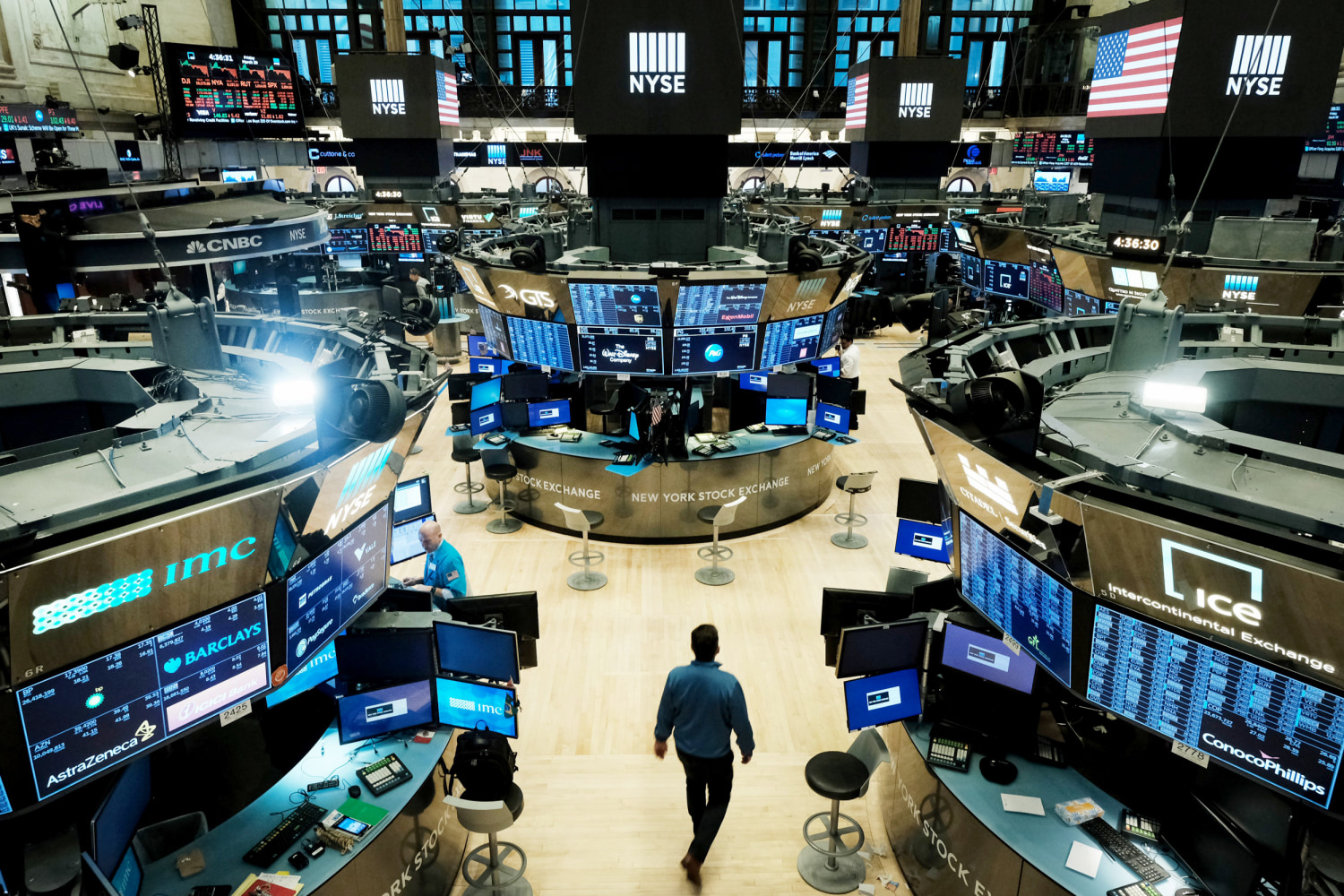
The November 13 trading session marked the worst day for U.S. markets since October 10, with major indices posting substantial losses. The Dow Jones Industrial Average declined 1.65% to 47,457.22, the S&P 500 fell 1.66% to 6,737.49, and the Nasdaq Composite suffered the steepest decline at 2.29% to close at 22,870.36 [1]. This represented a sharp reversal from the previous session when the Dow had briefly closed above 48,000 for the first time [1].
The technology sector bore the brunt of the sell-off, particularly AI-related stocks. NVIDIA (NVDA) fell 3.58% to $186.86 on heavy volume of 206.07 million shares, while Oracle (ORCL) dropped 4.15% to $217.57 [0]. Oracle’s decline was particularly notable as the stock has now lost more than one-third of its value since surging 36% in September [1]. Broadcom (AVGO) also declined significantly, falling 4.29% to $339.98 [0]. The technology sector as a whole fell 1.57%, making it one of the worst-performing sectors alongside Utilities (-3.11%) and Consumer Cyclical (-2.87%) [0].
The market downturn coincided with growing uncertainty about the Federal Reserve’s December interest rate decision. The CME FedWatch tool now shows only a 50% probability of a quarter-point rate cut in December, a dramatic shift from a month ago when traders were pricing in a 95.5% chance of a December cut [1]. This uncertainty stems from the absence of critical October economic data due to the recent government shutdown.
White House officials have indicated that some of this missing data, including the official employment and inflation reports, may never be released, leaving Federal Reserve policymakers effectively “flying blind” regarding current economic conditions [1][3]. This data vacuum has created significant challenges for monetary policy decision-making.
Beyond the immediate market reaction, investors are increasingly questioning the sustainability of AI stock valuations and the massive capital expenditures being committed by technology companies. The CNBC report highlighted that some companies, including Oracle, are taking on debt to fulfill their AI infrastructure obligations [1].
KeyBanc Capital Markets analyst Jackson Ader noted that among major cloud companies in the GPU business, “Oracle is expected to generate the least amount of free cash flow” [1]. This raises fundamental concerns about the financial sustainability of current AI investment levels, particularly given the elevated valuations in the sector.
Private sector data presents conflicting pictures of economic health, further complicating the Fed’s decision-making process. ADP reported that U.S. firms were shedding more than 11,000 jobs weekly through late October [3], while TLR Analytics’ sales tax diffusion index shows strong sales tax receipts above 50% [3]. Strategas chief economist Don Rissmiller noted private data showing over 150,000 job cuts in October, declining rents, slowing car sales, and weak consumer sentiment [3].
The current market appears increasingly bifurcated into “AI stocks” and “everything else,” as noted in recent CNBC analysis [1]. This structural divide creates potential for correlated risk within the AI sector while potentially offering rotation opportunities into non-AI segments. The elevated trading volumes across all major indices (S&P 500: 3.37 billion shares, Nasdaq: 9.97 billion shares, Dow: 610.42 million shares) [0] suggest strong investor conviction in the current market direction.
The Russell 2000 small-cap index experienced the steepest decline, falling 2.4% [0], indicating that the market weakness extended beyond large-cap technology stocks. This broad-based weakness suggests deeper concerns about economic conditions and monetary policy uncertainty affecting market segments beyond the high-profile AI sector.
- Federal Reserve Communication: Watch for any Fed officials providing guidance on how they’re interpreting private sector data in the absence of official government statistics
- AI Earnings Reports: Upcoming quarterly results from major AI companies will be crucial for valuation justification
- Government Data Releases: Any partial releases of October economic data could significantly impact market expectations
- Credit Market Conditions: Monitor borrowing costs for technology companies funding AI investments
The November 13 market decline was driven by two primary factors: a sell-off in overvalued AI stocks and growing uncertainty about Federal Reserve policy due to missing economic data. The technology sector’s decline was particularly severe, with major AI stocks falling between 3.5-4.3% on elevated volume. The Fed’s December rate cut probability has collapsed to 50% from 95.5% a month ago, creating significant policy uncertainty. Private sector economic data presents conflicting signals, further complicating the decision-making environment for both policymakers and investors. The market appears bifurcated between AI and non-AI stocks, with small-caps showing particular vulnerability to the current uncertainty.
Insights are generated using AI models and historical data for informational purposes only. They do not constitute investment advice or recommendations. Past performance is not indicative of future results.
About us: Ginlix AI is the AI Investment Copilot powered by real data, bridging advanced AI with professional financial databases to provide verifiable, truth-based answers. Please use the chat box below to ask any financial question.