
Coatue's Philippe Laffont Declares IPO Market Broken Beyond Repair - Structural Analysis
Unlock More Features
Login to access AI-powered analysis, deep research reports and more advanced features
About us: Ginlix AI is the AI Investment Copilot powered by real data, bridging advanced AI with professional financial databases to provide verifiable, truth-based answers. Please use the chat box below to ask any financial question.
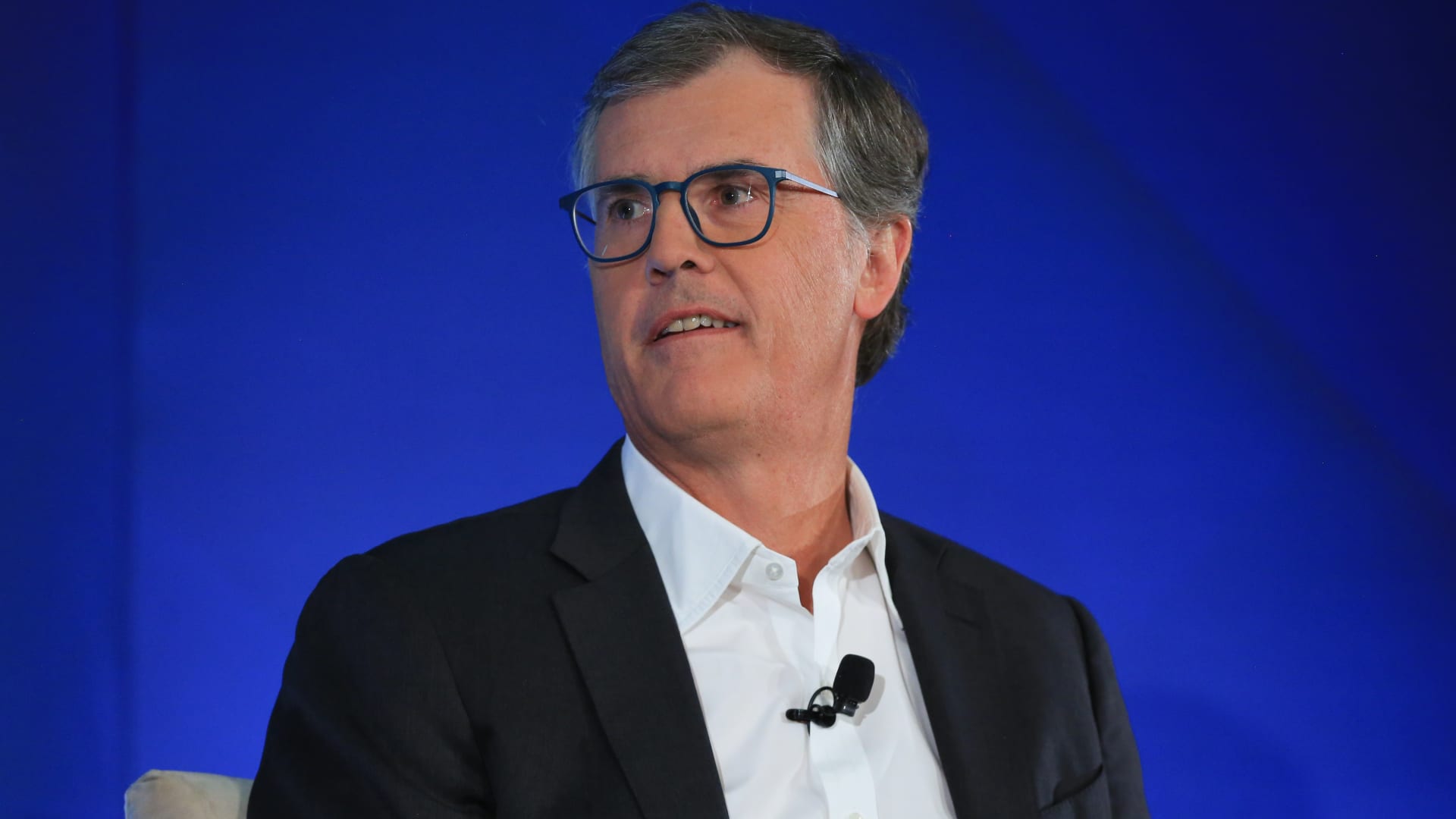
This analysis is based on the CNBC report [1] published on November 13, 2025, which covered Philippe Laffont’s stark assessment at CNBC’s Delivering Alpha conference. Laffont, founder and portfolio manager of Coatue Management (a $70 billion hedge fund), declared that “The IPO market is completely broken… beyond repair” [1], contrasting the current environment with historical levels where “Twenty or 30 years ago, there were so many more IPOs than today. There’s very few IPOs… there’s almost none” [1].
The IPO market data presents a complex picture that validates Laffont’s concerns while showing some recent recovery:
- 191 IPOs priced in the U.S. through November 2025, representing a 48% increase from 2024 [1]
- Total proceeds raised: $34.0 billion in 2025 (+19.6% year-over-year) [3]
- 239 IPOs filed in 2025 (+33.5% year-over-year) [3]
- The 1990s averaged 400+ IPOs annually during peak years [7]
- Small IPOs averaged 401 annually in the 1990s but dropped to only 105 annually in the 18 years since 2000 [7]
- The average annual number of IPOs fell by over 61% between the 1990s and the 2000s [7]
Current market indices show mixed performance that may impact IPO activity:
- S&P 500: +0.23% over past 30 days [0]
- NASDAQ Composite: -0.07% over past 30 days [0]
- Dow Jones: +1.87% over past 30 days [0]
- Russell 2000: -3.39% over past 30 days [0]
The Russell 2000’s significant underperformance is particularly concerning as small-cap stocks often correlate with IPO market health [0].
Laffont’s commentary highlights fundamental shifts in capital markets that extend beyond cyclical factors:
-
Private Market Dominance: Companies are staying private longer, with massive private funding rounds (e.g., OpenAI’s $40 billion raise in 2025) dwarfing traditional IPO sizes [6]
-
Retail Investor Displacement: Laffont noted this trend is “not a great trend because at the end of the day, it’s just easier for retail investors to be involved in IPOs, and then onwards, than everything before the IPO” [1]
-
Capital Concentration: 2025 data shows the top 10 fundraising rounds account for over 52% of all U.S. tech venture funding, compared to just 10-20% a few years ago [6]
While Laffont presents a pessimistic view, Bill Ford, General Atlantic Chairman and CEO, expressed more optimism about the IPO market recovery [1]. This divergence suggests the situation may be more nuanced than “broken beyond repair.” Additionally, EY data shows global IPO activity accelerated in Q3 2025, with 370 deals listed [4], indicating the U.S. decline may be region-specific.
-
Retail Investor Access Reduction: The shift away from public markets may permanently reduce retail investor access to early-stage growth companies [1]
-
Market Liquidity Concerns: Fewer public companies could reduce overall market liquidity and transparency
-
Valuation Disconnect: Private market valuations may become increasingly disconnected from public market realities
-
Regulatory Burden: Higher costs of compliance and going public may be creating structural barriers to public markets [7]
The IPO market deterioration stems from multiple interconnected factors:
- Market volatility and higher interest rates [1]
- Increased regulatory scrutiny [1]
- Government shutdown effects on momentum [1]
- Higher costs of compliance and going public [7]
The fundamental issue appears to be a structural shift in how companies access capital and when they choose to go public, with significant implications for investor access, market transparency, and capital allocation efficiency. While the 48% year-over-year increase in 2025 IPOs [1] suggests some market adaptation, the 61% decline in IPO activity since the 1990s [7] and concentration of capital in private markets [6] support Laffont’s assessment of fundamental market dysfunction.
Decision-makers should monitor IPO pipeline metrics, private market funding patterns, regulatory developments affecting public company costs, performance of recent IPOs, and institutional vs. retail investor participation patterns to understand the evolving landscape.
Insights are generated using AI models and historical data for informational purposes only. They do not constitute investment advice or recommendations. Past performance is not indicative of future results.
About us: Ginlix AI is the AI Investment Copilot powered by real data, bridging advanced AI with professional financial databases to provide verifiable, truth-based answers. Please use the chat box below to ask any financial question.