
Natural Gas Futures Surge to Multi-Month Highs Amid Early Winter Cold Snap
Unlock More Features
Login to access AI-powered analysis, deep research reports and more advanced features
About us: Ginlix AI is the AI Investment Copilot powered by real data, bridging advanced AI with professional financial databases to provide verifiable, truth-based answers. Please use the chat box below to ask any financial question.
Related Stocks
This analysis is based on the Wall Street Journal report [1] published on November 13, 2025, which highlighted the first arrival of frosty weather across the eastern U.S. sending natural gas futures to multi-month highs, signaling potential heating cost implications if winter conditions become particularly harsh.
Natural gas futures have experienced significant upward momentum, reaching $4.59 per MMBtu (up 1.26% on November 13) [0] and hitting their highest levels since December 2022 [2]. The commodity has shown remarkable performance with a 51.53% gain over the past month and 64.75% increase compared to the same time last year [2]. Trading Economics notes that prices rose to nearly 3-year highs, supported by strong export demand and colder weather forecasts for early December [2].
The U.S. Energy Information Administration reported working gas in storage at 3,915 Bcf as of October 31, 2025, representing a net increase of 33 Bcf from the previous week [4]. While this remains 162 Bcf above the 3,753 Bcf five-year average, it’s 6 Bcf less than last year at the same time [4]. The storage build has moderated significantly from the previous week’s 74 Bcf increase [4], indicating tightening market conditions.
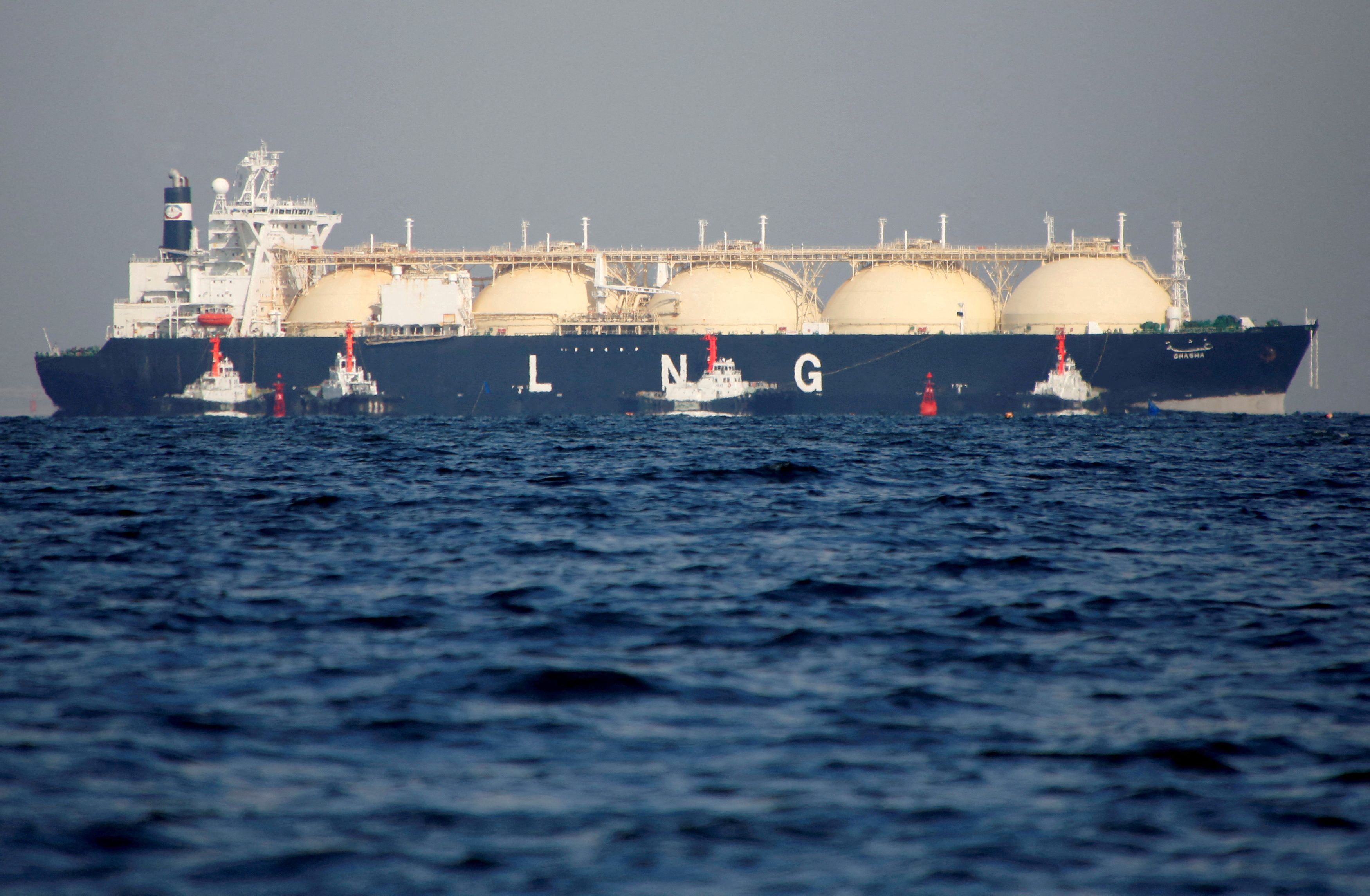
Export demand remains robust with flows to eight major U.S. LNG terminals averaging 17.8 bcfd in November, up from a record 16.7 bcfd in October [2]. European buyers continue seeking alternatives to Russian gas, driving sustained U.S. export demand [2]. Meanwhile, U.S. gas production in Lower-48 states reached 109 bcfd in November, setting a fresh record [2].
Despite natural gas strength, the broader energy sector underperformed on November 13, declining 2.15% [0]. Major natural gas infrastructure companies showed mixed performance: Cheniere Energy (LNG) at $213.30 (-0.12%), The Williams Companies (WMB) at $59.59 (-1.39%), and Excelerate Energy (EE) at $26.50 (-2.32%) [0].
The early cold snap has triggered immediate market response, with traders positioning for continued cold weather [1]. The EIA forecasts natural gas spot prices to average $3.90 per MMBtu this winter [1], suggesting potential for further upside if cold persists. This weather-driven demand surge demonstrates the market’s sensitivity to temperature changes and seasonal factors.
Despite appearing ample, current storage levels mask underlying market tightening. The combination of record LNG exports and potential severe winter weather could create supply tightness, particularly in regional markets [2][4]. The moderation in storage builds from 74 Bcf to 33 Bcf week-over-week [4] indicates accelerating inventory depletion as the heating season begins.
Record LNG export levels provide structural support to U.S. natural gas prices, creating a new baseline that’s less dependent on domestic weather patterns. The sustained European demand for non-Russian gas [2] suggests this export pressure will continue, potentially keeping prices elevated even during milder winter periods.
- Price Volatility: Natural gas prices are highly sensitive to weather patterns and can experience rapid fluctuations based on temperature changes [1]. The current 51.53% monthly gain [2] suggests elevated volatility risk.
- Supply-Demand Imbalance: While current storage appears adequate, the combination of record exports and potential severe winter weather could create supply tightness, particularly in regional markets [2][4].
- Storage Drawdown Risk: A prolonged cold spell could rapidly deplete current storage advantages, especially given the 6 Bcf deficit compared to year-ago levels [4].
Decision-makers should closely track weekly EIA Storage Reports for inventory changes and market balance [4], weather forecasts particularly for major population centers in the eastern U.S. [1], LNG export data for sustained demand indicators [2], and production metrics for supply-side developments [2].
Natural gas markets are experiencing significant price pressure driven by early winter weather and structural export demand. Current storage at 3,915 Bcf [4] provides a buffer but masks tightening fundamentals. Record production at 109 bcfd [2] is being offset by record LNG exports at 17.8 bcfd [2], creating a new market equilibrium. The EIA’s winter price forecast of $3.90 per MMBtu [1] may prove conservative if cold weather persists. Market participants should monitor the interaction between weather patterns, export flows, and storage withdrawal rates for indications of sustained price pressure.
Insights are generated using AI models and historical data for informational purposes only. They do not constitute investment advice or recommendations. Past performance is not indicative of future results.
About us: Ginlix AI is the AI Investment Copilot powered by real data, bridging advanced AI with professional financial databases to provide verifiable, truth-based answers. Please use the chat box below to ask any financial question.