
Wall Street Transitions to 24-Hour Trading: Asian Market Demand Drives Extended Hours Revolution
Unlock More Features
Login to access AI-powered analysis, deep research reports and more advanced features
About us: Ginlix AI is the AI Investment Copilot powered by real data, bridging advanced AI with professional financial databases to provide verifiable, truth-based answers. Please use the chat box below to ask any financial question.
Related Stocks
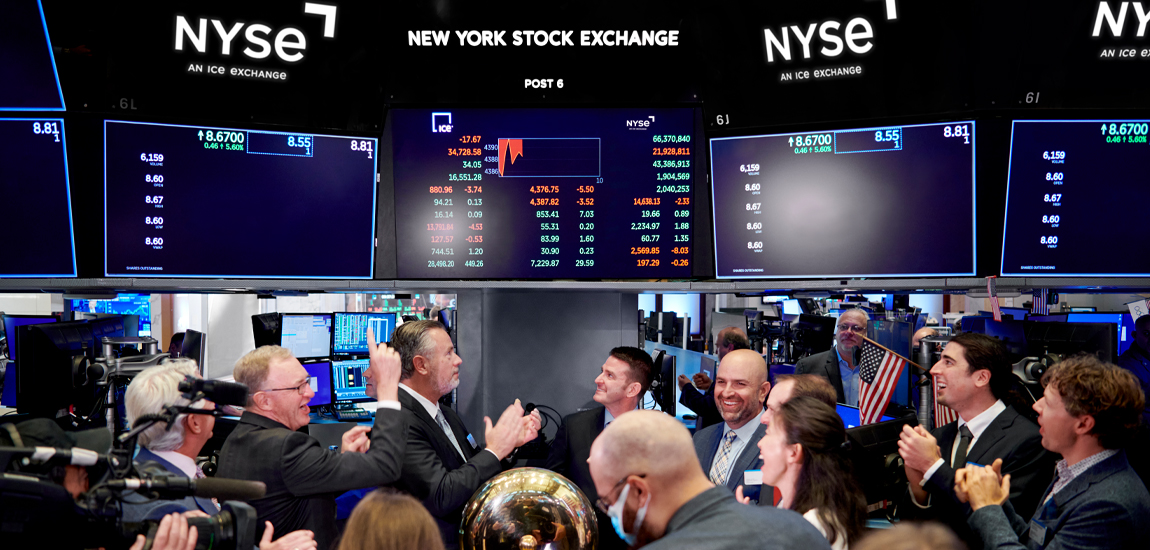
This analysis is based on the MarketWatch report [1] published on November 13, 2025, which reveals that Wall Street is rapidly transitioning toward “always on” overnight trading for U.S. equities. The movement is being driven by strong demand from Asian markets, where millions of investors already trade more than 2,100 U.S. securities during overnight hours (8 p.m. to 4 a.m. Eastern time) [1]. Three major U.S. exchanges - NYSE (ICE), Nasdaq (NDAQ), and Cboe Global Markets (CBOE) - are engaged in a competitive race to launch their own overnight sessions, with NYSE targeting 22-hour trading by late 2026 and Nasdaq planning 24-hour trading in H2 2026 [1].
The transition to extended trading hours represents a fundamental shift in U.S. market structure. NYSE received SEC approval in February 2025 and announced plans for 22-hour trading, while Nasdaq aims for full 24-hour coverage by H2 2026 [1]. This competitive race is driven by market data revenue considerations, as exchanges risk losing data business if competitors launch first [1]. On the news date, exchange stocks showed modest declines (ICE: -0.35%, Nasdaq: -0.73%, Cboe: -0.35%) [0], suggesting the market had largely priced in this transition.
The implementation requires significant infrastructure upgrades across the market ecosystem. Centralized Securities Information Processors (SIPs) must extend processing capabilities, while the National Securities Clearing Corp. plans to increase clearing hours by Q2 2026 [1]. The Depository Trust & Clearing Corp. requires regulatory approval for extended settlement services. ViewTrade, a key technology provider working with 300+ brokers across 30+ countries, enables Asian investor access through Blue Ocean ATS and Bruce ATS systems [1].
Retail brokerages are well-positioned to benefit from extended hours. Robinhood (HOOD), Charles Schwab (SCHW), and Interactive Brokers (IBKR) already offer nearly 24-hour trading on select U.S. stocks and ETFs [1]. However, on the news date, these stocks experienced significant declines (HOOD: -6.49%, IBKR: -4.35%, SCHW: -1.21%) [0], possibly reflecting broader market conditions rather than specific concerns about overnight trading prospects.
The shift toward 24-hour trading aligns U.S. markets with Asian trading schedules, potentially attracting more international capital and addressing the “insatiable global appetite” for U.S. stocks during overnight hours [1]. This represents a significant step toward true global market integration, where U.S. equities can be traded continuously across time zones.
Extended trading hours may serve as an “equalizer” for working-class investors with limited trading time during regular hours [1]. Retail traders cite competitive disadvantages versus institutional investors as a key driver for demanding more flexible trading access. This democratization trend could reshape market participation patterns and potentially increase overall market liquidity.
- System Stress: Exchange readiness for peak overnight demand remains untested at scale
- Liquidity Fragmentation: Multiple exchanges launching overnight sessions could split liquidity and widen spreads
- Clearing Settlement: NSCC’s ability to handle extended clearing operations smoothly is unproven
- Regulatory Oversight: SEC continues to review extended trading proposals for investor protection
- Revenue Growth: Extended hours create new trading volume and fee opportunities for exchanges and brokerages
- International Capital Flow: Asian time zone alignment could attract significant new investment flows
- Technology Leadership: First-mover advantages in capturing market data revenue and establishing technical standards
- Market Democratization: Expanded access could increase retail participation and market engagement
- Implementation Timelines: SEC approval dates and exchange launch announcements
- Volume Metrics: Overnight trading volumes and liquidity patterns
- System Performance: Technical glitches or outages during extended hours
- Competitive Responses: Exchange differentiation strategies for overnight offerings
- International Flows: Changes in Asian investor participation patterns
The transition to 24-hour U.S. equity trading represents a structural evolution driven by global market demand and technological capability. Major exchanges are investing heavily in infrastructure upgrades to support extended hours, with implementation targeted for 2026. While the opportunity for increased global capital flows and market democratization is significant, operational risks remain substantial given the complexity of extending clearing, settlement, and trading systems. The success of this transition will depend on robust technical implementation, regulatory oversight, and market participant adoption.
Insights are generated using AI models and historical data for informational purposes only. They do not constitute investment advice or recommendations. Past performance is not indicative of future results.
About us: Ginlix AI is the AI Investment Copilot powered by real data, bridging advanced AI with professional financial databases to provide verifiable, truth-based answers. Please use the chat box below to ask any financial question.