
Analysis: Magnificent Seven Tech Stocks' Market Dominance and Concentration Risks
Unlock More Features
Login to access AI-powered analysis, deep research reports and more advanced features
About us: Ginlix AI is the AI Investment Copilot powered by real data, bridging advanced AI with professional financial databases to provide verifiable, truth-based answers. Please use the chat box below to ask any financial question.
Related Stocks
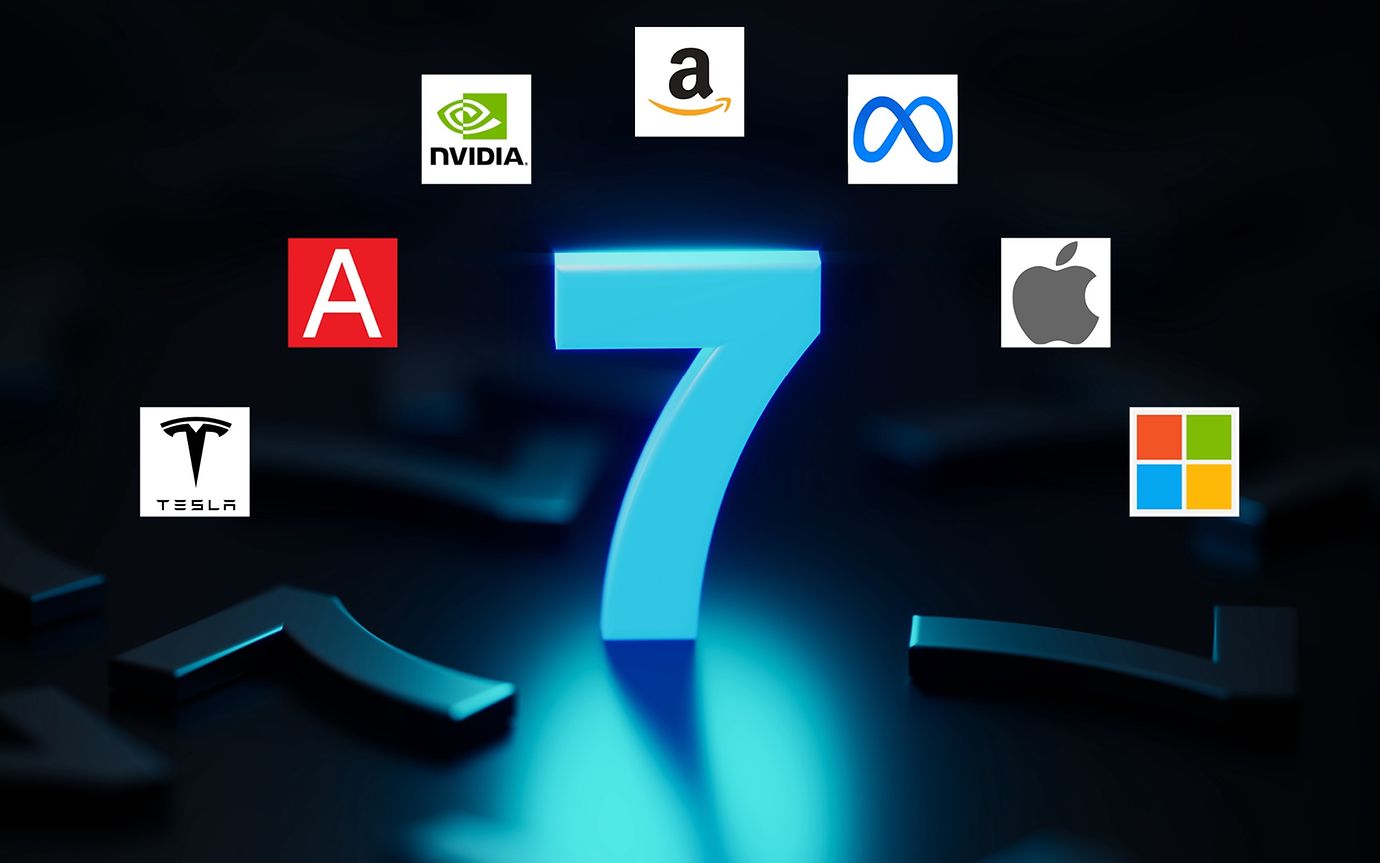
This analysis is based on the Seeking Alpha report [1] published on November 13, 2025, which examines the dramatic rise of the “Magnificent Seven” technology stocks within the S&P 500 index. The report reveals that these seven companies have increased their market concentration from 30% to approximately 36.6% of the S&P 500’s total valuation over the past two years, creating unprecedented market dominance while introducing significant concentration risks for investors [1][2].
The Magnificent Seven’s market dominance has accelerated dramatically, representing a nearly threefold increase from their 12.3% share in 2015 to the current 36.6% [2]. This concentration level significantly exceeds historical norms, as the top 10 S&P 500 stocks have typically averaged 24% concentration, with the previous peak being 28% in 1970 [3]. The current concentration represents an unprecedented deviation from historical market structure patterns.
The concentration has profoundly affected S&P 500 performance, with the index delivering cumulative gains of 68.4% since 2023, compared to only 34.2% for Invesco’s equally-weighted RSP ETF over the same period [3]. This performance differential demonstrates how market-cap weighting of the Magnificent Seven has roughly doubled returns for S&P 500 investors but at the cost of reduced diversification.
Current market data shows mixed performance within the group, with NVIDIA (+0.33%) and Microsoft (+0.48%) showing positive momentum, while Meta (-2.88%), Tesla (-2.05%), Amazon (-1.97%), and Alphabet (-1.58%) experienced declines [0]. This divergence suggests potential rotation within the technology sector and emerging differentiation among the previously correlated group.
Two-year performance data reveals significant variation:
- Apple (AAPL): +47.17% gain, rising from $185.82 to $273.47 [0]
- Microsoft (MSFT): +38.81% gain, rising from $368.22 to $511.14 [0]
The broader group achieved a staggering 697.6% combined return from 2015 to 2024, significantly outperforming the S&P 500’s 178.3% return over the same period [2]. However, this outperformance has been accompanied by increased volatility, with the Magnificent Seven stocks showing higher volatility than the broader market index and greater vulnerability to tech sector downturns [2].
The Technology sector is currently down 0.81%, while Communication Services is up 1.38%, indicating sector rotation within technology-related industries [0]. This suggests that while the overall technology theme remains dominant, investor preferences are shifting between subsectors.
The extreme concentration means that S&P 500 index funds have become increasingly concentrated in these seven stocks, potentially reducing the diversification benefits that investors typically expect from broad market index funds [3]. This structural change has significant implications for portfolio construction and risk management strategies.
The current 36.6% concentration level is historically unprecedented and likely unsustainable long-term. Historical analysis suggests that such high concentration levels typically lead to increased volatility and potential underperformance during market downturns [2][3]. The market has entered uncharted territory in terms of concentration dynamics, making historical comparisons less reliable for future predictions.
Many investors may be unknowingly exposed to extreme concentration risk through S&P 500 index funds, believing they are diversified when in reality they have significant exposure to just seven companies [3]. This creates a hidden risk factor that may not be apparent until market conditions deteriorate.
Several Magnificent Seven stocks show extended valuations, with Tesla trading at a P/E ratio of 226.63 and NVIDIA at 55.06 [0]. These valuation levels suggest that future returns may be constrained unless earnings growth can justify current price levels. The combination of high concentration and extended valuations creates a potentially volatile scenario for investors.
The current mixed performance within the Magnificent Seven suggests that the group may be losing its previous high correlation, with company-specific factors becoming more important drivers of individual stock performance [0]. This could signal the beginning of a more differentiated market environment where stock selection becomes increasingly important.
-
Concentration Risk: The 36.6% concentration creates significant vulnerability to poor performance by even a few of these stocks, which could disproportionately impact the entire S&P 500 [3].
-
Regulatory Scrutiny: The market dominance of these companies could attract increased regulatory attention, particularly regarding antitrust concerns and market competition issues.
-
Valuation Correction Risk: Extended valuations, particularly in Tesla (P/E: 226.63) and NVIDIA (P/E: 55.06), could be vulnerable to corrections if earnings growth disappoints [0].
-
Tech Sector Rotation: The current weakness in tech stocks (-0.81%) could signal the beginning of a broader sector rotation away from high-growth technology names [0].
-
Increased Volatility: The Magnificent Seven stocks are more volatile than the broader S&P 500 and are more heavily impacted by bear markets and tech sector downturns [2].
-
Equal-Weight Alternatives: Investors seeking diversification might consider equal-weight S&P 500 ETFs like RSP, which have underperformed during the Magnificent Seven’s dominance but may provide better risk-adjusted returns going forward [3].
-
Selective Opportunities: The emerging performance divergence within the group may create opportunities for stock selection based on company-specific fundamentals rather than broad technology exposure [0].
-
Sector Rotation: The rotation between Technology (-0.81%) and Communication Services (+1.38%) suggests opportunities for tactical sector allocation [0].
-
Earnings Performance: Upcoming earnings reports will be crucial in determining whether current valuations are justified across all seven companies.
-
Interest Rate Environment: Changes in interest rates could disproportionately affect high-growth tech stocks and impact relative valuations.
-
AI Investment Returns: The massive investments in artificial intelligence by these companies need to start showing meaningful returns to justify current valuations.
-
Market Breadth: Monitor whether market leadership begins to broaden beyond the Magnificent Seven, which could signal a healthier, more sustainable market environment.
The Magnificent Seven’s market dominance has reached unprecedented levels, with these seven technology companies now controlling 36.6% of the S&P 500’s total market capitalization, up from 30% two years ago and 12.3% in 2015 [1][2]. This concentration has delivered superior returns, with the S&P 500 gaining 68.4% since 2023 compared to 34.2% for equal-weight alternatives [3].
However, this dominance comes with significant risks. The concentration level far exceeds historical norms and creates substantial diversification risk for investors, particularly those using market-cap weighted index funds [3]. Several stocks show extended valuations, and the group’s higher volatility makes them more vulnerable during market downturns [2].
The current mixed performance within the group suggests emerging differentiation and potential rotation opportunities [0]. Investors should carefully consider their exposure to these seven stocks and may want to explore equal-weight alternatives or more diversified approaches to mitigate concentration risk.
Historical patterns suggest that such extreme concentration levels are not sustainable long-term and typically lead to increased volatility and potential underperformance during market corrections [2][3]. The combination of high concentration, extended valuations, and emerging performance divergence warrants careful monitoring and risk assessment by market participants.
Insights are generated using AI models and historical data for informational purposes only. They do not constitute investment advice or recommendations. Past performance is not indicative of future results.
About us: Ginlix AI is the AI Investment Copilot powered by real data, bridging advanced AI with professional financial databases to provide verifiable, truth-based answers. Please use the chat box below to ask any financial question.