
Fed Governor Waller Advocates Deregulation and Rate Cuts Amid Policy Divide
Unlock More Features
Login to access AI-powered analysis, deep research reports and more advanced features
About us: Ginlix AI is the AI Investment Copilot powered by real data, bridging advanced AI with professional financial databases to provide verifiable, truth-based answers. Please use the chat box below to ask any financial question.
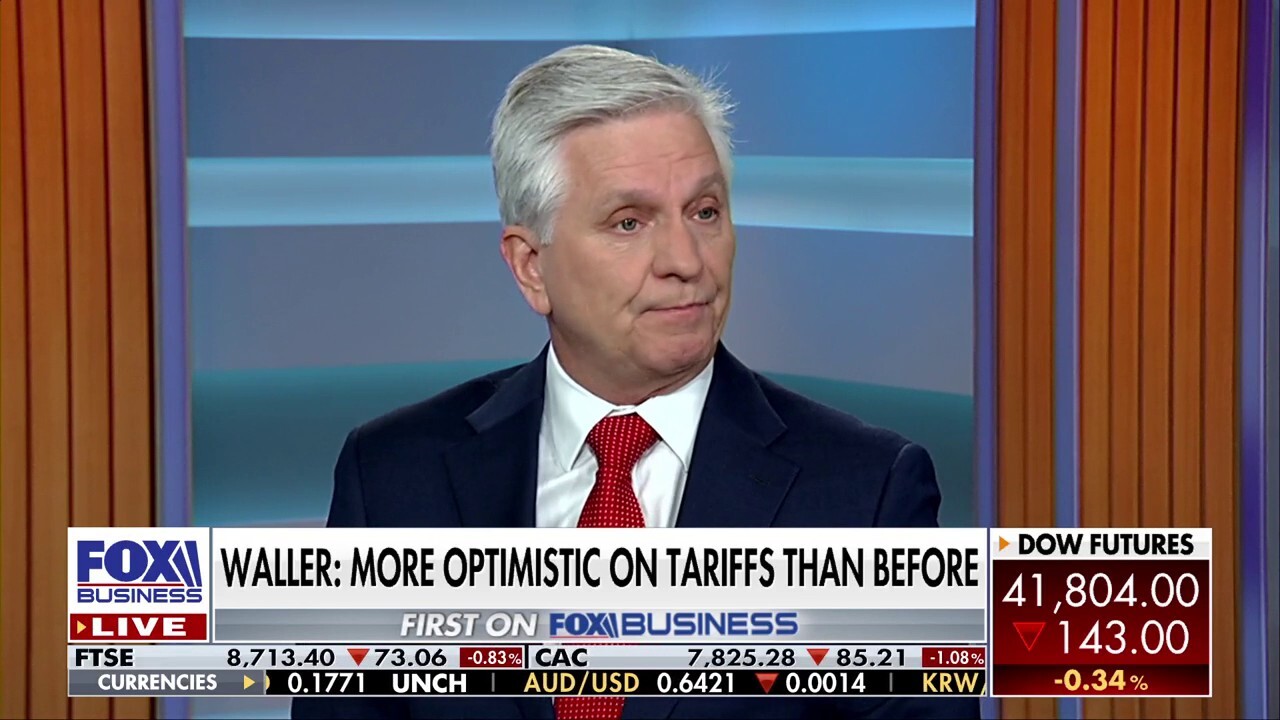
This analysis is based on the Fox Business interview with Federal Reserve Governor Christopher Waller [1] published on October 31, 2025, where he discussed monetary policy and deregulation as a potential Fed Chair candidate.
Federal Reserve Governor Christopher Waller’s appearance on Fox Business’s “Kudlow” program revealed a significant public disagreement within the Federal Reserve regarding monetary policy direction [1][2]. Waller strongly criticized Fed Chair Jerome Powell’s “driving in the fog” analogy regarding economic uncertainty, dismissing concerns about data limitations from the ongoing government shutdown and arguing “We actually have a lot of data, just because the official government data hasn’t come out” [1][2]. This stance directly contradicts Powell’s more cautious approach, with Powell suggesting another December rate cut is “far from a foregone conclusion” [3].
The market reaction on October 31, 2025, reflected this policy uncertainty. Treasury yields rebounded to 4.10% after falling below 4.00% earlier in the week, while equity markets showed mixed performance [0][3]. The S&P 500 declined 0.50% to 6,840.19, the NASDAQ Composite fell 0.91% to 23,724.96, and the Dow Jones dropped 0.10% to 47,562.88 [0].
The market response revealed clear sector preferences aligned with Waller’s deregulation advocacy. Energy stocks led with a 2.81% gain, financial services rose 1.38%, and real estate increased 1.77% [0]. Conversely, technology underperformed significantly with a 1.74% decline, and utilities fell 1.997% [0]. This pattern suggests investors were positioning for potential deregulation benefits in traditionally regulated sectors while being cautious about growth-oriented areas.
Waller’s comments carry additional significance given his status as one of five finalists to replace Powell when his term expires in May 2026 [1]. The selection process is being led by Treasury Secretary Scott Bessent, with Waller having previously interviewed with the administration [1]. This political timing suggests his public policy advocacy may be aimed at positioning himself for the Fed Chair role.
Other Fed officials expressed caution similar to Powell’s stance. Kansas City Fed President Jeffrey Schmid voted against the recent quarter-point rate cut, while Dallas Fed President Lorie Logan stated she would have voted against it and would “find it difficult” to support another December cut without clearer evidence [3].
The ongoing four-week government shutdown has created significant data gaps, with the Chicago PMI (43.8 vs. 42.0 estimate) being one of the few recent economic indicators available [3]. Waller’s dismissal of these data limitations highlights a fundamental disagreement about how much uncertainty should influence policy decisions.
Waller identified the labor market as his “biggest concern” [1], though specific data points weren’t detailed in available coverage. This focus suggests potential employment weakness that could justify continued accommodative policy despite inflation concerns.
The sector performance pattern indicates markets are already pricing in potential deregulation benefits under new Fed leadership. Energy and financial services, traditionally heavily regulated sectors, outperformed significantly, suggesting investor expectations of reduced regulatory burden.
The public disagreement between Fed officials creates heightened market volatility potential, particularly around the December FOMC meeting. The divergence between Waller’s aggressive rate-cut stance and other officials’ caution could lead to unexpected policy outcomes.
With government data delayed by the shutdown, markets are operating with incomplete information. This creates risk for both policymakers and investors who must make decisions without comprehensive economic data.
- December Fed Meeting: Watch for voting patterns and any changes in policy stance among Fed officials
- Government Shutdown Resolution: Data flow restoration will provide clearer economic signals
- Labor Market Indicators: Waller’s emphasis on labor market weakness warrants close monitoring
- Treasury Yield Movements: The 10-year yield at 4.10% represents a key level for mortgage rates and broader economic activity
The combination of Fed policy disagreement and ongoing data limitations creates significant uncertainty that may impact market volatility through the remainder of 2025. Waller’s public advocacy for continued rate cuts and deregulation benefits, coupled with his status as a Fed Chair candidate, suggests potential policy shifts if he assumes leadership. However, the strong opposition from other Fed officials indicates continued policy uncertainty.
The sector performance pattern suggests markets are positioning for potential deregulation benefits while maintaining defensive postures in uncertain policy environment. Investors should monitor the December FOMC meeting closely, as the outcome could signal whether Waller’s more accommodative stance or Powell’s cautious approach will prevail in shaping Fed policy going forward.
Insights are generated using AI models and historical data for informational purposes only. They do not constitute investment advice or recommendations. Past performance is not indicative of future results.
About us: Ginlix AI is the AI Investment Copilot powered by real data, bridging advanced AI with professional financial databases to provide verifiable, truth-based answers. Please use the chat box below to ask any financial question.