
Market Divergence Analysis: Tech Momentum vs Semiconductor Pressure Amid AI Competition
Unlock More Features
Login to access AI-powered analysis, deep research reports and more advanced features
About us: Ginlix AI is the AI Investment Copilot powered by real data, bridging advanced AI with professional financial databases to provide verifiable, truth-based answers. Please use the chat box below to ask any financial question.
Related Stocks
This analysis is based on the Reddit discussion [1] from October 28, 2025, highlighting divergent market movements across technology sectors and emerging short-term trading opportunities.
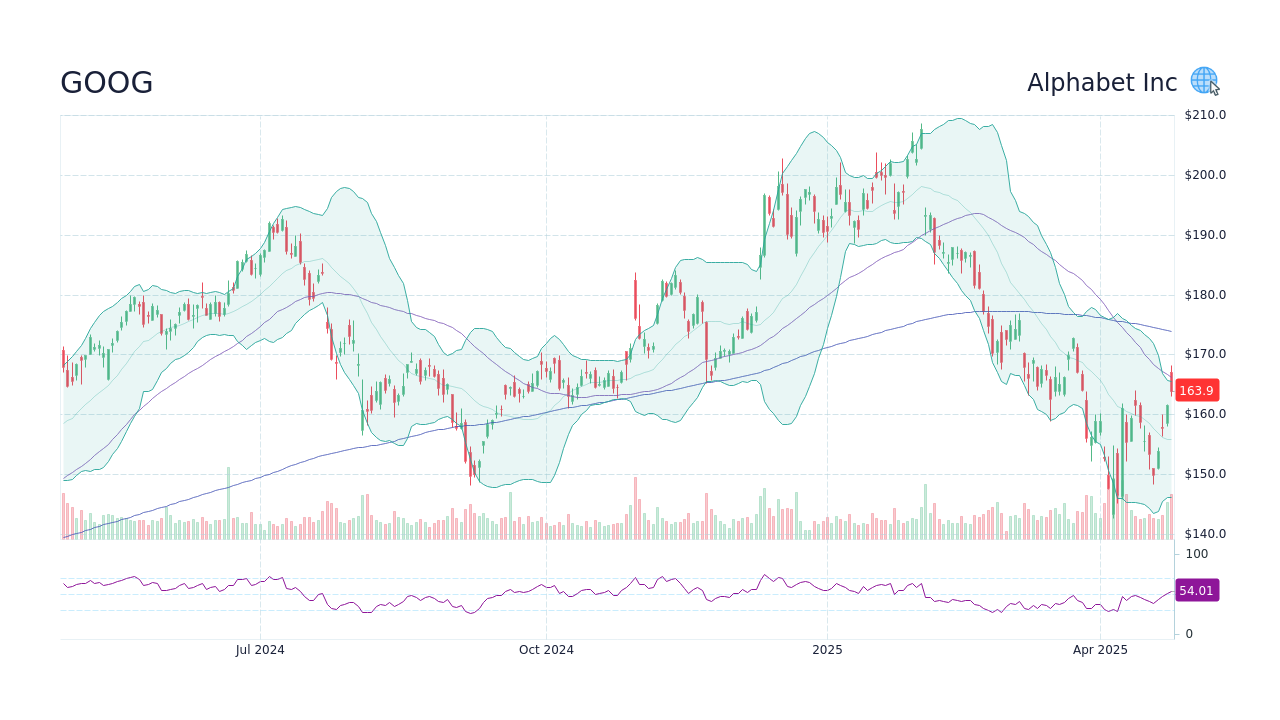
The market presents a complex picture of sector divergence driven by competitive dynamics in the AI technology space. GOOG and SHOP have demonstrated remarkable strength, with GOOG trading at $281.82 and SHOP at $173.86, both approaching their 52-week highs of $291.93 and $182.19 respectively [0]. This momentum contrasts sharply with semiconductor weakness, where AMD and MU face downward pressure from competitive announcements [0].
Qualcomm’s strategic entry into the AI accelerator chip market represents a significant disruption, with the company unveiling AI200 and AI250 chips targeting the projected $933 billion AI data center market by 2030 [2]. This announcement caused Qualcomm shares to surge over 20% on October 27, signaling strong market approval of this competitive pivot [2]. The move directly challenges established players and has created immediate pressure on semiconductor stocks.
Simultaneously, Samsung’s aggressive 30% price cut on HBM3E memory chips, reducing costs from $300 to $200 per unit, has intensified competition in the high-margin AI memory segment [3]. This pricing strategy aims to challenge Hynix’s dominant 60-70% market share position, with Samsung currently holding 20-30% and Micron maintaining 15-20% [3]. The timing is particularly critical as all three major memory manufacturers compete for HBM4 certification for Nvidia’s Rubin accelerator expected in Q4 2026 [3].
The options market reveals additional complexity with SNAP showing unusual put activity. Put open interest stands at 562,252 contracts, above the 52-week average of 458,166, while the put/call ratio decreased by 13.3% to 0.3 over the last 5 days [4]. This suggests shifting institutional sentiment despite the stock trading near 52-week lows at $7.80 [0].
- Tariff uncertainty could accelerate sector rotation away from consumer discretionary and technology stocks [5]
- Samsung’s HBM price cuts may trigger broader memory market pricing pressure, impacting margins across the semiconductor sector [3]
- Qualcomm’s AI chip entry could disrupt established competitive dynamics, potentially creating longer-term margin pressure for traditional semiconductor players [2]
- GOOG and SHOP present momentum continuation setups with both stocks within 5% of 52-week highs and showing consistent volume support [0]
- Semiconductor stocks AMD and MU may offer mean reversion opportunities if oversold conditions persist, particularly given the sector’s long-term AI growth narrative
- SNAP’s elevated options activity creates potential for volatility-based strategies, though careful risk management is essential given the near 52-week lows [4]
The market environment on October 28, 2025, reflects significant divergence driven by AI competitive dynamics and macroeconomic uncertainty. GOOG ($281.82) and SHOP ($173.86) demonstrate strong momentum approaching 52-week highs, while semiconductor stocks face pressure from Qualcomm’s AI chip announcement and Samsung’s aggressive HBM pricing [0][2][3]. The S&P 500 closed at 6,890.88 (-0.10%), NASDAQ at 23,827.49 (+0.26%), and Dow at 47,706.38 (-0.10%) [0].
Qualcomm’s strategic pivot targeting the $236 billion AI data center market represents a fundamental competitive shift, while Samsung’s 30% HBM price cut signals intensifying competition for market share in high-margin AI memory [2][3]. Options market activity in SNAP suggests institutional positioning for potential volatility, reflecting broader uncertainty about tariff impacts and sector rotation [4][5].
The analysis reveals a market increasingly differentiated by AI value chain positioning, with companies demonstrating clear AI monetization strategies outperforming those exposed to hardware commoditization pressures. This trend suggests continued sector-specific opportunities rather than broad market movements in the near term.
Insights are generated using AI models and historical data for informational purposes only. They do not constitute investment advice or recommendations. Past performance is not indicative of future results.
About us: Ginlix AI is the AI Investment Copilot powered by real data, bridging advanced AI with professional financial databases to provide verifiable, truth-based answers. Please use the chat box below to ask any financial question.