
DOJ Investigation into Fed Chair Jerome Powell: Governance Crisis and May 2026 Term Transition
Unlock More Features
Login to access AI-powered analysis, deep research reports and more advanced features
About us: Ginlix AI is the AI Investment Copilot powered by real data, bridging advanced AI with professional financial databases to provide verifiable, truth-based answers. Please use the chat box below to ask any financial question.
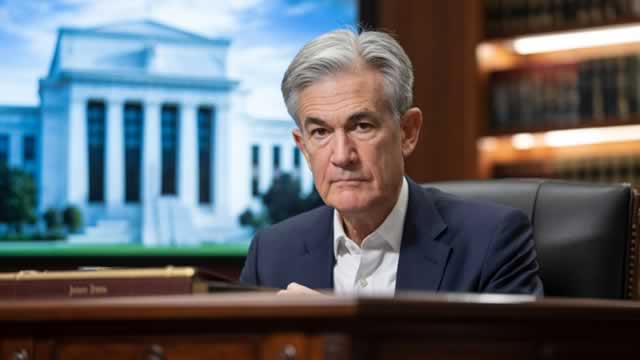
The DOJ investigation into Federal Reserve Chair Jerome Powell represents a significant escalation in tensions between the central bank and the Trump administration, creating unprecedented uncertainty around the future governance of U.S. monetary policy. The investigation, which began in late 2025 and became publicly disclosed on January 12, 2026, centers on Powell’s congressional testimony concerning the Fed’s $2.5 billion headquarters renovation project and allegations of false statements made during that testimony [1][2]. U.S. Attorney Jeanine Pirro is leading the probe from the U.S. Attorney’s Office for the District of Columbia, with the FBI Washington field office also involved in the investigation [3].
Powell has publicly characterized the investigation as “a threat to the Fed’s governance structure” and a form of political intimidation designed to undermine the central bank’s independence [1]. This characterization aligns with broader concerns about the separation of monetary policy decisions from political influence. The timing of the investigation is particularly significant given that Powell’s chair term expires on May 15, 2026, and the Trump administration has been openly critical of Powell’s handling of interest rates, with the President previously calling Powell a “jerk” who “will be gone soon” [1].
The structural complexity of the Federal Reserve system adds another layer of significance to this investigation. Powell holds two distinct positions: he serves as Fed chair with a term expiring May 15, 2026, and simultaneously serves as one of seven members of the Fed’s governing board with a term extending until January 31, 2028 [1]. Historically, nearly all Fed chairs have resigned from the board when their chair term ended, with the last exception being Marriner Eccles, who remained on the board for three years after his chair term concluded in 1948 [1]. This historical precedent makes the current situation exceptional and raises important questions about potential governance arrangements should Powell choose to remain as a governor.
The investigation reveals several critical insights about the current state of U.S. institutional governance and the challenges facing independent central banks. First, the criminalization of Federal Reserve communications represents an unprecedented development that could fundamentally alter the relationship between the central bank and the executive branch. A bipartisan group of economists and former Fed officials have explicitly condemned the probe as “an unprecedented attempt to use prosecutorial attacks to undermine that independence” [2], highlighting the systemic implications of this investigation.
Second, the political dynamics surrounding Fed nominations create significant uncertainty about the institution’s future composition. At least two Republican senators, including Senator Thom Tillis, have stated they will not vote for Fed nominees until the legal cloud over Powell is resolved [1]. This confirmation delay could have profound implications, as Trump may have the opportunity to appoint 4-5 board members if Powell departs entirely, potentially gaining majority control of the governing board and fundamentally altering the Fed’s policy direction [1]. The interplay between the investigation and the confirmation process creates a complex political dynamic that extends well beyond the immediate legal concerns.
Third, the investigation’s scope and timeline remain unclear, creating uncertainty for market participants and policymakers alike. While U.S. Attorney Pirro suggested there was “no immediate threat of criminal indictment” [4], Powell has indicated that prosecutors threatened charges, creating a discrepancy in public communications that adds to the uncertainty. This ambiguity makes it difficult for financial markets to price in the potential outcomes, contributing to market volatility when news of the investigation breaks.
Fourth, the bipartisan nature of the criticism surrounding this investigation is noteworthy. While the investigation was initiated under a Republican administration, concerns about its implications for Fed independence have attracted support from lawmakers across the political spectrum. This bipartisan concern suggests that the investigation may have longer-term implications for how future administrations interact with independent regulatory agencies.
The investigation presents both significant risks and potential opportunities for various stakeholders in the financial system. From a risk perspective, the primary concerns center on policy continuity and institutional independence. If the investigation undermines Powell’s effectiveness as Fed chair or forces his departure before the scheduled transition, the resulting uncertainty could affect the trajectory of monetary policy decisions. Financial markets have already shown sensitivity to these developments, with stocks declining following the announcement of the criminal probe [2].
The governance risk extends beyond the immediate investigation to potential precedents being established for future interactions between the executive branch and independent agencies. If the investigation succeeds in its apparent goal of pressuring Powell to resign or alter his policy positions, it could weaken the independence of other regulatory bodies and central banks globally. This systemic risk is particularly concerning given the importance of Fed independence for global financial stability.
From an opportunity perspective, the investigation has prompted important conversations about institutional safeguards and the need for stronger protections for independent regulatory bodies. This could lead to legislative or administrative reforms that strengthen the governance framework for the Federal Reserve and similar institutions. Additionally, the bipartisan criticism of the investigation may create opportunities for building consensus around measures to protect central bank independence.
The potential for Powell to remain as a governor after his chair term ends, while historically unusual, could provide continuity during a period of significant uncertainty. This arrangement would preserve institutional knowledge and experience at the board level while allowing for new leadership in the chair position. However, such an arrangement would also be unprecedented in modern times and could create its own set of governance challenges.
The DOJ investigation into Fed Chair Jerome Powell centers on his June 2025 congressional testimony regarding the Fed’s $2.5 billion headquarters renovation. Key timeline dates include the investigation’s beginning in late 2025, public disclosure on January 12, 2026, and Powell’s chair term expiration on May 15, 2026, with his governor term extending to January 31, 2028. Subpoenas have been issued to the Federal Reserve, and Powell characterizes the investigation as political intimidation targeting central bank independence. Market reaction has included stock declines, while bipartisan criticism from economists and former officials has condemned the probe as an unprecedented threat to institutional independence. Congressional hearings, Senate Banking Committee actions on Fed nominations, and developments in the investigation itself represent key monitoring priorities for stakeholders in the coming weeks and months.
Insights are generated using AI models and historical data for informational purposes only. They do not constitute investment advice or recommendations. Past performance is not indicative of future results.
About us: Ginlix AI is the AI Investment Copilot powered by real data, bridging advanced AI with professional financial databases to provide verifiable, truth-based answers. Please use the chat box below to ask any financial question.