
Federal Reserve Policy Division: Schmid's Inflation Concerns Signal Potential Shift in Rate Trajectory
Unlock More Features
Login to access AI-powered analysis, deep research reports and more advanced features
About us: Ginlix AI is the AI Investment Copilot powered by real data, bridging advanced AI with professional financial databases to provide verifiable, truth-based answers. Please use the chat box below to ask any financial question.
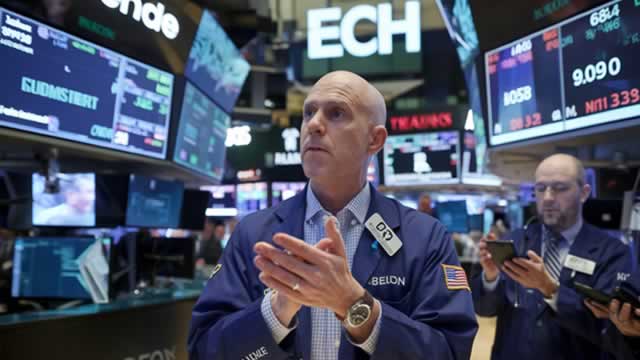
This analysis examines the January 15, 2026 statements by Jeffrey Schmid, President of the Federal Reserve Bank of Kansas City, who publicly advocated for maintaining interest rates unchanged amid persistent inflationary pressures. Schmid’s remarks, published in the Wall Street Journal [1], reprised his dissent from the December 2025 Federal Open Market Committee meeting where he joined only two other officials in opposing the quarter-point rate reduction. His emphasis on inflation remaining above the Fed’s 2% target for more than four years underscores growing institutional concern about the sustainability of the current disinflation trajectory and raises questions about the policy path forward in 2026. Market indices demonstrated modest intraday volatility in response to these developments [0], reflecting investor sensitivity to signals from Federal Reserve officials regarding the trajectory of monetary policy.
The Federal Reserve’s December 2025 meeting produced a notably divided outcome, with the FOMC voting 9-3 to approve a 25-basis-point rate cut that brought the federal funds rate to the 3.5%-3.75% range [2][3]. This three-way dissent represents the most fractured FOMC vote since September 2019 and signals meaningful divergence in how individual policymakers assess the economic landscape. The dissent breakdown revealed an unusual configuration: President Schmid and Chicago Fed President Austan Goolsbee both preferred maintaining rates unchanged, while Governor Christopher Waller advocated for a more aggressive 50-basis-point reduction [1][2]. This configuration suggests that the committee’s deliberations involved genuine disagreement about both the appropriate direction and magnitude of policy adjustment, rather than simply differing views on timing.
The dot plot released following the December meeting projects only one additional rate cut in 2026, reflecting a more cautious stance than markets had anticipated [1][3]. However, this projection itself reveals internal disagreement, with seven FOMC participants forecasting no cuts and eight anticipating two or more cuts over the course of the year [2]. This split projection indicates substantial uncertainty about the economic outlook and highlights the challenge facing policymakers as they attempt to calibrate policy in an environment characterized by persistent inflation and evolving labor market conditions.
President Schmid’s position rests on a straightforward but consequential premise: with inflation having exceeded the Federal Reserve’s 2% target for more than four years, policymakers lack the luxury of complacency regarding price stability [1]. This framing suggests that Schmid views the current inflation environment not as a temporary phenomenon requiring patience, but as a structural concern demanding sustained vigilance. His continued dissent across two consecutive meetings indicates that this position reflects deeply held convictions about appropriate policy rather than tactical objections to specific decisions.
The Kansas City Fed President’s emphasis on the temporal dimension of elevated inflation carries particular weight given his regional perspective. The Kansas City Federal Reserve District encompasses a diverse economic landscape including energy production, agriculture, and technology sectors, providing Schmid with exposure to varied inflationary dynamics across different industries and geographic regions. His repeated objections to rate cuts suggest that regional economic conditions may be informing a more hawkish assessment of inflation persistence than prevails among his colleagues.
The unusual configuration of dissenters in December—two favoring no change and one favoring a larger cut—reveals a committee navigating complex trade-offs without clear consensus [2][3]. This dynamic differs from typical FOMC divisions where dissenters generally object to the direction of policy rather than advocating for alternative magnitudes of adjustment. The presence of both “hold” and “cut-more” dissenters suggests that the committee’s deliberative process is genuinely grappling with genuine uncertainty rather than simply managing inevitable minor disagreements.
The implications for upcoming meetings are significant. With the January 28-29 FOMC meeting approaching, Schmid’s public statements serve as a clear signal of the resistance that any further rate reductions may encounter [3]. If additional officials align with his assessment that the December cut may have been premature, the committee could shift toward a more accommodative stance that emphasizes patience and data dependence. Conversely, if the majority view prevails that the current trajectory remains appropriate, continued dissent may erode confidence in committee cohesion.
The fundamental debate underlying Schmid’s position concerns whether current inflation represents residual effects of pandemic-era disruptions or reflects more persistent structural pressures. The four-year duration of elevated inflation has progressively eroded the credibility of “transitory” narratives that dominated early in the price acceleration cycle. Schmid’s explicit reference to this extended period above target suggests he has concluded that structural factors—including deglobalization trends, demographic shifts in labor markets, and evolving consumption patterns—may be sustaining inflationary pressure in ways that require policy response rather than patience.
This assessment carries implications beyond immediate rate decisions. If Federal Reserve officials increasingly adopt Schmid’s framing, the committee may revise longer-run policy rate expectations upward, recognizing that the neutral rate of interest may have risen relative to pre-pandemic estimates. Such a revision would have far-reaching implications for financial market pricing, mortgage rate expectations, and corporate borrowing decisions throughout the economy.
Current market indicators reflect the uncertainty generated by FOMC divisions. The 13-week Treasury bill index stood at 3.56% as of the analysis period [0], pricing in expectations that incorporate both the December cut and anticipated future adjustments. This level suggests markets remain uncertain about the trajectory of policy and are maintaining flexibility to adjust expectations as new information arrives.
The modest volatility observed in equity indices following Schmid’s statements [0] indicates that markets are actively processing the implications of his comments without yet reaching definitive conclusions. This measured response reflects the reality that Schmid’s position, while significant, represents one voice among many on a committee that ultimately makes decisions through collective deliberation. However, repeated expressions of similar concerns by additional officials could catalyze more substantial market repositioning.
The current configuration of FOMC opinion suggests three potential scenarios for the policy path forward. First, the committee may maintain the current trajectory of gradual rate reduction, proceeding with additional cuts as inflation data permits while managing dissent through deliberative process. Second, the committee may pause to assess the impact of the December cut, adopting a “wait-and-see” approach that acknowledges uncertainty about economic transmission [3]. Third, if incoming data disappoints or additional officials align with Schmid’s assessment, the committee may reconsider the appropriateness of the December adjustment, potentially reversing course or extending the pause before any further cuts.
The analysis reveals several risk factors warranting attention from market participants and economic observers. Policy path uncertainty has increased following Schmid’s statements, as his characterization of the December cut as potentially premature introduces doubt about the 2026 trajectory [3]. This uncertainty may manifest as increased volatility around FOMC communications and heightened sensitivity to incoming economic data.
FOMC cohesion represents an ongoing concern, with the three-dissent outcome in December marking the most divided vote in over six years [2]. Such divisions can complicate the Federal Reserve’s communication efforts and potentially undermine market confidence in policy effectiveness. When committee members publicly disagree about appropriate policy, markets must process not only the decision itself but also the implications of ongoing internal conflict.
The inflation persistence theme highlighted by Schmid remains a significant risk factor, particularly given the historical difficulty of returning inflation to target once it has become established at elevated levels [1]. If price pressures prove more durable than anticipated, the Federal Reserve may face renewed pressure to maintain restrictive policy longer than currently projected, with implications for economic growth and asset valuations.
The current policy uncertainty creates opportunities for investors prepared to position defensively while maintaining flexibility. Duration exposure management becomes increasingly important as rate expectations shift, with the potential for both upward and downward revisions to policy paths creating asymmetric return possibilities.
The January FOMC meeting represents a key inflection point where committee dynamics will become clearer. Observers with strong convictions about the appropriate policy path may find attractive entry points if market pricing diverges from their assessment of likely outcomes. However, the substantial uncertainty surrounding committee deliberations counsel against concentrated positions in rate-sensitive assets.
The January 15, 2026 Wall Street Journal interview with Federal Reserve Bank of Kansas City President Jeffrey Schmid provides important insight into the internal deliberations shaping monetary policy [1]. Schmid’s assertion that inflation having remained above 2% for more than four years eliminates room for complacency represents a significant counterpoint to the majority view that supported the December 2025 quarter-point rate reduction. His continued dissent across consecutive meetings signals a deeply held conviction that warrants serious consideration from market participants and economic analysts.
The December 2025 FOMC vote of 9-3 for a 25-basis-point cut to the 3.5%-3.75% range revealed unusual divisions, with two officials preferring no change and one advocating for a larger reduction [2][3]. The dot plot projecting only one additional cut in 2026 itself reflects deep committee disagreement, with seven officials forecasting no cuts and eight anticipating two or more. These dynamics establish the context for assessing Schmid’s statements and their implications for the January meeting and beyond.
Market indicators showed modest volatility in response to these developments [0], reflecting ongoing processing of policy uncertainty rather than definitive reassessment of expectations. The 13-week Treasury bill yield at 3.56% represents the market’s current best estimate of policy合理ization, subject to revision as new information arrives.
Upcoming catalysts include the January 28-29 FOMC meeting, December PCE inflation data, and additional remarks from Federal Reserve officials including Presidents Goolsbee and Waller. Trump administration policy developments may also influence the inflation outlook and Fed’s policy calculus [3]. Market participants should monitor these inputs for signals about the sustainability of the disinflation trend and the appropriate trajectory for monetary policy.
Insights are generated using AI models and historical data for informational purposes only. They do not constitute investment advice or recommendations. Past performance is not indicative of future results.
About us: Ginlix AI is the AI Investment Copilot powered by real data, bridging advanced AI with professional financial databases to provide verifiable, truth-based answers. Please use the chat box below to ask any financial question.