
Analysis of the Impact of China's Antitrust Investigation on Trip.com's Long-Term Business Development and Competitive Landscape
Unlock More Features
Login to access AI-powered analysis, deep research reports and more advanced features
About us: Ginlix AI is the AI Investment Copilot powered by real data, bridging advanced AI with professional financial databases to provide verifiable, truth-based answers. Please use the chat box below to ask any financial question.
Related Stocks
I will now write a systematic and comprehensive analysis report based on the collected data.
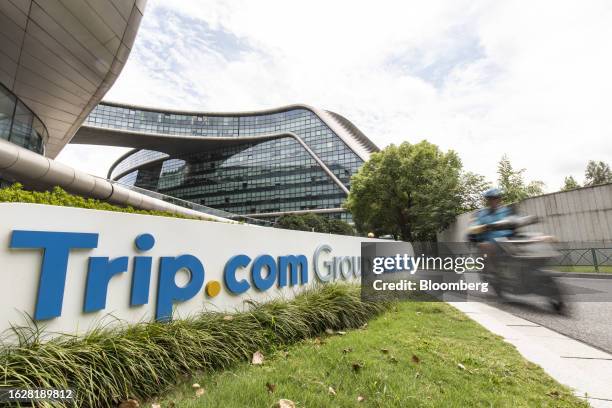
On January 14, 2026, China’s State Administration for Market Regulation (SAMR) officially launched an antitrust investigation against Trip.com Group Limited (Stock codes: NASDAQ:TCOM/Hong Kong: 09961). According to the investigation notice, the regulatory authority determined that Trip.com is suspected of abusing market dominance to engage in monopolistic conduct, marking another major antitrust case in China’s platform economy sector [1][2]. Trip.com immediately issued a statement, stating that it will “actively cooperate with the regulatory authority’s investigation and fully implement regulatory requirements,” while emphasizing that all business operations of the company remain normal [3].
The timing of this investigation is noteworthy—coming on the eve of the Spring Festival travel peak, when tourism demand is booming, the regulator’s decision to act at this time demonstrates its firm determination to regulate competition in the platform economy. It is reported that prior to this, Trip.com had faced reports from merchants in multiple regions and interviews with regulatory authorities, including a joint report from hotel operators in Zhengzhou and a collective interview by the Guizhou Provincial Market Regulation Bureau regarding issues such as “forced exclusivity” (er xuan yi), order cancellation with price hikes, etc. [4].
After the investigation news was announced, Trip.com’s stock price was hit by a sell-off. In the U.S. stock market, TCOM plummeted
From a technical analysis perspective, the stock price has broken below the support levels of the 50-day and 200-day moving averages, entering a short-term downward channel. Market sentiment indicators show that panic is spreading, and the implied volatility in the options market has risen sharply, reflecting investors’ growing concerns about uncertainties in subsequent developments.
Trip.com holds an absolute dominant position in China’s online travel (OTA) market. According to a 2024 research report by BOCOM International, Trip.com’s
The core competitive advantages of the Trip.com ecosystem are reflected in the following dimensions:
| Competitive Advantage | Specific Performance |
|---|---|
Traffic Entrance Positioning |
Through the acquisition of Qunar (bringing in Baidu’s shareholding) and stake in Tongcheng (integrating with Tencent’s ecosystem), it has achieved strategic layout of the two major traffic entrances of Baidu and Tencent |
In-Depth Supply Chain Integration |
Holds 12.26% of BTG Hotels and 6.87% of Huazhu Group, deeply binding upstream hotel resources |
International Layout |
Acquired Skyscanner, secured a board seat at Tripadvisor, and holds a 47.53% stake in MakeMyTrip |
Multi-Brand Matrix |
Operates differentiated brands such as Ctrip, Qunar, Trip.com, Skyscanner, covering different user groups |
From the perspective of segmented markets, the Trip.com ecosystem has a share of over 54% in the
Despite facing regulatory pressure, Trip.com’s financial fundamentals remain solid:
- Revenue Scale: In the first three quarters of 2025, revenue reached RMB 47.011 billion, with Q3 revenue alone reaching approximately RMB 18.4 billion, a year-on-year increase of 16%
- Profitability: Net profit attributable to parent shareholders in the first three quarters reached as high as RMB 29.013 billion, with Q3 net profit at RMB 19.9 billion, a year-on-year surge of 192.6%
- Profit Margin: Q3 profit margin reached as high as 33.88%, far exceeding the industry average, with adjusted EBITDA of RMB 6.3 billion
- Cash Flow: As of September 30, 2025, liquid assets such as cash and cash equivalents, short-term investments reachedRMB 107.7 billion
- Gross Profit Margin: The comprehensive gross profit margin is as high as 81.7%, higher than consumer brands such as Louis Vuitton and Pop Mart
Notably, in the first three quarters of 2025, Trip.com’s non-recurring profit and loss net profit reached RMB 17 billion, equivalent to
According to the Anti-Monopoly Law of the People’s Republic of China, the penalty standards for abusing market dominance are:
- Fine:1% to 10%of the previous year’s sales revenue
- Confiscation of illegal gains
Referring to historical cases:
- Alibaba (2021): FinedRMB 18.228 billionfor “forced exclusivity” behavior, accounting for 4% of its 2019 domestic sales revenue (RMB 455.712 billion) [8][9]
- Meituan (2021): FinedRMB 3.442 billionfor similar behavior, and required to fully refund exclusive cooperation deposits of RMB 1.289 billion [8]
For Trip.com, its domestic business revenue in fiscal year 2024 is substantial; if calculated based on the median fine ratio of 4%, the fine amount may reach the level of
The long-term impact of the antitrust investigation on Trip.com may far exceed the fine itself. Referring to the Alibaba case, the regulatory authority not only issued a huge fine but also released a detailed administrative guidance document requiring the enterprise to carry out comprehensive rectification [9]:
- Cease exclusive cooperation such as “forced exclusivity”: Previously, Trip.com implemented disguised exclusive cooperation through its “special brand” and “golden brand” merchant system, requiring merchants to promise to remove products from other platforms, otherwise they would lose core traffic support
- Standardize the exercise of pricing power: The behavior of the “price adjustment assistant” function, one of the triggers of the investigation, which modified hotel room prices without authorization, may require comprehensive rectification
- Reduce commission rates: Currently, Trip.com charges merchants a high commission rate of 15%-20%, with commission rates for scarce resources reaching as high as 30%; combined with traffic promotion fees, the comprehensive cost is close to 40%
- Improve platform transparency: Objectively and neutrally set search and sorting algorithms, and use data resources fairly and justly
The antitrust investigation may become a turning point in the competitive landscape of the online travel market. For a long time, the “moat” formed by Trip.com’s scale advantage is facing the following challenges:
| Competitor | Strategic Initiatives | Development Trend |
|---|---|---|
Douyin |
GMV of hotel and travel business was approximately RMB 60 billion in 2023, and is expected to reach RMB 90 billion in 2024, a year-on-year increase of 50% | Attracts young users through content marketing and live-stream e-commerce |
| Officially announced its entry into the hotel and travel track in 2025, launching the “JD Hotel PLUS Membership Program” with a maximum 0 commission policy for three years | Reached a strategic cooperation with Jinjiang Hotels | |
Meituan |
Relying on its local life service ecosystem, it has surpassed Trip.com in terms of hotel booking room nights | Undertakes high-frequency catering traffic |
Fliggy |
Backed by Alibaba’s massive user base, focuses on the outbound travel market | Relies on the Alipay ecosystem |
Regulatory pressure will weaken Trip.com’s control over merchants, creating a more level playing field for the above-mentioned competitors. In particular, Douyin, leveraging its content platform advantages, has grown rapidly through its “hotel and travel group buying” model, with order volume increasing by 42% year-on-year in 2025, and is becoming a competitor that Trip.com cannot ignore [7].
The 2021 Alibaba antitrust case is the most iconic case in China’s platform economy sector, and its subsequent development has important reference value for Trip.com:
- The fine of RMB 18.228 billion led to Alibaba’s first quarterly loss since its listing in Q4 of fiscal year 2021 (net loss of RMB 7.654 billion)
- The stock price remained under pressure after the news was announced, but gradually stabilized later
- Investor sentiment gradually recovered, and the business fundamentals were not fundamentally damaged
- Ant Group’s IPO was suspended, and spin-off plans for businesses such as Alibaba Cloud were affected
- Regulation of the platform economy has become normalized, and the era of “wild growth” has ended
- Alibaba’s market value has fallen sharply from its peak, but its core e-commerce business remains solid
- Huge fines are recorded in profit and loss in one go, and will not change the long-term business model
- Regulatory pressure promotes compliant operation of enterprises, which may require sacrificing some excess profits
- Although market position is challenged, platforms with deep foundations can still maintain competitiveness
Despite both being antitrust investigations, the two companies have significant differences:
| Dimension | Alibaba | Trip.com |
|---|---|---|
Industry Position |
Absolute leader in the e-commerce industry | Dominant player in the online travel industry |
Competitive Landscape |
Faces strong competition from Pinduoduo, JD.com, etc. | Competitors are relatively scattered, with more obvious scale advantages |
Business Dependency |
Core e-commerce business accounts for about 70% | Diversified layout (accommodation, transportation, tourism, corporate travel) |
Regulatory Environment |
The first major case in 2021 | Regulatory framework is relatively mature |
Financial Buffer |
Sufficient cash reserves | RMB 107.7 billion in liquid assets, stronger financial strength |
Trip.com’s diversified business layout and ample cash reserves provide it with a larger buffer space to cope with regulatory shocks.
The regulatory authority determines that there are violations, but the penalty is relatively mild (fine in the range of 2%-3% of annual sales revenue), and requires Trip.com to carry out business rectification. In this scenario, Trip.com’s core business model is retained, but it needs to adjust some exclusive cooperation agreements and reduce merchant commission rates. Short-term profit growth may slow down by 1-2 percentage points, but long-term competitiveness is not fundamentally damaged.
Referring to the Alibaba case, the fine ratio is around 4%, and comprehensive rectification requirements are put forward for platform operation rules. Trip.com needs to significantly revise its cooperation agreements with merchants, cancel the “forced exclusivity” clauses, and adjust search and sorting algorithms. This scenario will lead to a 5%-10% decline in commission revenue, but the market position can still be maintained.
The regulatory authority adopts a tougher stance, with the fine ratio close to the upper limit (8%-10%), and may require the spin-off of some businesses or restrict future mergers and acquisitions. This scenario is the most severe blow to Trip.com, but considering the complexity of its business structure, the probability is relatively low.
| Indicator | Current Level | Impact of Scenario 1 | Impact of Scenario 2 | Impact of Scenario 3 |
|---|---|---|---|---|
| Estimated Fine (in RMB 100 million) | - | 20-40 | 50-100 | 150+ |
| Commission Rate Adjustment | 15-30% | Decrease by 2-3% | Decrease by 5-8% | Decrease by 10%+ |
| 2026 Net Profit Growth Rate | 15-20% | 12-15% | 8-12% | 0-5% |
| Short-Term Stock Price Impact | -17% | Stabilizes and rebounds | Fluctuates to form a bottom | Further declines |
Despite the regulatory shock, analysts generally maintain a Buy rating on Trip.com:
- Consensus Target Price: $81.00, representing a29%upside from the current stock price ($62.78)
- Target Price Range: $78-$90
- Rating Distribution: 72.1% Buy, 23.3% Hold, 4.7% Sell
- Recent Actions: Institutions such as Bank of America Securities, Citigroup, Barclays, etc., all maintained their original ratings after the investigation news was announced
Analysts’ optimism is mainly based on:
- Trip.com’s leading position in the online travel market is difficult to shake in the short term
- International tourism demand continues to recover, and China’s outbound travel market has huge potential
- The company has ample cash reserves, and the fine will not affect normal operations
- Regulatory norms are conducive to the long-term healthy development of the industry
Regardless of the final result of the investigation, Trip.com needs to consider the direction of long-term strategic transformation:
- Improve user experience, rather than simply pursuing GMV growth
- Strengthen service fulfillment capabilities to establish differentiated competitive advantages
- Develop high-end customized travel services to increase average customer spending
- Develop more value-added service products (travel insurance, VIP lounges, customized travel)
- Build a membership system to increase user stickiness and repurchase rate
- Expand corporate travel management business (B2B)
- Expand overseas markets with international brands such as Skyscanner and Trip.com
- Seize the opportunity of outbound travel recovery to build a global supply chain network
- Reduce excessive dependence on the Chinese market (current share still exceeds 80%)
Although the antitrust investigation brings short-term pain, it may also become an opportunity for Trip.com to standardize its operations:
- Reshaping Merchant Relationships: After abandoning exclusive cooperation, merchants gain greater autonomy, and Trip.com needs to win cooperation through better services rather than relying on market dominance
- Improvement of Platform Governance: Regulatory requirements will promote Trip.com to improve its governance level in areas such as algorithm transparency, data protection, and user privacy
- Optimization of Industry Ecosystem: A level playing field helps stimulate innovation vitality and promote the healthy development of the entire online travel industry
In the medium to long term, the online travel market may show the following evolutionary trends:
- : Market share will decline slightly (from 56% to 45%-50%), but it will still maintain its position as an industry leader
- Douyin: Rises rapidly with content advantages, becoming a third polar force that cannot be ignored
- Meituan: Relies on its local life ecosystem to maintain advantages in the hotel booking field
- Fliggy: Focuses on the outbound travel segmented market for differentiated competition
- New Entrants: Players such as JD.com enter the market, intensifying market competition
The industry is transforming from “dominant market share” to “diversified competition”, which means more reasonable prices and better service choices for consumers.
- Regulatory Risk: Uncertainty in the investigation result may lead to further penalties
- Competitive Risk: New entrants such as Douyin and JD.com continue to erode market share
- Macroeconomic Risk: Economic downturn may affect tourism consumption demand
- Geopolitical Risk: Changes in international relations may restrict the recovery of the outbound travel market
- Stay calm and avoid panic selling
- Follow up on subsequent investigation progress and company business adjustments
- In the long term, high-quality assets still have allocation value
- The sharp pullback in stock price may provide a buying opportunity
- Increase positions after regulatory expectations become clear
- Pay attention to the entry timing corresponding to the $81 target price
- Increased volatility brings options trading opportunities
- Pay attention to support levels ($55-$58) and resistance levels ($70-$75)
- Set strict stop-losses to control downside risks
The antitrust investigation into Trip.com by China’s State Administration for Market Regulation is a landmark event in the process of standardized development of the platform economy. In the short term, the sharp stock price decline reflects market panic; but from a long-term perspective, this event may become a catalyst for the transformation of Trip.com and even the entire online travel industry.
With its deep accumulation in supply chain, traffic, technology, etc., Trip.com’s market position is difficult to be fundamentally overturned in the short term. However, regulatory pressure will force it to adjust its business strategy, abandon some sources of “excess profits”, and the industry’s competitive landscape will also evolve from “dominant market share” to “diversified coexistence”.
For investors, the key is to distinguish between short-term shocks and long-term value. Trip.com’s fundamentals remain solid, and its ample cash reserves and diversified business layout provide it with a buffer space to cope with regulatory shocks. After market sentiment gradually stabilizes, high-quality targets with long-term investment value are still worthy of bargain hunting.
- Although the fine amount is large, it will not shake Trip.com’s financial foundation
- Business model adjustment is inevitable, but long-term competitiveness can still be maintained
- The competitive landscape will tend to balance, with Trip.com’s market share declining slightly
- Short-term fluctuations provide buying opportunities, and the logic of long-term value investment remains unchanged
[1] Web in Travel - “Trip.com under investigation over alleged monopolistic practices, shares tumble” (https://www.webintravel.com/trip-com-under-investigation-over-alleged-monopolistic-practices-shares-tumble/)
[2] CNBC - “Trip.com shares plunge more than 20% as China opens antitrust probe into company” (https://www.cnbc.com/2026/01/15/tripcom-shares-plunge-as-china-opens-antitrust-probe-into-company.html)
[3] Sputnik News - “China’s largest online travel platform Trip.com faces antitrust investigation” (https://sputniknews.cn/20260115/1069316295.html)
[4] Weikehao - “Trip.com under antitrust investigation: Is it a good thing that you can’t see competitors with a telescope?” (https://mp.ofweek.com/digitaleconomy/a056714790627)
[5] Investing.com - “Trip.com stock falls as China launches antitrust probe” (https://cn.investing.com/news/stock-market-news/article-93CH-3165445)
[6] GuruFocus - “China Opens Antitrust Probe Into Trip.com Ahead of Lunar New Year Travel Surge” (https://www.gurufocus.com/news/4111176/china-opens-antitrust-probe-into-tripcom-ahead-of-lunar-new-year-travel-surge)
[7] 21st Century Business Herald - “Trip.com filed for antitrust investigation! Douyin and JD.com enter strongly, will the OTA industry pattern change?” (https://www.21jingji.com/article/20260115/herald/346489979c15ec9195d303282501cba0.html)
[8] 21st Century Economic Research Institute - “Internet Antitrust and Investment Impact Report (2021)” (https://app.21jingji.com/html/report/202201internetantitrust.pdf)
[9] Sina Finance - “Largest domestic fine! Alibaba fined 18.2 billion for monopoly” (http://finance.sina.com.cn/wm/2021-04-10/doc-ikmyaawa8923230.shtml)
[10] Soochow Securities - “In-Depth Report on the OTA Industry: Market Size, Competitive Landscape and Growth Outlook” (https://pdf.dfcfw.com/pdf/H3_AP202411141640878234_1.pdf)
Report Completion Date: January 15, 2026
Data Sources: Jinling API Market Data, Brokerage Research Reports, Authoritative Financial Media
Insights are generated using AI models and historical data for informational purposes only. They do not constitute investment advice or recommendations. Past performance is not indicative of future results.
About us: Ginlix AI is the AI Investment Copilot powered by real data, bridging advanced AI with professional financial databases to provide verifiable, truth-based answers. Please use the chat box below to ask any financial question.