
Federal Reserve Chair Jerome Powell Criminal Investigation: Implications for Central Bank Independence and Market Stability
Unlock More Features
Login to access AI-powered analysis, deep research reports and more advanced features
About us: Ginlix AI is the AI Investment Copilot powered by real data, bridging advanced AI with professional financial databases to provide verifiable, truth-based answers. Please use the chat box below to ask any financial question.
Related Stocks
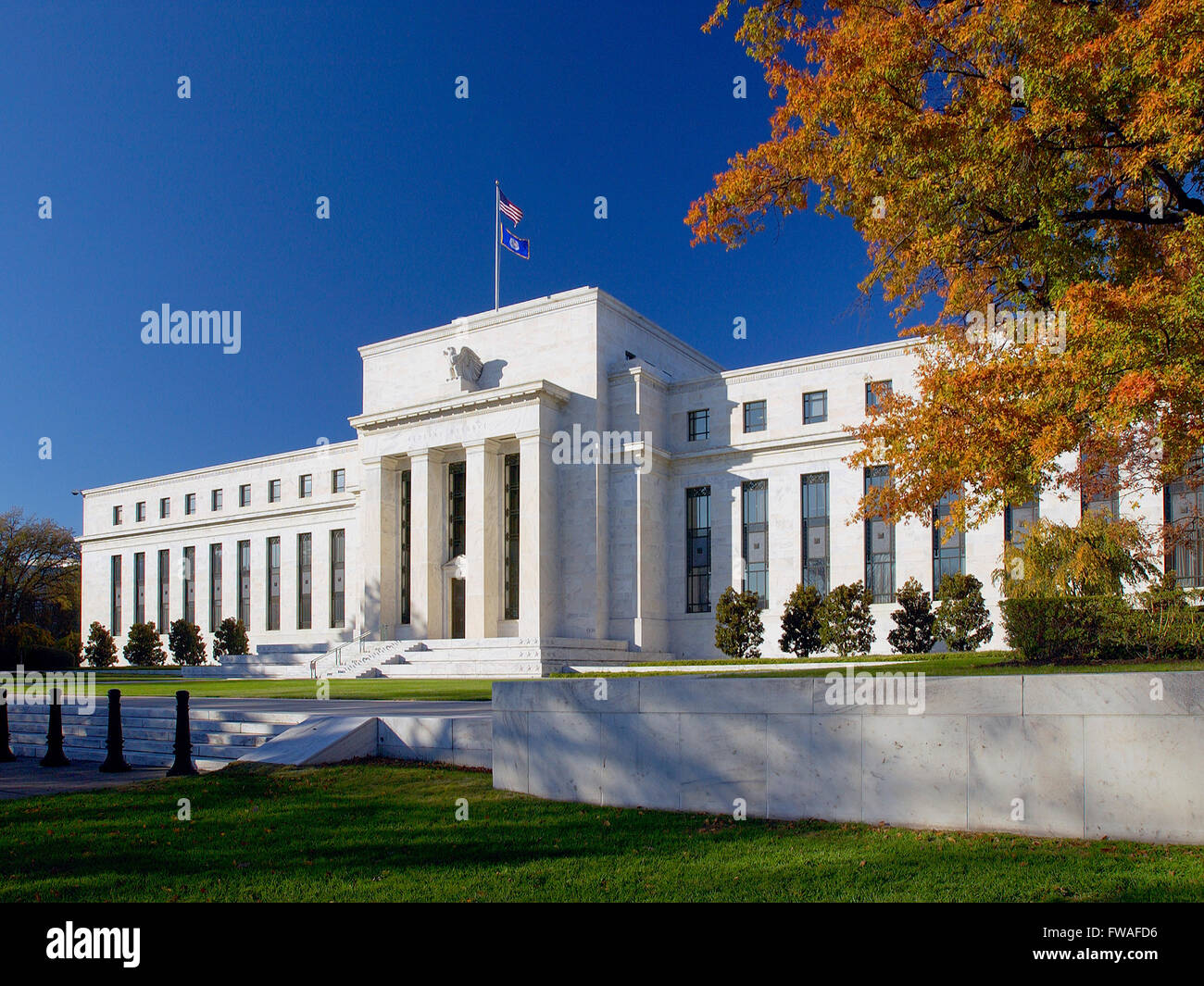
This analysis examines the criminal investigation launched by federal prosecutors into Federal Reserve Chair Jerome Powell, announced publicly on January 11, 2026. The investigation, approved in November 2025 and led by Trump-appointed U.S. Attorney Jeanine Pirro, centers on the Fed’s $2.5 billion headquarters renovation project and Powell’s congressional testimony. Powell has characterized the probe as politically motivated retaliation for the Fed’s resistance to political pressure on interest rate decisions. The investigation carries significant implications for Federal Reserve independence—a foundational pillar of U.S. financial stability—and has prompted bipartisan congressional opposition and elevated safe-haven asset prices. Market indicators show gold rising 2.5% and silver advancing 7.3% in response to the uncertainty surrounding the central bank’s leadership and operational independence [0].
The criminal investigation into Federal Reserve Chair Jerome Powell represents an unprecedented development in the relationship between the executive branch and the nation’s central bank. Federal prosecutors from the U.S. Attorney’s Office for the District of Columbia approved the investigation in November 2025, though Powell did not publicly disclose its existence until January 11, 2026. The investigation focuses on two primary areas: the Fed’s $2.5 billion headquarters renovation project and testimony Powell provided to the Senate Banking Committee [1][2].
The investigation’s timing is particularly notable given that Powell’s term as Fed Chair expires in May 2026, creating uncertainty around the central bank’s leadership transition during an ongoing legal proceeding. The DOJ has served the Federal Reserve with grand jury subpoenas that carry implications for potential criminal indictment, a development that Powell has framed as an unprecedented threat to the institution’s independence [1].
Powell has explicitly characterized the investigation as retaliation for the Federal Reserve’s approach to monetary policy, stating that the Fed has been “setting interest rates based on evidence rather than political pressure” from the Trump administration. This framing positions the investigation not merely as a prosecutorial inquiry but as a constitutional confrontation over the independence of the Federal Reserve System—a structure deliberately designed to insulate monetary policy decisions from political interference [2].
Former Federal Reserve Chair Janet Yellen has publicly characterized the investigation as “extremely chilling,” warning that such actions could transform the United States into what she termed a “banana republic” scenario. This assessment underscores the broader institutional concern that criminalizing policy disagreements between the executive branch and the central bank would fundamentally alter the operational architecture of U.S. monetary policy governance [2].
President Trump has stated he has no knowledge of the investigation, though the probe is being conducted by a Trump-appointed U.S. Attorney, creating a complex political dynamic that requires careful monitoring. Historical context is relevant here: similar DOJ investigations into political adversaries, including cases against New York Attorney General Letitia James and former FBI Director James Comey, were subsequently dismissed or blocked by courts, raising questions about the investigative foundation and prosecutorial discretion in politically sensitive matters [1].
The market response to the investigation announcement reveals investor concern about potential implications for monetary policy stability and the broader institutional framework governing U.S. financial markets. Precious metals demonstrated notable movement, with gold prices increasing 2.5% and silver advancing 7.3% on the news, reflecting investor flight toward safe-haven assets amid uncertainty regarding central bank independence [0].
Equity markets exhibited relatively muted immediate reactions, with major indices remaining relatively flat following the initial disclosure. This seemingly contained response may reflect several factors: the investigation’s focus on a specific renovation project rather than monetary policy operations directly; the uncertain timeline and outcome of any potential legal proceedings; and the possibility that Powell’s characterization of the probe as politically motivated may not ultimately result in charges or meaningful disruption to Fed operations.
However, the bond market and currency markets warrant continued monitoring as the situation develops. The Federal Reserve’s independence in setting interest rates affects Treasury yields globally, and any perceived politicization of monetary policy decisions could influence investor allocations across fixed-income and currency markets.
The investigation has catalyzed bipartisan congressional opposition, though the specific positions taken by lawmakers reveal complex political alignments. Senators from both parties have expressed concern about the precedent established by investigating a Federal Reserve Chair, with Senators Tillis and Warren pledging to block Federal Reserve nominees during the pendency of the investigation [2].
This congressional response highlights the institutional tensions emerging from the investigation. The Federal Reserve’s structure as an independent central bank depends upon both legal protections and political support from Congress. If the investigation proceeds and creates a environment where Fed Chairs face criminal liability for policy decisions made in good faith, the pool of qualified candidates for future leadership positions may shrink, and sitting officials may face constraints on their decision-making independence.
The investigation into Powell raises fundamental questions about the boundaries between legitimate oversight and political interference with central bank operations. The Federal Reserve’s independence was established through the Federal Reserve Act of 1913 and subsequent amendments precisely to prevent the kinds of political pressures on monetary policy that Powell alleges are motivating this investigation. If federal prosecutors can pursue criminal charges against a Fed Chair based on policy decisions or administrative actions that occurred within the scope of official duties, the precedent could fundamentally alter the operational independence of the central bank.
The historical pattern of investigations into political adversaries that were later dismissed or blocked suggests the need for careful evaluation of the investigative foundation. This pattern, combined with Powell’s characterization of the investigation as politically motivated, warrants close attention to the specific legal claims being pursued and the evidentiary basis for the grand jury subpoenas.
The investigation creates an uncertainty window that extends beyond the immediate legal proceedings. Powell’s term expires in May 2026, and the normal nomination and confirmation process may be complicated by the ongoing investigation. Even if no charges are filed, the cloud of uncertainty could affect the Fed’s ability to communicate policy decisions effectively and could create hesitation in financial markets regarding the trajectory of U.S. monetary policy.
Investors and market participants should recognize that the Federal Reserve’s credibility as an institution depends partly on the perception that its policy decisions are based on economic analysis rather than political considerations. Any erosion of this perception could have lasting effects on inflation expectations, term premiums in bond markets, and the dollar’s role as a reserve currency.
The investigation’s implications extend beyond domestic U.S. markets to the international financial system. The Federal Reserve’s independence has been a model for central banks worldwide and has supported the dollar’s status as the primary global reserve currency. International investors and central banks may reassess allocation decisions if the investigation signals a fundamental shift in U.S. institutional arrangements.
G7 coordination on monetary policy and international financial stability could be affected, and IMF statements on U.S. central bank independence may emerge as the situation develops. The dollar’s role in global trade and finance depends upon confidence in the Fed’s operational independence, making this investigation a matter of international as well as domestic concern.
The criminal investigation into Federal Reserve Chair Jerome Powell, approved in November 2025 and publicly disclosed on January 11, 2026, centers on the Fed’s $2.5 billion headquarters renovation project and Powell’s congressional testimony. Powell characterizes the investigation as politically motivated retaliation for the Fed’s resistance to political pressure on interest rate decisions. The probe is being conducted by the U.S. Attorney’s Office for the District of Columbia under Trump-appointed U.S. Attorney Jeanine Pirro [1][2].
Market indicators following the announcement included gold prices rising 2.5% and silver advancing 7.3%, reflecting investor concern about potential implications for central bank independence [0]. Bipartisan congressional opposition has emerged, with Senators Tillis and Warren pledging to block Fed nominees during the investigation [2]. Former Fed Chair Janet Yellen warned that the investigation creates an “extremely chilling” precedent that could transform U.S. governance in concerning ways [2].
The investigation’s implications extend to monetary policy credibility, international confidence in U.S. institutional arrangements, and the broader precedent for executive branch oversight of independent regulatory agencies. Historical patterns of similar investigations being dismissed or blocked warrant careful evaluation of the investigative foundation and legal claims being pursued [1]. The situation continues to develop and warrants ongoing monitoring for new developments.
[0] Ginlix Analytical Database - Market Indices Data
[1] BBC News - “US Fed chair Jerome Powell under criminal investigation”
[2] Fox News / Multiple Sources - DOJ probe coverage including ‘Kudlow’ interview with Gregg Jarrett
Insights are generated using AI models and historical data for informational purposes only. They do not constitute investment advice or recommendations. Past performance is not indicative of future results.
About us: Ginlix AI is the AI Investment Copilot powered by real data, bridging advanced AI with professional financial databases to provide verifiable, truth-based answers. Please use the chat box below to ask any financial question.