
Market Reference Value of Institutional Investors' 13F Position Changes and Investment Insights from Praetorian Wealth Management
Unlock More Features
Login to access AI-powered analysis, deep research reports and more advanced features
About us: Ginlix AI is the AI Investment Copilot powered by real data, bridging advanced AI with professional financial databases to provide verifiable, truth-based answers. Please use the chat box below to ask any financial question.
Related Stocks
Based on the collected data and research reports, I will systematically analyze for you the market reference value of institutional investors’ 13F position changes, as well as the investment insights from the latest position disclosure of Praetorian Wealth Management.
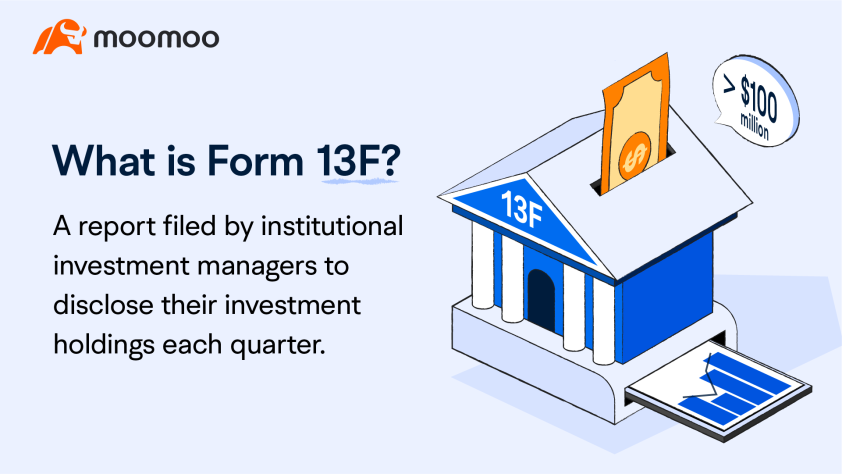
Form 13F is a mandatory document required by the U.S. Securities and Exchange Commission (SEC) for institutional investors with assets under management exceeding $100 million to disclose their equity investment portfolios on a quarterly basis [1]. Despite an information disclosure lag of approximately 45 days, 13F data remains an important reference for professional investors in market analysis and investment decision-making, mainly reflected in the following aspects:
13F position data can effectively verify the institutional capital endorsement of market trends. When the price uptrend of a sector or individual stock is accompanied by a simultaneous increase in 13F institutional holdings, it indicates that the trend has substantive support from institutional capital and usually has stronger sustainability [2]. For example, the 2023 rally in the semiconductor sector was confirmed by 13F data to be the result of a large-scale shift of institutional capital to the artificial intelligence and chip sectors. Conversely, if prices rise first and subsequent 13F data shows institutions are building positions, the validity of the trend can be retroactively verified, providing decision support for trend continuation trades.
13F data can effectively identify the risk of “crowded trading”, which refers to the situation where a large number of institutions hold the same individual stock. Such targets are prone to stampede-like declines when the market is under pressure, as institutional investors will liquidate positions collectively to control risk exposure [2]. At the same time, if institutional holdings of a target continue to decrease, it is often a leading signal of weakening prices, and investors should be alert to potential downside risks.
By analyzing the 13F position changes of multiple institutions, investors can discover emerging investment themes early. When multiple institutions simultaneously build positions in certain niche targets (such as uranium miners, cybersecurity companies, etc.), it may indicate that a new investment theme is forming [2]. Conversely, when targets of popular themes disappear from 13F holdings, it indicates that institutions have begun to exit, and the theme cycle may have peaked. This forward-looking signal is of important reference value for grasping market rotation opportunities.
By aggregating the total market value of stock holdings in 13F reports across the entire market, we can judge the overall risk appetite level of institutions. In a bull market, if the total market value of institutional stock holdings continues to rise, it indicates that institutions are increasing leverage and increasing allocations to risky assets; conversely, a decline in total market value often foreshadows rising market volatility and institutions shifting to safe-haven asset allocations [2].
| Analysis Dimension | Method Description | Investment Significance |
|---|---|---|
Sector Capital Flow Tracking |
Aggregate 13F position data by sector and calculate quarterly net capital inflow/outflow | Sectors with net inflows for 3 consecutive quarters have clear allocation trends and a higher probability of rising |
Institutional Capital Flow Indicator Calculation |
Compare changes in holding quantity and market value across consecutive quarters | A positive value indicates institutional buying, while a negative value indicates selling, allowing early detection of trend-based buying and selling pressure |
High-Win-Rate Institutional Clone Strategy |
Screen institutions with concentrated holdings, low trading frequency, and excellent long-term performance for position replication | Historical data shows that this strategy can generate returns comparable to or exceeding the index, with lower volatility |
Combined Analysis of Price and Position Trends |
Cross-verify price trends with institutional position trends | Identify trend health, institutional distribution signals, bargain-hunting signals, etc. |
Macro Position Insight |
Aggregate the total market value of stock holdings in 13F reports across the entire market | Judge changes in the overall risk appetite of institutions |
| Price Trend | Institutional Position Trend | Signal Interpretation | Investment Strategy |
|---|---|---|---|
| Rising | Increasing | Healthy trend with continuous institutional buying | Follow the trend for positioning |
| Rising | Decreasing | Institutions are secretly distributing shares, and upward momentum may fade | Be cautious about chasing highs, consider reducing positions |
| Falling | Increasing | Institutions are bargain-hunting, a potential contrarian positioning signal | Pay attention on dips |
| Falling | Decreasing | Weak trend, avoid bottom-fishing | Avoid and wait on the sidelines |
It is important to note that 13F data has the following limitations [2]:
- Only discloses long positions, and does not include short positions, options, futures, or overseas assets
- Only covers institutions with assets under management exceeding $100 million; holdings of small hedge funds and family offices are not visible
- Only discloses positions at the end of the quarter; the specific trading timing within the quarter cannot be known
- Institutions may submit amended reports, which can affect the accuracy of cross-cycle data
Therefore, 13F data should be regarded as a
Praetorian Wealth Management is a well-known hedge fund management firm led by Harris “Kuppy” Kupperman. Its core investment philosophy is to pursue
In his latest investor letter, Kupperman clearly stated: “The easy way was to be long Ponzi schemes, companies without earnings, concepts without viable paths to profits, and various AI plays… while shorting businesses that traded at low cash flow multiples.” [4] This reflects Praetorian Capital Fund’s investment style of adhering to value investing and refusing to chase hot trends.
| Time Period | Net Return Rate | Cumulative YTD Return | Feature Description |
|---|---|---|---|
| Q1 2025 | +3.12% | +3.12% | Moderate rise in core portfolio |
| Q2 2025 | +3.59% | +6.80% | Small losses from event-driven strategy |
| Q3 2025 | +5.70% | +12.16% | Expanded gains in core portfolio |
Praetorian Capital Fund achieved a cumulative net return of
According to Kupperman’s statements in the Q2 and Q3 investor letters, Praetorian Capital Fund is adjusting its strategy [3][5]:
- Maintain a Defensive Stance: Kupperman stated, “We believe that the current environment favors a more defensive posture”
- Increase Cash Allocation: Nearly40% of the portfolio is cashat the end of the quarter to maintain flexibility and wait for market opportunities
- Shift to Event-Driven Strategy: “Cash is our edge here, and I plan to wait for undiscovered, and newly inflecting trends”
- Long-Term Optimism, Short-Term Prudence: Kupperman firmly believes, “I remain convinced that while the markets will be higher in the future, first, they may suffer”
According to the latest 13F position disclosure (as of March 31, 2023), the total market value of Praetorian Capital Management LLC’s portfolio is
| Rank | Ticker | Company Name | Holding Market Value | Portfolio Proportion | Position Change |
|---|---|---|---|---|---|
| 1 | JOE | St. Joe Company | $33.67 million | 24.58% | Reduced by 10.27% |
| 2 | BNO | United States Brent Oil Fund LP | $33.65 million | 24.57% | Increased by 3.56% |
| 3 | VAL | Valaris Limited | $23.02 million | 16.81% | No change |
| 4 | TDW | Tidewater Inc. | $14.33 million | 10.46% | Increased by 1.56% |
| 5 | AMRK | A-Mark Precious Metals | $7.90 million | 5.77% | New position (100%) |
| Ticker | Holding Market Value | Portfolio Proportion | Industry |
|---|---|---|---|
| AMRK | $7.90 million | 5.77% | Precious Metals |
| FC | $2.58 million | 1.89% | Management Services |
| DK | $1.98 million | 1.44% | Oil Refining |
| AU | $0.522 million | 0.38% | Mining |
| GLD | $1.44 million | 1.05% | Gold ETF |
| Ticker | Position Change Magnitude | Share Quantity Change |
|---|---|---|
| USAP | +47% | +63,823 shares |
| TSQ | +28% | +91,797 shares |
| BNO | +4% | +43,520 shares |
| TDW | +1.56% | +5,000 shares |
| POL | +3.15% | +150,000 shares |
| Ticker | Position Change Magnitude | Share Quantity Change | Latest Market Value |
|---|---|---|---|
| JOE | -10.27% | -92,560 shares | $33.67 million |
| SURG | -18.64% | -110,000 shares | $2.16 million |
| MKTW | -27.99% | -142,978 shares | $0.681 million |
The main liquidated positions include ANEB (180,000 shares), RSX (543,000 shares), and some silver-related call options [6].
Judging from the 13F position allocation of Praetorian Capital Management, its sector preferences show the following characteristics:
- BNO (Brent Crude Oil ETF) accounts for 24.57%
- TDW (Marine Transportation Services) accounts for 10.46%
- DK (Oil Refining) accounts for 1.44%
- Energy-related positions account for more than 36% in total, reflecting deep participation in the commodity cycle
- AMRK (Precious Metals Trading) accounts for 5.77%
- GLD (Gold ETF) accounts for 1.05%
- AU (Gold Mining) accounts for 0.38%
- Reflects the demand for inflation hedging and physical asset allocation
- JOE (St. Joe Company) accounts for 24.58%, reflecting investment in specific regional real estate development and resource assets
- VAL (Offshore Drilling Services) accounts for 16.81%, reflecting a grasp of the oil and gas service cycle
- The top 5 holdings account for more than 82%of the portfolio
- Individual positions in JOE and BNO each exceed 24%
- This highly concentrated strategy requires investors to have a deep understanding of and confidence in the held targets
- While the market chases AI and tech stocks, it chooses to increase holdings in traditional energy and commodity-related targets
- Maintains a cash proportion of nearly 40%, waiting for buying opportunities during market panic
- Kupperman clearly stated that he refuses to chase “Ponzi schemes” and unprofitable concept stocks [4]
- Positions in energy and offshore drilling services reflect a grasp of cycles
- Allocation to JOE reflects insights into specific events (population migration, regional development)
- The excessively high proportion of energy and related sectors may lead to significant drawdowns when energy prices fall
- It is recommended that ordinary investors avoid over-imitating the concentrated allocation of a single sector
- A highly concentrated portfolio may face liquidity challenges when the market is under pressure
- Maintaining a high proportion of cash is one of the response strategies
- Kupperman expected, “Given the Fund’s concentrated portfolio structure and focus on asymmetric opportunities, I anticipate that the Fund will be rather volatile from quarter to quarter” [3]
- Learn from Institutional Investment Logic: Tracking 13F data can help understand the investment directions and strategy adjustments of professional institutional investors, providing references for personal investment decisions
- Focus on Fundamental Analysis: Praetorian Capital Fund’s investment style emphasizes buying targets with actual value, strong cash flow, and long-term growth logic, rather than chasing hot concepts
- Maintain Cash Flexibility: When market uncertainty is high, maintaining a certain proportion of cash can provide a buffer against market volatility and capital to seize opportunities
- Emphasize Risk Control: Highly concentrated investment needs to be matched with strict risk management measures; ordinary investors should adjust their position allocations according to their own risk tolerance
- Theme Discovery and Verification: By analyzing 13F data, emerging themes that institutional capital is positioning in can be discovered, and the sustainability of existing trends can be verified
- Crowdedness Monitoring: Monitor the concentration of institutional holdings in specific targets or sectors to warn of potential stampede risks
- Peer Comparison: Compare position changes of different institutions to understand market consensus and differences

The chart above shows the core framework of 13F institutional position analysis, including: the price trend and institutional position signal matrix, Praetorian Capital Management’s 13F position distribution, statistics on position change types, and importance evaluation of core 13F analysis dimensions.

The chart above shows the quarterly net return rate and cumulative YTD return rate performance of Praetorian Capital Fund in the first three quarters of 2025.
The 13F position changes of institutional investors are an important reference tool for understanding market trends, identifying investment opportunities, and warning of risks. Despite limitations such as data lag and limited coverage, through systematic analysis and cross-validation, 13F data can provide valuable insights for investment decisions.
As a hedge fund that adheres to value investing and refuses to chase hot trends, Praetorian Wealth Management’s investment strategy and position allocation provide investors with a unique reference perspective. Its preference for energy, commodities, and physical assets, as well as its practice of maintaining cash flexibility and a defensive stance, reflect a cautious and optimistic attitude towards the current market environment. Investors can learn from its investment logic and risk management methods, but should adjust their position allocations according to their own situations and avoid simple replication.
[1] AwesomeFinTech - “SEC Form 13F Filing Requirements” (https://www.awesomefintech.com/term/cards/form-13f/)
[2] Medium/@trading.dude - “How to Use 13F Filings: Reading the Hidden Hand of Institutional Money” (https://medium.com/@trading.dude/how-to-use-13f-filings-reading-the-hidden-hand-of-institutional-money-a5b7d07a514e)
[3] Seeking Alpha - “The Praetorian Capital Fund Q3 2025 Investor Letter” (https://seekingalpha.com/article/4832946-praetorian-capital-fund-q3-2025-investor-letter)
[4] BuySide Digest - “Praetorian Capital: Making Money the Hard Way (Again)” (https://www.buysidedigest.com/insights/the-hard-way-still-works-lessons-from-harris-kuppermans-q3-2025-praetorian-capital-letter/)
[5] Seeking Alpha - “The Praetorian Capital Fund Q2 2025 Investor Letter” (https://seekingalpha.com/article/4810920-the-praetorian-capital-fund-q2-2025-investor-letter)
[6] Last10K - “Praetorian Capital Management LLC 13F Holdings SEC Filings” (https://last10k.com/sec-filings/1337851)
Insights are generated using AI models and historical data for informational purposes only. They do not constitute investment advice or recommendations. Past performance is not indicative of future results.
About us: Ginlix AI is the AI Investment Copilot powered by real data, bridging advanced AI with professional financial databases to provide verifiable, truth-based answers. Please use the chat box below to ask any financial question.