
In-Depth Research Report on SPD Bank: Paths to Enhancing Profitability After Exceeding 10 Trillion Yuan in Assets
Unlock More Features
Login to access AI-powered analysis, deep research reports and more advanced features
About us: Ginlix AI is the AI Investment Copilot powered by real data, bridging advanced AI with professional financial databases to provide verifiable, truth-based answers. Please use the chat box below to ask any financial question.
Related Stocks
Based on the above in-depth analysis, we now present a comprehensive research report on SPD Bank:
In 2025, SPD Bank achieved total assets of

| Core Indicators | 2025 | 2024 | YoY Change |
|---|---|---|---|
| Operating Income (hundred million yuan) | 1,739.64 | 1,707.48 | +1.88% |
| Net Profit (hundred million yuan) | 500.17 | 452.57 | +10.52% |
| ROE (%) | 6.76 | 6.28 | +0.48pct |
| Basic EPS (yuan) | 1.52 | 1.36 | +11.76% |
The 2025 performance showed a
At the end of 2025, SPD Bank’s non-performing loan balance was 719.90 hundred million yuan, a decrease of 11.64 hundred million yuan from the end of the previous year; its
From a historical trend perspective, SPD Bank’s non-performing loan ratio has continuously decreased from 1.73% in 2020 to 1.26% in 2025, showing a steady improvement trend [1]. However, in horizontal comparison, the non-performing loan ratio is still relatively high in the industry:
| Bank | 2024 Non-Performing Loan Ratio | First Three Quarters of 2025 |
|---|---|---|
| China Merchants Bank | 0.94% | - |
| Industrial Bank | 1.08% | - |
| China CITIC Bank | 1.16% | - |
| SPD Bank | 1.36% | 1.29% |
However, behind the improvement in asset quality, there are compliance shortcomings. In 2025, SPD Bank received 25 regulatory fines, 7 of which were large fines of millions of yuan, involving issues such as inadequate post-loan management, misappropriation of loan funds, and illegal disposal of non-performing loans [1]. Compliance loopholes not only bring direct economic losses, but also may bury new hidden non-performing risks, affecting the sustainable improvement of asset quality.
In 2025, SPD Bank’s ROE was 6.76%, although it increased by 0.48 percentage points compared to the previous year, it still

By decomposing ROE using the DuPont analysis method, we can clearly identify the core links where SPD Bank’s profitability is weak:
| Decomposition Indicator | SPD Bank | China Merchants Bank | Gap |
|---|---|---|---|
| Net Profit Margin | 2.65% | 4.42% | -1.77pct |
| Asset Turnover Ratio | 0.48% | 0.80% | -0.32pct |
| Equity Multiplier | 13.2 | 11.0 | +2.2 |
- Largest gap in net profit margin: Reflects comprehensive disadvantages in net interest margin, intermediate business income ratio, cost control, etc.
- Significantly low asset turnover ratio: Indicates low income-generating efficiency of assets, with a large number of assets failing to be effectively converted into income
- High equity multiplier: A “fig leaf” for ROE, but also means higher financial leverage and risk exposure
Based on scenario analysis calculations, if SPD Bank can targetedly improve key indicators, there is significant room for ROE improvement:
| Scenario | Assumptions | Calculated ROE | ROE Improvement |
|---|---|---|---|
| Baseline | 2024 Actual | 6.28% | - |
| Scenario 1 | Net interest margin increased to 1.60% | 7.08% | +0.80pct |
| Scenario 2 | Non-interest income ratio increased to 36% | ~6.59% | ~+0.31pct |
| Scenario 3 | Retail income ratio increased to 40% | ~7.24% | ~+0.96pct |
| Scenario 4 | Comprehensive improvement | ~8.48% | ~+2.20pct |
At the end of the third quarter of 2025, SPD Bank’s single-quarter net interest margin rebounded to 1.44%, but it still fell short of the average level of 1.56% for joint-stock commercial banks, and was far lower than China Merchants Bank’s 1.98% [1]. As a core profitability indicator for banks, net interest margin directly determines the marginal contribution of interest income.
- Asset side: High proportion of corporate loans with low yields; insufficient proportion of high-yield retail loans (credit cards, consumer finance)
- Liability side: Poor control of deposit costs, high dependence on interbank liabilities
In 2024, SPD Bank’s net non-interest income was 560.30 hundred million yuan, accounting for
Retail banking is a key engine for banks to weather economic cycles and achieve stable profitability. In 2024, SPD Bank’s net operating income from retail business was 544.35 hundred million yuan, a year-on-year decrease of 14.40%, accounting for only
From 2019 to the third quarter of 2025, SPD Bank’s core tier 1 capital adequacy ratio continued to decline from 10.26% to
- Asset side optimization: Increase the proportion of high-yield assets such as personal loans and credit card loans; increase the allocation of high-quality assets to policy-supported areas such as technology finance and green finance
- Liability side cost control: Expand core liability sources such as low-cost settlement deposits and demand deposits; optimize interbank liability structure to reduce comprehensive interest payment costs
- Wealth management: Build a diversified product system to increase customer AUM (Assets Under Management) scale
- Investment banking: Develop businesses such as bond underwriting, M&A financing, and asset securitization
- Transaction banking: Deeply engage in light capital businesses such as supply chain finance, cash management, and cross-border finance
- Customer management: Deepen digital customer acquisition and operation capabilities to improve customer stickiness and activity
- Product innovation: Enrich the retail product matrix, focusing on breakthroughs in credit cards, consumer finance, and wealth management
- Channel upgrading: Promote online-offline integration and optimize outlet productivity
- Timely promote equity financing to supplement core tier 1 capital
- Optimize capital allocation to improve the return on risk-weighted assets
- Develop light capital businesses to reduce capital consumption
- Improve the full-process risk management system for pre-loan, in-loan, and post-loan stages
- Increase efforts to dispose of existing non-performing assets
- Improve compliance management level to reduce regulatory fines
- Continuous improvement of asset quality: The trend of non-performing “double drop” has been established, and the provision coverage level has increased
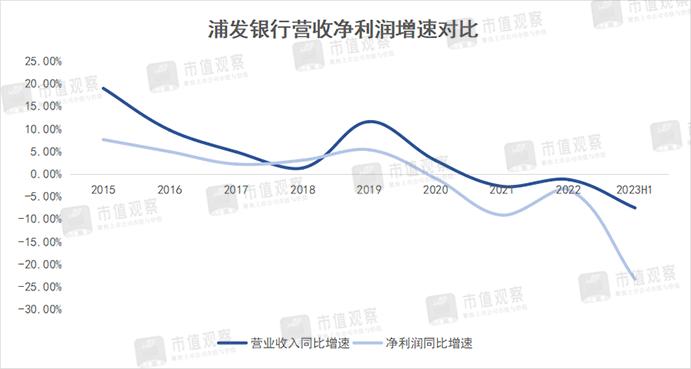
- Performance returns to growth track: In 2025, net profit growth rate reached 10.52%, and operating income growth rate turned positive
- Scale advantages emerge: Assets exceed 10 trillion yuan, providing a foundation for business transformation
- Valuation at historical low: The stock price has risen significantly from the 2024 low, but PB is still attractive
- Profitability recovery progress falls short of expectations: ROE improvement requires systematic reform support
- Net interest margin continues to narrow: In the interest rate liberalization environment, net interest margin still faces downward pressure
- Risk of asset quality reversal: Economic downturn cycles may lead to a rebound in non-performing loan ratio
- Pressure from capital adequacy ratio red line: Business expansion space is restricted
- Compliance risk: Regulatory fines may affect reputation and business operations
SPD Bank is in a critical stage of transformation from “scale expansion” to “quality improvement”. The improvement of asset quality creates conditions for ROE recovery, but to catch up and surpass in the highly competitive joint-stock commercial bank sector, systematic reforms are still needed in areas such as net interest margin, non-interest income, and retail business. For investors focusing on the banking sector, SPD Bank has potential opportunities for a turnaround from distress, but it is necessary to closely track the actual progress of its profitability improvement.
[0] SPD Bank 2025 Annual Performance Express Announcement (https://stockmc.xueqiu.com/202601/600000_20260114_87IY.pdf)
[1] Received Fines of Tens of Millions, Multiple Persons Barred from Industry, SPD Bank’s Compliance Shortcomings Highlighted - Sino-Manager (https://www.sino-manager.com/detail/16211)
[2] SPD Bank’s Net Profit Reached 50.017 Billion Yuan with 10.52% Growth Last Year, Non-Performing “Double Drop” - The Paper (https://m.thepaper.cn/newsDetail_forward_32376081)
[3] Jinling API Market Data [0]
Insights are generated using AI models and historical data for informational purposes only. They do not constitute investment advice or recommendations. Past performance is not indicative of future results.
About us: Ginlix AI is the AI Investment Copilot powered by real data, bridging advanced AI with professional financial databases to provide verifiable, truth-based answers. Please use the chat box below to ask any financial question.