
DOJ Investigation into Fed Chair Powell Sparks Constitutional and Market Concerns
Unlock More Features
Login to access AI-powered analysis, deep research reports and more advanced features
About us: Ginlix AI is the AI Investment Copilot powered by real data, bridging advanced AI with professional financial databases to provide verifiable, truth-based answers. Please use the chat box below to ask any financial question.
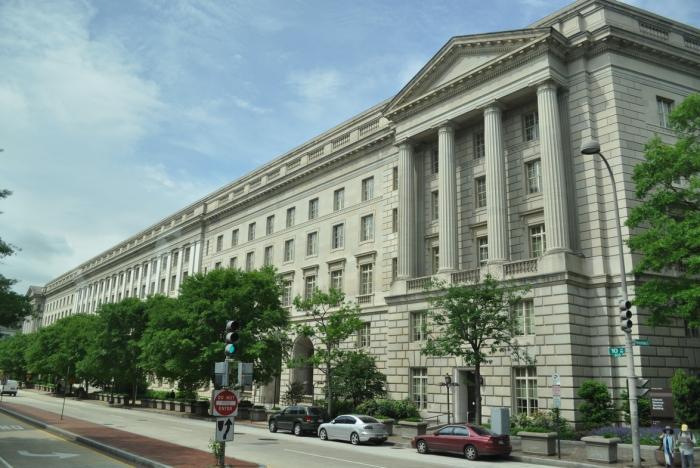
The Department of Justice has initiated a criminal investigation into Federal Reserve Chair Jerome Powell, marking an unprecedented escalation in tensions between the Trump administration and the independent central bank. The investigation centers on Powell’s congressional testimony concerning a multi-billion-dollar renovation project at the Federal Reserve’s headquarters in Washington, D.C. [1][2]. Senator Kevin Cramer’s appearance on CNBC’s “Money Movers” on January 14, 2026, provided political context to the legal scrutiny, suggesting that Powell’s voluntary departure could resolve the constitutional standoff without prolonged legal confrontation [6].
The DOJ’s investigation is being conducted through the U.S. Attorney’s Office for the District of Columbia, led by U.S. Attorney Jeanine Pirro, a Trump appointee [2]. This prosecutorial framework signals a formal, institutional approach rather than merely political pressure. Powell responded with an unprecedented public video statement, characterizing the investigation as “pretexts” designed to undermine Federal Reserve independence—a charge that elevates the matter from a routine legal inquiry to a fundamental constitutional confrontation regarding the separation of powers and central bank autonomy [1][3].
Financial markets reacted negatively to the escalating political tensions surrounding Federal Reserve independence, with equity indices reflecting investor concern about potential policy disruption. The S&P 500 declined 0.70% and the Dow Jones Industrial Average fell 0.34% on January 14, 2026, following the emergence of additional details about the investigation and congressional reactions [0]. These moves, while not catastrophic, represent meaningful market sensitivity to institutional integrity concerns.
The bond market revealed additional stress indicators, with Treasury yield spreads widening as investors priced in elevated uncertainty regarding future Federal Reserve policy trajectories [0]. The dollar index showed moderate volatility as foreign investors assessed the implications of potential Federal Reserve leadership changes for U.S. monetary policy continuity. Financial sector equities experienced particular pressure, as banks and financial institutions expressed concern about the precedent set by executive branch investigation of an independent central bank chair.
The investigation has generated surprising pushback from within the Republican Party, highlighting the traditional Wall Street Republican constituency’s deep commitment to Federal Reserve independence. Senate Majority Leader John Thune warned that the DOJ investigation “better be real” and “serious,” signaling congressional scrutiny of the administration’s legal strategy [4]. Several Republican senators, including Lisa Murkowski, Thom Tillis, and Bill Hagerty, have expressed concern about the constitutional precedent that investigating a sitting Fed chair would establish [3][4].
Former Federal Reserve chairs spanning multiple administrations—Alan Greenspan, Ben Bernanke, and Janet Yellen—issued a joint condemnation of the investigation, framing it as an existential threat to the central bank’s ability to conduct monetary policy free from political interference [1]. This unprecedented unified statement from living former Fed chairs underscores the historical significance of the current confrontation and the perceived threat to institutional norms that have governed U.S. monetary policy for decades.
Senator Cramer’s own comments revealed internal Republican ambivalence, as he acknowledged that he “does not believe [Powell] is a criminal” despite his criticism of Powell’s performance as Fed chair regarding interest rate decisions [5]. This distinction between policy disagreement and criminal investigation highlights the potential overreach that even sympathetic lawmakers perceive in the current DOJ approach.
The investigation raises fundamental questions about the boundaries between executive branch authority and the independence guaranteed to the Federal Reserve through statutory framework. Powell’s current term as Fed chair extends until May 2026, though he can remain on the Board of Governors until January 2028 under existing appointments [1][2]. The timing of the investigation—just months before the chairmanship transition window—suggests strategic considerations beyond purely legal merits.
Legal scholars have noted that successful prosecution of a Fed chair for testimony regarding administrative matters would require establishing criminal intent, a high evidentiary threshold that many constitutional experts view as difficult to meet given the nature of congressional testimony about complex government projects. The investigation’s focus on renovation costs—amounting to a multi-billion dollar figure—represents substantial financial stakes, but the distinction between administrative error and criminal conduct remains legally significant.
The DOJ investigation into Fed Chair Powell represents an unprecedented confrontation between executive branch prosecutorial authority and central bank independence, triggering market volatility and bipartisan congressional concern. Senator Cramer’s suggestion that resignation would provide “an elegant way out” reflects the political pressure facing the independent institution, while simultaneous pushback from Republican lawmakers and former Fed chairs demonstrates the constitutional stakes involved. Market indicators show elevated volatility and widening yield spreads as investors assess potential policy disruption scenarios [0][1][2][3][4].
The investigation’s legal merits remain contested, with Powell characterizing it as politically motivated “pretexts” and supporters of central bank independence warning of precedent-setting threats to monetary policy autonomy. The approaching leadership transition window and upcoming FOMC meeting add time pressure to an already sensitive constitutional confrontation.
Insights are generated using AI models and historical data for informational purposes only. They do not constitute investment advice or recommendations. Past performance is not indicative of future results.
About us: Ginlix AI is the AI Investment Copilot powered by real data, bridging advanced AI with professional financial databases to provide verifiable, truth-based answers. Please use the chat box below to ask any financial question.