
Trump's Detroit Press Availability: Iran Military Action, Fed Criticism, and Greenland Acquisition Demands
Unlock More Features
Login to access AI-powered analysis, deep research reports and more advanced features
About us: Ginlix AI is the AI Investment Copilot powered by real data, bridging advanced AI with professional financial databases to provide verifiable, truth-based answers. Please use the chat box below to ask any financial question.
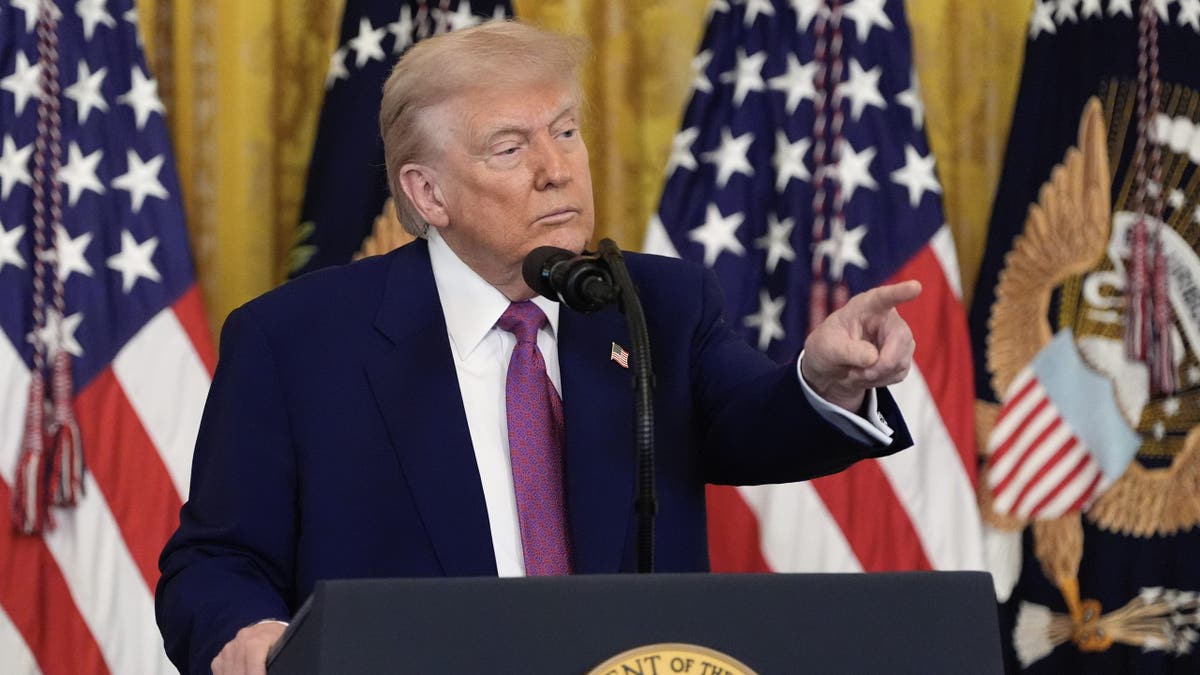
President Trump’s press availability on January 14, 2026, occurred immediately following a domestic economic focus day in Detroit, where he delivered remarks at the Detroit Economic Club and toured a Ford factory [2][6]. This domestic economic positioning contrasts sharply with the aggressive foreign policy statements made during the same period, suggesting a deliberate strategy of maintaining multiple active fronts in international relations. The timing of this press availability—occurring in the early morning hours EST—indicates the intensity of ongoing developments, particularly regarding the Iran situation where the President noted an NSC meeting had just concluded [2].
The event represents a significant moment in the early weeks of Trump’s second term, demonstrating the administration’s willingness to pursue parallel diplomatic initiatives across geographically and substantively distinct policy areas. The convergence of potential military action in the Middle East, unprecedented tension with the Federal Reserve, and territorial ambitions in the Arctic creates a complex decision-making environment for allies, adversaries, and markets alike [1][2][3].
President Trump’s statements regarding Iran reveal an administration actively considering military intervention following violent crackdowns on protest movements. According to reports, approximately 2,000 individuals have been killed in Iran during the ongoing protests, with activist groups documenting severe human rights violations [1]. Trump stated that his next move depends on the outcome of National Security Council deliberations, adding that he would “know within 20 minutes” and “act accordingly” regarding the situation [2].
The President’s language suggests that a military response remains a credible option, despite apparent friction with key allies. Israeli officials have reportedly warned against immediate military strikes, suggesting alternative approaches including cyberattacks and intensified sanctions [1]. This divergence in strategic preferences between Washington and Jerusalem adds complexity to potential coalition-building for any Iran-related military action.
The reference to a “locked and loaded” posture echoes rhetoric from Trump’s first term, signaling that the administration views the Iranian situation through a lens of immediate threat rather than diplomatic opportunity. However, the deliberate ambiguity surrounding the specific nature and timing of any potential action maintains strategic uncertainty while preserving diplomatic flexibility [1][2].
The President’s comments on Federal Reserve Chair Jerome Powell represent an unprecedented escalation in tensions between the White House and the central bank. Trump called Powell a “bad Fed person” and expressed hope that Powell “will be out of there soon,” directly questioning the central banker’s continued tenure [2]. This rhetorical attack is compounded by an ongoing DOJ criminal investigation into Powell, which Trump defended by stating “I can’t help what it looks like” [2].
The implications for monetary policy independence are substantial. Market participants and institutional investors have historically relied on the Federal Reserve’s operational independence as a cornerstone of U.S. financial stability. Any perceived erosion of this independence—particularly through criminal investigation of a sitting Fed Chair—introduces new risk premiums into Treasury markets and broader financial conditions [2].
Notably, prominent voices in the financial community have criticized the DOJ investigation. Jamie Dimon, CEO of JPMorgan Chase, has reportedly characterized the probe as undermining the independence of the Federal Reserve [2]. Such criticism from mainstream financial leaders suggests potential reputational and market consequences for the administration’s confrontation with the central bank.
The timing of these comments, during a period of ongoing economic transition and potential inflation concerns, amplifies the significance of Fed-White House relations. Investors will likely monitor Treasury yield reactions and Federal Reserve communications for signs of policy coordination or continued independence [2].
Trump’s statements on Greenland represent the most direct and potentially consequential diplomatic challenge of his current term. In an early morning Truth Social post, the President declared that “anything less” than U.S. control of Greenland “is unacceptable,” while claiming that “NATO becomes far more formidable and effective with Greenland in the hands of the UNITED STATES” [3][4].
This territorial ambition has encountered immediate and repeated rejection from Greenlandic leadership. Greenland Premier has repeatedly stated that “Greenland is not for sale,” rejecting American overtures directly [3]. Trump’s response to this rejection was dismissive, stating regarding the Premier: “That’s their problem. I disagree with him… that’s going to be a big problem for him” [4].
The diplomatic dimension extends to Denmark, the sovereign nation with responsibility for Greenland’s foreign relations. Danish Foreign Minister has characterized the upcoming White House meeting with Vice President Vance and Secretary Rubio as an opportunity to “look each other in the eye” [5]. However, analysts suggest Danish leaders face a genuine “conundrum” in responding to American territorial demands while maintaining NATO cohesion and transatlantic alliance stability [5].
The President’s assertion that “NATO should be leading the way” to acquire Greenland fundamentally reframes the alliance’s purpose and raises questions about the future of collective security arrangements [4][5]. This demand places NATO allies in an uncomfortable position—either complicit in an unprecedented territorial acquisition or publicly opposing American strategic objectives.
The simultaneous pursuit of military action in Iran, confrontation with the Federal Reserve, and territorial expansion in Greenland reveals several interconnected strategic themes that merit attention from observers and policymakers.
First, the administration appears to be testing institutional and diplomatic boundaries across multiple domains simultaneously. This approach creates diffusion of attention and response capacity among adversaries and allies alike. By maintaining active pressure on multiple fronts, the White House may be attempting to maximize negotiating leverage and minimize coordinated pushback.
Second, the Fed confrontation signals potential coordination between foreign policy and economic policy objectives. A weakened Federal Reserve—either through leadership change or compromised independence—could facilitate more aggressive trade negotiations or accommodate fiscal expansion without traditional monetary policy constraints. The market implications of this potential coordination merit careful monitoring [2].
Third, the Greenland initiative represents a fundamental challenge to post-Cold War international norms regarding territorial integrity and sovereignty. The willingness to pursue territorial acquisition openly—despite universal rejection from relevant parties—suggests an administration comfortable with unilateral action outside traditional diplomatic frameworks [3][4][5].
The convergence of these developments creates elevated risk across multiple asset classes and geographic regions. Geopolitical risk assessment indicates heightened probability of military action in the Middle East within a compressed timeframe, given the President’s stated decision-making timeline [1][2]. Diplomatic risk assessment indicates significant strain on NATO cohesion and transatlantic relations, particularly if the Greenland acquisition proceeds as an active demand rather than negotiation [4][5]. Market volatility risk assessment indicates elevated uncertainty regarding Federal Reserve independence and, by extension, U.S. monetary policy trajectory [2].
For immediate monitoring, the January 14, 2026 meeting between Vice President Vance, Secretary Rubio, and Danish/Greenlandic foreign ministers at the White House represents a critical inflection point [3][5]. The outcome of this meeting—whether it produces diplomatic compromise or further confrontation—will shape the trajectory of the Greenland situation. Similarly, the absence of specific timing for Iran military action, despite the “20-minute” decision claim, suggests continued ambiguity that markets must digest [2].
This press availability demonstrates an administration willing to pursue aggressive initiatives across disparate policy domains without apparent concern for coordination costs or diplomatic blowback. The President’s direct language—“bad Fed person,” “unacceptable,” “big problem for him”—reflects a negotiation style predicated on maximum pressure and direct confrontation [2][4].
The factual record indicates that Greenland remains firmly under Danish sovereignty with no indication of willingness to negotiate [3][5]. The Iran situation involves documented mass casualties but uncertain American response parameters [1]. The Federal Reserve confrontation lacks clear precedent in American political history, making outcome prediction particularly difficult [2].
All three policy areas share a common characteristic: the administration is pursuing objectives with uncertain domestic or international support, relying on unilateral pressure rather than coalition-building or compromise. This approach may yield diplomatic victories but also carries substantial risk of escalation, isolation, and market disruption.
The January 14, 2026 press availability revealed the following factual positions: President Trump indicated imminent decision-making authority regarding potential Iran military action following an NSC meeting; the President maintained and escalated criticism of Federal Reserve Chair Powell while defending the DOJ investigation; and Trump insisted on U.S. control of Greenland as “vital” despite repeated rejections from Greenlandic and Danish leadership [1][2][3][4][5].
Immediate developments to monitor include the outcome of White House meetings with Danish/Greenlandic officials scheduled for January 14, 2026; any further statements from the Federal Reserve regarding operational independence; and Iranian government response to escalated American rhetoric [3][5]. The World Economic Forum was cited by Trump as the venue for forthcoming housing policy announcements, providing a near-term opportunity for administration messaging [2].
Insights are generated using AI models and historical data for informational purposes only. They do not constitute investment advice or recommendations. Past performance is not indicative of future results.
About us: Ginlix AI is the AI Investment Copilot powered by real data, bridging advanced AI with professional financial databases to provide verifiable, truth-based answers. Please use the chat box below to ask any financial question.