
December 2025 CPI Inflation: Dramatic Narrative Shift in Fed Rate Cut Expectations
Unlock More Features
Login to access AI-powered analysis, deep research reports and more advanced features
About us: Ginlix AI is the AI Investment Copilot powered by real data, bridging advanced AI with professional financial databases to provide verifiable, truth-based answers. Please use the chat box below to ask any financial question.
Related Stocks
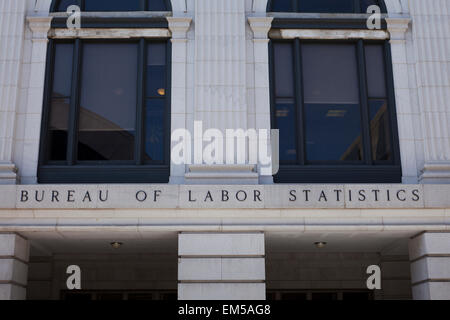
The December 2025 CPI inflation report, released by the Bureau of Labor Statistics on January 13, 2026, represents a pivotal moment in the Federal Reserve’s ongoing battle against inflation. The data revealed that both headline and core inflation measures remained essentially unchanged from November levels, with headline CPI registering a 2.7% year-over-year rate while core CPI came in at 2.6% year-over-year [1][4]. This annual improvement from 2024’s 2.9% headline and 3.2% core rates demonstrates meaningful progress in the disinflation process, yet the monthly trajectory continues to hover above the 0.2% threshold that would sustainably return inflation to the Federal Reserve’s 2% target [4].
The monthly breakdown reveals the underlying pressures仍然 (still) facing consumers and policymakers. Shelter costs contributed significantly to the headline number with a 0.4% increase, while food prices surged 0.7% month-over-month, directly impacting household budgets [1][4]. However, some deflationary pressures persisted in specific categories: used car and truck prices declined 1.1%, while information technology hardware and services fell 1.3%, providing some offset to broader inflationary pressures [1]. These divergent sectoral trends highlight the uneven nature of the current economic landscape and the complexity of achieving sustained price stability.
The most striking aspect of this CPI release is not the data itself, but rather the dramatic transformation in market expectations regarding Federal Reserve policy. Just one month prior, financial markets were pricing in approximately a 50% probability of a rate cut at the January 2026 Federal Open Market Committee (FOMC) meeting [1][5]. Following the December CPI data and accompanying economic indicators, that probability has collapsed to roughly 5%, with the CME FedWatch Tool indicating a ~95% likelihood that rates will remain unchanged at the January meeting [5][6].
This narrative shift reflects the convergence of several economic factors that have altered the Fed’s calculus. Robust economic growth, evidenced by the Federal Reserve’s own projections of 2.3% GDP growth for 2026, has reduced the urgency for accommodative policy [5]. Simultaneously, labor market indicators have shown a softening unemployment rate that, paradoxically, has reinforced the case for maintaining higher rates rather than cutting them [1]. The Federal Reserve’s Summary of Economic Projections now indicates only one 25 basis point cut expected throughout 2026, a figure that stands in stark contrast to market pricing and suggests potential volatility as these expectations converge [5].
Major financial institutions have adjusted their forecasts accordingly. Goldman Sachs has pushed back its rate cut forecast to June or September 2026, while JPMorgan has introduced the possibility of a rate hike in 2027—a remarkable transformation from the cutting cycle that dominated discourse just weeks prior [6][7]. This shift reflects growing concern among policymakers and economists that the economy’s resilience may require a more prolonged period of restrictive monetary policy to fully extinguish inflationary pressures.
Equity markets responded to the shifted rate cut expectations with modest but telling declines on January 13, 2026. The Dow Jones Industrial Average experienced the largest decline at 0.86%, followed by the Russell 2000 small-cap index at 0.43%, the S&P 500 at 0.20%, and the NASDAQ composite at 0.11% [0]. The heightened sensitivity of the Dow and Russell 2000 reflects their greater exposure to rate-sensitive sectors and domestic economic conditions, respectively, suggesting that market participants are reassessing the implications of a prolonged higher-rate environment for these segments.
Treasury markets initially rallied on the CPI release but subsequently saw those gains fade, with yields ending unchanged to slightly higher on the day [1]. This pattern indicates that while the inflation data was benign, the broader implications for Fed policy and economic growth have created a more complex backdrop for fixed-income markets. The initial rally likely reflected relief that inflation hadn’t accelerated, while the subsequent fade captured the market’s processing of the Fed’s likely response to sustained economic strength.
The December 2025 CPI data confirms that the disinflation process continues, albeit at a pace that remains frustratingly gradual for both the Federal Reserve and market participants [4]. The annual figures—2.7% headline inflation compared to 2.9% in 2024, and 2.6% core inflation versus 3.2% in the prior year—demonstrate meaningful progress over the full year [4]. However, the persistence of monthly readings above the 0.2% level needed to reach the 2% target sustainably suggests that the “last mile” of the inflation fight may prove more challenging than the initial progress.
The composition of inflation also warrants attention from a strategic perspective. The 0.7% monthly increase in food prices and the 0.4% rise in shelter costs represent categories that disproportionately affect lower-income households and carry significant political and social weight [1][4]. These sticky components, combined with services inflation more broadly, may prove more resistant to monetary policy tightening than the goods deflation that characterized much of 2024, potentially extending the timeline for achieving the Fed’s price stability mandate.
The discrepancy between Federal Reserve guidance—which contemplates only one 25 basis point cut in 2026—and market pricing creates a potential source of market volatility that investors should carefully monitor [5]. Historically, periods of significant divergence between Fed communications and market expectations have been associated with heightened volatility and sudden repricing events as one side or the other adjusts to reality. The current gap suggests that either the Fed will need to adopt a more accommodative stance than currently signaled, or markets will need to price in a more prolonged period of restrictive policy.
This divergence reflects the fundamental uncertainty surrounding the current economic outlook. The Federal Reserve’s projections of 2.3% GDP growth in 2026 alongside declining unemployment to 4.4% paint a “Goldilocks” scenario that supports equity valuations while simultaneously reducing the urgency for policy accommodation [5]. The challenge for markets lies in determining whether this optimistic scenario will materialize, and if so, whether it will prove compatible with the inflation target that remains the Fed’s primary statutory mandate.
Economists and analysts have noted that recent government shutdown disruptions may affect the interpretation of inflation data, introducing an element of uncertainty into trend analysis [2][4]. This caution is particularly relevant for December data, which may reflect atypical collection methodologies or reporting delays that could distort the underlying economic signal. Market participants should be aware of this limitation when drawing conclusions from the December CPI release and should consider the potential for revised or adjusted data in subsequent months as collection methodologies normalize.
The analysis reveals several risk factors that warrant careful attention from market participants. First, the policy path uncertainty stemming from the gap between Fed guidance and market expectations may generate volatility as these views converge, potentially causing sudden repricing across asset classes [5]. Investors should be aware that positions predicated on near-term rate cuts may face mark-to-market challenges as the market adjusts to a higher-for-longer rate environment.
Second, despite the annual improvement in inflation metrics, the persistence of monthly readings above the 0.2% threshold needed to sustainably reach the 2% target suggests that the inflation fight may not be complete [4]. Areas requiring continued monitoring include food prices, which rose 0.7% month-over-month, and shelter costs, which increased 0.4% and remain a significant component of the overall index [1][4]. These categories carry heightened political and economic sensitivity that could influence Federal Reserve policy deliberations.
Third, the robust economic growth and resilient labor market that have reduced rate cut probability simultaneously increase the risk that inflationary pressures could reaccelerate if demand continues to outpace supply. JPMorgan’s forecast of a potential rate hike in 2027, while not the base case, reflects this concern and should be incorporated into risk scenario planning [7].
Despite the challenges, the current environment also presents opportunities for strategic positioning. The shift away from near-term rate cut expectations suggests that cyclical sectors may outperform as the market reweights the probability of continued economic expansion [1]. Sectors with exposure to domestic growth, including industrials and select consumer discretionary categories, may benefit from the reframed narrative around economic resilience.
Additionally, the stabilization of inflation at moderately elevated levels while growth remains robust creates conditions that have historically been favorable for risk assets, provided that the “soft landing” narrative remains intact. The equity market’s modest response to the shifted rate expectations—declines of less than 1% across major indices—suggests that investors are processing this information in an orderly fashion rather than panicking about the implications for either growth or valuations.
The December 2025 CPI inflation report, released January 13, 2026, confirmed that headline inflation held steady at 2.7% year-over-year while core inflation moderated to 2.6% year-over-year, with monthly increases of 0.3% and 0.2% respectively meeting or beating market expectations [0][1]. Despite this favorable inflation data, the probability of a January 2026 Federal Reserve rate cut has collapsed from approximately 50% to roughly 5%, driven by robust economic growth and labor market dynamics that suggest the Fed need not rush to accommodative policy [1][5][6].
The Federal Reserve’s Summary of Economic Projections now indicates only one 25 basis point cut expected in 2026, significantly less than market pricing, creating potential for volatility as expectations converge [5]. Goldman Sachs has pushed back its rate cut forecast to June or September 2026, while JPMorgan has introduced the possibility of a rate hike in 2027, reflecting the uncertain path ahead [6][7]. Major indices declined modestly on the news, with the Dow Jones (-0.86%) and Russell 2000 (-0.43%) showing greater sensitivity to rate-sensitive dynamics [0].
Key upcoming catalysts include the January 27-28, 2026 FOMC meeting, the December 2025 employment data release, and the Q4 2025 GDP advance estimate, all of which will provide additional information for calibrating the economic and policy outlook [5]. Market participants should note that government shutdown disruptions may affect recent data interpretation, introducing additional uncertainty into trend analysis [2][4]. The disinflation trajectory remains intact but gradual, with monthly readings still above the 0.2% threshold needed to sustainably reach the 2% target [4].
Insights are generated using AI models and historical data for informational purposes only. They do not constitute investment advice or recommendations. Past performance is not indicative of future results.
About us: Ginlix AI is the AI Investment Copilot powered by real data, bridging advanced AI with professional financial databases to provide verifiable, truth-based answers. Please use the chat box below to ask any financial question.