
Analysis of the Impact of Meta AI Smart Glasses' Capacity Doubling Strategy
Unlock More Features
Login to access AI-powered analysis, deep research reports and more advanced features
About us: Ginlix AI is the AI Investment Copilot powered by real data, bridging advanced AI with professional financial databases to provide verifiable, truth-based answers. Please use the chat box below to ask any financial question.
Related Stocks
Based on the latest collected data and market information, I provide you with an in-depth analysis report on the impact of Meta AI smart glasses’ capacity expansion strategy.
According to multiple sources[1][2][3], Meta and EssilorLuxottica (parent company of Ray-Ban) are considering increasing the
The background of this capacity expansion plan is:
- Current production capacity is severely insufficient: On January 6, 2026, Meta announced that it would suspend its global expansion plans to the UK, France, Italy, and Canada due to “unprecedented demand and limited inventory”, and the waiting list in the US market has extended to2026[3]
- Sales growth exceeds expectations: Cumulative sales in 2024 exceeded1 million units[4], and sales in the first half of 2025grew more than 3 timescompared to the same period in 2024[5]
- EssilorLuxottica accelerates capacity expansion: The original target of 10 million units of annual production capacity by the end of 2026 has beencompleted ahead of schedule, and it is now accelerating towards higher production capacity[1]

Meta’s Reality Labs division is responsible for smart glasses, VR headsets, and metaverse businesses, and its financial status reflects the
| Metric | Full Year 2024 | Q4 2024 | Q3 2025 |
|---|---|---|---|
Revenue |
$2.1B | $1.1B | $470M |
Operating Loss |
$17.7B | $4.97B | $4.4B |
Revenue Share |
Only 0.9% of Meta’s total revenue | - | - |
- Reality Labs’ revenue accounts for an extremely low shareof Meta’s total revenue (only 0.9% in Q3 2025), but operating losses are substantial
- Revenue in Q4 2024 seasonally surged to $1.1B, mainly benefiting from the holiday shopping season
- Since Facebook was renamed Meta in 2021, Reality Labs’ cumulative losses have exceeded $70B[7]
If production capacity is successfully expanded to 20 million units per year, assuming an average selling price of
| Capacity Scenario | Annual Sales Assumption | Average Selling Price | Potential Annual Revenue Contribution |
|---|---|---|---|
| Original Capacity Target | 5-8 million units | $350 | $1.75B-$2.8B |
New Capacity Target |
10-15 million units |
$380 |
$3.8B-$5.7B |
| Expanded Capacity | 20 million units | $400 | $8B |
Capacity expansion will improve Reality Labs’ financial status through the following paths:
- Economies of scale reduce unit costs: Doubling production capacity will significantly dilute R&D, mold, and fixed costs
- Enhanced supply chain bargaining power: Deep integration with EssilorLuxottica (approximately 3% equity investment, valued at approximately $3.5B[8]) ensures priority production capacity supply
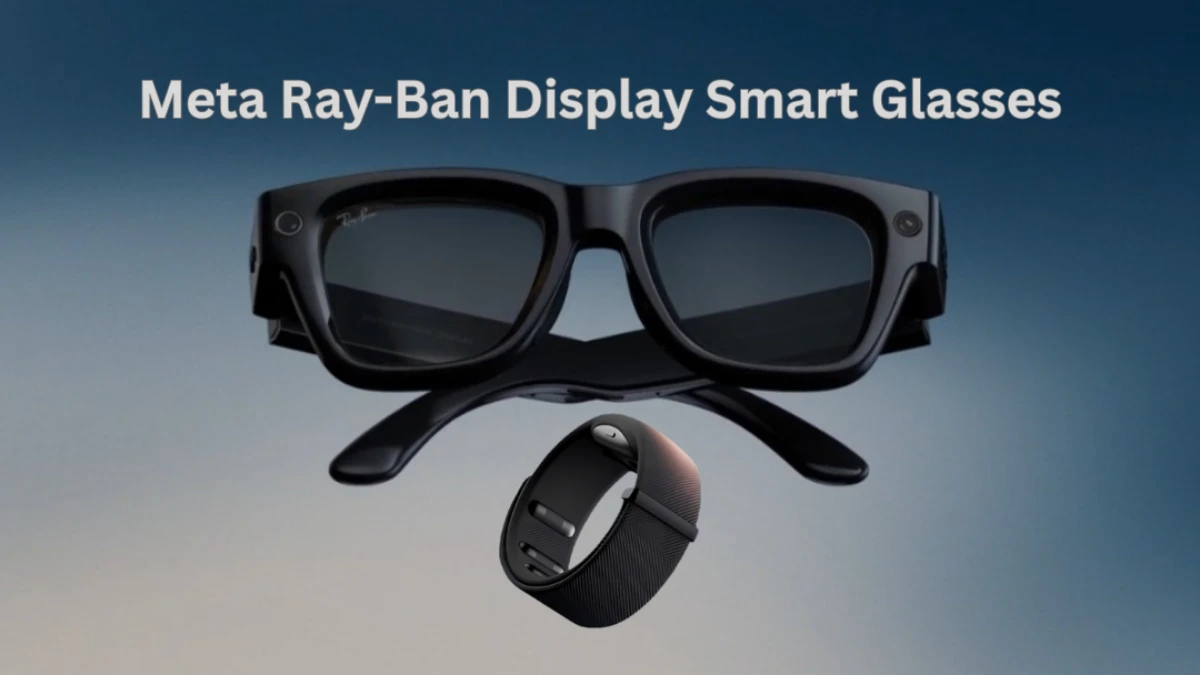
- Ecological synergy effect: The combination of smart glasses + Neural Band gesture control + Meta AI creates new revenue streams
However,
- The entry of competitors such as Apple and Google will compress profit margins
- Sustained high R&D investment (AR display technology, AI algorithms, chips, etc.)
- Losses are expected to expand to $20B in 2025[9]
According to data from Counterpoint Research[10], the global smart glasses market in 2024 presents the following competitive landscape:
| Player | 2024 Market Share | Core Advantages | 2025 Developments |
|---|---|---|---|
Meta (Ray-Ban) |
Over 60% |
First-mover advantage, brand collaboration, mature AI functions | Capacity expansion, launch of Display new model |
| Apple | 0% (in development) | Brand premium, closed ecosystem, chip capabilities | Expected to launch in 2026-2027 |
| 5-8% (prototype stage) | AI (Gemini), AndroidXR ecosystem | In joint development with Samsung | |
| Xiaomi/Chinese players | 10-15% | Cost advantage, localization | Planned large-scale entry in 2025 |
| Others | 10-15% | Niche markets | Vertical fields such as professional/sports/medical |
Doubling production capacity has
- Lock in market share through supply-side positioningbefore products from Apple, Google, etc. are officially launched
- An annual production capacity of 20 million units can cover 70-80%of global high-end smart glasses demand
- Supply chain sources indicate that 2025 will see a “hundreds of smart glasses players competing”[10], and sufficient production capacity is the foundation for coping with price wars
- Scale barrier: Gain control over the supply chain, making it difficult for competitors to obtain equivalent production capacity
- Time barrier: User usage habits and content ecosystems require time to accumulate, and first-mover advantages are difficult to replicate quickly
- Ecosystem barrier: Continuous iteration of Meta AI (real-time translation, visual understanding, multimodal interaction) and synergy with hardware
Meta regards smart glasses as the
- Provide visual, auditory, locationand other multi-dimensional data inputs for Meta AI
- Create a “screen-free” social experience, replicating Facebook’s early user growth path
- The 3% equity cooperation with EssilorLuxottica (a $3.5B investment) ensures long-term supply chain security[8]
Although capacity expansion strengthens Meta’s competitive advantages, it still faces the following challenges:
| Risk Type | Details | Potential Impact |
|---|---|---|
Product Risk |
Battery life, privacy disputes, immature AR display technology | Limited user experience, reduced market acceptance |
Competitive Risk |
Entry of Apple, Google, Xiaomi (2025-2026) | Eroded market share, price war pressure |
Financial Risk |
Sustained losses of Reality Labs (expected $20B in 2025)[9] | Shaken investor confidence, valuation pressure |
Regulatory Risk |
AI data privacy, regulations on glasses shooting | Restricted product functions, increased compliance costs |
According to Counterpoint Research’s forecast[10]:
Market Size (Billion USD)  Year-over-Year Growth
2024: $3.2B (YoY +210%)  ████████████████░░ 85%
2025: $5.1B (YoY +60%)   ██████████████████ 110%
2026: $8.2B (YoY +60%)   ████████████████░░ 60%
2027: $13.1B (YoY +60%)  ████████████████░░ 60%
2028: $21.0B (YoY +60%)  ████████████████░░ 60%
2029: $33.6B (YoY +60%)  ████████████████░░ 60%
- AI function upgrades: Real-time translation, visual understanding, smart assistant
- Diversified price segments: From $299 entry-level to $799 high-end models
- Fashion integration: Co-branding with Ray-Ban, Oakley and other brands to eliminate the “techy” stigma
- Channel expansion: From online to offline retail networks
If Meta achieves an annual production capacity of 20 million units in 2026, based on conservative estimates (actual sales are 50-60% of production capacity):
- Expected Sales in 2026: 10-12 million units
- Expected Revenue Contribution: $3.8B-$4.8B (calculated at an average selling price of $380)
- Expected Market Share: 35-45% (declined due to intensified competition, but still leading)
- The inflection point where the smart glasses business shifts from a “loss black hole” to a “growth engine” is approaching
- Q3 2025 EPS exceeded expectations ($7.25 vs expected $6.72)[6], demonstrating core business resilience
- Analyst consensus rating: Buy, target price $825 (current $631 has 30% upside potential)[6]
- Sustained expansion of Reality Labs’ losses may drag down overall profit margins
- Surge in AI capital expenditure triggers market concerns (stock price fell 11% after Q3 earnings report)[9]
- Valuation multiple is under pressure (current P/E 27x is below historical average)
| Investment Strategy | Recommendation | Rationale |
|---|---|---|
Long-term Allocation |
Hold | The AI hardware track has huge space, and Meta has first-mover advantages |
Short-term Trading |
Be cautious about chasing highs | Valuation has partially reflected growth expectations, wait for Q4 earnings confirmation |
Risk Hedging |
Focus on AR/VR concept stocks | Such as supply chain enterprises like Goertek, Crystal-Optech, etc. |
- February 4, 2026: Meta Q4 2025 Earnings Report (pay attention to Reality Labs guidance)
- H1 2026: Apple’s smart glasses launch plan becomes clear
- H2 2026: Actual implementation of Meta’s capacity expansion
The strategic decision by Meta and EssilorLuxottica to double the production capacity of Ray-Ban Meta smart glasses to 20 million units is a key measure to
-
Impact on Revenue: If capacity expansion proceeds smoothly, the revenue of the smart glasses business is expected to grow from approximately $300 million in 2024 to$4B-$6B in 2026, becoming an important revenue pillar for Reality Labs.
-
Impact on Competitive Position:
- Short-term (2025-2026): Doubling production capacity will help Meta lock in a35-45% market sharebefore products from Apple, Google, etc. are launched, maintaining its market leader position
- Medium-term (2026-2028): Economies of scale + ecosystem synergy form competitive barriers, but it is necessary to address the dual challenges of Apple’s “high-end + closed ecosystem” and Google’s “open AndroidXR”
-
Implications for Investors: Capacity expansion marks the transition of Meta’s metaverse/AI hardware strategy from the “money-burning stage” to the “commercialization stage”, and is a key signal to verify the feasibility of its “second growth curve”.
- Capacity expansion may face supply chain bottlenecks or lower-than-expected demand
- Products from competitors such as Apple and Google may bring disruptive challenges
- Sustained losses of Reality Labs remain the main drag on Meta’s financial statements
[1] UploadVR - “Meta Glasses Drive More Than A Third Of EssilorLuxottica’s Growth” (https://www.uploadvr.com/meta-smart-glasses-drive-essilorluxotticas-growth/)
[2] Il Sole 24 Ore - “Meta and Essilux set to double production of Ray-Bans with integrated AI” (https://en.ilsole24ore.com/art/meta-and-essilux-ready-to-double-production-ray-ban-ai-integrated-AIUkc5q)
[3] PYMNTS - “Meta and EssilorLuxottica Consider Doubling Smart Glasses Production Capacity” (https://www.pymnts.com/news/wearables/2026/meta-and-essilorluxottica-consider-doubling-smart-glasses-production-capacity/)
[4] The Verge - “Meta’s Ray-Bans smart glasses sold more than 1 million units last year” (https://www.theverge.com/meta/603674/meta-ray-ban-smart-glasses-sales)
[5] LinkedIn/Virtua Executive - “Ray-Ban owner posts strong Q2 growth as Meta deepens smart glasses play” (https://www.linkedin.com/posts/virtua-executive_ray-ban-owner-posts-strong-q2-growth-as-meta-activity-7355892358103613440-Q3MK)
[6] Jilin AI - Meta Platforms (META) Company Overview Data (2026-01-13)
[7] Games Industry Biz - “Meta reportedly set to cut 10% of staff in Reality Labs metaverse arm” (https://www.gamesindustry.biz/meta-reportedly-set-to-cut-10-of-staff-in-reality-labs-metaverse-arm)
[8] LinkedIn Virtua Executive Post - Details of Meta’s 3% Equity Investment in EssilorLuxottica (https://www.linkedin.com/posts/virtua-executive_ray-ban-owner-posts-strong-q2-growth-as-meta-activity-7355892358103613440-Q3MK)
[9] Yahoo Finance - “What to Expect From Meta Platforms’ Q4 2025 Earnings Report” (https://finance.yahoo.com/news/expect-meta-platforms-q4-2025-124454318.html)
[10] Counterpoint Research - “Global Smart Glasses Market Soars 210% YoY in 2024” (https://counterpointresearch.com/en/insights/post-insight-research-notes-blogs-rayban-meta-smart-glasses-drive-global-smart-glasses-market-surge-in-2024-fuelling-momentum-in-2025-with-projected-60-cagr-through-2029)
[11] Baptist Research - “$800 Smart Glasses? Meta’s Boldest AR Move Yet Could Shake Up Market” (https://baptistaresearch.com/800-smart-glasses-metas-boldest-ar-move-yet-could-shake-up-the-market/)
Insights are generated using AI models and historical data for informational purposes only. They do not constitute investment advice or recommendations. Past performance is not indicative of future results.
About us: Ginlix AI is the AI Investment Copilot powered by real data, bridging advanced AI with professional financial databases to provide verifiable, truth-based answers. Please use the chat box below to ask any financial question.