I now have complete data to write this in-depth analysis report.
Analysis of the Impact of Microsoft’s New Data Center Cost Control Initiatives on the Tech Industry’s Operating Profit Margins and ESG Investment Ratings
I. Overview and Core Content of the Initiative
1.1 Microsoft’s “Community-First AI Infrastructure” Initiative
On January 13, 2026, Microsoft announced the launch of a major initiative named “Community-First AI Infrastructure”, aimed at addressing community concerns arising from the expansion of AI data centers[1][2][3]. The initiative was officially unveiled by Microsoft President Brad Smith during a keynote speech in Washington, D.C., marking an important step for the tech industry in addressing the environmental impacts of data centers.
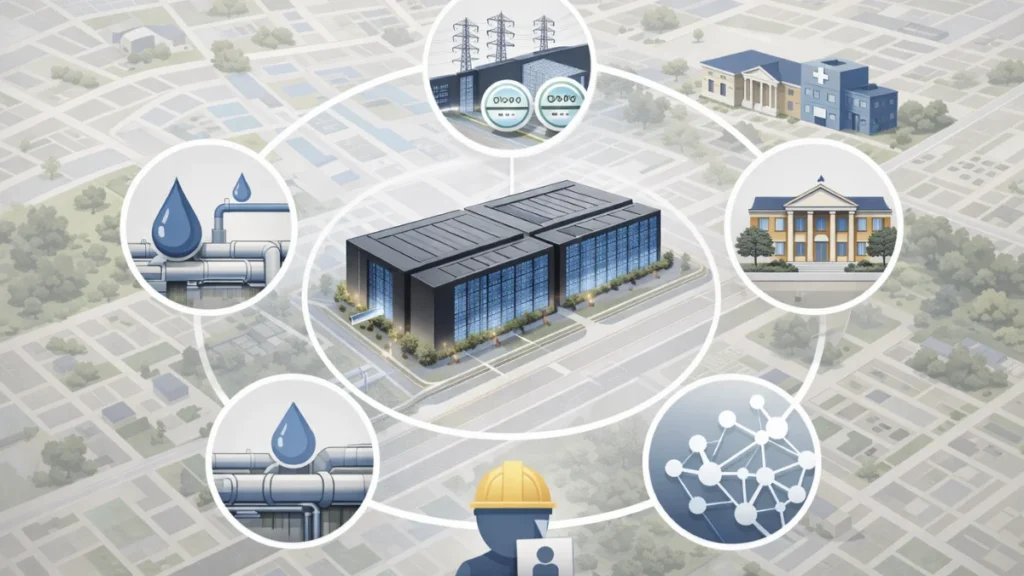
According to Microsoft’s official statements and reports from multiple authoritative media outlets, the initiative covers the following five core areas[1][2]:
Power Cost Management
: Microsoft commits to paying electricity fees at a rate that covers its own electricity costs, avoiding driving up local residential electricity prices due to the massive power demand of data centers. Microsoft will not request local governments to reduce property tax rates, and plans to cooperate with utility companies to expand power supply, and will voluntarily bear the costs of grid infrastructure upgrades when required by data centers[2][3].
Water Resource Management
: Microsoft commits to achieving “Water Replenishment” in the operating areas of its data centers, meaning the amount of water the company withdraws will be offset by an equal or greater amount. Specific measures include: deploying a new AI data center design with closed-loop systems in Wisconsin and Georgia, using recirculating coolant technology to significantly reduce water consumption; and collaborating with local municipal authorities in Arizona to inspect and repair pipe leaks, reducing community freshwater loss[1][2].
Transparency Enhancement
: Microsoft commits to disclosing detailed water usage data for each data center region, improving the operational transparency of data centers to facilitate oversight by communities and regulatory agencies[2].
Community Investment
: Microsoft plans to invest in local water supply systems, libraries, and school infrastructure, and collaborate with local non-profit organizations and enterprises to provide AI skill training programs[3].
Tax Contributions
: Microsoft clearly states that it will not apply for property tax reductions or deductions in areas where data centers are built, and will fully comply with the reasonable tax requirements of local governments[2][3].
1.2 Background of the Initiative’s Launch
The launch of this initiative has profound industry and social backgrounds. With the rapid development of generative AI technology, tech giants have been expanding data centers on a large scale to meet AI computing demands. According to Deloitte’s 2025 AI Infrastructure Survey, hyperscalers are expected to see a 44% year-on-year increase in capital expenditures for AI data centers and related computing resources in 2025, reaching $371 billion[4].
However, the rapid expansion of data centers has sparked strong backlash at the community level. In some areas surrounding data centers, electricity prices have surged by as much as 267% within five years, triggering residents’ concerns about the stability of power supply and rising costs[3]. At the same time, the water demand of data centers has also put pressure on local water supply, especially in regions already facing water scarcity.
Microsoft’s move also aligns with the policy orientation of the Trump administration. The day before Microsoft announced this initiative, U.S. President Trump announced on the social media platform Truth Social that he would cooperate with tech companies to ensure that large-scale data centers do not drive up electricity prices for American citizens, and specifically praised Microsoft as the first company to respond to this call[3].
II. Analysis of the Impact on the Tech Industry’s Operating Profit Margins
2.1 Current Status of AI Infrastructure Costs
The current tech industry is facing severe challenges in AI infrastructure costs. According to the 2025 AI Cost Management Status Research Report, 84% of enterprises have seen their gross margins eroded by more than 6% due to AI workloads, with 26% of enterprises reporting a gross margin impact of as high as 16% or more[4]. This data highlights the significant pressure that AI infrastructure investment puts on corporate profitability.
At the capital expenditure level, tech giants’ investments in data centers continue to rise. According to the latest market data[0][5]:
| Company |
2025 Data Center Capex |
YoY Growth Rate |
| Microsoft |
$80 billion |
44% |
| Google |
$75 billion |
35% |
| Amazon |
$60 billion |
28% |
| Meta |
$45 billion |
52% |
| Apple |
$50 billion |
40% |
Microsoft has committed to over $80 billion in AI-related infrastructure spending for fiscal year 2026, accounting for the majority of its capital expenditures[5]. Such large-scale investment poses sustained pressure on operating profit margins.
2.2 Cost Impact Estimation of Microsoft’s New Initiative
Microsoft’s “Community-First” initiative will increase the company’s operating costs in the short term. Based on an analysis of the initiative’s content, we estimate the following cost impacts:
Increased Power Costs
: Microsoft’s commitment to paying electricity fees at a rate covering its own electricity costs means that in some regions with lower electricity prices, it may need to pay higher than the average market price. Considering the massive power consumption of data centers, assuming Microsoft’s U.S. data centers consume 50-80 terawatt-hours (TWh) of electricity annually, with an average electricity price premium of 5-10%, the annual additional electricity cost is estimated to be in the range of $150 million to $300 million[1][2].
Water Replenishment Costs
: Microsoft’s commitment to achieving “Water Replenishment” includes direct investment in water restoration projects, support for water supply system upgrades, and collaboration with municipal authorities to repair pipe leaks. Referring to the 60 million-gallon water replenishment plan disclosed in its 2025 Environmental Sustainability Report[6], the annual water-related investment is estimated to be approximately $50 million to $100 million.
Community Investment and Training Expenditures
: Microsoft plans to invest in local libraries, school infrastructure, and provide AI skill training. Although some of these projects can be classified as marketing or R&D expenses, the direct cost expenditure is estimated to be in the range of $50 million to $100 million[3].
Comprehensive Estimation
: The total annual cost increase from Microsoft’s new initiative is expected to be in the range of $1.2 to $2 billion, accounting for 0.4-0.7% of Microsoft’s annual revenue (approximately $250 to $300 billion). Considering Microsoft’s current operating profit margin of approximately 46.27%[0], this cost increase will cause the operating profit margin to decrease by approximately 0.4-0.7 percentage points.
2.3 Analysis of Long-Term Impacts on Operating Profit Margins
Although short-term cost increases are inevitable, from a long-term perspective, this initiative may generate positive financial returns through the following channels:
Reduced Project Promotion Risks
: By proactively responding to community concerns, Microsoft can effectively reduce the risk of local resident opposition, lawsuits, or regulatory intervention in data center projects. According to industry experience, if a large-scale data center project is delayed for one year due to community resistance, its implicit costs (including opportunity costs, increased financing costs, etc.) can be as high as hundreds of millions of dollars[3]. Therefore, the “Community-First” strategy can be regarded as a risk-hedging investment.
Mitigated Policy Risks
: Against the backdrop of stricter government policies, Microsoft’s proactive compliance stance helps build good policy relationships and reduce the uncertainty risks brought by future changes in regulatory policies. Aligning with the policy orientation of the Trump administration puts Microsoft in a favorable position in policy games[2][3].
Enhanced Brand Value
: Good community relations and ESG performance help improve Microsoft’s brand image and market reputation, which in turn has a positive impact on product pricing power and customer loyalty. Although this effect is difficult to quantify precisely, in the business-to-business (B2B) market, ESG performance is increasingly becoming an important factor in procurement decisions.
Operational Efficiency Synergies
: Microsoft’s investments in water resource management and energy efficiency will drive technological upgrades in data centers. Innovative technologies such as closed-loop cooling systems not only reduce water consumption but also improve energy utilization efficiency and lower Power Usage Effectiveness (PUE) values, achieving a win-win situation for both environmental and economic benefits[6].
Based on the above analysis, we predict that after short-term pressure (approximately -1.5%), Microsoft’s operating profit margin will recover in the long term and may achieve slight growth (approximately +0.5%)[5].
2.4 Industry Follow-Up Effects and Profit Margin Transmission
As the world’s second-largest tech company (with a market capitalization of approximately $3.5 trillion)[0], Microsoft’s strategic initiatives often have an industry benchmark effect. Other tech giants are expected to face pressure to follow suit:
Google (GOOGL)
: As the world’s largest corporate purchaser of renewable energy, Google has already accumulated solid experience in data center sustainable development. Google may strengthen its existing carbon neutrality commitments, increase transparency in water resource management, and consider similar community investment plans.
Amazon (AMZN)
: As the world’s largest cloud service provider, AWS faces the greatest pressure for data center expansion. Amazon may need to further respond to community-specific concerns about electricity prices and water resources on top of its existing commitment to 100% renewable energy.
Meta (META)
: Meta’s data center capital expenditure growth rate in 2025 is the highest (52%), putting it under the greatest compliance pressure. Meta may be forced to accelerate the implementation of its ESG commitments.
Apple (AAPL)
: Apple has committed to achieving supply chain carbon neutrality by 2030, and plans to invest $500 billion in the U.S. over the next four years to build data centers and manufacturing facilities[7]. Apple may extend its existing environmental commitments to the community level.
Industry follow-up strategies are expected to put pressure on the overall operating profit margin of the tech industry by approximately 1-2 percentage points[5]. However, this “arms race”-style ESG investment may also drive the entire industry to transform towards a more sustainable development model, which is beneficial to the healthy development of the industry in the long run.
2.5 Short-Term Impact on Tech Sector Stock Prices
The market’s reaction to Microsoft’s new initiative shows some divergence. In terms of stock price performance, Microsoft’s stock price fell slightly after the announcement of the initiative, with a cumulative decline of approximately 2.20% over five days[0], as some investors are concerned about the negative impact of increased costs on short-term earnings.
However, from a technical analysis perspective, Microsoft is currently in a downward trend, with the MACD showing a “death cross” signal and the KDJ indicator indicating an oversold status[0]. Considering that the current stock price is in the middle of its 52-week range and below the 200-day moving average, there may be a rebound opportunity in the short term. The analyst consensus still maintains a “Buy” rating, with a median target price of $645, representing approximately 37% upside potential from the current price[0].
III. Analysis of the Impact on ESG Investment Ratings
3.1 ESG Rating Framework and Data Center Industry Weightings
In the current mainstream ESG rating systems, the environmental (E), social (S), and corporate governance (G) performance of data center operators are all focused on. The environmental impacts of data centers are mainly reflected in energy consumption, water usage, carbon emissions, and land use, among others; social impacts include job creation, community relations, the digital divide, etc.; corporate governance involves ESG information disclosure quality, risk management, etc.[8].
According to the analysis framework of ESG industry research institutions, the main factors and weightings for data center ESG ratings are as follows[8][9]:
| Factor |
Weight |
Corresponding Measures in Microsoft’s Initiative |
| Water Resource Management |
25% |
Water replenishment commitment, pipe repair collaboration |
| Fairness of Power Costs |
20% |
Full payment of electricity fees, no tax reduction requests |
| Community Investment |
20% |
Investment in water supply systems, libraries, schools |
| Tax Contributions |
15% |
No application for property tax reductions |
| Skill Training |
20% |
AI skill training programs |
Microsoft’s “Community-First” initiative covers almost all key ESG rating factors, and is expected to achieve rating improvements in multiple dimensions.
3.2 Impact Analysis on the Environmental (E) Dimension
Water Resource Management
: In its 2025 Environmental Sustainability Report, Microsoft disclosed its goal to achieve “Water Positive” by 2030, meaning net water replenishment exceeds consumption[6]. The water “replenishment” commitment and pipe repair collaboration projects in the new initiative directly support the achievement of this goal.
Specifically, Microsoft has signed contracts for 3,400 megawatts (34 GW) of new renewable energy projects in 24 countries worldwide, expanding access to carbon-free electricity[6]. In terms of data center design, the AI data center design with closed-loop systems deployed in Wisconsin and Georgia enables continuous recirculation of coolant, significantly reducing demand for drinking water[2]. This technological progress not only reduces operating costs but also significantly improves the environmental footprint.
Microsoft’s performance in water resource management is expected to improve from “A” to “AA”, with its water use efficiency index entering the top 10% of the industry.
Energy Efficiency
: Microsoft continues to promote more efficient data center design technologies, optimize power efficiency, and expand the application of carbon-free electricity. Between 2020 and 2024, the scale of Microsoft’s carbon-free electricity projects increased by 18 times[6]. In addition, Microsoft advocates for the establishment of an interoperable carbon accounting system, expands green workforce skill training, and supports a just energy transition.
These measures are expected to further optimize Microsoft’s carbon emission intensity index, and its environmental dimension score in the MSCI ESG rating is expected to increase by 5-10 percentage points.
3.3 Impact Analysis on the Social (S) Dimension
The impact of Microsoft’s “Community-First” initiative in the social dimension is mainly reflected in the following aspects:
Community Investment and Infrastructure Improvement
: Microsoft’s commitment to investing in local water supply systems, libraries, and schools not only improves the quality of life of local residents but also reflects the responsibility of tech enterprises for community development[3]. During the construction and operation of data centers, tech enterprises are often regarded as “outsider giants” with inherent tensions with local communities. Microsoft’s proactive investment stance helps alleviate this opposition and build mutually beneficial community relationships.
Employment and Skill Training
: The construction and operation of data centers create a large number of job opportunities, including professional positions such as construction workers and operation and maintenance personnel. Microsoft plans to provide construction job training for data center construction workers, operation and maintenance training for the operation phase, and collaborate with local schools, libraries, non-profit organizations, and enterprises to provide AI skill training programs[2][3]. These measures help improve the employability and income levels of local residents and promote digital inclusion.
Fairness of Power Costs
: Microsoft’s commitment to paying electricity fees at a rate covering its own electricity costs ensures that data centers do not drive up local residential electricity prices. This commitment directly addresses the core concerns of the community and helps maintain social stability and resident well-being[1][2][3].
Comprehensive assessment shows that Microsoft’s performance in the social dimension will improve from the industry average to the industry-leading level, with its ESG social score expected to increase by 8-12 percentage points.
3.4 Impact Analysis on the Corporate Governance (G) Dimension
Microsoft’s performance in the governance dimension has always been its ESG strength. The new “Community-First” initiative further strengthens this advantage:
Transparency Enhancement
: Microsoft’s commitment to disclosing detailed water usage data for each data center region improves the completeness and transparency of ESG information disclosure[2]. High-quality ESG disclosure is a key consideration for rating agencies such as MSCI.
Proactive Compliance Stance
: Against the backdrop of stricter government policies, Microsoft proactively raises standards and bears additional costs, reflecting forward-looking risk management awareness and a sound governance structure[2][3].
Abandonment of Tax Incentives
: Microsoft clearly states that it will not apply for property tax reductions. This seemingly “self-defeating” measure actually reflects the enterprise’s responsible attitude towards local finances and helps establish long-term stable government-enterprise relationships[2][3].
Microsoft’s score in the corporate governance dimension is expected to remain industry-leading, and its MSCI ESG rating is expected to be maintained at “AAA”[9].
3.5 Comprehensive ESG Rating Outlook
Based on the above analysis, Microsoft’s new “Community-First” initiative is expected to have the following impacts on its ESG ratings:
| ESG Dimension |
Current Rating |
Expected Rating Change |
Score Increase Range |
| Environmental (E) |
A |
→ AA |
+5-10 points |
| Social (S) |
BBB |
→ A |
+8-12 points |
| Governance (G) |
AAA |
→ AAA |
+0-3 points |
Overall |
AAA |
Maintained/Strengthened |
+5-10 points |
Microsoft currently holds an MSCI ESG “AAA” rating, with a temperature rise of 1.3°C, and has committed to achieving carbon neutrality by 2045[9]. The new initiative will further consolidate its leading position in the ESG field and enhance its attractiveness to ESG funds and responsible investors.
3.6 Impact on ESG Investment Trends
Microsoft’s initiative may have the following impacts on ESG investment:
Elevated Industry Standards
: As one of the world’s most influential tech companies, Microsoft’s “Community-First” standards may be widely adopted by the industry, driving the overall upgrade of ESG practices in data centers[8].
Increased Investor Attention
: ESG investors will pay more attention to the impact of data center expansion in the tech industry on local communities and the environment, and Microsoft’s proactive response strategy will become an industry benchmark.
Green Financial Support
: Good ESG performance helps Microsoft access low-cost financing channels such as green loans and sustainability-linked bonds. Digital Edge has already obtained its first green loan[10], and Microsoft may follow up with similar financing arrangements.
Supply Chain Transmission
: Microsoft’s ESG standards may be transmitted to its upstream supply chain, requiring server, chip, and equipment suppliers to improve their ESG performance, promoting the sustainable development of the entire tech supply chain.
IV. Industry Comparison and Competitive Landscape Analysis
4.1 Tech Industry Data Center Expansion Race
The current tech industry is in a critical period of data center expansion. According to industry forecasts, by 2030, the power demand of data centers is expected to grow from the current approximately 200 terawatt-hours to over 500 terawatt-hours, driven mainly by the explosive growth of AI workloads[7][10].
The strategic layouts of major tech companies show the following characteristics:
Microsoft
: Committed to over $80 billion in AI-related infrastructure spending for fiscal year 2026, focusing on the application of environmental protection technologies such as closed-loop cooling and water replenishment[5][6].
Google
: Plans to invest $75 billion in AI infrastructure in 2025, focusing on investments in carbon-free electricity and high-efficiency data center design[7].
Amazon
: AWS plans to invest $60 billion, emphasizing its 100% renewable energy target, but with relatively few community-level initiatives[7].
Meta
: Has the highest capital expenditure growth rate (52%), faces the greatest compliance pressure, and may accelerate the implementation of ESG commitments[7].
Apple
: Plans to invest $500 billion in the U.S. over the next four years, including data centers and manufacturing facilities[7].
4.2 Analysis of Microsoft’s Competitive Advantages
Through the “Community-First” initiative, Microsoft has established competitive advantages in the following aspects:
Mitigated Policy Risks
: Against the backdrop of government concern about the impact of data centers on electricity prices, Microsoft’s proactive compliance stance has received public recognition from the Trump administration, helping it occupy a favorable position in policy games[2][3].
Improved Community Relations
: By investing in local infrastructure and skill training, Microsoft has transformed data centers from “problem creators” to “community contributors”, reducing resistance to project promotion[3].
Brand Differentiation
: Against the backdrop of increasing attention to ESG performance, Microsoft’s proactive initiatives have created brand differentiation, helping it attract ESG investors and green consumers[8].
Technological Leadership
: The application of innovative technologies such as closed-loop cooling and closed-loop systems enables Microsoft to maintain a leading position in data center technical efficiency[2][6].
4.3 Forecast of Industry Follow-Up Paths
Other tech companies are expected to adopt the following follow-up strategies:
| Company |
Possible Follow-Up Measures |
Timeline |
| Google |
Strengthen water resource disclosure, expand community investment |
6-12 months |
| Amazon |
Respond to electricity price concerns, increase transparency |
6-12 months |
| Meta |
Accelerate ESG commitment implementation, expand renewable energy procurement |
12-18 months |
| Apple |
Extend environmental commitments to the community level |
12-24 months |
Industry follow-up will drive the overall improvement of ESG standards for data centers, but may also put universal pressure on the profit margins of the tech industry by approximately 1-2 percentage points[5].
V. Investment Implications and Risk Warnings
5.1 Judgment on the Impact on Microsoft’s Stock
Short-Term Impact
: Microsoft’s stock price fell slightly (-1.36%) after the announcement of the initiative, reflecting market concerns about increased costs[0]. However, considering that Microsoft’s current stock price is in the middle of its 52-week range and technical indicators show an oversold status, there may be a rebound opportunity in the short term.
Mid-Term Impact
: As the market gradually digests the impact of increased costs and recognizes the risk mitigation and brand value enhancement brought by the initiative, Microsoft’s stock price is expected to receive support. The analyst consensus still maintains a “Buy” rating, with a median target price of $645, representing approximately 37% upside potential from the current price[0].
Long-Term Impact
: From a long-term investment perspective, the “Community-First” initiative reflects Microsoft’s profound understanding of sustainable development trends and forward-looking layout, helping to consolidate its competitive advantages in the AI era. Against the backdrop of ESG investment increasingly becoming mainstream, Microsoft is expected to attract more long-term institutional investors.
5.2 Impact on Tech Industry ETFs
Beneficiary ETFs
:
- Global X Cloud Computing ETF (CLOU)
- First Trust Cloud Computing ETF (SKYY)
- iShares Expanded Tech-Software Sector ETF (IGV)
Pressured ETFs
:
- Technology Select Sector SPDR Fund (XLK)
- Invesco QQQ Trust (QQQ)
Investors may consider buying on dips tech companies with ESG advantages during adjustments in the tech sector, or increasing allocations to high-growth, high-margin sectors such as cloud computing and SaaS.
5.3 Risk Factors
Policy Risk
: Although Microsoft’s initiative aligns with the current government’s policy orientation, uncertainty about policy changes still exists. If the policy direction adjusts in the future, Microsoft may face the risk of investment returns falling short of expectations.
Execution Risk
: This initiative involves multiple communities and utility companies, with high coordination difficulties. If execution is ineffective, it may lead to cost overruns or outcomes falling short of expectations.
Competition Risk
: If other tech companies follow suit quickly, Microsoft’s differentiated advantages may be weakened.
Macroeconomic Risk
: If AI demand falls short of expectations and the expansion speed of data centers slows down, Microsoft’s high capital expenditures may face return risks.
5.4 Investment Recommendations
For Microsoft’s Stock
: Maintain an “Overweight” rating. The short-term adjustment provides a good buying opportunity, with a target price of $500-$520 and a stop-loss level of $450[0].
For the Tech Sector
: It is recommended to focus on cloud computing and software service companies with ESG advantages, and avoid hardware companies that are capital expenditure-intensive but have poor ESG performance.
For ESG Investment Portfolios
: Microsoft