
JD Logistics' Privatization of Deppon: Transaction Analysis and Assessment of Shareholder Value Impact
Unlock More Features
Login to access AI-powered analysis, deep research reports and more advanced features
About us: Ginlix AI is the AI Investment Copilot powered by real data, bridging advanced AI with professional financial databases to provide verifiable, truth-based answers. Please use the chat box below to ask any financial question.
Related Stocks
Now I will conduct an in-depth analysis based on the collected data and generate visual charts to demonstrate the impact of the transaction.

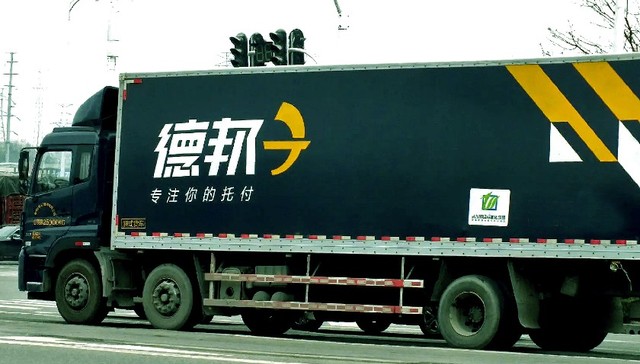
According to the latest announcement, Suqian JD Zhuofeng, a wholly-owned subsidiary of JD Logistics (2618.HK) and the indirect controlling shareholder of Deppon Co., Ltd. (603056.SH), proposes that Deppon voluntarily delist from the Shanghai Stock Exchange. As the core of the privatization plan, JD Logistics will provide Deppon shareholders with a cash exit option at a price of
| Project | Data |
|---|---|
| Cash Exit Option Price | 19.0 RMB/share |
| Number of Shares Involved | Approximately 202.78 million shares |
| Total Consideration | RMB 3.797 billion |
| Premium vs. Pre-suspension Price | 35.3% |
| JD Logistics’ Shareholding Ratio | 80.01% |
The core motivation for this privatization stems from the commitment made by JD Logistics during its acquisition of Deppon in 2022. On September 6, 2022, Suqian JD Zhuofeng issued a commitment: within five years from the completion of the previous tender offer, it will resolve the horizontal competition issue between JD Logistics and Deppon Co., Ltd. through feasible measures[1][2]. Now entering the fourth year, this voluntary delisting is an inevitable requirement to fulfill the aforementioned commitment.
From the perspective of capital market regulatory logic, voluntary delisting aligns with the policy orientation of “further smoothing diversified delisting channels” stated in the Several Opinions of the State Council on Strengthening Supervision, Preventing Risks, and Promoting High-Quality Development of the Capital Market[1]. In recent years, the China Securities Regulatory Commission (CSRC) and the Shanghai Stock Exchange (SSE) have attached great importance to the construction of the capital market ecosystem, guiding listed companies to focus on their core businesses and improve quality and efficiency by deepening the reform of the delisting system.
Regarding market speculations about JD Logistics listing on the A-share market or asset injection, analysts believe these paths are not feasible[1][2]:
- Asset Injection Path: In the logistics industry, the boundaries between express delivery, less-than-truckload (LTL) freight, and supply chain businesses are blurred. Supply chain business is essentially an integrated form of “warehousing + LTL freight + express delivery”. Even if asset integration is carried out, it may still be deemed to have horizontal competition.
- A-Share Listing Path: After the full implementation of the registration-based system, red-chip companies listed overseas need to meet strict conditions to apply for listing on the A-share main board. JD Logistics’ industry attributes and market capitalization scale make it difficult to meet the requirements.
Therefore, voluntary delisting has become
According to financial data, JD Logistics currently has a market capitalization of approximately HK$72.7 billion and its financial position is relatively stable[0]. The cash expenditure of RMB 3.797 billion will have a certain impact on the company’s short-term cash flow, but considering the following:
- The company remained profitable in 2024, with a net profit margin of approximately 3.34%[0]
- Operating cash flow has remained positive, with free cash flow reaching RMB 15.172 billion in 2024[0]
- Sufficient cash reserves on hand, with the ability to make payments
If funds for privatization are raised through financing, it may cause a certain degree of dilution to the interests of existing shareholders. However, considering that JD Logistics holds approximately 80% of Deppon’s shares, the actual cash payment is mainly targeted at minority shareholders (approximately 20% of the equity), with an actual net cash outflow of approximately RMB 760 million (RMB 3.797 billion × 20%), which has a relatively limited overall financial impact on the company.
The complete resolution of the horizontal competition issue will bring the following benefits to JD Logistics:
- Eliminating Potential Conflicts of Interest: Avoid internal competition with Deppon during business expansion
- Unified Strategic Planning: Can coordinate resource allocation at the group level to avoid redundant construction
- Enhancing Capital Market Recognition: Fulfilling commitments demonstrates the spirit of contract and strengthens investor trust
According to analysis by research institutions, the synergies between JD Logistics and Deppon are mainly reflected in the following aspects[3][4]:
| Synergy Dimension | Specific Performance | Expected Benefits |
|---|---|---|
Network Integration |
Trunk line + transfer network integration | Reduce trunk transportation costs by 15-20% |
Last-Mile Pickup and Delivery |
Network transformation and integration of redundant resources | Reduce operating expenses and improve store efficiency |
Customer Diversion |
Business introduction from JD Group | Sustained growth in connected transaction volume |
Resource Complementarity |
Complementarity between large-parcel express and small-parcel delivery | Improve product portfolio |
| Year | Connected Transaction Volume (RMB 100 million) | YoY Change |
|---|---|---|
| 2022 Actual | 0.20 | - |
| 2023 Actual | 33.86 | Substantial Growth |
| 2024 Actual | 58.33 | +72.2% |
| 2025 Forecast | 84.61 | +45.1% |
The continuous expansion of connected transaction volume indicates that the synergy between the two parties is accelerating[2]
The current logistics industry is in a transition period of high-quality development, with market competition shifting from simple price wars to competition in comprehensive service capabilities. After the completion of privatization, the two parties can form stronger competitive advantages in the following aspects:
- Complementary Service Capabilities: Deppon has obvious advantages in large-parcel transportation, which complements JD Logistics’ small-parcel delivery capabilities
- Improved Coverage Network: The integrated network will have more comprehensive coverage, enabling end-to-end “warehousing + trunk line + delivery” services
- Establishing Cost Advantages: Scale effects and network integration will significantly reduce comprehensive operating costs
According to announcements and industry analysis, the integration of Deppon after delisting will follow the following path:
- Full connection of network resources
- Interconnection of information systems
- Unification of operating standards
- Personnel optimization and organizational adjustment
- Full realization of cost synergies
- Gradual emergence of revenue synergies
- Differentiated brand positioning
- Consolidation and enhancement of market position
As the first express logistics enterprise listed via IPO in China, Deppon has high brand recognition in the LTL freight market. After delisting, it is expected that Deppon will
- Preserve Deppon’s brand value
- Maintain the stability of customer relationships
- Avoid the risk of customer loss caused by brand integration
According to previously disclosed cooperation information, the two parties have made progress in resource integration in the following areas:
- Asset Transfer: In 2023, Deppon purchased part of the assets of 83 transit centers from JD Logistics for no more than RMB 106 million[3]
- Business Cooperation: Connected transactions generated by Deppon providing labor services to JD Group have continued to grow
- Network Integration: The trunk line + transfer network integration project is gradually deepening
Maintaining the stability of the management team during the privatization process is crucial for business continuity. It is expected that JD Logistics will continue to rely on Deppon’s existing management team to promote integration, so as to reduce business fluctuations.
Deppon’s net profit attributable to shareholders of the listed company in the first three quarters of 2025 was
There are differences in corporate culture and management style between JD Logistics and Deppon. Integration cases in the logistics industry show that cultural conflicts may lead to problems such as personnel turnover and reduced efficiency.
The logistics industry is highly competitive. Competitors such as J&T Express and ZTO Express continue to expand, and the risk of price wars still exists. During the integration period, Deppon needs to face challenges from competitors.
From a valuation perspective, the impact of this privatization transaction on JD Logistics’ shareholder value can be assessed from the following dimensions:
| Assessment Dimension | Impact Judgment | Explanation |
|---|---|---|
| Short-Term Cash Flow | Negative | Cash expenditure of RMB 3.797 billion (actual net outflow of approximately RMB 760 million) |
| Resolution of Horizontal Competition | Positive | Eliminates long-term uncertainty and improves valuation certainty |
| Synergy Expectations | Positive | Network integration brings cost savings and revenue growth |
| Market Share Enhancement | Positive | Strengthens competitiveness in integrated logistics services |
Overall,
- Unexpectedly strong release of integration synergies
- Deppon’s return to profitability
- Recovery of logistics industry prosperity
- Driven by JD Group’s business growth
- Integration progress falls short of expectations
- Continued deterioration of Deppon’s performance
- Intensification of industry price wars
- Macroeconomic downturn impacts logistics demand
Based on the above analysis, our investment recommendations for JD Logistics stock are as follows:
-
Investment Rating: Maintain “Buy” rating (current target price: HK$18.50, with approximately 32.5% upside potential from the current price)[4]
-
Core Logic:
- Privatization resolves the horizontal competition issue and eliminates long-term uncertainty
- Continuous growth of connected transactions indicates that synergies are being unlocked
- The logistics industry pattern is optimizing, and the company is expected to benefit from the high-quality development of the industry
- Current valuation is attractive (P/E ratio of approximately 10x, lower than the historical average)
-
Key Focus Areas:
- Progress of Deppon’s privatization and details of the integration plan
- Specific implementation of synergies between the two parties
- Progress of Deppon’s performance improvement
- Changes in the logistics industry competition pattern
JD Logistics’ promotion of Deppon’s privatization with a cash exit option of RMB 3.797 billion is a transaction with both strategic significance and commercial rationality. In the short term, the cash expenditure will have a certain impact on JD Logistics’ finances, but considering the company’s stable financial position and that only the minority shareholders’ equity portion needs to be paid, the overall impact is controllable. In the long term, privatization will completely resolve the horizontal competition issue, remove obstacles for the two parties to deepen synergy, and help unlock the integration effect of “1+1>2”.
After Deppon’s delisting, it is expected that on the basis of maintaining brand independence, it will fully access the core resources of the JD Logistics system to achieve in-depth strategic integration. Against the background of the logistics industry’s transformation from price wars to competition in comprehensive service capabilities, the in-depth synergy between the two parties will help build a more competitive modern logistics service system.
For JD Logistics’ shareholders, this privatization may bring certain financial pressure in the short term, but in the long term, it will enhance the company’s strategic value and market competitiveness. Against the background of the continuous optimization of the logistics industry pattern, JD Logistics is expected to further consolidate its position as an integrated logistics service provider through in-depth integration with Deppon, creating sustainable long-term returns for shareholders.
[1] Securities Times Network - “Deppon Co., Ltd. Delisting: A Win-Win Strategic Choice for Shareholders, Offer Premium Exceeds 35%” (https://www.stcn.com/article/detail/3590666.html)
[2] Sina Finance - “After Anneng, Another LTL Freight Giant Plans Voluntary Delisting” (https://finance.sina.com.cn/jjxw/2026-01-13/doc-inhheqfm9018505.shtml)
[3] Securities Times Network - “Deppon Co., Ltd. Purchases JD Logistics Assets for Over RMB 100 Million to Promote Resource Integration and Complementary Advantages” (https://www.stcn.com/article/detail/906796.html)
[4] BOCOM International Research Report - “JD Logistics (2618 HK): Early Investment Drives Accelerated Growth of External Integrated Revenue” (https://pdf.dfcfw.com/pdf/H3_AP202508161728603439_1.pdf)
[5] Cinda Securities Research Report - “In-Depth Network Integration Promises Profits for LTL Freight Giant” (https://pdf.dfcfw.com/pdf/H3_AP202504011649969107_1.pdf)
[6] Gilin AI - JD Logistics (2618.HK) Company Profile and Financial Data API
[7] Gilin AI - JD Logistics (2618.HK) Financial Statement Analysis API
Insights are generated using AI models and historical data for informational purposes only. They do not constitute investment advice or recommendations. Past performance is not indicative of future results.
About us: Ginlix AI is the AI Investment Copilot powered by real data, bridging advanced AI with professional financial databases to provide verifiable, truth-based answers. Please use the chat box below to ask any financial question.