
In-Depth Analysis of Meta Reality Labs Layoffs and AI Device Transformation
Unlock More Features
Login to access AI-powered analysis, deep research reports and more advanced features
About us: Ginlix AI is the AI Investment Copilot powered by real data, bridging advanced AI with professional financial databases to provide verifiable, truth-based answers. Please use the chat box below to ask any financial question.
Related Stocks
Based on the collected data, I can now conduct a comprehensive analysis of Meta’s strategic transformation.
Meta announced approximately 10% staff reduction in its Reality Labs division in January 2026, involving about 1,500 positions[1][2]. Chief Technology Officer Andrew Bosworth issued an internal announcement, and affected employees received layoff notices on Tuesday. Meta spokesperson Tracy Clayton confirmed: “We said last month that we would shift some investments from the metaverse to wearables, and this is part of that strategy. We plan to use the savings to support the growth of wearables this year”[3].
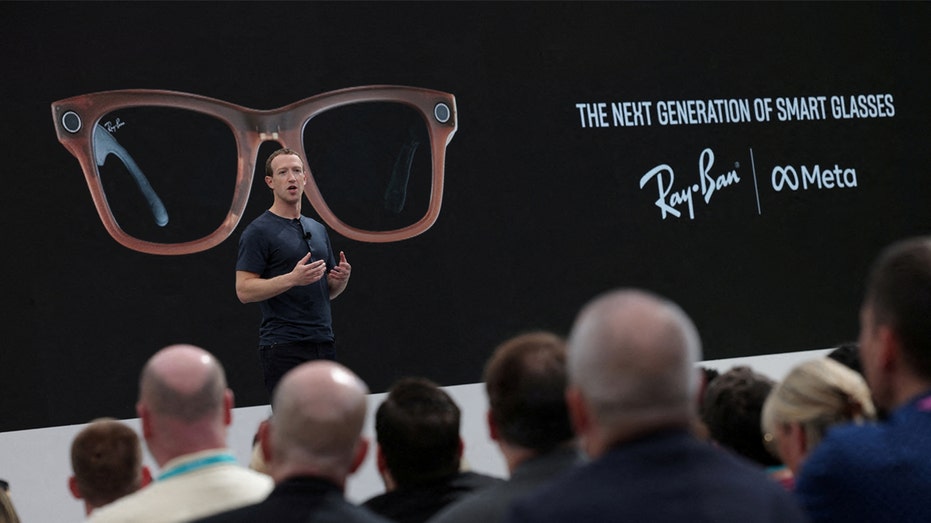
This layoff mainly affects the virtual reality products and Horizon Worlds (VR social network) teams, while the Ray-Ban smart glasses team is unaffected[2].
Based on the latest financial data[0]:
| Metric | 2025 Q3 Data |
|---|---|
| Reality Labs Revenue | $470 million |
| Reality Labs Proportion | Only 0.9% |
| Reality Labs Quarterly Loss | Approximately $4.4 billion[2] |
| Family of Apps Revenue | $50.77 billion (99.1%) |
In stark contrast to the predicament of the VR business:
- Sales Breakthrough: Ray-Ban Meta smart glasses saw a 200% year-over-year sales growth in the first half of 2025, with cumulative sales exceeding 2 million units[4]
- Market Share: Captured 6% of the smart glasses market share in the first quarter[5]
- Supply Shortage: Demand is so strong that the pre-order list extends into 2026, and launches in Europe and Canada have been delayed[6]
- Capacity Expansion: Meta plans to double the production capacity of AI smart glasses by the end of 2026[3]
The global smart glasses market is projected to grow from $2.47 billion in 2025 to $8.26 billion in 2030, with a compound annual growth rate of 27.3%[5]. This high-growth track stands in contrast to the slow development of the VR market.
Based on the latest data[0]:
| Financial Metric | Value | Assessment |
|---|---|---|
| Market Capitalization | $1.59 trillion | Stable position as a tech giant |
| Price-to-Earnings Ratio (P/E) | 27.14x | Relatively reasonable |
| Net Profit Margin | 30.89% | Excellent |
| Operating Profit Margin | 43.23% | Industry-leading |
| ROE | 30.93% | Efficient capital utilization |
| Current Ratio | 1.98 | Financially sound |
| Free Cash Flow (2024) | $54.07 billion | Ample cash generation capacity |
| Quarter | Revenue | Year-over-Year Growth | EPS |
|---|---|---|---|
| 2025 Q3 | $51.24 billion | +26% | $7.25 |
| 2025 Q2 | $47.52 billion | - | $7.14 |
| 2025 Q1 | $42.31 billion | - | $6.43 |
| Rating Metric | Data |
|---|---|
| Consensus Target Price | $825 (+30.7% upside potential) |
| Target Price Range | $718 - $1,117 |
| Proportion of Buy Ratings | 84.3% (Strong Buy + Buy) |
| Overall Rating | Buy |
- ❌ The metaverse is not completely abandoned
- ✅ The metaverse timeline has been extended[1]
- ✅ Resource priority is tilted towards AI wearables
Meta spokesperson Nissa Anklesaria clearly stated: “Across the Reality Labs portfolio, we are shifting some investments from the metaverse to AI glasses and wearables given the momentum in that area”[2].
| Factor | VR/Metaverse | AI Smart Glasses |
|---|---|---|
| Consumer Acceptance | Slow | Rapid growth |
| Market Validation | Not yet mainstream | Validated by 2 million units sold |
| Profitability Outlook | Consistent losses | Marginal improvement |
| AI Integration Capability | Limited | Natural carrier |
| Daily Usage Scenarios | Limited | Seamless integration |
As analysts pointed out: “In the tech industry, capital and talent follow the highest-impact opportunities — right now, that’s AI”[1]. The leading positions of companies like OpenAI and Google in the AI field have forced Meta to re-evaluate resource allocation.
Meta is deeply integrating AI capabilities into its product matrix:
- Advertising Business: Q3 ad impressions increased by 14%, and average price per ad rose by 10%[6]
- User Engagement: User interaction on Family of Apps continues to strengthen
- Wearable AI: Ray-Ban smart glasses serve as the physical carrier for AI assistants
- Infrastructure: 2025 capital expenditure is increased to $70-$72 billion, mainly for AI infrastructure[6]
| Competitor | Smart Glasses Product | Status |
|---|---|---|
| Meta/EssilorLuxottica | Ray-Ban Meta | Market leader |
| Amazon | Echo Frames | Competitor |
| Next-generation smart glasses | In development | |
| Apple | Vision Pro | High-end positioning, different track |
Meta’s partnership with EssilorLuxottica provides a key retail channel advantage[5].
- Capacity Bottleneck: Demand far exceeds supply, which may delay revenue growth
- Hardware Complexity: Manufacturing of the dual-component (glasses + wristband) setup has complexities[5]
- AI Competition: Needs to catch up with OpenAI and Google where it lags[2]
- Reality Labs Losses: Will continue to face pressure in the short term
| Dimension | Assessment |
|---|---|
Short-Term Impact |
Layoffs cut costs and improve operational efficiency; the stock price has already priced in some expectations |
Strategic Rationality |
Highly reasonable — shifting from a high-loss, low-validated business to a high-growth, validated business |
Financial Health |
Strong — high profit margins and ample cash flow support long-term investment |
Innovation Competitiveness |
Enhanced — AI integration + wearable hardware form differentiation |
Metaverse Outlook |
Postponed rather than abandoned — waiting for technological maturity and improved market acceptance |
- Current Stock Price: $631.09[0]
- Analyst Target Price: $825 (+30.7%)[0]
- 60-Day Performance: Down 10.75% (market-wide adjustment + concerns over AI investment)[0]
- Technical Position: Below the 50-day moving average ($640.50), approaching the support zone
- The core advertising business continues to grow strongly
- AI smart glasses have proven product-market fit
- The financial foundation is sound, supporting multi-line investments
- Analysts are generally bullish, with 84% giving buy ratings
[0] Broker API Data (market quotes, financial metrics, analyst ratings)
[1] LinkedIn News - “Meta moves forward with job cuts to its metaverse unit” (https://www.linkedin.com/news/story/meta-moves-forward-with-job-cuts-to-its-metaverse-unit-7409217/)
[2] Final Round AI - “Meta Layoffs 2026: VR Reality Labs Hit by 10% Job Cuts” (https://www.finalroundai.com/blog/meta-reality-labs-layoffs-2026)
[3] The Verge - “Meta confirms Reality Labs layoffs and shifts to invest more in wearables” (https://www.theverge.com/news/861295/meta-reality-labs-layoffs-shift-to-wearables)
[4] CNET - “Smart Glasses Are Coming for Your Face, With Wild Ambitions” (https://www.cnet.com/tech/computing/features/smart-glasses-revolution-whats-coming-meta-ray-bans-and-beyond/)
[5] AInvest - “Meta’s Ray-Ban AI Glasses: Scaling for Market Dominance in a High-Growth Segment” (https://www.ainvest.com/news/meta-ray-ban-ai-glasses-scaling-market-dominance-high-growth-segment-2601/)
[6] Barchart - “As Meta Delays New Ray-Ban Display Glasses, Should You Buy, Sell, or Hold META Stock” (https://www.barchart.com/story/news/36984366/as-meta-delays-new-ray-ban-display-glasses-should-you-buy-sell-or-hold-meta-stock)
Insights are generated using AI models and historical data for informational purposes only. They do not constitute investment advice or recommendations. Past performance is not indicative of future results.
About us: Ginlix AI is the AI Investment Copilot powered by real data, bridging advanced AI with professional financial databases to provide verifiable, truth-based answers. Please use the chat box below to ask any financial question.