
Trump-Powell Tensions Escalate: Analysis of Federal Reserve Independence Crisis
Unlock More Features
Login to access AI-powered analysis, deep research reports and more advanced features
About us: Ginlix AI is the AI Investment Copilot powered by real data, bridging advanced AI with professional financial databases to provide verifiable, truth-based answers. Please use the chat box below to ask any financial question.
Related Stocks
This analysis examines the escalating confrontation between President Donald Trump and Federal Reserve Chair Jerome Powell, marking an unprecedented challenge to central bank independence. On January 13, 2026, President Trump intensified his public attacks on Powell, labeling him “incompetent” or “crooked” while the Department of Justice simultaneously opened a criminal investigation into Powell related to the Fed’s $2.5 billion headquarters renovation project [1][2]. The Dow Jones Industrial Average declined 0.86% in response to the political tensions, reflecting market concerns about monetary policy uncertainty and constitutional implications [0]. This developing situation represents the first-ever criminal investigation of a sitting Federal Reserve chair and has sparked bipartisan backlash from lawmakers and Wall Street leaders alike.
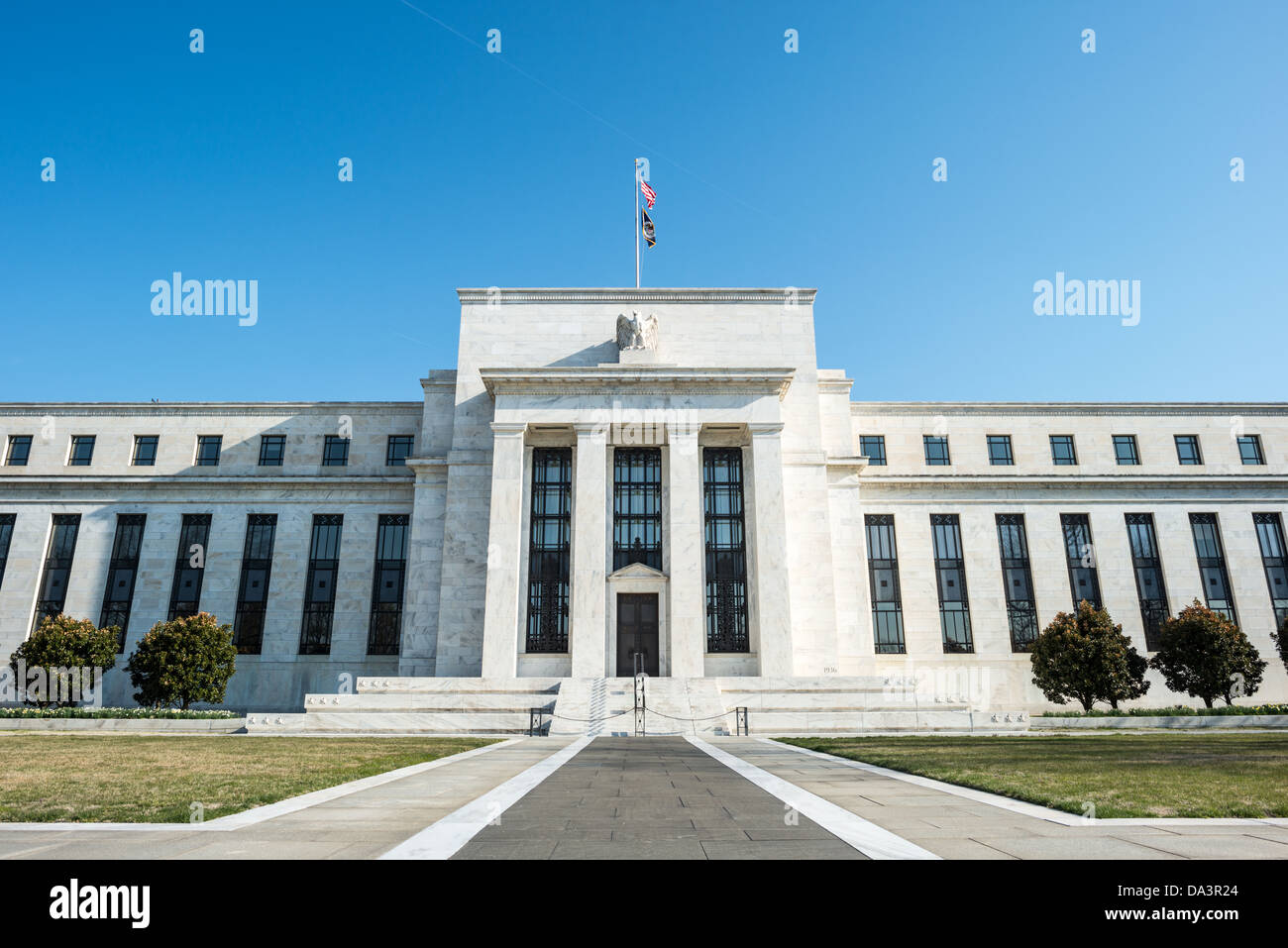
The confrontation between President Trump and Fed Chair Powell represents a fundamental assault on the independence of the United States’ central bank, a cornerstone of American economic stability since the Federal Reserve Act of 1913. The verbal attacks from the White House have been escalating since late 2024, but reached a critical inflection point when the DOJ initiated a criminal investigation that Powell himself confirmed in a video statement on January 11, 2026 [3][4]. This investigation centers on the controversial $2.5 billion renovation project at the Federal Reserve headquarters, which has run billions over its original budget, providing a legal pretext for the administration’s pressure campaign.
The timing of these attacks is particularly significant given Powell’s scheduled term expiration as Fed chair in May 2026, though he can remain as a governor until 2028. This creates a complex political and legal landscape where the administration may be attempting to either force Powell’s resignation or create conditions that would justify his removal before his term expires. The “for cause” removal provisions that protect Fed governors are now being tested in real-time, with implications that could reshape the relationship between the executive branch and monetary policy authorities for generations [4].
The market’s reaction to the developing crisis has been relatively measured but revealing in its distribution across indices. The Dow Jones Industrial Average showed the most pronounced sensitivity, declining 0.86% to close at 49,192.00, while the S&P 500 fell 0.20% to 6,963.75 and the NASDAQ slipped 0.11% to 23,709.87 [0]. The Russell 2000, often considered a barometer of domestic economic sentiment, declined 0.43% to 2,633.10. The disproportionate impact on the Dow Jones—considered more sensitive to financial sector dynamics—suggests investors are specifically concerned about implications for banking and financial services.
Jamie Dimon, CEO of JPMorgan Chase, has joined the chorus of critics warning about the economic consequences of undermining Fed independence. Dimon cautioned that these actions may “raise inflation expectations and probably increase rates,” highlighting the potential for self-defeating economic policy [5]. The relatively contained nature of market volatility thus far should not be interpreted as complacency; rather, markets may be awaiting more concrete developments, particularly the January 27-28 Federal Open Market Committee meeting and any Supreme Court rulings regarding Fed governance.
The legal framework surrounding Fed independence is being tested in unprecedented ways. Senator Thom Tillis, a Republican, has threatened to block all Fed nominees until the DOJ investigation is resolved, demonstrating that the administration’s approach has encountered resistance within its own party [3][5]. This bipartisan backlash is significant because it suggests that the removal of institutional norms around central bank independence may carry political costs that extend beyond partisan lines.
The Supreme Court is scheduled to hear arguments on January 21, 2026, regarding the removal of Fed Governor Lisa Cook, which will establish important precedent for the scope of presidential authority over Fed leadership. Kevin Hassett, Trump’s top economic adviser, has emerged as the front-runner to replace Powell, which would signal a significant shift in the Fed’s policy orientation toward more direct alignment with administration preferences [2]. Powell’s defiant public stance—declaring that “public service sometimes requires standing firm in the face of threats”—signals that this confrontation may escalate into a prolonged legal and political battle [4].
The criminal investigation of a sitting Fed chair represents a fundamental departure from established norms governing the relationship between the executive branch and independent regulatory agencies. Historically, disputes between administrations and Fed leadership have been resolved through the appointment process and public rhetoric, not criminal investigations. This escalation introduces legal uncertainty into what has been considered a settled constitutional arrangement, potentially chilling the willingness of future central bank officials to make unpopular but economically necessary decisions regarding interest rates.
The precedent being established extends beyond the immediate Trump-Powell conflict. If the administration succeeds in using DOJ investigations to pressure or remove a Fed chair who has merely pursued independent monetary policy, the independence of other independent agencies—such as the Securities and Exchange Commission, Consumer Financial Protection Bureau, and Federal Trade Commission—could similarly be called into question. This represents a structural shift in the balance of power within the executive branch that could have long-lasting implications for regulatory stability.
The emergence of Republican opposition to the administration’s tactics, particularly from Senator Tillis, indicates that institutional norms retain some resilience despite political pressure. This resistance creates a potential check on executive overreach, but also introduces legislative uncertainty into the process for confirming Powell’s successor. The threat to block all Fed nominees could create a leadership vacuum at the Federal Reserve, which would itself undermine monetary policy effectiveness and market confidence.
The Wall Street reaction has been notably critical, with Dimon’s comments representing just the most prominent example of financial industry concern. The potential for increased inflation expectations and interest rate volatility as a result of compromised Fed independence has direct implications for borrowing costs, asset valuations, and economic planning across the private sector. This represents a rare alignment of interests between moderate lawmakers, financial institutions, and the broader business community in preserving central bank independence.
Several imminent developments will shape the trajectory of this crisis. The January 27-28 FOMC meeting will be closely watched for any signals regarding interest rate policy that might be influenced by the political environment, as well as for the tone of any accompanying communications from Fed officials. The Supreme Court hearing on Lisa Cook’s removal on January 21 will provide crucial legal guidance on the scope of presidential removal authority over independent agency heads. The scope and pace of the DOJ investigation will determine whether this remains a pressure tactic or escalates into formal charges that could further destabilize institutional arrangements.
The most significant risk emerging from this situation is the potential for sustained uncertainty regarding monetary policy direction, which could increase volatility across asset classes and elevate borrowing costs as markets price in political risk premiums. The longer the confrontation persists without resolution, the more likely it becomes that foreign investors and central banks may reconsider the safety and stability of U.S. Treasury securities as a reserve asset, potentially weakening the dollar and increasing yields independently of fundamental economic conditions.
Legal uncertainty regarding the removal of Fed officials represents a systemic risk to the broader framework of independent regulatory agencies. If the executive branch successfully establishes the precedent that independent agency heads can be threatened, investigated, or removed for policy disagreements, the consistency and predictability of regulatory enforcement—critical factors for business investment decisions—could be substantially undermined.
The bipartisan resistance to the administration’s approach on Fed independence creates opportunities for institutional preservation through legislative or judicial action. Markets may ultimately benefit from a clear Supreme Court ruling that affirms the independence of the Federal Reserve and establishes firmer boundaries on executive authority over monetary policy.
For market participants, the current volatility presents tactical opportunities in assets that would benefit from Fed independence, including high-quality financial sector equities and long-duration Treasuries. However, these opportunities are conditional on the crisis being resolved in a manner that preserves institutional credibility.
Investors should be aware that this unprecedented confrontation introduces significant uncertainty into monetary policy outlook and the broader framework of independent regulatory agencies in the United States. The combination of public attacks, DOJ investigation, and potential legal proceedings creates a complex risk environment that may not be fully reflected in current market prices. Monitoring developments related to the Supreme Court hearing, FOMC communications, and congressional responses will be essential for managing portfolio exposure to these risks.
The confrontation between President Trump and Fed Chair Powell represents an unprecedented challenge to Federal Reserve independence, marked by verbal attacks, a DOJ criminal investigation, and bipartisan backlash. Key facts include the investigation’s focus on the $2.5 billion Fed headquarters renovation project, Powell’s confirmation of the investigation on January 11, 2026, and his defiant public stance. The Dow Jones showed the most sensitivity to the news, declining 0.86% on January 13, while other major indices also posted modest losses [0].
Upcoming decision points include the January 21 Supreme Court hearing on Lisa Cook’s removal, the January 27-28 FOMC meeting, and the resolution of the DOJ investigation. Republican Senator Thom Tillis has threatened to block all Fed nominees until the investigation is resolved, while Kevin Hassett has emerged as the front-runner to replace Powell [2][3][5]. Jamie Dimon and other Wall Street leaders have warned that undermining Fed independence may increase inflation expectations and interest rates [5]. The constitutional and institutional implications of this crisis extend beyond the immediate participants to the broader framework of American economic governance.
[0] Ginlix Analytical Database – Market Indices Data
[1] Reuters – “Trump team ramps up attack on Fed’s Powell with criminal indictment threat” (2026-01-12)
[2] New York Times – “Lawmakers and Former Fed Leaders Denounce Powell” (2026-01-12)
[3] Reuters – “Latest Trump move on Fed may have hit a tripwire” (2026-01-13)
[4] NPR – “Trump’s ugly feud with the Federal Reserve” (2026-01-13)
[5] CNBC – “Trump attacks Powell amid Fed fears” (2026-01-13)
Insights are generated using AI models and historical data for informational purposes only. They do not constitute investment advice or recommendations. Past performance is not indicative of future results.
About us: Ginlix AI is the AI Investment Copilot powered by real data, bridging advanced AI with professional financial databases to provide verifiable, truth-based answers. Please use the chat box below to ask any financial question.