
Payment Stocks Decline Amid Credit Card Rate Cap Policy Uncertainty: Mizuho Analyst Assessment
Unlock More Features
Login to access AI-powered analysis, deep research reports and more advanced features
About us: Ginlix AI is the AI Investment Copilot powered by real data, bridging advanced AI with professional financial databases to provide verifiable, truth-based answers. Please use the chat box below to ask any financial question.
Related Stocks
The market reaction on January 13, 2026, reflects a pronounced sector rotation driven by policy uncertainty surrounding potential credit card interest rate regulations. The Trump administration is reportedly considering implementing a one-year 10% cap on credit card interest rates, significantly below the current industry average APR of approximately 20% [2][3]. This development has created a bifurcated market response, with traditional payment networks and major banking institutions experiencing selling pressure while fintech and alternative lending platforms demonstrate relative strength or gains.
The major payment networks experienced notable declines during the trading session. Visa (V) closed at $330.01, representing a decline of 2.07% with trading volume of 15.43 million shares. Mastercard (MA) similarly declined, finishing the day at $546.44, down 2.24% with volume of 6.18 million shares [0]. These declines represent meaningful moves for large-cap financial stocks and reflect investor concerns about potential impacts on credit card transaction volumes and associated fee revenue streams. The uncertainty surrounding regulatory policy creates challenges for accurate earnings forecasting and valuation modeling for these established players.
PayPal (PYPL) experienced a more moderate decline of 1.00%, closing at $56.60 with substantial trading volume of 11.31 million shares [0]. The digital payment platform’s relative outperformance compared to Visa and Mastercard may reflect its diversified business model, which includes merchant services and consumer-to-consumer payments beyond traditional credit card transactions. However, the stock remains significantly depressed, having declined 32.55% over the past year and trading at a forward P/E ratio of approximately 10x, well below the S&P 500 average of 22x [7].
The pre-market trading on January 12 revealed pronounced weakness among major banks with substantial credit card lending operations. Citigroup © experienced the most significant decline at 3.8%, followed by JPMorgan Chase (JPM) at 2.5% and Bank of America (BAC) at 1.5% [0]. These declines reflect the direct exposure of banking institutions to credit card interest income, which could be materially impacted by a 10% rate cap. JPMorgan has publicly stated that “everything’s on the table” in response to the proposed policy, indicating potential legal and lobbying challenges ahead [5].
In contrast to traditional financial institutions, fintech and alternative lending platforms showed notable resilience or gains during the same period. SoFi Technologies (SOFI) gained 0.96%, closing at $26.95, building on a remarkable 90%+ performance over the past year [0]. Affirm Holdings (AFRM) advanced 0.26% to $76.19, recovering from a 9.2% decline on January 12. Upstart (UPST) demonstrated the strongest performance among covered fintechs, gaining 4.84% to close at $47.25 [0].
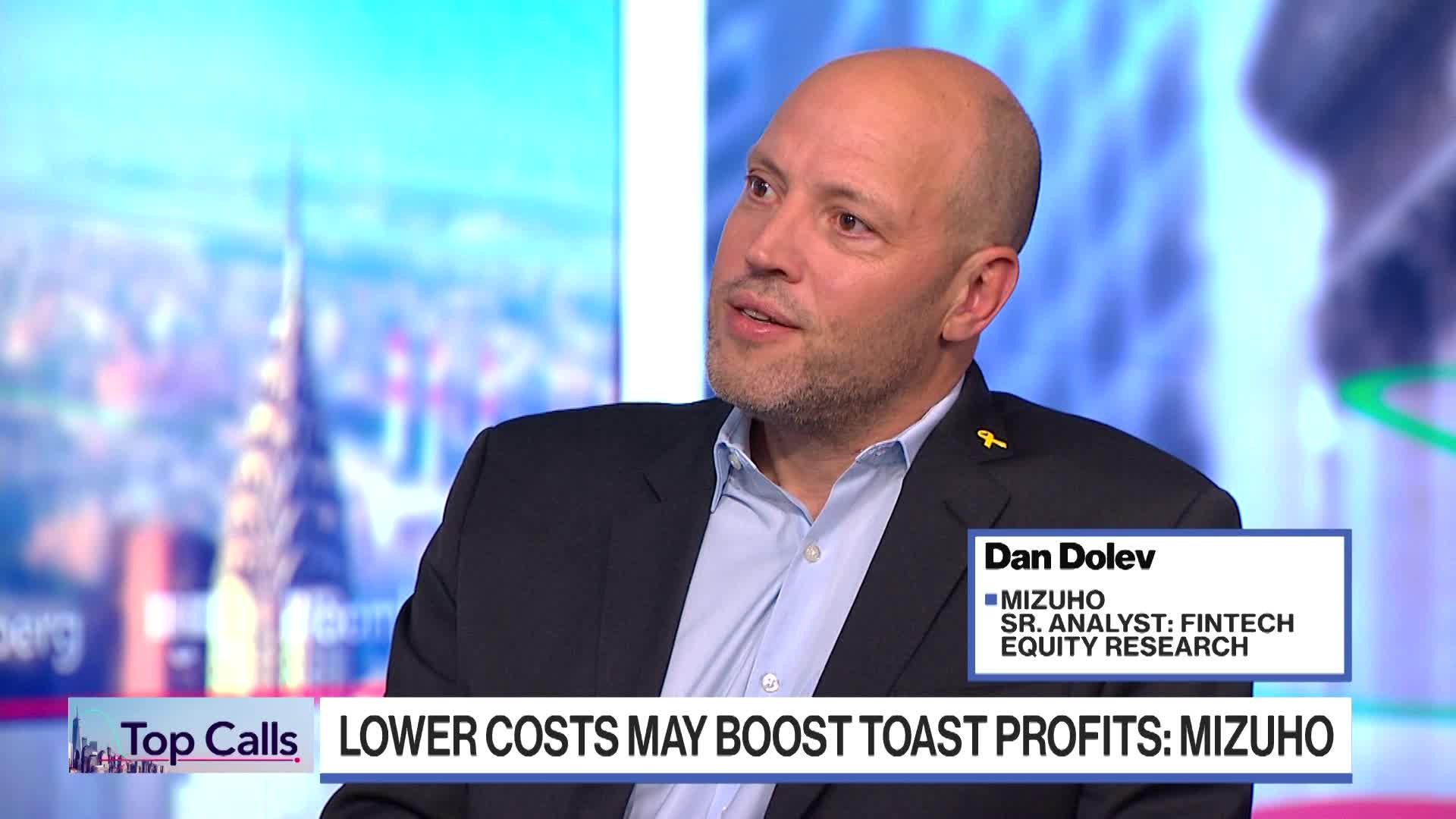
Mizuho analyst Dan Dolev has identified these fintech companies as potential beneficiaries of the policy uncertainty, noting that consumers displaced from traditional credit access due to tightened lending standards at banks would increasingly turn to alternative lending platforms [2][9]. This sector rotation reflects market expectations of potential market share shifts within the consumer lending ecosystem.
The proposed 10% credit card interest rate cap would fundamentally alter the economics of consumer lending in the United States. With U.S. credit card debt reaching a record $1.23 trillion in Q3 2025, the policy could save Americans an estimated $100 billion annually in interest costs according to research from Vanderbilt University [2]. However, the practical implementation challenges are substantial. Approximately 50% of U.S. consumers have FICO scores below 745, and the lower rate cap would make lending to these borrowers economically challenging under traditional banking models [2]. This creates a complex policy tradeoff between consumer protection and credit availability.
The potential for unintended consequences deserves careful consideration. While the stated goal is consumer savings, restrictive rate caps could limit credit access for consumers who currently benefit from credit card convenience and revolving credit facilities. The experience of military lending caps and certain state-level usury restrictions provides historical context for potential outcomes, though the federal scope and 10% level represent unprecedented policy territory.
Mizuho research highlighted an interesting divergence in investor sentiment between retail and institutional investors regarding payment stocks [4]. Retail investors have demonstrated preference for payment and checkout stocks such as PayPal, while institutional investors favor payment network companies like Visa and Mastercard. This sentiment gap may contribute to the differential price performance and volatility patterns observed across the payment sector.
The current policy uncertainty appears to be amplifying these existing sentiment patterns. Institutional investors, who typically hold larger positions in Visa and Mastercard, may be responding to fundamental concerns about credit card volume growth, while retail investors focused on fintech growth stories may be more optimistic about market share shift opportunities.
The policy uncertainty could accelerate structural shifts in the competitive landscape of consumer finance. Traditional banks may respond to rate caps by tightening underwriting standards, particularly for lower-credit borrowers. This creates an opportunity for fintech companies with alternative underwriting approaches, including AI-powered credit decision platforms like Upstart [2]. The potential for meaningful volume growth in fintech lending, provided these companies can effectively manage underwriting risk, represents a key thesis for sector optimists.
However, significant uncertainties remain regarding regulatory treatment of alternative lending products. It remains unclear whether buy-now-pay-later services would face similar rate caps or potentially receive regulatory carve-outs [3]. The revenue models of different fintech companies vary considerably, with Affirm deriving revenue primarily from merchant fees rather than interest income, potentially positioning it favorably under various regulatory scenarios.
The payment and financial services sector faces elevated uncertainty until policy details become clearer. The lack of specific implementation timelines, uncertainty regarding whether caps would apply to new cards or existing balances, and potential legal challenges create a challenging environment for investment decision-making [0]. Major banking associations and individual institutions have signaled willingness to challenge proposed policies through legal and legislative channels, adding to the uncertainty horizon.
Credit card transaction volumes represent a significant revenue component for Visa and Mastercard, and any sustained reduction in credit card usage or balance growth could impact these companies’ revenue trajectories. The interconnected nature of payment networks with banking partners means that policy impacts on banks may indirectly affect network volumes through second-order effects on credit card issuance and usage patterns.
The potential market share reallocation from traditional banks to fintech lenders represents a significant opportunity for companies positioned to capture this shift. SoFi’s integrated banking platform, Affirm’s established BNPL presence, and Upstart’s AI-powered underwriting capabilities each represent distinct approaches to capturing growth in the alternative lending space [2][9]. The relative performance divergence observed on January 13 suggests that market participants are already adjusting positioning in anticipation of potential sector shifts.
Additionally, companies that can demonstrate resilient business models with diversified revenue streams may attract investor interest as policy uncertainty persists. PayPal’s partnership with Deutsche Bank to scale payment solutions globally represents an example of strategic initiatives that could provide growth catalysts independent of domestic credit card policy developments [8].
The time sensitivity of this analysis is elevated due to the potential for rapid policy developments. Market participants should monitor Trump administration actions, Federal Reserve positioning, and Congressional activity for signals regarding implementation timelines and specific policy parameters [0]. The Q4 2025 and Q1 2026 earnings seasons will provide important opportunities for management commentary on policy outlook and strategic responses at major payment and financial services companies.
The January 13, 2026 trading session revealed clear market differentiation within the financial services sector based on policy exposure to potential credit card interest rate regulation. Traditional payment networks Visa and Mastercard declined 2.07% and 2.24% respectively, while major banks with credit card lending exposure experienced pre-market declines of 1.5% to 3.8% [0]. In contrast, fintech and alternative lending platforms demonstrated relative resilience, with SoFi gaining 0.96%, Affirm advancing 0.26%, and Upstart rising 4.84%.
Mizuho analyst Dan Dolev’s assessment highlights the potential for meaningful volume growth in fintech lending if policy uncertainty forces traditional banks to tighten underwriting standards [2][9]. The estimated $100 billion in annual consumer interest savings from a 10% rate cap must be weighed against potential credit access limitations for approximately half of U.S. consumers with FICO scores below 745 [2]. Market participants should monitor policy developments, legal challenges, and company-specific responses as this situation evolves.
Key variables warranting continued observation include the specific implementation details of any rate cap policy, the scope of regulatory treatment for alternative lending products, and the actual consumer behavior shifts that may emerge as the competitive landscape adjusts. The fundamental question of whether fintech lenders can effectively manage underwriting risk for borrowers displaced from traditional credit access remains an important consideration for longer-term investment thesis evaluation.
Insights are generated using AI models and historical data for informational purposes only. They do not constitute investment advice or recommendations. Past performance is not indicative of future results.
About us: Ginlix AI is the AI Investment Copilot powered by real data, bridging advanced AI with professional financial databases to provide verifiable, truth-based answers. Please use the chat box below to ask any financial question.