
In-Depth Analysis of the Impact of USMCA Trade Agreement Adjustments on Investment in Three Major North American Sectors
Unlock More Features
Login to access AI-powered analysis, deep research reports and more advanced features
About us: Ginlix AI is the AI Investment Copilot powered by real data, bridging advanced AI with professional financial databases to provide verifiable, truth-based answers. Please use the chat box below to ask any financial question.
Related Stocks
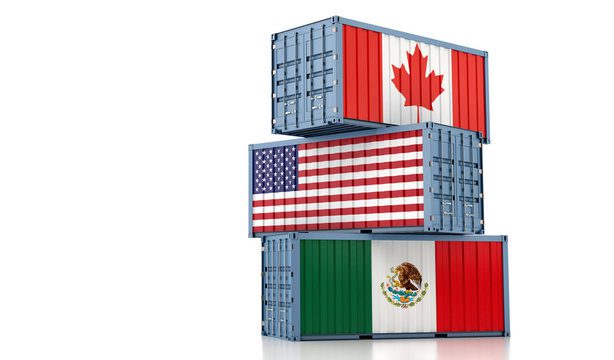
According to the latest information, U.S. Trade Representative Jamieson Greer told Congress in December 2025 that the Trump administration may withdraw from or renegotiate the USMCA. The agreement will undergo a statutory review in July 2026, at which point the three countries will decide whether to extend the agreement to 2042, maintain the annual review mechanism, or allow it to expire in 2036[1][2].
- January 2025:The Trump administration imposed a 25% tariff on Canada and Mexico, but products complying with USMCA rules of origin were exempt[3]
- July 2026:USMCA statutory review deadline
- Current Status:Mexican President Claudia Sheinbaum clarified that there is no withdrawal plan, and only the scheduled review will be conducted[1]
| Company | Mexican Business Layout | Current Market Capitalization | Risk Exposure |
|---|---|---|---|
General Motors (GM) |
4 manufacturing plants, exported 355,000 vehicles to the U.S. in 2024 | $77.72B | Extremely High |
Ford Motor (F) |
Cuautitlán and Hermosillo assembly plants, Chihuahua engine plant | $54.89B | Extremely High |
Stellantis |
Has a large Mexican business, is evaluating capacity relocation | $29.33B | Extremely High |
Ford CEO Jim Farley warned: “In the long run, a 25% tariff on the Mexican and Canadian borders would deal an unprecedented blow to the U.S. auto industry.”[3]
- Mexico’s auto production fell 3.7% year-on-year in October 2025, mainly affected by semiconductor shortages and USMCA uncertainty[4]
- For decades, Mexican factories have frequently shipped auto parts back and forth multiple times during the manufacturing process
- Vehicles complying with USMCA are temporarily exempt from tariffs, but non-compliant products are subject to a 25% tariff[5]
- Mazda, Honda, and General Motors are increasing local procurement and diversifying suppliers
- Stellantis announced plans to double its U.S. production over the next four years with a $13 billion investment[6]
| Company | International Business Proportion | Mexican Business Performance | Risk Level |
|---|---|---|---|
Walmart (WMT) |
International sales grew 10.8%, driven mainly by Mexico | One of the largest international business markets | High |
Costco (COST) |
Has large warehouse stores in both Canada and Mexico | Highly integrated supply chain | Medium-High |
- Approximately 85% of Mexico’s exports still enjoy zero-tariff treatment under USMCA protection[7]
- If USMCA expires, retailers will face a significant increase in costs
- As one of the largest U.S. importers, Walmart is extremely sensitive to supply chain disruptions
| Trade Flow | Proportion | Key Products |
|---|---|---|
| U.S. Agricultural Exports to Mexico | Mexico is the largest export market | Corn, soybeans, pork |
| U.S. Agricultural Exports to Canada | Second largest export market | Meat, grains, oilseeds |
| U.S. Imports from Mexico | Accounts for 69% of U.S. vegetable imports | Fresh vegetables, tomatoes |
| Company | Market Capitalization | Business Sensitivity |
|---|---|---|
Deere & Company (DE) |
$134.43B | Highly integrated North American supply chain |
AGCO Corporation |
$8.32B | Agricultural machinery exporter |
- Canada was the U.S.'s largest export destination in 2024[8]
- The establishment of the Advisory Committee on Seasonal and Perishable Agricultural Products reflects concerns about the competitiveness of domestic producers[9]
- Agricultural equipment dealers face pressure from rising input costs of steel and aluminum
- General Motors (GM)- One of the largest automakers in Mexico, leads in exports to the U.S.
- Ford Motor (F)- Stock price rose 26.53% in the past 90 days, but has high exposure risk in Mexico[0]
- Stellantis NV (STLA)- Stock price fell 8.5% in the past 90 days, Canadian business faces risks[0]
- Honda Motor (HMC)- Has extensive production capacity layout in Mexico
- BMW (BMW)- Has a production base for high-end models in Mexico
- Walmart Inc. (WMT)- Market capitalization of $957.94 billion, international business is highly dependent on Mexico
- Costco Wholesale (COST)- Has important businesses in both Canada and Mexico
- Target Corp. (TGT)- Supply chain covers all three countries
- Deere & Company (DE)- Agricultural equipment manufacturing relies on regional supply chains
- Tyson Foods (TSN)- Meat processing spans the borders of the three countries
- Cargill- Private company, agricultural products trading giant
| Indicator | Expected Change | Reason |
|---|---|---|
| Mexican Auto Production | Down 3-5% | Tariff uncertainty + supply chain adjustments |
| Retail Costs | Up 5-10% | Tariff pass-through for non-USMCA goods |
| Agricultural Equipment Orders | Down 10-15% | Farmers postpone purchases to wait and see policy developments |
- Maintain the annual review mechanism
- Tariffs remain unchanged, products complying with USMCA are exempt
- Market uncertainty decreases, manufacturing stocks rebound
- Stricter rules of origin
- Mexico may face more non-tariff barriers
- Supply chain adjusts gradually, costs rise moderately
- Full restoration of 25% tariffs
- Mexico loses approximately 85% of tariff exemption protection[7]
- Large-scale supply chain restructuring, significant sell-off of manufacturing stocks
- Ford (F)- P/E ratio 11.99, low valuation but extremely high exposure in Mexico
- Stellantis (STLA)- In a loss-making state (P/E ratio -10.15), highest risk
- AGCO- Fell 12.3% in the past 90 days, most vulnerable in the agricultural equipment sector
- Walmart (WMT)- Despite high exposure risk, scale advantages and pricing power provide a buffer
- Deere (DE)- Leader in agricultural equipment, technical barriers provide certain protection
- U.S. Domestic Manufacturing- Expectation of supply chain reshoring
- Defense-Related Manufacturing- May receive policy support
- Domestic Agriculture- Reduced import competition
| Indicator | Warning Threshold | Explanation |
|---|---|---|
| USMCA Review Progress | July 2026 | Key node for the fate of the agreement |
| Mexican Auto Production | Year-on-year change < -10% | Signal of supply chain deterioration |
| Agricultural Equipment Orders | Decline for 3 consecutive months | Signal of agricultural investment contraction |
| Retailer Inventory Costs | Increase > 15% | Cost pass-through pressure |
Potential adjustments to the USMCA trade agreement will have far-reaching impacts on the North American economy:
- Manufacturingwill be hit most directly, especially automakers highly dependent on Mexican assembly operations
- Retailwill face rising supply chain costs, squeezing profit margins
- Agricultural sectorhas medium exposure, but is vulnerable to trade policy uncertainty
Investors should closely monitor the results of the July 2026 USMCA review and take appropriate risk management measures for high-exposure targets. The current market has already partially priced in these uncertainties, but if the agreement deteriorates, it may trigger a significant adjustment in the manufacturing sector.
[1] Mexico Business News - “2025 in Review: Plan Mexico, US Relations, New Tariffs” (https://mexicobusiness.news/policyandeconomy/news/2025-review-plan-mexico-us-relations-new-tariffs)
[2] Grant Thornton - “2026 in manufacturing: Policy risks and opportunities” (https://www.grantthornton.com/insights/articles/manufacturing/2026/2026-manufacturing-policy-risks-opportunities)
[3] Wikipedia - “Tariffs in Trump’s Second Term” (https://zh.wikipedia.org/zh-hans/特朗普第二届任期关税)
[4] Commercial Carrier Journal - “Mexico blockades, Canada crackdown strain cross-border freight capacity” (https://www.ccjdigital.com/business/article/15774768/mexico-blockades-canada-crackdown-strain-crossborder-freight-capacity)
[5] Skadden - “Turbulence Ahead: Tariff and Trade Policy Shifts” (https://www.skadden.com/insights/publications/2026/2026-insights/regulatory-enforcement/turbulence-ahead)
[6] Fastmarkets - “The Steel Timeline of Trade Policies in 2025” (https://www.fastmarkets.com/insights/ghost-of-steel-past-a-timeline-of-2025-in-the-americas-steel-industry/)
[7] Supply Chain by the Numbers - “Jan. 8, 2026” (https://www.scdigest.com/assets/newsviews/26-01-08.php?CID=23015)
[8] Farm Equipment - “Why the USMCA Review Matters to Farm Equipment Dealers” (https://www.farm-equipment.com/blogs/6-opinions-columns/post/24898-why-the-usmca-review-matters-to-farm-equipment-dealers)
[9] Choices Magazine - “Trade and Supply Chain Impacts of Tariffs on Fresh Vegetable Imports from Mexico” (https://www.choicesmagazine.org/choices-magazine/theme-articles/trade-theme---part-2/trade-and-supply-chain-impacts-of-tariffs-on-fresh-vegetable-imports-from-mexico)
[0] Jinling AI - Market Data and Real-Time Quotes
Insights are generated using AI models and historical data for informational purposes only. They do not constitute investment advice or recommendations. Past performance is not indicative of future results.
About us: Ginlix AI is the AI Investment Copilot powered by real data, bridging advanced AI with professional financial databases to provide verifiable, truth-based answers. Please use the chat box below to ask any financial question.