
Analysis of the Impact of Delta Air Lines' Large-Scale Boeing 787 Order on Boeing and the Aerospace Manufacturing Industry
Unlock More Features
Login to access AI-powered analysis, deep research reports and more advanced features
About us: Ginlix AI is the AI Investment Copilot powered by real data, bridging advanced AI with professional financial databases to provide verifiable, truth-based answers. Please use the chat box below to ask any financial question.
Related Stocks
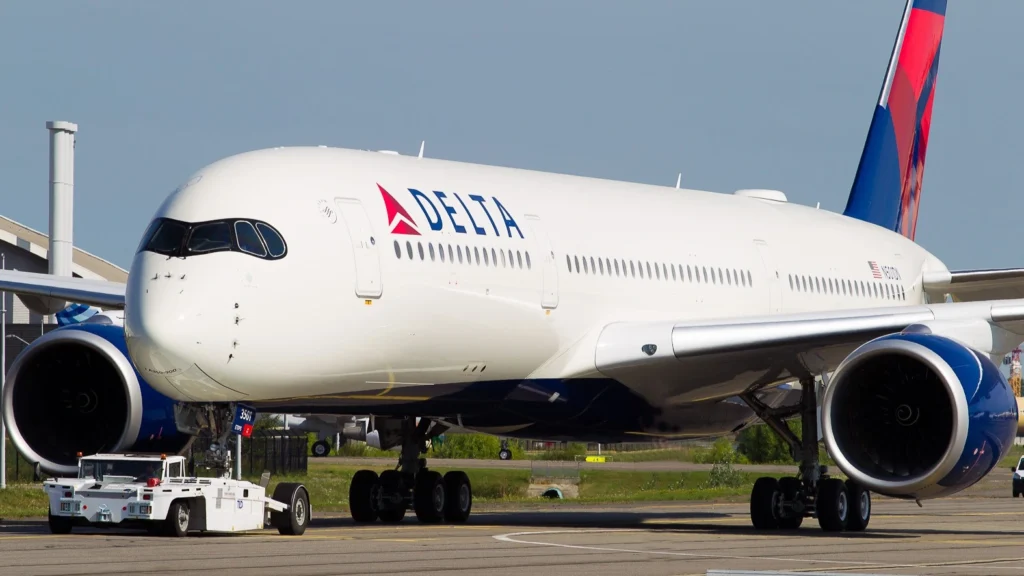
According to Boeing’s official announcement, Delta Air Lines announced an order for up to 60 Boeing 787-10 Dreamliners on January 13, 2026, marking Delta’s first direct widebody aircraft order from Boeing[1][2]. The specific order structure consists of
Based on published list price data, the list price of the Boeing 787-10 is
| Order Type | Quantity | Estimated Value |
|---|---|---|
| Firm Orders | 30 aircraft | Approximately $10.15 billion |
| Options | 30 aircraft | Approximately $10.15 billion |
Potential Total Value |
60 aircraft |
Approximately $20.3 billion |
It should be noted that actual transaction prices usually include significant discounts, with bulk purchase discounts for airlines typically ranging between 20%-40%. Even with a 30% discount, the actual contract value of this order could still reach the
As of November 2025, Boeing’s 787 program has received a total of
- 787-10 variant: Total orders of 413 aircraft, 134 delivered, 279 remaining to be delivered[5]
- 2025 Performance: The 787 program secured339 net ordersin 2025, its strongest performance in recent years[5]
Delta Air Lines’ order will increase the 787-10’s undelivered orders by approximately 10%-20%, further consolidating the variant’s market position. It is worth noting that Delta previously operated a small number of 787 aircraft through leasing companies, but this is its first direct order from Boeing[1][3].
Boeing’s commercial aircraft business performed strongly in the third quarter of 2025:
- Commercial Aircraft Backlog Value: $534.6 billion (as of September 30, 2025)[6]
- Commercial Aircraft Division Revenue: $11.1 billion, a 49% year-over-year increase, primarily driven by higher deliveries including the 787[6]
- 787 Program Production Capacity: Has stabilized at a production rate of 7 aircraft per month[6]
- 787 Deliveries in the First Three Quarters of 2025: 61 aircraft, a 51% year-over-year increase[6]
This order will provide Boeing with a stable long-term revenue source and help improve its cash flow position. In the third quarter of 2025, Boeing achieved $1.1 billion in operating cash flow, its first positive quarterly operating cash flow in recent years[6].
Data for 2025 shows that the competitive dynamics between Boeing and Airbus in the widebody aircraft market have changed significantly:
| Indicator | Boeing | Airbus |
|---|---|---|
| 2025 Widebody Aircraft Orders | Over 500 aircraft | Approximately 250 aircraft[7] |
| Widebody Aircraft Utilization Share | 787 leads with approximately 30% | A330 at approximately 29%, A350 share growing[7] |
| Overall Commercial Aircraft Market Share | Approximately 40% | Approximately 60%[8] |
As one of the largest airlines in the U.S., Delta’s move marks an important shift in the U.S. market—previously, Delta has favored an Airbus fleet for the past 15 years, centered around the A220, A320 family narrowbody aircraft, and A330, A350 widebody aircraft[2].
Delta Air Lines CEO Ed Bastian clearly stated that this order reflects the airline’s strategic intention to
- Supply Stability: Reduce supply chain risks through diversified suppliers
- Bargaining Power: A multi-supplier structure helps secure more favorable procurement terms
- Operational Flexibility: A combination of different aircraft types can better match the needs of different routes
The main competitor of the 787-10 is the Airbus A350-900. According to Delta Air Lines’ official statement, the key considerations for choosing the 787-10 over larger widebody aircraft include[2]:
- Operating Cost Advantage: On medium-haul international routes (transatlantic, South America), the 787-10 is more cost-effective than larger widebody aircraft such as the A350
- Route Matching: The 787-10’s range (6,430 nautical miles) perfectly matches Delta’s core international route network
- Fuel Efficiency: The 787-10 reduces fuel consumption by 25% compared to the older aircraft it replaces, and has the lowest per-seat operating cost among widebody aircraft[Original Text]
2025 was a year of strong recovery for the widebody aircraft market. Data shows that overall widebody aircraft utilization has approached pre-pandemic 2019 levels, with a gap of less than 2%[7]. The 787’s utilization share rose from 22% in 2019 to approximately 30% in 2025, making it the leader in the widebody aircraft market[7].
Delta Air Lines’ order has multiple strategic implications for Boeing’s 787 program:
- Market Confidence Endorsement: All three major U.S. legacy airlines (United Airlines, American Airlines, Delta Air Lines) now operate 787 fleets
- Production Capacity Utilization Guarantee: Provides order support for capacity expansion at Boeing’s South Carolina factory
- Brand Image Enhancement: As Boeing’s flagship widebody aircraft, the 787 has received recognition from one of the largest airlines in the U.S.
This order has put certain pressure on Airbus:
- Delta Air Lines is an important customer of Airbus, and its widebody fleet was previously almost entirely composed of Airbus A330/A350 aircraft
- Delta’s choice indicates that Boeing still has the ability to secure orders even in Airbus’ traditionally strong markets
- In the future, Airbus may need to offer price discounts or service upgrades to maintain customer loyalty
- Financial Impact: Delta Air Lines’ order brings Boeingat least $10 billionin firm order revenue, and if all options are exercised, the total value could reach the$20 billionrange
- Competitive Impact: This order marks an important shift in the U.S. aviation market, indicating a rebound in Boeing’s competitiveness in the widebody aircraft market
- Strategic Significance: Reflects the trend of airline supplier diversification, which will have a far-reaching impact on the long-term competitive landscape of the aerospace manufacturing industry
- Boeing is expected to continue increasing 787 production capacity, targeting a production rate of 10 aircraft per month[5]
- Competition in the widebody aircraft market will continue to intensify, especially against the backdrop of growing demand in emerging markets in the Middle East and Asia-Pacific
- The delay of Boeing’s 777X program (expected to enter service in 2028) may further enhance the 787’s strategic position in Boeing’s product portfolio
[1] Boeing Investor Relations - Delta Air Lines Orders up to 60 Boeing 787 Dreamliners (https://investors.boeing.com/investors/news/press-release-details/2026/Delta-Air-Lines-Orders-up-to-60-Boeing-787-Dreamliners-to-Grow-Modernize-Widebody-Fleet/default.aspx)
[2] Reuters - Delta forecasts earnings growth on premium travel demand, places Boeing 787 order (https://www.reuters.com/business/delta-bets-premium-travel-demand-with-upbeat-outlook-boeing-787-order-2026-01-13/)
[3] Simple Flying - Delta Adds 30 Boeing 787-10 Dreamliners To Order Book (https://simpleflying.com/delta-air-lines-boeing-787-10-order/)
[4] AXON Aviation - Aircraft Pricing (https://www.axonaviation.com/commercial-aircraft/aircraft-data/aircraft-pricing)
[5] Wikipedia - List of Boeing 787 orders and deliveries (https://en.wikipedia.org/wiki/List_of_Boeing_787_orders_and_deliveries)
[6] Boeing Investor Relations - Boeing Reports Third Quarter Results (https://investors.boeing.com/investors/news/press-release-details/2025/Boeing-Reports-Third-Quarter-Results/default.aspx)
[7] Aviation Week - Flight Friday: Widebodies Soar In 2025 As Utilization Patterns Shift (https://aviationweek.com/aerospace/aircraft-propulsion/flight-friday-widebodies-soar-2025-utilization-patterns-shift)
[8] WhatJobs - Airbus vs Boeing Market Dominance 2025 (https://www.whatjobs.com/news/wj-material/uploads/2025/06/Powerful-Shift-Airbus-vs-Boeing-Market-Dominance-2025—Why-Airbus-Is-Winning.webp)
Insights are generated using AI models and historical data for informational purposes only. They do not constitute investment advice or recommendations. Past performance is not indicative of future results.
About us: Ginlix AI is the AI Investment Copilot powered by real data, bridging advanced AI with professional financial databases to provide verifiable, truth-based answers. Please use the chat box below to ask any financial question.