
Analysis of Competitive Barriers Between BrightGene BioMed's T-Bren and Enhertu in the Adjuvant Therapy Field
Unlock More Features
Login to access AI-powered analysis, deep research reports and more advanced features
About us: Ginlix AI is the AI Investment Copilot powered by real data, bridging advanced AI with professional financial databases to provide verifiable, truth-based answers. Please use the chat box below to ask any financial question.
Related Stocks
Based on the collected information, I will conduct a systematic analysis for you.
Currently, the global HER2 ADC space is undergoing profound transformation. AstraZeneca/Daiichi Sankyo’s Enhertu (trastuzumab deruxtecan), supported by positive results from the DESTINY clinical trial program, has gradually advanced from third-line to second-line and first-line therapy, and successfully expanded its scope to adjuvant and neoadjuvant therapy[1]. Data from the phase III DESTINY-Breast05 study showed that Enhertu reduced the risk of disease recurrence or death by 53% compared to the standard of care T-DM1, with a 3-year invasive disease-free survival (IDFS) rate of 92.4%, significantly outperforming the 83.7% rate in the T-DM1 group[2].
Facing the strong competitive barriers built by Enhertu in frontline therapy, most domestic HER2 ADC companies have adopted differentiated strategies—focusing on later-line therapy or drug-resistant settings. However, BrightGene BioMed’s T-Bren (BL-M07D1) has chosen to compete head-on: its adjuvant therapy for HER2-positive breast cancer has advanced to phase III clinical trials, and neoadjuvant therapy is in phase II clinical trials, forming a direct rivalry with Enhertu’s core development trajectory[1].
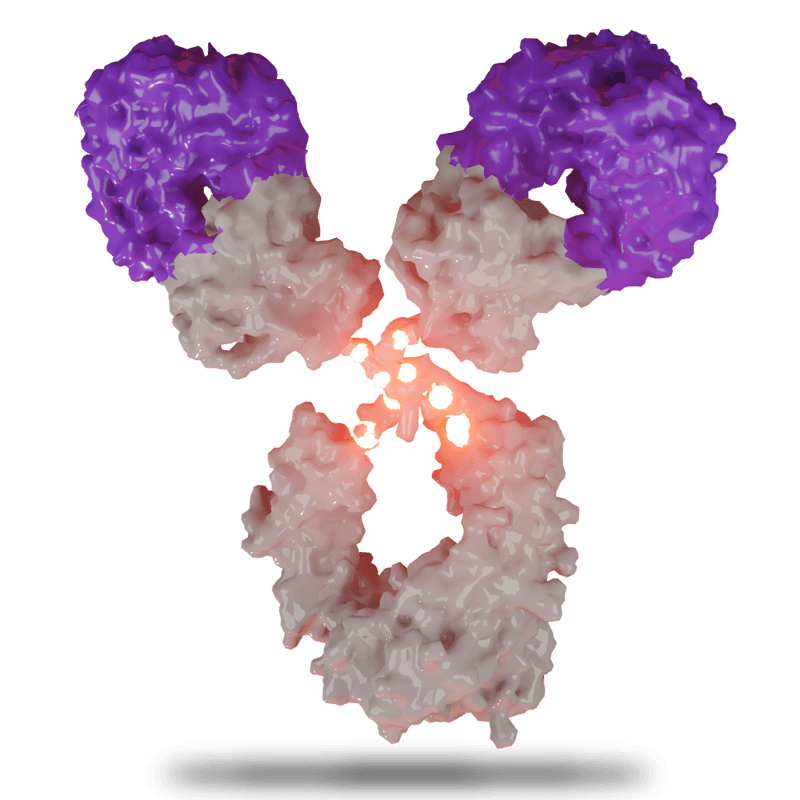
ADC drugs consist of three components: antibody, linker, and payload. Technological optimization of each component constitutes a core competitive barrier:
Enhertu uses Daiichi Sankyo’s proprietary DXd topoisomerase I inhibitor, which is approximately 1,000 times more cytotoxic than traditional chemotherapy drugs and exhibits a bystander effect—capable of killing surrounding tumor cells that do not directly bind to the target[2]. Although T-Bren is also a topoisomerase I inhibitor-based ADC, it needs to demonstrate pharmacodynamic properties equivalent or superior to DXd in terms of payload molecular design, and the balanced optimization of toxicity intensity and selectivity.
Enhertu uses a stable cleavable tetrapeptide linker that remains highly stable in the bloodstream, releasing the payload only within tumor cells to achieve precise killing[2]. T-Bren needs to achieve equivalent or better stability metrics in linker design while ensuring effective release in the tumor microenvironment—this technical balance is a key determinant of ADC efficacy and safety.
The DAR value directly impacts the efficacy and toxicity of an ADC. Enhertu has a DAR value of approximately 8, achieving a good balance between efficacy and safety. T-Bren needs to determine the optimal DAR value through systematic optimization and maintain batch-to-batch consistency in large-scale production.
To compete head-on with Enhertu in the adjuvant therapy space, T-Bren needs to conduct large-scale, long-term follow-up phase III head-to-head clinical trials. The DESTINY-Breast05 study enrolled 1,635 patients with a median follow-up time of nearly 30 months[2]. T-Bren’s clinical trial design must meet the same rigorous standards in terms of enrollment criteria, follow-up duration, and efficacy endpoints.
The adjuvant therapy space has extremely high requirements for long-term drug safety. Enhertu has accumulated extensive long-term safety data, with an incidence rate of interstitial lung disease (ILD)/non-infectious pneumonia of approximately 9.6%, most of which are low-grade events[2]. T-Bren needs to demonstrate its safety profile in a sufficiently large patient population, particularly its ability to control rare but serious adverse events.
The primary efficacy endpoints for adjuvant therapy are typically disease-free survival (DFS) or invasive disease-free survival (IDFS), which require a long follow-up period to obtain mature survival data. T-Bren needs to demonstrate that its efficacy is non-inferior or even superior to Enhertu, which requires a longer clinical development cycle and a larger patient enrollment scale.
The manufacturing of ADC drugs involves complex bioconjugation processes, which have extremely high requirements for production facilities and quality control systems:
- Consistency of Bioconjugation Process: Ensure high consistency of DAR values and conjugation sites across all batches
- Purification Process Control: Effectively remove impurities such as free payload and aggregates
- Cold Chain Logistics System: ADC drugs typically require cold chain transportation and storage
- Production Capacity Scale: Meet global commercial supply demands
Despite the aforementioned technical barriers, BrightGene BioMed has designed multiple differentiated competitive paths for T-Bren:
In addition to breast cancer, T-Bren has demonstrated “best-in-class” potential in non-small cell lung cancer (NSCLC). In the Ib/II phase study presented at the 2025 ESMO Congress, T-Bren achieved an objective response rate (ORR) of 62.0% and a confirmed objective response rate (cORR) of 54.0% in previously treated patients with HER2-mutated advanced NSCLC; the 6-month duration of response (DoR) rate reached 95.7%, and the 6-month progression-free survival (PFS) rate was 90.7%[1]. This cross-indication layout can mitigate competitive risks associated with a single indication.
T-Bren is currently advancing 14 clinical trials simultaneously in China and the US, including 6 pivotal registration studies[1]. This global layout helps to:
- Obtain safety data from diverse ethnic groups
- Submit new drug applications to multiple regulatory authorities simultaneously
- Lay the foundation for subsequent global commercialization
BrightGene BioMed has built a comprehensive technology platform covering bispecific ADCs, dual-payload ADCs, immunostimulatory payload ADCs, and antibody-radionuclide conjugates (ARCs)[3]. Iza-bren (an EGFR×HER3 bispecific ADC) has made breakthrough progress in later-line nasopharyngeal carcinoma therapy, and its technical experience can support the optimization of T-Bren.
For T-Bren to effectively compete with Enhertu in the adjuvant therapy space, it needs to break through the following key nodes:
| Barrier Dimension | Core Challenge | Breakthrough Path |
|---|---|---|
Clinical Efficacy |
Demonstrate non-inferiority to Enhertu | Large-scale head-to-head phase III study, long-term follow-up data |
Safety |
Establish differentiated safety advantages | Optimize ADC structure, reduce incidence of serious adverse events (AEs) such as ILD |
Manufacturing |
Consistency in large-scale production | Build GMP-compliant ADC production facilities |
Commercialization |
Build global commercialization capabilities | Strategic partnerships or establish in-house commercial team |
Differentiation |
Avoid homogeneous competition | Cross-indication layout, explore combination therapy regimens |
Zhu Yi, founder of BrightGene BioMed, stated that it will take at least 5 years and an investment of USD 1 billion to become a truly international enterprise[3]. In terms of global R&D, BrightGene BioMed has established an innovative R&D center in Zhangjiang, Pudong, Shanghai, which will collaborate with its US R&D center to build a global R&D pattern driven by both China and the US.
The head-to-head competition between T-Bren and Enhertu in the adjuvant therapy space is, in essence, a comprehensive contest of the integrated technical capabilities of ADC drugs. T-Bren needs to achieve breakthroughs in multiple dimensions including ADC structural design, clinical development, and manufacturing, while building differentiated competitive advantages through cross-indication layout and global development. Despite facing the first-mover advantages and data barriers established by Enhertu, BrightGene BioMed still has the potential to secure a position in this highly competitive track by virtue of its technical platform accumulation and strategic resolve.
[1] China Pharmaceutical Innovation and Research Development Association - HER2 ADC Market Consolidation: Live or Die for Domestic Players? (https://www.phirda.com/artilce_41347.html)
[2] AstraZeneca/Daiichi Sankyo - Phase III DESTINY-Breast05 Trial Results (https://www.astrazeneca.com/content/az-cn-zh/media/press-releases/2025/10-21-02.html)
[3] Pharmcube - BrightGene BioMed: Holding a Bispecific ADC “Blockbuster”, Accelerating the Sprint to the Global Market (https://bydrug.pharmcube.com/news/detail/3efa137ece4e6c48d862200838e97600)
Insights are generated using AI models and historical data for informational purposes only. They do not constitute investment advice or recommendations. Past performance is not indicative of future results.
About us: Ginlix AI is the AI Investment Copilot powered by real data, bridging advanced AI with professional financial databases to provide verifiable, truth-based answers. Please use the chat box below to ask any financial question.