
Ginlix AI
50% OFF

Research on AI Hardware Upgrade Strategy of Lijing Innovation Against the Background of Declining Gross Margin of Optical Modules

#optical_module #gross_margin_decline #AI_hardware #strategic_analysis #consumer_electronics #automotive_optics #research_report
Neutral
A-Share
January 14, 2026

Unlock More Features

Login to access AI-powered analysis, deep research reports and more advanced features
Research on AI Hardware Upgrade Strategy of Lijing Innovation Against the Background of Declining Gross Margin of Optical Modules

About us: Ginlix AI is the AI Investment Copilot powered by real data, bridging advanced AI with professional financial databases to provide verifiable, truth-based answers. Please use the chat box below to ask any financial question.

Related Stocks

01415.HK
--
01415.HK
--

Based on the collected information, I will provide you with a strategic analysis report on Lijing Innovation against the background of the continuous decline in gross margin of its optical module business.


Research on AI Hardware Upgrade Dividends for Lijing Innovation Against the Background of Continuous Decline in Gross Margin of Optical Module Business
1. Company Overview and Market Position

Lijing Innovation Technology Co., Ltd. was founded in 2018 and is an affiliated enterprise of Luxshare Precision, with Wang Laixi as its legal representative. The company rapidly consolidated its technical strength through strategic acquisitions: in 2018, it acquired the camera module business division of Lite-On Technology, and in 2020, it acquired a 44.87% stake in Cowell Electronics (01415.HK) to become the largest shareholder. As of the end of June 2025, Lijing Innovation’s shareholding ratio in Cowell Electronics has increased to 70.39%[1].

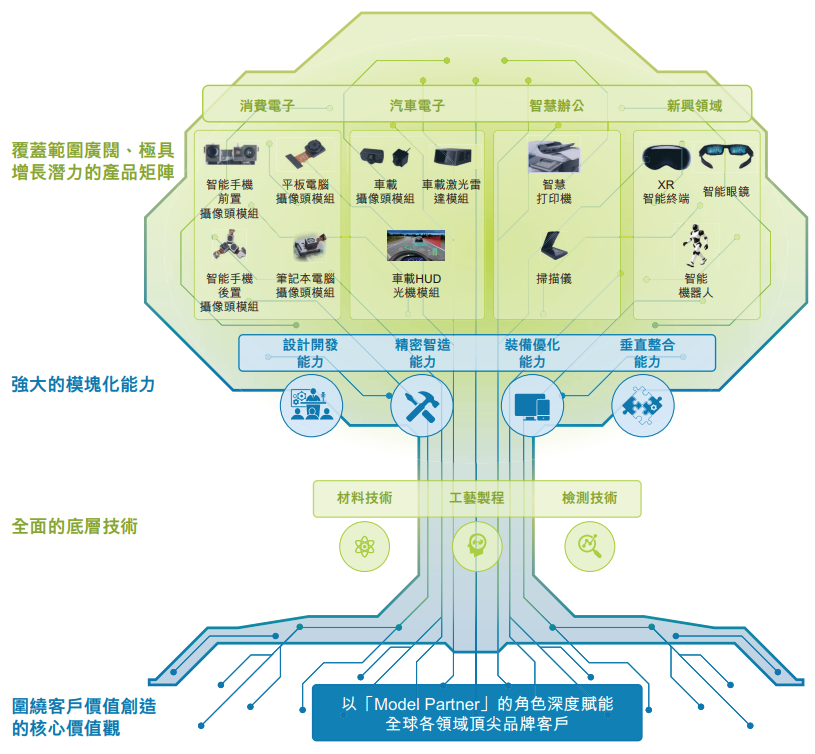
According to the latest data, based on 2024 revenue, Lijing Innovation ranks second globally in the consumer electronics camera module sector and first among Chinese manufacturers. It has a significant market share advantage in mid-to-high-end smartphone modules and PC modules, with one out of every six laptops worldwide equipped with its camera modules. In 2024, the company achieved revenue of RMB 27.91 billion, doubling from RMB 12.75 billion in 2022; its revenue in the first half of 2025 increased by 53.4% year-on-year, maintaining a strong growth momentum[2].

2. Analysis of the Reasons for Continuous Gross Margin Decline
2.1 Industry-Wide Gross Margin Pressure

Lijing Innovation’s gross margin dropped from 12.2% in 2022 to 10.8% in 2024, and remained at 10.8% in the first half of 2025. Despite continuous revenue expansion, the scale effect has not been significantly converted into profit elasticity, reflecting the real dilemma of intensified industry competition[2].

This phenomenon is prevalent in the optical module industry:

Enterprise Business Segment 2024 Gross Margin YoY Change
O-Film Intelligent Automotive Products 8.7% -6.15pct
Hongjing Optoelectronics Intelligent Automotive Camera Modules 11.74% -3.84pct
Hongjing Optoelectronics Intelligent Automotive Optical Lenses 24.05% -2.77pct
Yutong Optics Vehicle-Mounted Products 26.39% -2.39pct

Data Source: 2024 annual reports of various companies and industry research[3]

2.2 Core Driving Factors of Gross Margin Decline

First, continuous transmission of cost reduction pressure from the downstream.
As high-level advanced driver-assistance systems (ADAS) are popularized in the mass market priced at RMB 100,000, the wave of “ADAS democratization” has swept the industry. The cost reduction pressure faced by vehicle manufacturers is being transmitted more fiercely to upstream suppliers, significantly squeezing the profit space of suppliers[3].

Second, product homogenization caused by intensified industry competition.
More and more enterprises are entering the intelligent automotive vehicle-mounted optical track, and the number of market participants continues to increase. New entrants represented by Faguang Co., Ltd. and Tongxingda continue to emerge, intensifying the competitive landscape of the industry[3].

Third, high costs of technological iteration.
To maintain competitive advantages in the vehicle-mounted optical market, leading enterprises continue to expand R&D investment. Sunny Optical’s R&D expenditure reached RMB 2.924 billion in 2024, a year-on-year increase of 13.9%; Lianchuang Electronics has maintained high R&D investment for six consecutive years, reaching RMB 939 million in 2024. Although high R&D investment helps build technical barriers, it also intensifies profitability pressure in the short term[3].

3. Strategic Opportunities Brought by AI Hardware Upgrades
3.1 AI-Driven Structural Growth of the Consumer Electronics Precision Optical Market

The precision optical solution market for AI consumer electronics is undergoing structural changes. According to industry forecasts, this market will achieve a compound annual growth rate of over 30% from 2025 to 2029, and Lijing Innovation is at the core of this structural change[2].

The demand for optical modules brought by AI hardware upgrades is reflected in multiple dimensions:

Computational photography capability upgrade.
AI-driven image processing requires support from higher-spec camera modules, including larger pixel sizes, higher dynamic ranges, and faster image processing speeds. This creates incremental demand for high-end camera modules.

Spatial perception and multi-modal interaction.
New terminals such as AI glasses and AR/VR devices put forward higher requirements for capabilities such as spatial perception, 3D imaging, and multi-modal interaction, promoting the evolution of optical modules towards high precision and multi-functionality.

Intelligent automotive vision system upgrade.
With the continuous penetration of high-level ADAS, the average number of cameras per vehicle will increase from 5 in 2025 to 10 in 2030, and the demand for vehicle-mounted vision systems will double[3].

3.2 Increase in the Proportion of High-Value-Added Products

Lijing Innovation is actively seizing the opportunities brought by AI hardware upgrades to promote the evolution of its product structure towards high value-added. The proportion of high-value-added products such as high-pixel and rear camera modules of the company continues to increase, and the average selling price has risen by nearly 50% from 2022 to 2024. This trend indicates that despite the industry-wide gross margin pressure, high-end products still have good profit elasticity[2].

3.3 Diversified Business Layout

Layout in the robot field.
In January 2025, Lijing Innovation and Zhiyuan Innovation (Shanghai) Technology Co., Ltd., the parent company of Zhiyuan Robot, jointly established Guangzhou Lizhi Perception Technology Co., Ltd. with a registered capital of RMB 20 million, holding 85% and 15% of the shares respectively. The business scope of the company covers artificial intelligence theory and algorithm software development, artificial intelligence public data platforms, artificial intelligence hardware sales, etc., marking Lijing Innovation’s official entry into the robot field[1].

Cowell Electronics’ performance surge.
Benefiting from increased orders, Cowell Electronics’ revenue in the first half of 2025 increased by 132.2% year-on-year to USD 1.36 billion, and its net profit increased by 306% year-on-year to USD 67.4 million, hitting a new historical high in half-year performance. On the day after the release of the half-year report, Cowell Electronics’ stock price rose by 15%, with its market capitalization exceeding HKD 35.5 billion. Calculated based on this, the market value of Lijing Innovation’s holdings is close to HKD 25 billion[1].

4. Strategic Paths to Maintain AI Hardware Upgrade Dividends
4.1 Transformation from “Scale Expansion” to “Value Deep Cultivation”

Lijing Innovation needs to complete the strategic evolution from the past “spec stacking” and scale expansion to system-level optical solutions. The company should focus on core optical capabilities related to AI such as computational photography, spatial perception, and multi-modal interaction to build differentiated competitive advantages[2].

Key focuses for technical capability building:

  • Enhance the collaborative optimization capability of AI algorithms and optical hardware
  • Develop customized optical solutions for AI terminals
  • Build vertical integration capabilities from lenses and modules to algorithms
4.2 Sustained High-Intensity R&D Investment

Referring to the experience of industry-leading enterprises, continuous R&D investment is the key to building technical barriers. Lijing Innovation should learn from the successful experience of Lianchuang Electronics, which “added more than 500 authorized patents from 2022 to 2024”, and increase R&D investment in cutting-edge fields such as AI optics and automotive vision[3].

Recommended R&D investment directions:

  • AI-driven intelligent imaging technology
  • 3D perception and spatial computing optical solutions
  • Ultra-thin and miniaturized optical module technology
  • Automotive-grade optical module reliability technology
4.3 Deepen Collaborative Cooperation in the Industrial Chain

Deepen client-side cooperation.
Lijing Innovation should deepen strategic cooperation with core customers such as Apple, closely follow the product demand brought by AI hardware upgrades, and ensure its position as a core supplier in the next generation of AI terminals.

Industrial chain integration.
Through holding Cowell Electronics, Lijing Innovation has formed vertical integration capabilities from lenses to modules. In the future, it should further extend to upstream optical lenses and optical design links to build a more complete collaborative advantage in the industrial chain.

Expand ecological cooperation.
In the intelligent automotive field, it should deepen strategic cooperation with international solution providers such as Mobileye, NVIDIA, and Horizon Robotics, as well as domestic leading platforms such as Baidu, to ensure that its products can enter the supply chain system of mainstream automakers[3].

4.4 Seize Opportunities in Emerging Terminal Markets

AI glasses market.
As AI technology penetrates into consumer electronics terminals, AI glasses are expected to become the next heavyweight terminal product after smartphones. Lijing Innovation should lay out in advance products such as mini camera modules and AR optical modules for AI glasses.

Robot vision systems.
The joint venture with Zhiyuan Robot has laid the foundation for Lijing Innovation to enter the robot vision track. With the rapid development of the embodied intelligence industry, the demand for visual sensors by robots will grow rapidly.

Intelligent cockpit and autonomous driving.
Although the gross margin of vehicle-mounted optics is under pressure, the growth in camera usage brought by the penetration of high-level ADAS is still a deterministic trend. The company should offset the downward pressure on gross margin through product structure optimization and process improvement.

4.5 Optimization of Financial Strategies

Increase the proportion of high-margin products.
Through continuous product structure optimization, increase the sales proportion of high-margin products such as rear camera modules and high-pixel modules to improve overall profitability.

Improve operational efficiency.
Against the background of industry-wide gross margin pressure, reduce manufacturing costs and improve operational efficiency through lean production, automation transformation, and supply chain optimization.

Optimize capital operations.
Continue to leverage the resource advantages of the Luxshare system platform, integrate high-quality assets through strategic acquisitions, and enhance scale effects and synergistic effects.

5. Risk Factors and Responses
5.1 Main Risks

Demand recovery of consumer electronics products such as smartphones falls short of expectations.
If downstream terminal demand is weak, it will have an adverse impact on Lijing Innovation’s business growth and profitability.

Industry competition intensifies again.
As more competitors enter the optical module market, industry competition may further intensify, leading to continuous gross margin pressure.

AI hardware upgrade progress falls short of expectations.
If the progress of AI hardware upgrades is slower than expected, it will affect the promotion of the company’s high-value-added products and profit improvement.

Large resource investment in new businesses drags down performance.
The early-stage investment in new businesses such as robots and AI glasses may exert pressure on short-term performance.

5.2 Risk Response Strategies
  • Maintain diversified customer structure to reduce the risk of single customer dependence
  • Continuously promote product structure upgrading to maintain technological leading advantages
  • Adopt a progressive investment strategy for new businesses to control trial-and-error costs
  • Strengthen strategic cooperation with upstream and downstream of the industrial chain to build ecological barriers
6. Conclusion and Outlook

As a leading enterprise in the global consumer electronics camera module sector, Lijing Innovation is facing the challenge of continuous industry-wide gross margin decline. However, AI hardware upgrades have brought structural growth opportunities to the optical module industry. The precision optical solution market for AI consumer electronics is expected to achieve a compound annual growth rate of over 30% from 2025 to 2029, and Lijing Innovation is expected to fully grasp this historic opportunity with its technical accumulation, market position, and customer resources.

The company’s core strategy should focus on: transforming from scale expansion to value deep cultivation, continuously increasing R&D investment to build technical barriers, deepening industrial chain collaborative cooperation to consolidate market position, and actively laying out emerging terminal markets such as AI glasses and robots to expand growth space. Through the above strategic measures, Lijing Innovation is expected to maintain and expand the dividends brought by AI hardware upgrades amid the industry’s gross margin pressure, and achieve sustainable, high-quality development.


References

[1] Securities Times - “Fruit Chain No.1” Fights in the AI Era: Luxshare Precision Secures RMB 190 Billion Apple Order (https://www.stcn.com/article/detail/3587686.html)

[2] OFweek - “Lijing Innovation Strives for Hong Kong IPO: Annual Revenue of RMB 27.9 Billion, Can AI Save Optical Modules?” (https://mp.ofweek.com/iot/a656714290627)

[3] Economic Observer - “Optical Enterprises Battle in the Automotive Track: Easy to Sell Products, Hard to Make Profits” (http://www.eeo.com.cn/2025/0502/724795.shtml)

Related Reading Recommendations
No recommended articles
Ask based on this news for deep analysis...
Alpha Deep Research
Auto Accept Plan

Insights are generated using AI models and historical data for informational purposes only. They do not constitute investment advice or recommendations. Past performance is not indicative of future results.