
In-Depth Analysis of CATL Being Added to the U.S. Military-Industrial Enterprise Blacklist
Unlock More Features
Login to access AI-powered analysis, deep research reports and more advanced features
About us: Ginlix AI is the AI Investment Copilot powered by real data, bridging advanced AI with professional financial databases to provide verifiable, truth-based answers. Please use the chat box below to ask any financial question.
Related Stocks
Based on the collected information, I will prepare a systematic and comprehensive analysis report for you.
On January 7, 2026, the U.S. Department of Defense officially added Contemporary Amperex Technology Co. Limited (CATL, Stock Code: 300750.SZ) to the
The U.S. Department of Defense has previously added multiple Chinese enterprises to this list, including large companies such as Tencent Holdings and CATL [2]. Recently, nine U.S. lawmakers jointly sent a letter to Secretary of Defense Hegseth, urging that more Chinese enterprises such as DeepSeek, Xiaomi, BOE, etc. be added to the same list [2].
Pursuant to Section 1260H of the U.S. National Defense Authorization Act, enterprises included in the list will face the following restrictions:
- Government Procurement Restrictions: U.S. government agencies are prohibited from conducting specific procurements with enterprises on the list
- Investment Restrictions: U.S. investors may face investment bans on enterprises on the list
- Technology Cooperation Review: Cooperation projects involving U.S. technologies will be subject to stricter reviews
- Supply Chain Security Review: U.S. enterprises cooperating with listed enterprises will face additional compliance reviews
In February 2023, CATL and Ford Motor announced the construction of a lithium iron phosphate (LFP) battery plant in Marshall, Michigan. The total investment of the project is US$3.5 billion, fully funded by Ford, with CATL only responsible for providing technical support. This “indirect entry into the U.S.” plan attempted to evade U.S. government reviews through a technology authorization model [1].
However, according to the latest reports,
According to LatePost, CATL once carried out a cooperative project codenamed “Elvis” (Tesla’s internal code: “HOWD”) with Tesla, planning to build a new lithium iron phosphate battery plant near the Nevada Gigafactory. Under this project, Tesla purchased CATL’s battery production lines, and CATL provided supply chain and production process support [1].
However, affected by U.S. policies,
In addition to CATL, other Chinese battery enterprises have also encountered major setbacks in their U.S. operations:
| Enterprise | Project | Status |
|---|---|---|
| Envision AESC | Battery plant in South Carolina (exclusive for BMW) | Suspended |
| Gotion High-Tech | Battery material plant in Michigan | Cooperation terminated by the state government |
| Canadian Solar | U.S. photovoltaic and energy storage manufacturing business | Announced divestiture |
Compared with the strict restrictions in the U.S. market, CATL’s layout in Europe remains relatively stable for now:
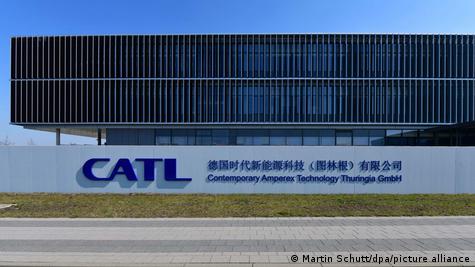
- Thuringia, Germany Plant: Already in operation, supplying European OEMs such as BMW and Daimler
- Hungary Plant: Under construction, expected to support enterprises such as Tesla and Volkswagen
However, it is important to be alert that U.S. policy trends may have a
In the face of restrictions from the U.S. and Western countries, CATL is accelerating its layout in emerging markets such as Southeast Asia, South America, and the Middle East:
- Indonesia: Cooperating with local enterprises to build a battery industry chain
- Thailand: Considering building a production base
- Vietnam: Exploring localized production solutions

| Indicator | Data |
|---|---|
| Highest Price in the Period (2025-12-22) | RMB 398.86 |
| Latest Closing Price (2026-01-12) | RMB 359.00 |
| Maximum Drawdown | -9.99% |
| Period Price Change | -4.21% |
| 20-Day Moving Average | RMB 372.69 |
From a technical analysis perspective, the stock price has fallen below the 20-day moving average, showing a weak consolidation pattern in the short term [0].
Despite geopolitical pressures, CATL’s core financial indicators remain healthy:
| Financial Indicator | Value | Industry Evaluation |
|---|---|---|
| Market Capitalization | RMB 1.58 trillion | World’s largest battery manufacturer |
| Price-to-Earnings Ratio (P/E) | 25.55x | Within a reasonable range |
| Return on Equity (ROE) | 22.84% | Excellent level |
| Net Profit Margin | 16.53% | Strong profitability |
| Current Ratio | 1.68 | Sound financial status |
| Asset-Liability Ratio Risk | Low risk | Financially conservative |
Financial analysis shows that the company adopts conservative accounting policies, has low debt risk, and performs well in free cash flow [0].
Latest quarterly financial report shows:
- Q3 EPS: RMB 4.10 (0.49% above expectations)
- Q3 Revenue: RMB 104.2 billion (11.59% below expectations)
The revenue falling short of expectations is mainly affected by restrictions on overseas market expansion. As the U.S. market further tightens, the proportion of overseas revenue is expected to decline from the current approximately 30% [0].
In the face of multiple restrictions from the U.S., CATL is adopting the following response measures:
- Increase domestic capacity layout to meet the demand of the domestic new energy vehicle market
- Enhance independent and controllable technological capabilities to reduce reliance on U.S. technologies
- Accelerate layout in Southeast Asian countries such as Indonesia, Thailand, and Vietnam
- Explore opportunities in emerging markets such as the Middle East and South America
- Increase R&D investment to enhance innovation capabilities in material systems
- Develop differentiated products more suitable for overseas market demands
- Challenge the U.S. government’s decision through legal means
- Seek support from industry associations and chambers of commerce
The U.S. “encirclement” of China’s lithium battery industry will have a far-reaching impact on the global new energy pattern:
- Narrowed paths for overseas expansion
- Restrictions on technology authorization models
- Possible obstacles to capital market financing
- Increased costs of new energy vehicles
- Huge costs for rebuilding battery supply chains
- May delay the electrification process of the U.S. automotive industry
- Policy Risk: The U.S. may further expand the scope of restrictions
- Market Risk: The European market may be affected by policy spillovers
- Exchange Rate Risk: Fluctuations in foreign exchange gains and losses from overseas businesses
- Technological Risk: Changes in technological routes may affect competitiveness
- Stable Industry Position: Its position as the global leader in power batteries is difficult to shake
- Strong Domestic Demand: China’s new energy vehicle market continues to grow
- Obvious Technological Advantages: Leading R&D investment in the industry
- Healthy Cash Flow: Sound financial status and strong risk resistance capabilities
Considering the short-term impact and long-term value comprehensively, we believe:
- Short-term (1-3 months): The stock price may continue to be under pressure; it is recommended to pay attention to the support level of RMB 360-370
- Mid-term (3-6 months): Valuation is expected to recover after market sentiment is digested
- Long-term (more than 1 year): The value of the industry leader remains significant; it is recommended to accumulate positions on dips
CATL being added to the U.S. military-industrial enterprise blacklist is a major setback in its overseas expansion, but it is not a fatal blow. Relying on its technological advantages, cost control capabilities, and strong demand in the Chinese market, the company still has strong risk resistance capabilities.
From a strategic perspective, this incident also highlights the importance of
For investors, it is recommended to pay attention to the following key time nodes:
- The China policy direction of the new U.S. administration
- Latest progress of the EU’s battery policies targeting China
- Progress of CATL’s overseas projects
- Release of the company’s annual performance
[1] Eastmoney.com - “Global Encirclement of China’s Lithium Battery | Exclusive” (https://caifuhao.eastmoney.com/news/20260113095330551187520)
[2] Yahoo Taiwan Stock - “DeepSeek, Xiaomi May Be Added to U.S. Department of Defense Blacklist” (https://tw.stock.yahoo.com/news/大陸產業-deepseek-小米恐遭列美國防部黑名單-小米發聲了-072913044.html)
[0] Gilin AI Financial Database - CATL Stock Data and Financial Analysis
Insights are generated using AI models and historical data for informational purposes only. They do not constitute investment advice or recommendations. Past performance is not indicative of future results.
About us: Ginlix AI is the AI Investment Copilot powered by real data, bridging advanced AI with professional financial databases to provide verifiable, truth-based answers. Please use the chat box below to ask any financial question.