
In-Depth Analysis of the Suspension of CATL and Ford's Cooperation Project: Strategic Dilemmas and Prospects of Technology Export Models
Unlock More Features
Login to access AI-powered analysis, deep research reports and more advanced features
About us: Ginlix AI is the AI Investment Copilot powered by real data, bridging advanced AI with professional financial databases to provide verifiable, truth-based answers. Please use the chat box below to ask any financial question.
Related Stocks
Now, based on the collected information, I will prepare a detailed analysis report for you.
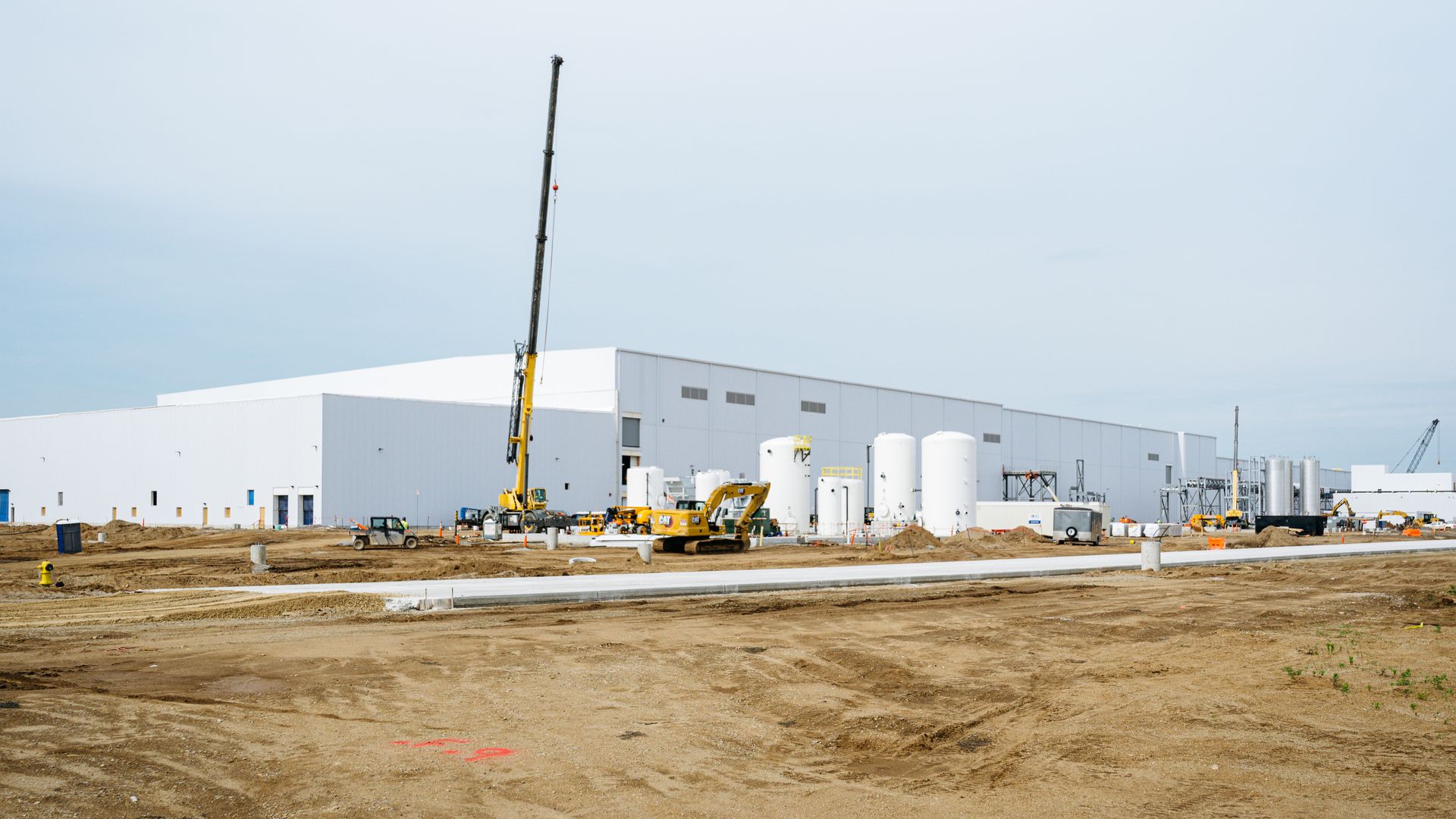
The cooperation project between CATL and Ford Motor began on February 14, 2023 (U.S. Valentine’s Day), when the two parties announced the construction of a lithium iron phosphate (LFP) battery plant in Marshall, Michigan. The total investment of the project reaches $3.5 billion, with 100% of the funding and full ownership of the plant provided by Ford Motor, while CATL is responsible for providing battery patent technology licensing, as well as construction and operation service support [1][2].
This cooperation model, known as “LRS” (Licence Royalty Service), has the following core features:
- Capital Structure Separation: Ford bears all capital expenditures, and CATL does not hold equity in the project
- Technology Export-Oriented: CATL is responsible for building battery production lines, establishing supply chains, commissioning equipment, and managing manufacturing processes
- Revenue Model: CATL generates income through one-time equipment sales fees and patent licensing fees collected based on battery production volume
- Employment Commitment: The project originally planned to create 2,500 manufacturing jobs with an annual production capacity of 35GWh [3][4]
Ford’s choice of CATL’s lithium iron phosphate (LFP) technology is mainly based on the following considerations:
On September 25, 2023, Ford Motor announced the suspension of construction work on the Marshall, Michigan battery plant, with the reasons for suspension including:
- Labor Negotiation Pressure: The strike by the United Auto Workers (UAW) continued to escalate, with the salary and benefits of battery plant workers and union representation becoming core points of contention
- Concerns Over Operating Costs: Ford stated that it needs to confirm that the project can operate in a “competitive” manner
- Policy Uncertainty: The foreign entity restriction clauses in the U.S. Inflation Reduction Act (IRA) pose potential risks [8]
UAW President Shawn Fain criticized Ford’s move at the time as a “shameful, blatant layoff threat”, stating that the union only demanded reasonable transition guarantees during the shift to electric vehicles [9].
After a two-month suspension, Ford announced the restart of the project in November 2023, but with major adjustments:
| Indicator | Original Plan | Adjusted Plan |
|---|---|---|
| Annual Capacity | 35GWh | 20GWh (↓43%) |
| Number of Vehicles Supplyable | 400,000 units | Approximately 230,000 units |
| Employee Scale | 2,500 people | 1,700 people |
Ford attributed this to
As of early 2026, the project has the following characteristics:
- Construction Still in Progress: The main building of the plant has basically been completed, and it is still expected to be put into operation in 2026
- Increased Policy Risks: On January 6, 2026, the U.S. Department of Defense added CATL to the “Chinese Military Companies List”
- Seeking Tax Incentives: Ford is pushing the U.S. Treasury Department to approve the tax credit eligibility under the IRA for batteries produced by the plant
- Strategic Value Trade-Off: Despite the expanding losses of Ford’s overall electric vehicle business (a loss of $1.3 billion in Q3 2025), it still chose to retain the project [11]
The Inflation Reduction Act (IRA), passed by the U.S. Congress in August 2022, established the “Foreign Entity of Concern (FEOC)” rule, which constitutes the first barrier for Chinese battery companies to enter the U.S. market:
- Prohibits tax credits for battery components manufactured or assembled by “Foreign Entities of Concern”
- All companies registered in China or in which the Chinese government holds 25% or more of the shares may be designated as FEOCs
- Key battery minerals and components must gradually meet local procurement ratio requirements [12]
In July 2025, U.S. President Donald Trump signed the “One Big Beautiful Bill Act (OBBB)”, creating a more severe containment situation for China’s lithium battery industry:
- The existing new energy vehicle purchase tax credits ($7,500 for new vehicles, $4,000 for used vehicles) will be terminated early on September 30, 2025
- Gradually eliminate the Advanced Manufacturing Production Credit (AMPC) for battery manufacturers under the IRA [13]
- If the amount of a technology licensing agreement signed between an enterprise and an FEOC exceeds $1 million, the project will lose its tax credit eligibility
- “Chinese-funded background” is comprehensively defined from multiple dimensions including equity structure, supply chain, technology licensing, and capital flow [14]
- Starting in 2026, the use of key minerals, components, technology licensing, or equipment provided by restricted entities will make projects ineligible for tax credits
- For projects using components from China, the proportion of non-Chinese components must reach at least 60%, and will be gradually increased to 85% by 2030
- For participation in projects through subsidiaries or joint ventures, if the shareholding exceeds 25% after equity penetration, the entity will still be designated as an FEOC [15]
On January 6, 2026, the U.S. Department of Defense added 134 Chinese companies including CATL and Tencent to the “Section 1260H List” (Chinese Military Companies List), which is the latest blow to the technology export model:
- Legal Basis: Based on Section 1260H of the FY2021 National Defense Authorization Act
- Core Allegation: Designating these enterprises as having “direct or indirect” cooperative relationships with the Chinese military
- Subsequent Impacts: Starting from June 2026, the U.S. Department of Defense will prohibit direct procurement of goods or services from listed enterprises; starting from June 2027, indirect procurement will also be prohibited
- CATL’s Response: Stated that this designation is “wrong” and emphasized that it “has not engaged in any military-related activities” [16][17]
The LRS cooperation model between CATL and Ford is essentially a “third path” found in the gap of China-U.S. policy games:
- Avoiding Direct Factory Establishment Restrictions: Using technology licensing instead of direct investment to avoid triggering foreign entity reviews
- Meeting U.S. Manufacturing Requirements: The plant is fully owned by Ford, so products can be regarded as “Made in America”
- Maintaining Technology Control: CATL does not need to transfer core technology and patent ownership
- Reducing Capital Risks: No need to bear large-scale fixed asset investments [18]
The newly added “licensing agreement amount limit” clause in the “One Big Beautiful Bill Act” directly targets the technology licensing cooperation model. The $1 million threshold means that any cooperation involving substantive technology transfer may trigger the risk of losing tax credit eligibility [19].
U.S. members of Congress have continued to question the Ford-CATL cooperation:
- Republican Senator Marco Rubio (current U.S. Secretary of State) once led efforts to block the project, stating that the technology licensing model is a “channel for Chinese companies to obtain U.S. taxpayer subsidies”
- Mike Gallagher, Chairman of the House Select Committee on the Chinese Communist Party, stated that Ford “needs to cancel this deal permanently”
- Virginia Governor Glenn Youngkin once rejected Ford’s plan to build a similar battery plant in the state [20]
Even if technology licensing itself does not directly trigger sanctions, the strict supply chain restrictions in the “One Big Beautiful Bill Act” still constitute a substantial barrier:
- The supply of battery materials, equipment, and components must meet the proportion requirements of non-Chinese components
- Technical support from engineers dispatched by CATL may be designated as “participation by restricted entities”
- In the long term, technology iteration and process optimization will be affected by information isolation [21]
The difficulties faced by the Ford-CATL project have triggered widespread strategic adjustments in the industry:
| Enterprise | Response Measures | Impact Assessment |
|---|---|---|
| Envision AESC | Suspended the construction of a battery plant in South Carolina (investment of $1.6 billion) | The main plant structure has been completed, but key equipment is difficult to deliver |
| Gotion High-Tech | Terminated cooperation with the state government for the battery material plant in Michigan | The proposed $2.4 billion project has been suspended |
| LG Energy Solution | Terminated the $6.5 billion battery supply agreement with Ford | Shifted to energy storage business |
| EVE Energy | Reassessed North American investment plans | Maintained a cautious attitude |
| Hithium Energy | Its top U.S. customer Powin filed for bankruptcy | Impacted its U.S. business [22] |
- The Ford-CATL project has received initial recognition from the U.S. Treasury Department and is expected to continue advancing
- The existing technology licensing agreement was signed before the “One Big Beautiful Bill Act” and may be exempted
- Ford’s official statement: The project “fully complies with all legal requirements” and is “confident” in obtaining tax credits
- Reputational risks and potential legal consequences brought by the designation on the Section 1260H List
- Uncertainties in UAW labor relations persist
- Macroeconomic environment of slower growth in U.S. electric vehicle market demand [23]
In December 2025, Ford announced the expansion of cooperation with CATL to build an energy storage battery plant in Kentucky. This move indicates that:
- The tax credit reduction in the energy storage field is relatively small (it will only be gradually eliminated by 2033)
- The demand for LFP technology in energy storage batteries is more rigid (Chinese-made energy storage batteries account for more than 90% of the U.S. market)
- The energy storage business can be decoupled from the direct impact of fluctuations in electric vehicle sales [24]
CATL’s production capacity layout in Europe:
- German plant: Achieved break-even in 2024
- Hungary Phase I plant: Put into operation in June 2025
- Hungary Phase II / Spanish plant: Planned to be put into operation in 2026
- Total European production capacity will exceed 100GWh in 2026
European production capacity can serve as a “transit hub” for exports to the U.S., using U.S.-Europe free trade agreements to avoid some restrictions [25].
- Morocco: Enterprises such as Gotion High-Tech have built plants, leveraging the conditions of the U.S.-Morocco Free Trade Agreement
- Mexico: A potential plant location previously surveyed by CATL
- Using offshore company structures to avoid equity penetration reviews (but with high compliance risks) [26]
Under a stricter policy environment, the LRS model may evolve into:
- Only providing basic patent licensing, without involving process guidance and on-site support
- Generating one-time income through equipment sales to reduce reliance on continuous technical services
- Establishing a more isolated information security architecture to reduce the risk of data leakage
South Korean battery companies may be more impacted by the “One Big Beautiful Bill Act”:
- LG Energy Solution estimates: After losing subsidies, North American battery costs will be 35% higher than those in China
- Samsung SDI and SK On also face profit pressure from subsidy reductions
- As cost disadvantages intensify, the attractiveness of Chinese technology may instead increase [27]
The ultimate goal of U.S. automakers such as Ford is to cultivate local battery capabilities, but the technology obtained from CATL is not the most advanced level. Cultivating a U.S. local battery industry chain still takes a long time, and dependence on external technology cannot be completely eliminated during this period [28].
- The designation on the Section 1260H List caused short-term stock price fluctuations (a 6% drop was once seen in the Shenzhen market)
- The scalability of the technology licensing revenue model is suppressed by policies
- The strategic space for business expansion in the U.S. has narrowed
- Brand reputation has been damaged, affecting cooperation negotiations with other international automakers
- The plan for a Hong Kong IPO may face valuation pressure
- Accelerated strategic tilt towards markets such as Europe and Southeast Asia
- Continuing to advance the project requires bearing political pressure and potential legal risks
- Abandoning the project means that the cost control target for electric vehicles will be difficult to achieve
- Against the background of the overall contraction of the U.S. electric vehicle market, the fault tolerance space for battery strategy is limited
- Capacity reduction has led to an increase in unit costs
- Uncertainty about tax credit eligibility affects the project’s economic calculation
- Cooperation with CATL remains its most cost-competitive battery supply solution
| Risk Type | Risk Level | Risk Description |
|---|---|---|
| Policy Risk | High | U.S. technology restrictions against China continue to escalate |
| Trade Risk | High | Tariff barriers and supply chain reviews |
| Compliance Risk | Medium | Equity penetration and foreign entity designation |
| Market Risk | Medium | Slower growth in U.S. electric vehicle demand |
| Technology Risk | Low | Technology leakage and data security disputes |
The technology licensing amount limit in the “One Big Beautiful Bill Act”, the designation on the Section 1260H List, and the sustained political pressure from the U.S. Congress together constitute a systemic containment of the LRS cooperation model. This innovative model, once highly anticipated as a “circuitous entry into the U.S.” path, is facing an unprecedented policy cold wave.
Considering that:
- Existing cooperation projects have obtained partial policy exemptions
- U.S. automakers such as Ford have rigid demand for low-cost batteries
- Completely cutting off technical cooperation will significantly delay the U.S. electrification process
- South Korean competitors have insufficient substitution capabilities
Therefore, the technology export model will not be completely terminated, but its scale and scope will shrink significantly.
CATL’s technology export model is shifting from a “U.S.-led” strategy to a dual-track strategy of “European transit + energy storage priority”. The release of European production capacity, the expansion of energy storage business, and the deepening of layout in third-party countries will become new growth engines in the medium to long term.
| Scenario | Probability | Assumptions | Prospects for the Technology Export Model |
|---|---|---|---|
| Base Scenario | 50% | China-U.S. relations remain unchanged, and the “One Big Beautiful Bill Act” is strictly implemented | Contracts but maintains, focusing on energy storage |
| Optimistic Scenario | 25% | China-U.S. relations ease periodically, and technology restrictions are loosened | Restores some power battery cooperation |
| Pessimistic Scenario | 25% | The U.S. further escalates restrictions and completely bans technology licensing | Completely shifts to non-sensitive fields |
For investors focusing on CATL and China’s lithium battery industry, it is recommended to focus on the following:
- Progress of European Business: Capacity ramp-up and profit improvement of German and Hungarian plants
- Growth of Energy Storage Business: Demand resilience in the global energy storage market
- Transformation of Technology Licensing Model: Extension from power batteries to scenarios such as energy storage and commercial mobility
- Supply Chain Security Layout: Improvement of self-sufficiency rate of upstream key minerals and materials
- Policy Hedging Capability: Geographical diversification of overseas production capacity
[1] 36Kr - Licensing Battery Technology, CATL Enters the U.S. Through a Narrow Gap | 36Kr In-Depth (https://zhuanlan.zhihu.com/p/608865026)
[2] Caifu Hao - Global Containment of China’s Lithium Battery Industry | Exclusive (https://caifuhao.eastmoney.com/news/20260113095330551187520)
[3] EET China - CATL’s Technology Licensing: Helping the U.S. Build Cheaper Electric Vehicles (https://www.eet-china.com/mp/a303944.html)
[4] DoNews - Rumored that CATL is Negotiating Technology Licensing Cooperation with General Motors (https://www.donews.com/news/detail/1/4122198.html)
[5] Securities Times - Construction of the Battery Plant Cooperated by Ford and CATL Restarts (https://www.stcn.com/article/detail/1044569.html)
[6] Energy Connects - Why Ford Is Expanding a Partnership With Top Chinese Battery Maker (https://www.energyconnects.com/news/renewables/2025/december/why-ford-is-expanding-a-partnership-with-top-chinese-battery-maker/)
[7] Detroit News - Why Ford is expanding Its partnership with top Chinese battery maker (https://www.detroitnews.com/story/business/autos/ford/2025/12/23/why-ford-is-expanding-its-partnership-with-top-chinese-battery-maker/87894691007/)
[8] Voice of America (VOA) - Plagued by Labor Disputes, Ford Suspends Construction of Auto Battery Plant Cooperated with China’s CATL (https://www.voachinese.com/a/ford-pauses-work-on-chinese-battery-factory-in-michigan-20230926/7284079.html)
[9] Sina Finance - Multiple Battery Projects Delayed, Chinese-funded New Energy…
Insights are generated using AI models and historical data for informational purposes only. They do not constitute investment advice or recommendations. Past performance is not indicative of future results.
About us: Ginlix AI is the AI Investment Copilot powered by real data, bridging advanced AI with professional financial databases to provide verifiable, truth-based answers. Please use the chat box below to ask any financial question.