
DOJ Criminal Investigation into Fed Chair Jerome Powell: Unprecedented Threat to Central Bank Independence
Unlock More Features
Login to access AI-powered analysis, deep research reports and more advanced features
About us: Ginlix AI is the AI Investment Copilot powered by real data, bridging advanced AI with professional financial databases to provide verifiable, truth-based answers. Please use the chat box below to ask any financial question.
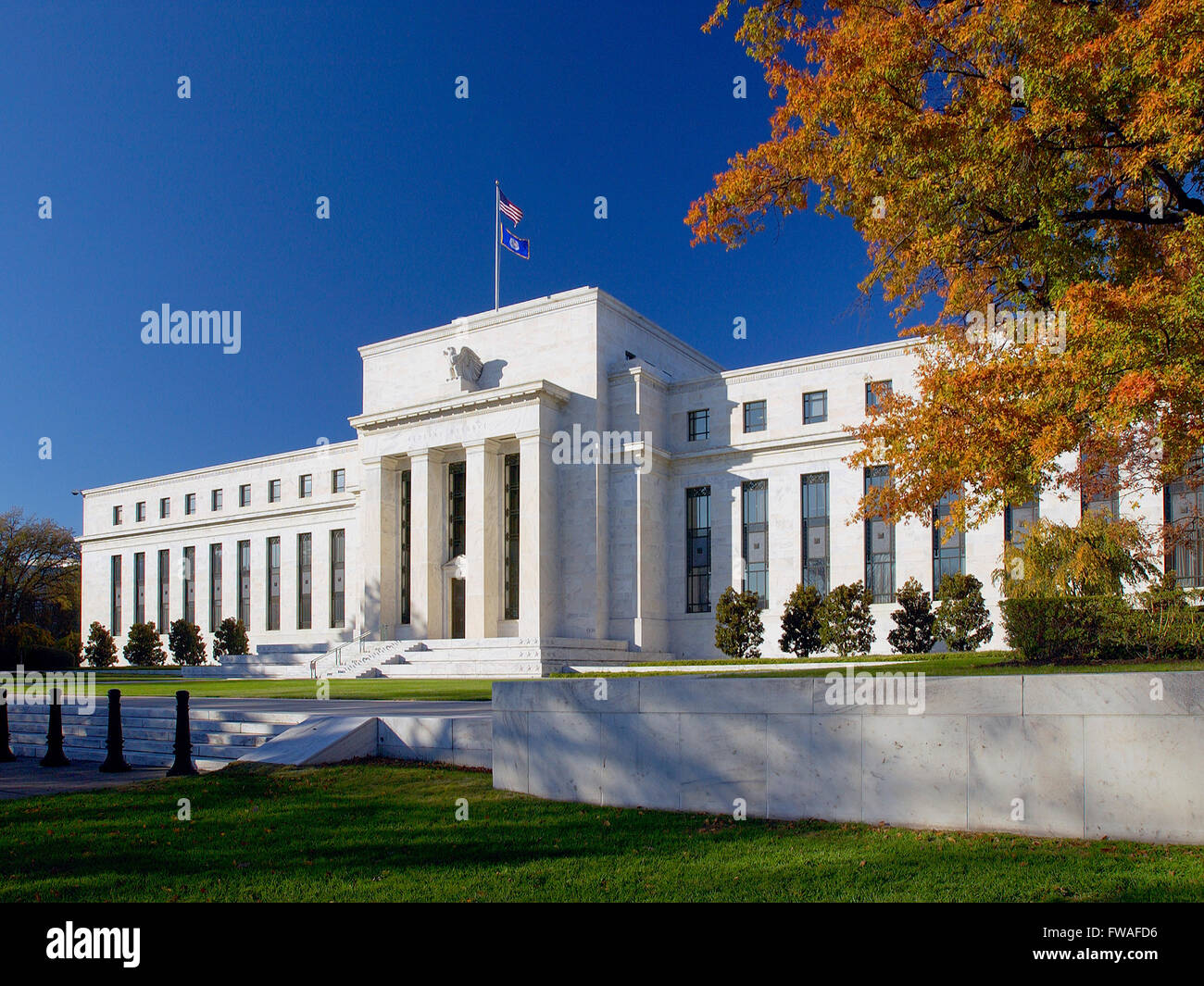
The Department of Justice has initiated what appears to be an unprecedented criminal investigation into a sitting Federal Reserve Chair, marking a significant escalation in tensions between the executive branch and the nation’s central bank. Grand jury subpoenas were served to the Federal Reserve on Friday, January 10, 2026, with the investigation centering on Fed Chair Jerome Powell’s June 2025 congressional testimony regarding a $2.5 billion headquarters renovation project and associated cost overruns [1][2]. Powell publicly revealed the existence of the investigation in an unusual video statement on Sunday night, January 12, 2026, directly addressing the nation about what he characterized as an attempt to undermine the Fed’s independence [1].
The investigation carries profound implications for the institutional framework of American monetary policy. In his statement, Powell articulated the core concern with notable directness: “This is about whether the Fed will be able to continue to set interest rates based on evidence and economic conditions—or whether instead monetary policy will be directed by political pressure or intimidation” [1][3]. This framing positions the DOJ probe not merely as a legal matter concerning congressional testimony, but as a fundamental challenge to the apolitical foundation upon which modern central banking has operated for over a century.
The Trump administration has sought to distance itself from direct involvement while maintaining criticism of Powell’s performance. President Trump denied directing the investigation, while White House press secretary criticism focused on job performance issues [1]. White House economic adviser Kevin Hassett acknowledged “dramatic cost overruns” at the Fed headquarters project but stated he was not involved in DOJ decision-making [1][4]. This careful separation between policy criticism and prosecutorial action creates an complex political dynamic where administration officials can express dissatisfaction with Powell while maintaining plausible deniability regarding the investigation’s origins or motivations.
Financial markets have exhibited measured volatility following disclosure of the investigation, suggesting investor concern without panic. The Dow Jones Industrial Average recorded the largest decline at 0.65%, followed by the NASDAQ’s 0.40% drop and the S&P 500’s 0.36% decline on January 13, 2026 [0][1]. The differential in declines across major indices may reflect varying sector exposures to interest rate expectations, with industrials and financial stocks—typically more sensitive to monetary policy direction—experiencing comparatively greater pressure.
The U.S. dollar weakened against major currencies following the news, indicating some erosion of confidence in U.S. monetary policy stability [1]. Treasury yields remained relatively stable, suggesting that bond market participants view the immediate inflation and growth outlook as unchanged despite the political controversy [0][1]. This divergence between equity and currency reactions versus bond market stability may indicate that traders are treating the situation as primarily a political and institutional risk rather than an immediate economic policy shift.
The market response pattern warrants continued monitoring as the situation develops. Historical precedent for such events is essentially nonexistent—the last time the Fed faced comparable political pressure was during the Nixon administration, but no criminal investigation of a sitting Fed chair has ever occurred. This absence of comparable situations complicates historical modeling and may explain the measured but uncertain market reaction as participants assess potential longer-term implications.
The investigation has prompted an unusually unified response from former Federal Reserve leadership and Treasury officials, transcending partisan affiliations. A joint statement from former Fed Chairs Janet Yellen, Ben Bernanke, and Alan Greenspan—spanning Democratic and Republican administrations—together with former Treasury Secretaries Timothy Geithner, Jacob Lew, Henry Paulson, and Robert Rubin, declared that “The reported criminal inquiry into Federal Reserve Chair Jay Powell is an unprecedented attempt to use prosecutorial attacks to undermine that independence” [5]. This breadth of institutional concern signals that the investigation is perceived by seasoned monetary policy hands as threatening foundational principles rather than merely a legitimate law enforcement matter.
Republican congressional reaction has introduced unexpected complexity into the political dynamics. Senator Thom Tillis of North Carolina, a Republican, issued a pointed statement declaring that “if there were any remaining doubt whether advisers within the Trump administration are actively pushing to end the independence of the Federal Reserve, there should now be none” [3][4]. Senator Tillis has subsequently pledged to block all Fed nominations until the investigation is resolved, potentially derailing the Trump administration’s agenda for appointing sympathetic leadership to the central bank [3][5]. Senators Lisa Murkowski and Susan Collins have also publicly defended Powell’s integrity, with Senator Collins noting that “One can’t help but wonder that [the investigation has] more to do with the chairman’s resistance to pressure from the White House when it comes to interest rates than it does his testimony” [5].
This congressional backlash creates a potentially significant obstacle for the administration. Powell’s term as Fed Chair expires in May 2026, and the administration had been expected to nominate a successor. However, with key Senate Republicans threatening to block confirmations and the investigation casting uncertainty over the transition, the path forward for Fed succession planning has become considerably more complicated [1][4]. The dynamic illustrates how an aggressive legal strategy, even if ultimately successful in its narrow aims, may produce unintended political consequences.
The investigation raises fundamental questions about the relationship between prosecutorial discretion and central bank independence that extend far beyond the specific facts of the case. The Federal Reserve’s ability to make interest rate decisions based on economic evidence rather than political pressure has been considered essential to U.S. financial stability since the system’s modern restructuring following the Banking Act of 1935 [2][3]. If DOJ investigations can be deployed against Fed leadership for conduct related to their official duties—even if that conduct allegedly involved misleading Congress—the chilling effect on future central bankers could be substantial.
The investigation’s timing is particularly significant given Powell’s known resistance to political pressure on interest rates. Throughout his tenure, Powell has maintained positions that sometimes conflicted with White House preferences, including resisting calls for rate cuts during periods of political pressure [1][3]. The coincidence of an investigation focused on a relatively minor matter—the headquarters renovation—emerging during a period when Powell has stood firm on monetary policy independence has led many observers to question whether the legal scrutiny serves legitimate law enforcement purposes or represents the weaponization of prosecutorial power for political ends.
The investigation introduces substantial uncertainty into the Fed succession timeline that extends beyond the immediate political friction. Powell’s term expires May 2026, and the standard timeline for announcing and confirming a successor would normally be underway [1][4]. However, the DOJ investigation creates multiple complications: a potential successor might be reluctant to accept appointment under circumstances that suggest the position comes with personal legal jeopardy; Senate Republicans have signaled willingness to block confirmations as leverage; and the broader environment of institutional conflict may deter highly qualified candidates from seeking the role.
This uncertainty regarding Fed leadership coincides with ongoing economic considerations that would normally command the central bank’s full attention. The January 27-28, 2026 Federal Open Market Committee meeting approaches, and market participants will be closely monitoring communications for any signals regarding how the controversy might affect policy deliberations [0][1]. The risk of policy uncertainty extending beyond the immediate crisis period represents a non-trivial concern for financial stability.
The investigation’s legal framework warrants attention from a procedural standpoint. Grand jury subpoenas suggest a serious criminal inquiry with prosecutorial intent, though the ultimate outcome remains uncertain [2]. Powell’s characterization of the investigation as “pretext” for political pressure does not address whether any technical violations of law occurred during his congressional testimony, but rather challenges the motivation behind the prosecution [1][3]. The distinction between legitimate law enforcement and politically motivated prosecution is one that courts may eventually need to address, though such determinations typically occur long after any immediate political and market effects have materialized.
The investigation introduces several categories of risk that market participants and policy observers should monitor carefully. First, the precedent risk of criminal investigation into central bank leadership represents a fundamental institutional concern that could affect confidence in U.S. monetary policy framework over time. While immediate market reactions have been measured, longer-term implications for foreign investment and dollar reserve holdings may emerge if the situation remains unresolved or escalates [1][2].
Second, the political risk of continued conflict between the executive branch and Fed leadership could create sustained uncertainty around monetary policy direction. If the investigation continues for an extended period, the Fed’s credibility as an independent policymaker may erode, potentially affecting inflation expectations and risk premiums across asset classes [1][4].
Third, the market volatility risk around the January 27-28 FOMC meeting and subsequent developments warrants preparation. Even if the investigation does not immediately affect policy decisions, market reactions to Fed communications could become more pronounced as participants attempt to parse statements for political signals [0][1].
Fourth, the potential for investigation scope expansion introduces additional uncertainty. Reports have not indicated whether the DOJ probe is limited to the renovation testimony or might extend to other aspects of Powell’s conduct or communications [2][3].
The situation also presents certain observation opportunities for understanding institutional resilience. The rapid and unified response from former Fed leadership and Treasury officials demonstrates that institutional norms retain significant support across political divides [5]. This response may constrain the investigation’s scope or duration if political costs become apparent.
Additionally, the Republican congressional backlash suggests that the investigation may not enjoy unified support within the governing party [3][5]. This political constraint could limit escalation and potentially lead to earlier resolution than might otherwise occur.
The market’s measured initial reaction indicates that investors are processing the information without panic, suggesting that institutional confidence remains intact despite the controversy [0][1]. This resilience provides a positive data point for assessing the system’s capacity to weather the uncertainty.
The Department of Justice’s criminal investigation into Federal Reserve Chair Jerome Powell represents an unprecedented development in American central banking history. The investigation, revealed publicly by Powell on January 12, 2026, concerns his June 2025 congressional testimony about a $2.5 billion headquarters renovation project. Powell has characterized the inquiry as pretextual political pressure targeting the Fed’s independence in setting interest rate policy.
Market reaction has been modest but telling, with equity indices declining between 0.36% and 0.65% on January 13 and the dollar weakening, while Treasury yields remained stable [0][1]. Former Fed Chairs Yellen, Bernanke, and Greenspan, together with multiple former Treasury Secretaries, have issued joint condemnation of the investigation as threatening institutional foundations [5]. Congressional reaction has been unexpectedly critical from some Republicans, with Senator Tillis blocking Fed nominations and Senators Murkowski and Collins defending Powell’s integrity [3][5].
The investigation complicates Fed succession planning ahead of Powell’s May 2026 term expiration and introduces uncertainty into monetary policy outlook. Key monitoring points include the January 27-28 FOMC meeting, congressional developments, DOJ investigation progress, and market stability indicators [0][1]. The situation’s resolution timeline will be critical for assessing longer-term implications for U.S. financial system credibility and central bank independence.
Insights are generated using AI models and historical data for informational purposes only. They do not constitute investment advice or recommendations. Past performance is not indicative of future results.
About us: Ginlix AI is the AI Investment Copilot powered by real data, bridging advanced AI with professional financial databases to provide verifiable, truth-based answers. Please use the chat box below to ask any financial question.