
Strategic Value Analysis of EVgo and Kroger's Charging Infrastructure Partnership
Unlock More Features
Login to access AI-powered analysis, deep research reports and more advanced features
About us: Ginlix AI is the AI Investment Copilot powered by real data, bridging advanced AI with professional financial databases to provide verifiable, truth-based answers. Please use the chat box below to ask any financial question.
Related Stocks
Based on the obtained data and materials, I will conduct a comprehensive strategic value assessment of EVgo and Kroger’s charging infrastructure partnership for you.
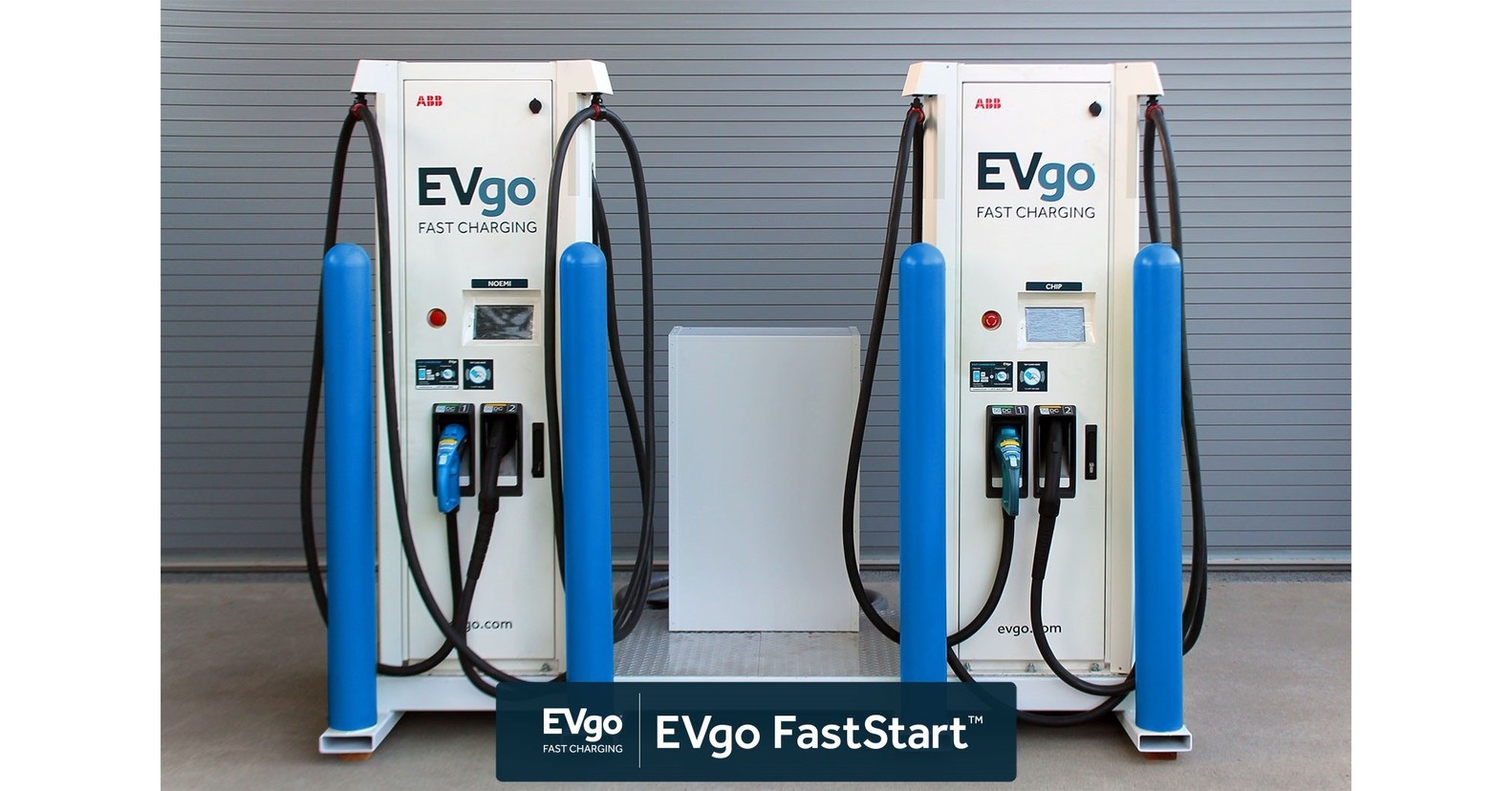
EVgo and Kroger announced an expansion of their strategic partnership in January 2026, planning to deploy at least 150 high-power fast chargers annually at Kroger’s stores across the U.S. through 2035. The first expanded partnership site was put into operation in Salt Lake City, Utah in January 2026 [1]. This partnership builds on the initial 2022 collaboration, covering stores under multiple brands including Kroger, Foods Co., Fred Meyer, Fry’s Food Stores, Harris Teeter, King Soopers, and Smith’s Food and Drug [2].
EVgo currently operates over 1,100 fast-charging stations across 47 states [2]. The partnership with Kroger will significantly accelerate its network expansion:
| Metric | Current Status | Increment After Partnership |
|---|---|---|
| Annual Deployment Volume | Existing Growth | +150 stations/year |
| Coverage Scenarios | Highways, Gas Stations | Daily Retail Scenarios |
| Single-station Capacity | Standard Configuration | Up to 16 fast chargers per station |
According to the latest financial data, EVgo’s retail charging revenue accounts for 54.1% of its total revenue, reaching $32.8 million [0]. The steadily growing revenue trajectory (continuous growth over the past seven quarters) indicates that the business model is maturing, and the Kroger partnership will provide a predictable source of demand for this growth [0].
Retail scenario charging has unique advantages:
EVgo’s current stock price is $3.09, representing a 38% decline from its 52-week high of $5.01, with a current market capitalization of $952 million [0]. The analyst consensus target price is $7.50, offering a 142.7% upside from the current price, with 11 analysts assigning a Buy rating [0]. If the partnership expansion plan is effectively executed and translated into revenue growth, it could serve as a catalyst for a valuation re-rating.
For retail enterprises, the deployment of charging infrastructure can deliver multiple customer values:
- Extended In-Store Duration: During EV charging (15-30 minutes), customers have ample time to make additional purchases
- Differentiated Competitive Advantage: Being the first among competitors to provide EV charging services, establishing a service barrier
- Attracting New Customer Groups of EV Owners: Covering approximately 30% of U.S. consumers without access to home charging [4]
As one of the largest grocery retailers in the U.S., Kroger can convey a positive ESG image to consumers by deploying clean energy charging facilities through its partnership with EVgo, which aligns with the sustainable development trend of the retail industry.
In addition to direct customer consumption conversion, Kroger can also benefit from charging-related services, although specific financial arrangements have not been disclosed. This asset-light “venue + traffic” model carries low risk, eliminating the need to bear the technical complexity and capital expenditure of charging equipment investment and operation.
According to industry research, the model of retail enterprises deploying charging infrastructure is highly replicable [3]:
| Dimension | Assessment |
|---|---|
Scenario Universality |
High — Adaptable to shopping malls, chain supermarkets, convenience stores, etc. |
Implementation Threshold |
Low — Existing parking spaces, grid connections, and planning approvals are already in place |
Profit Logic |
Clear — Stable charging demand + consumption linkage form predictable revenue |
Capital Attractiveness |
Strong — High-traffic scenarios reduce financing risks |
- Precise Site Selection: Prioritize coverage of urban areas with high EV penetration
- Charging Speed: High-power fast charging (150kW+) matches shopping duration
- Operational Efficiency: Prefabricated modular chargers (EVgo has implemented prefabricated domestic modules in over 40% of its stations [5])
- Technical Reliability: The Autocharge+ service has exceeded 5 million charging sessions and is compatible with nearly 80 vehicle models [6]
- Site Space Constraints: Limited retail parking lot area restricts charger deployment density
- Grid Upgrade Costs: High-power charging places higher requirements on the distribution network
- Long-Distance Travel Coverage: Over-focus on retail may neglect demand in highway corridors
| Element | Advantages of the EVgo-Kroger Model |
|---|---|
Win-Win Structure |
EVgo gains venues and traffic, while Kroger gains service value-added |
Asset-Light Operation |
Retailers do not need to bear equipment investment and technical operations |
Scale Effects |
Nationwide partnership reduces unit deployment costs |
Brand Synergy |
EVgo’s professional image complements Kroger’s retail credibility |
This partnership model is expected to become a replicable benchmark for retail enterprises integrating charging networks. Similar scenarios include:
- Shopping malls and commercial complexes
- Convenience store chains (e.g., 7-Eleven, Casey’s)
- Pharmacy chains (e.g., CVS, Walgreens)
- Fast food chains (e.g., McDonald’s, Starbucks)
- Valuation: The current P/S ratio is 6.55x. Considering continuous losses (-40% operating margin), the valuation is based on growth expectations [0]
- Catalysts: Progress in the execution of the Kroger partnership, user growth of Autocharge+, and increased charging volume
- Risks: Execution risk, intensified competition (e.g., Blink Charging, ChargePoint), and lower-than-expected electric vehicle penetration
- Valuation: P/E ratio of 50.73x, P/B ratio of 5.69x, valuation is relatively high [0]
- Investment Value: Stable grocery business + digital transformation (recent partnership with Google Cloud to deploy AI shopping assistants [7]) + charging service value-added
- Risks: Physical store expansion by e-commerce giants such as Amazon [8], intensified competition in the grocery industry
The charging infrastructure partnership between EVgo and Kroger represents an important business model innovation integrating electric vehicle charging networks with retail scenarios:
-
For EVgo: It provides a stable source of demand, accelerates network expansion, and reduces investment risks, serving as a key strategic support for its transition from a loss-making phase to a profitable phase.
-
For Kroger: It provides differentiated services in the highly competitive grocery retail market, enhances customer loyalty and in-store consumption potential, while establishing a positive ESG image.
-
Industry Demonstration Significance: The model is highly replicable and is expected to promote more retail enterprises to establish similar partnerships with charging operators, forming a “charging + retail” ecosystem.
Based on current data, this partnership has positive strategic value for both parties, but the actual effect depends on execution progress, EV market penetration, and verification of the unit economic model. If the partnership progresses smoothly and generates substantial charging volume and consumption conversion, EVgo is expected to achieve a business inflection point, while Kroger can seize the initiative in retail differentiated competition.
[1] Globe Newswire - “EVgo to Bring Fast Charging Choices to More Shoppers Across America” (https://www.globenewswire.com/en/news-release/2026/01/13/3217753/0/en/EVgo-to-Bring-Fast-Charging-Choices-to-More-Shoppers-Across-America.html)
[2] The EV Report - “EVgo Expands Kroger Partnership for Grocery Store Charging” (https://theevreport.com/evgo-expands-kroger-partnership-for-grocery-store-charging)
[3] Charging USA - “How Grocery Stores Became the New EV Charging Hubs” (https://www.charging-usa.com/insights/how-grocery-stores-became-the-new-ev-charging-hubs)
[4] ABC News - “More EVs are coming. Where’s the infrastructure to support them?” (https://abcnews.go.com/Business/evs-coming-infrastructure-support/story?id=81502192)
[5] Yahoo Finance - “EVgo, Inc. (EVGO) Deploys Over 40% Of Stations Using Prefabricated Modular Skids” (https://finance.yahoo.com/news/evgo-inc-evgo-deploys-over-023227755.html)
[6] StockStory - “Commercial Vehicle Group, EVgo, FTAI Infrastructure, Blink Charging, and Byrna Stocks Trade Down” (https://stockstory.org/us/stocks/nasdaq/cvgi/news/why-up-down/commercial-vehicle-group-evgo-ftai-infrastructure-blink-charging-and-byrna-stocks-trade-down-what-you-need-to-know)
[7] PR Newswire - “Kroger Scales Generative AI Strategy with Google Cloud to Drive Digital Growth and Personalization” (https://www.prnewswire.com/news-releases/kroger-scales-generative-ai-strategy-with-google-cloud-to-drive-digital-growth-and-personalization-302657659.html)
[8] The Verge - “Amazon is planning a Super Amazon-mart store near Chicago” (https://www.theverge.com/news/860058/amazon-chicago-supercenter-store-plans)
[0] Jinling API Market Data
Insights are generated using AI models and historical data for informational purposes only. They do not constitute investment advice or recommendations. Past performance is not indicative of future results.
About us: Ginlix AI is the AI Investment Copilot powered by real data, bridging advanced AI with professional financial databases to provide verifiable, truth-based answers. Please use the chat box below to ask any financial question.