
Fed Independence Crisis Triggers Record Precious Metals Surge: Gold Breaks $4,600, Silver Soars Amid DOJ Investigation
Unlock More Features
Login to access AI-powered analysis, deep research reports and more advanced features
About us: Ginlix AI is the AI Investment Copilot powered by real data, bridging advanced AI with professional financial databases to provide verifiable, truth-based answers. Please use the chat box below to ask any financial question.
Related Stocks
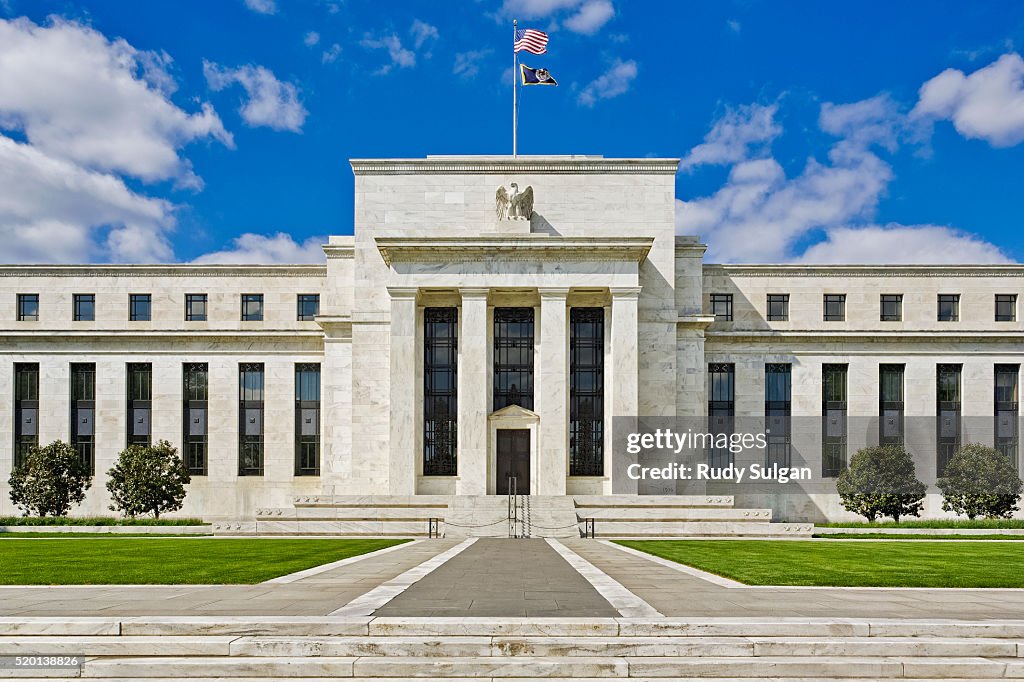
The January 12, 2026 precious metals surge represents a confluence of unprecedented political risk and structural market shifts that have fundamentally altered investor behavior toward safe-haven assets. The criminal investigation into Federal Reserve Chair Jerome Powell by the Justice Department under the Trump administration marks a watershed moment for central bank independence, triggering the most significant single-day precious metals movement in recent memory [1][2][3].
Gold’s breakthrough above the $4,600 barrier represents not merely a technical milestone but a structural reassessment of reserve asset allocation. According to market analysis, foreign central banks now hold more gold bullion than US Treasuries for the first time since 1996, signaling a fundamental shift in global reserve management strategies [4]. This transition has been accelerated by the political confrontation between the executive branch and the Federal Reserve, with Powell himself warning that “threats and ongoing pressure” are jeopardizing the central bank’s independence [3][4].
The precious metals rally demonstrated remarkable breadth across the complex, with gold closing between $4,616 and $4,628 per ounce, representing gains of 2.98% to 3% on the session [5][6]. Silver’s performance was even more pronounced, with prices reaching $83.58 to $86.00 per ounce, equating to daily advances of 4.54% to 7.84% [2][5]. The white metal has now generated an extraordinary 181.78% gain over the trailing twelve months, while gold has appreciated approximately 73.40% over the same period [2][7]. Platinum and palladium also participated in the rally, gaining 2.86% and 3.33% respectively, reflecting both safe-haven flows and industrial demand considerations [4].
The equity market response proved relatively muted given the severity of the political developments, with the S&P 500 closing at 6,977.26 (+0.48%), the NASDAQ Composite at 23,733.90 (+0.67%), and the Dow Jones Industrial at 49,590.21 (+0.18%) [0]. This resilience suggests investors are processing the information with nuance, distinguishing between immediate systemic risk and longer-term policy implications. However, longer-dated Treasuries showed vulnerability, and the US Dollar Index declined 0.29%, reflecting currency weakness in the face of political uncertainty [4][8].
Technical analysis indicates the precious metals rally retains bullish momentum without yet reaching overbought conditions on daily charts. Gold’s relative strength index (RSI) remains trending higher above 50, while the MACD indicator has been firmly in positive territory since late November, confirming the bullish trend structure [8]. Market analysts have identified $5,000 per ounce as the next major technical target for gold, representing a 100% Fibonacci extension from recent ranges, while silver’s 161.8% extension points toward the $88 level [2][8].
The Fed independence crisis represents a fundamental reassessment of political risk premiums across asset classes, with precious metals serving as the primary beneficiary. Market commentary from XS.com captures this dynamic succinctly: “Gold is no longer moving solely as a hedge against inflation or dollar weakness, but increasingly as protection against geopolitical disorder and the reshaping of global power dynamics” [4]. This evolution in gold’s role has significant implications for portfolio construction and risk management strategies.
The structural shift in central bank reserve allocation merits particular attention. Foreign central banks accumulating more gold than US Treasuries for the first time in three decades reflects both tactical positioning around current political uncertainty and strategic diversification away from dollar-denominated assets [4]. This trend, if sustained, could have profound implications for currency markets, interest rate dynamics, and the global financial architecture.
Silver’s outperformance relative to gold, with a 181.78% annual gain versus gold’s 73.40%, reflects multiple supporting factors beyond the political crisis. Industrial demand recovery, constrained supply growth, and retail investor enthusiasm through silver ETFs have created a more elastic demand curve for the white metal [2][7]. However, this same elasticity introduces higher volatility, with silver capable of experiencing large daily ranges even within 24-hour periods.
The modest equity market response to potentially market-moving news suggests several possible interpretations. Either markets have already priced significant political uncertainty, institutional investors view the Fed investigation as a negotiation tactic rather than a fundamental policy shift, or the safe-haven flow into precious metals has been partially offset by expectations that economic policy continuity will be maintained [0][8]. The coming weeks will be critical in distinguishing between these scenarios.
Expert forecasts for precious metals have continued to escalate, with consensus price targets for gold ranging between $5,000 and $6,000 per ounce within 2026 [2]. Notable commentators such as Robert Kiyosaki have made even more aggressive silver predictions, targeting $200 per ounce [2]. While such targets should be viewed with appropriate skepticism given the speculative nature of extreme price projections, they reflect the transformed market sentiment following the Fed independence crisis.
The January 12, 2026 precious metals surge was fundamentally driven by concerns over Federal Reserve independence following the Justice Department’s criminal investigation into Chair Jerome Powell. Gold reached all-time highs between $4,616 and $4,628 per ounce, representing daily gains of approximately 3%, while silver surged to $83.58-$86.00 per ounce with advances of 4.54% to 7.84% [5][6][2]. The metals complex showed exceptional strength, with platinum advancing 2.86% to $2,371 and palladium gaining 3.33% to $1,882 [4]. Silver’s extraordinary 181.78% year-over-year rally and gold’s 73.40% annual gain underscore the transformative nature of the current market environment [2][7].
Equity markets demonstrated relative resilience, with the S&P 500, NASDAQ, and Dow Jones Industrial Average all closing higher despite the political developments [0]. The US Dollar Index declined 0.29%, while longer-dated Treasuries showed vulnerability [4][8]. Technical analysis indicates continued bullish momentum, with gold’s RSI trending higher above 50 and the MACD confirming positive territory positioning since late November [8]. Analysts have identified $5,000 per ounce as the next technical target for gold, with consensus forecasts for 2026 ranging between $5,000 and $6,000 per ounce [2].
The structural shift in global reserve allocation, with foreign central banks now holding more gold than US Treasuries for the first time since 1996, reflects the long-term implications of current political developments [4]. This trend, combined with continued central bank buying at record levels and persistent safe-haven demand, provides fundamental support for elevated precious metals valuations. However, the unprecedented nature of the Fed independence crisis introduces risks that may not be fully captured by historical analysis or traditional risk models.
Insights are generated using AI models and historical data for informational purposes only. They do not constitute investment advice or recommendations. Past performance is not indicative of future results.
About us: Ginlix AI is the AI Investment Copilot powered by real data, bridging advanced AI with professional financial databases to provide verifiable, truth-based answers. Please use the chat box below to ask any financial question.