
DOJ Criminal Investigation into Fed Chair Jerome Powell: Market and Institutional Impact Analysis
Unlock More Features
Login to access AI-powered analysis, deep research reports and more advanced features
About us: Ginlix AI is the AI Investment Copilot powered by real data, bridging advanced AI with professional financial databases to provide verifiable, truth-based answers. Please use the chat box below to ask any financial question.
Related Stocks
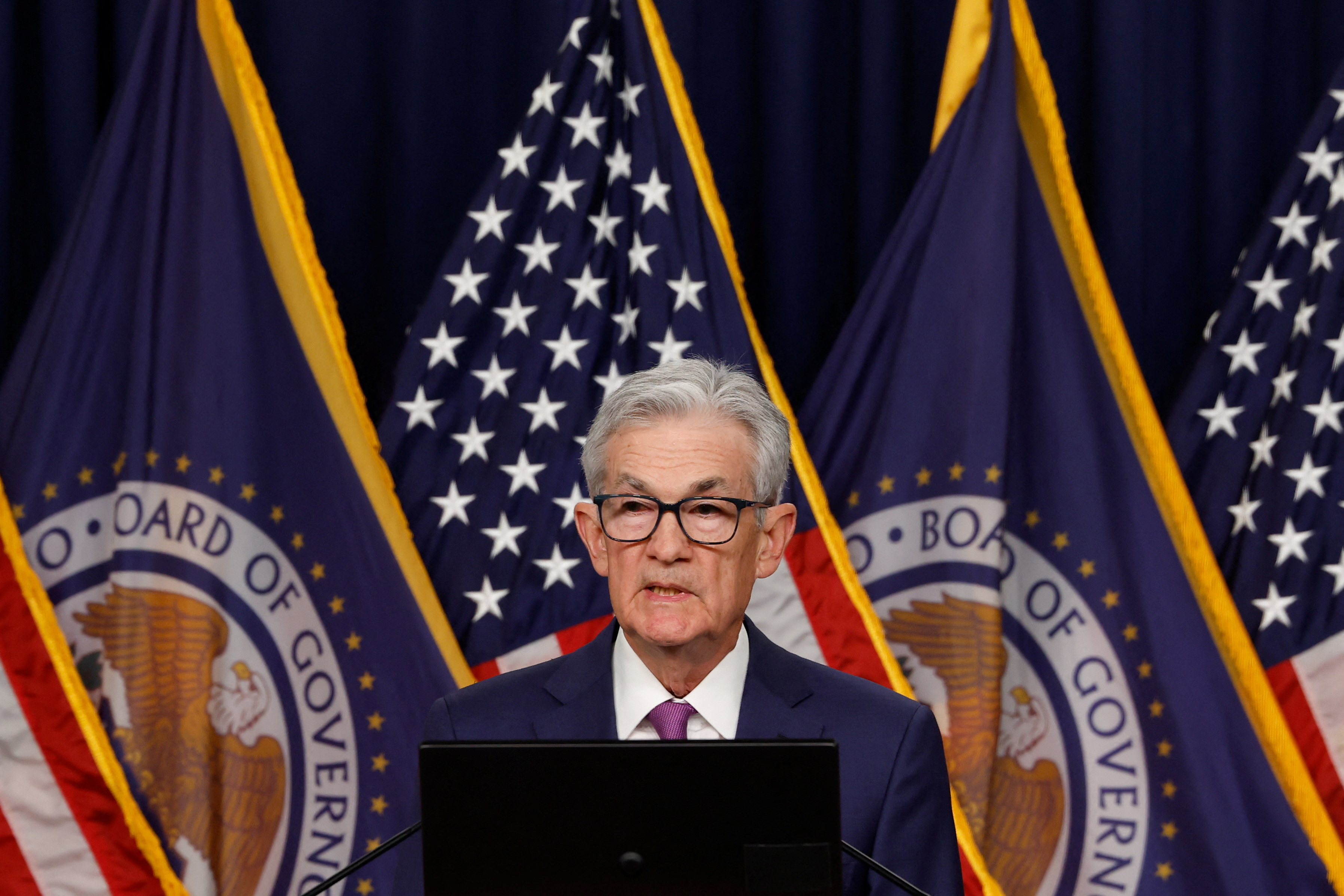
The Department of Justice has initiated a criminal investigation into Federal Reserve Chair Jerome Powell, representing what analysts characterize as an unprecedented attempt to scrutinize a sitting Fed Chair and potentially undermine the independence of the institution foundational to U.S. financial stability [2][4]. The investigation, approved in November 2025, was announced publicly on January 11-12, 2026, with the U.S. Attorney’s Office for the District of Columbia, led by Trump appointee Jeanine Pirro, serving grand jury subpoenas to the Federal Reserve on Friday [2][5]. Powell confirmed the investigation’s existence via video statement on Sunday night, marking a significant moment in the intersection of legal scrutiny and central bank governance.
The investigation centers on Powell’s testimony regarding the Federal Reserve’s $2.5 billion headquarters renovation project, which has exceeded its original budget by approximately $700 million [2][3]. However, Powell has characterized the investigation as fundamentally pretextual, stating that “this is about whether the Fed will be able to continue to set interest rates based on evidence and economic conditions—or whether instead monetary policy will be directed by political pressure or intimidation” [2]. This characterization elevates the matter from a routine oversight inquiry to a potential constitutional crisis involving the separation of powers and the independence of monetary policy institutions.
Initial market reaction on January 12, 2026, demonstrated notable resilience despite the gravity of the announcement [0]. The S&P 500 closed at 6,978.42, representing a gain of 0.49%, while the NASDAQ advanced 0.70% to reach 23,742.97 [0]. The Dow Jones Industrial Average showed more modest momentum, adding 0.17% to close at 49,585.30, while the Russell 2000 small-cap index demonstrated the strongest relative performance among major indices, advancing 0.79% to 2,634.68 [0].
This muted market response warrants careful interpretation. Several factors may contribute to the observed stability. First, the investigation’s focus on procedural and budgetary matters rather than monetary policy decisions directly may limit immediate market concern. Second, Powell’s term as Fed Chair concludes in May 2026, suggesting to some investors that the practical impact on near-term policy may be limited. Third, the precedent of past political tensions between the White House and the Federal Reserve has historically resulted in temporary market volatility without fundamental policy disruption.
However, the current calm may represent a “wait-and-see” posture rather than a lack of concern among market participants. Bond market dynamics, currency movements, and volume patterns in subsequent trading sessions will provide crucial indicators of whether the initial resilience represents sustainable investor confidence or deferred anxiety [0]. The dollar index (DXY) and Treasury yields merit particular attention as bellwethers of institutional confidence in Fed independence [0].
The investigation introduces significant legal and political complexity that extends beyond the immediate merits of any potential charges. Powell’s term as Governor of the Federal Reserve Board extends through January 2028, meaning that legal proceedings could continue well beyond his chairmanship and potentially affect the institution’s governance even after his leadership role concludes [2]. This temporal dimension creates uncertainty regarding the investigation’s ultimate resolution and its implications for future Fed leadership transitions.
Congressional dynamics further complicate the landscape. Senator Thom Tillis (R-North Carolina) has threatened to block any Fed nominee until the investigation is resolved, potentially creating significant delays in the leadership transition process [2][3]. This stance reflects broader Republican skepticism toward the current Fed leadership and suggests that even if the investigation resolves favorably for Powell, confirmation politics may impede the smooth transition of authority. The Senate Banking Committee’s posture will be particularly influential in determining whether institutional continuity can be maintained or whether political considerations will dominate the nomination process.
The investigation raises fundamental questions about the independence of the Federal Reserve, an independence that has been considered essential to the effective conduct of monetary policy since the system’s modern reformation in 1977. The Federal Reserve’s ability to set interest rates based on economic evidence rather than political pressure has been a cornerstone of U.S. monetary policy credibility, contributing to long-term inflation expectations remaining anchored despite periodic economic disruptions [2].
Powell’s characterization of the investigation as targeting the Fed’s independence itself rather than any specific procedural impropriety represents a significant escalation in the tension between the central bank and the Justice Department. If investors and global counterparties perceive that monetary policy decisions are subject to political pressure or legal intimidation, the credibility of U.S. monetary policy could be undermined with consequences for inflation expectations, Treasury borrowing costs, and the dollar’s reserve currency status [2][3].
Central banks in other G7 nations have historically looked to the Federal Reserve as a model of institutional independence, and this investigation could have implications for the global framework of central bank governance [2]. The precedent established by this investigation—whether legal scrutiny can be deployed against sitting central bank governors for policy-related testimony—could influence central bank independence worldwide.
The investigation into Chairman Powell represents more than a legal matter; it constitutes a structural challenge to the framework of monetary policy conduct that has prevailed in the United States for nearly five decades. The independence of the Federal Reserve from political interference has been considered essential to its effectiveness, allowing the central bank to take unpopular but economically necessary actions such as raising interest rates to combat inflation without fear of retaliation. The DOJ investigation, whatever its ultimate legal disposition, establishes a precedent that future administrations could invoke against subsequent Fed Chairs, fundamentally altering the calculus of central bank independence.
This structural concern transcends the specific allegations regarding the headquarters renovation. The investigation’s timing—occurring in the final months of Powell’s chairmanship—suggests that political considerations may be as significant as any procedural concerns [4][5]. The message sent to future Fed Chairs regarding the consequences of testimony or decisions that conflict with administration preferences could chill independent policy-making and shift the de facto balance of power in monetary policy toward the executive branch.
The timing of the investigation’s announcement, coming less than four months before Powell’s term as Chair expires, raises questions about the investigation’s practical objectives [3][4]. If the goal were to influence monetary policy decisions, the timing would be curious given Powell’s impending departure. However, if the objective extends beyond immediate policy considerations—to shape the confirmation process for the next Chair, to establish precedents for future central bank governance, or to signal the administration’s approach to independent agencies—the timing becomes more comprehensible.
The investigation also coincides with broader debates about the scope of executive authority and the independence of regulatory agencies. This context suggests that the Powell investigation may represent one front in a broader ideological struggle over the balance of power between the administrative state and elected officials, with implications extending well beyond monetary policy.
The unprecedented nature of a DOJ investigation into a sitting Fed Chair has attracted international attention and concern [3]. Central banks worldwide have noted the potential implications for their own independence and the broader framework of technocratic governance in economic policy. The G7 central bank coordinating body has reportedly discussed the development, though no formal response has been issued [2].
The investigation’s implications for the dollar’s reserve currency status merit particular attention. While the dollar’s role as the primary global reserve currency reflects structural factors that are unlikely to be fundamentally altered by a single investigation, any erosion in the perceived independence of U.S. monetary policy could over time affect the premium the United States enjoys in borrowing costs. International investors and foreign central banks may reconsider portfolio allocations if the institutional framework supporting dollar stability appears compromised.
This analysis is based on the CNBC report [1] published on January 12, 2026, which covered the Investment Committee’s reaction to the DOJ investigation into Fed Chair Jerome Powell, along with corroborating reports from multiple news sources including ABC News, Al Jazeera, the New York Times, and Politico [2][3][4][5].
Insights are generated using AI models and historical data for informational purposes only. They do not constitute investment advice or recommendations. Past performance is not indicative of future results.
About us: Ginlix AI is the AI Investment Copilot powered by real data, bridging advanced AI with professional financial databases to provide verifiable, truth-based answers. Please use the chat box below to ask any financial question.