
DOJ Criminal Investigation into Fed Chair Powell: Implications for Central Bank Independence
Unlock More Features
Login to access AI-powered analysis, deep research reports and more advanced features
About us: Ginlix AI is the AI Investment Copilot powered by real data, bridging advanced AI with professional financial databases to provide verifiable, truth-based answers. Please use the chat box below to ask any financial question.
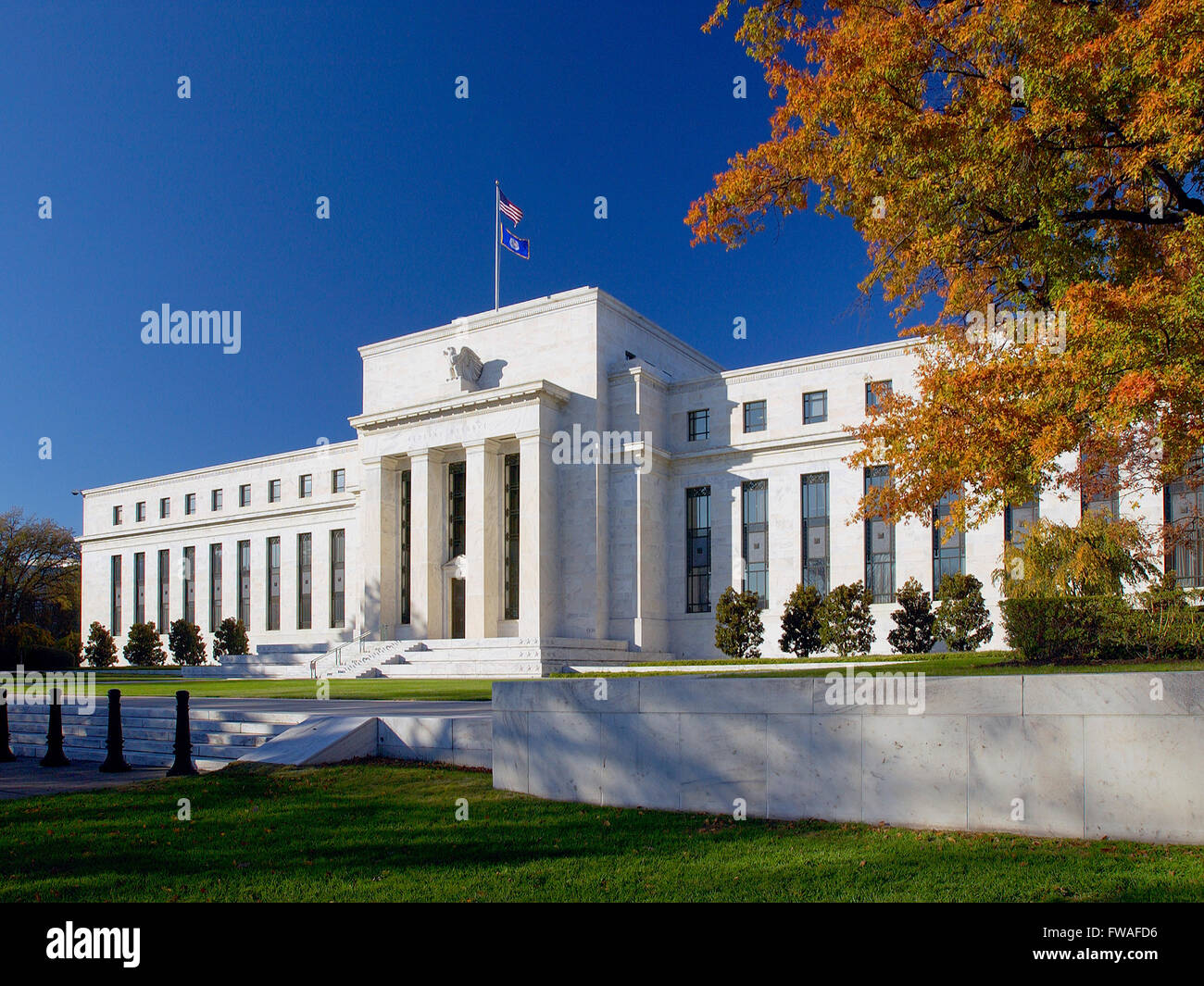
This analysis examines the Department of Justice’s criminal investigation into Federal Reserve Chair Jerome Powell, announced on January 11, 2026, which marks the first such probe against a sitting Fed chair in the institution’s 108-year history. The investigation, initiated by U.S. Attorney Jeanine Pirro and approved in November 2025, examines the Fed’s $2.5 billion headquarters renovation project and questions surrounding Powell’s June 2025 Senate Banking Committee testimony. Powell has characterized the investigation as retaliation for the Fed’s independent interest rate decisions, raising unprecedented concerns about the independence of monetary policy from political interference. While U.S. markets initially experienced volatility in response to the news, indices recovered by Monday’s close, though bond market indicators suggest persistent concerns about institutional credibility and long-term policy uncertainty [0][1].
The Department of Justice’s criminal investigation into Fed Chair Jerome Powell represents an unprecedented escalation in the tensions between the Trump administration and the Federal Reserve. According to multiple sources, the investigation was formally approved by U.S. Attorney Jeanine Pirro in November 2025, with grand jury subpoenas served on January 10, 2026 [1][2]. The probe encompasses two primary dimensions: the examination of spending records related to the Federal Reserve’s $2.5 billion headquarters renovation project in Washington, D.C., and an analysis of whether Powell provided false testimony during his June 2025 appearance before the Senate Banking Committee [1].
Powell announced the investigation in a video statement released on Sunday, January 11, 2026, marking the first time a sitting Federal Reserve chair has faced criminal investigation. The timing is particularly significant, coming less than two weeks before the end of Powell’s term as Fed chair on January 20, 2026, and approximately four months before his seven-year term as chair expires in May 2026. Notably, Powell’s term as a Federal Reserve governor extends through January 2028, creating a complex legal and institutional situation regarding his potential continued service [1][3].
The investigation cannot be understood in isolation from the broader political pressure campaign that President Trump has directed at the Federal Reserve. Throughout his second term, Trump has publicly and privately pressured Powell to lower interest rates, departing from the traditional arm’s-length relationship between the White House and monetary policymakers. The Brookings Institution’s David Wessel, appearing on CNBC’s “The Exchange” alongside Wall Street Journal’s Nick Timiraos on January 12, 2026, noted that Trump has expressed hope that Powell will leave the Fed board entirely when his term as chair concludes, suggesting the administration seeks complete removal of Powell from monetary policy deliberations [1].
This context has led analysts to characterize the DOJ investigation as an intimidation tactic rather than a routine legal inquiry. Steve Englander, head of global G10 FX research at Standard Chartered, employed a particularly striking metaphor, describing the investigation as “the Maduro option” — a reference intended to convey that Powell could face removal by force or legal pressure if he does not comply with political demands [1]. The comparison to Venezuelan President Nicolás Maduro’s authoritarian governance methods underscores the unprecedented nature of using criminal prosecution as a tool of monetary policy influence.
Initial market reaction to the investigation news was negative, with U.S. stock futures falling on Monday morning following Powell’s Sunday announcement. The 10-year U.S. Treasury yield rose to 4.189%, reflecting bond market concerns about inflation expectations and potential erosion of Fed credibility [1]. However, by Monday’s close, equity indices had largely recovered, with the S&P 500 gaining 0.49% to close at 6,978.42, the NASDAQ advancing 0.70% to 23,742.97, the Dow Jones increasing 0.17% to 49,585.30, and the Russell 2000 rising 0.79% to 2,634.68 [0].
This pattern of initial shock followed by recovery suggests that markets initially priced in the worst-case scenarios — including potential Fed dysfunction or sudden policy changes — but subsequently recalibrated as the immediate practical implications remained unclear. However, bond market indicators, particularly the 10-year Treasury yield movements, signal that fixed-income investors remain concerned about the longer-term implications for monetary policy credibility and potential inflation effects from compromised central bank independence.
The criminal investigation into a sitting Fed chair establishes a deeply troubling institutional precedent that extends beyond the immediate political and market implications. For over a century, the Federal Reserve has operated with substantial independence from direct political control, a design feature intended to insulate monetary policy decisions from short-term political pressures and to maintain public confidence in the stability of U.S. monetary arrangements. The New York Times reported that federal prosecutors have opened an inquiry into Powell, confirming the formal nature of the investigation and its potential implications for the broader central banking system [2].
International investors and foreign central banks have taken note of these developments. Analysts at multiple financial institutions have observed increased sentiment among global investors for diversification away from U.S. assets, with particular interest in Chinese, German, and UK assets as potential alternatives [1]. While such diversification trends are gradual and multi-factored, the Fed independence concern adds a structural risk premium to U.S. financial assets that previously did not exist. The credibility of U.S. monetary policy — long considered a cornerstone of global financial stability — is being tested in ways that could have lasting implications for the dollar’s reserve currency status and the willingness of foreign investors to hold U.S. government securities.
Adding to the uncertainty, President Trump has indicated that he has selected Powell’s replacement as Fed chair, though the formal announcement had not been made as of January 12, 2026. According to reports, Kevin A. Hassett, director of the National Economic Council, is a leading contender for the position [2]. The timing and identity of the successor carry significant implications for market expectations and monetary policy continuity.
The critical question facing investors is whether any Trump-appointed successor would be perceived as politically constrained in their monetary policy decisions. If markets conclude that future Fed chairs will make decisions based on political pressure rather than economic evidence, the effectiveness of monetary policy transmission could be compromised. This would represent a fundamental break with the post-Volcker era consensus on central bank independence that has guided monetary policy frameworks across developed economies.
The investigation also raises complex legal and governance questions that could extend well beyond the immediate controversy. Powell’s term as a Fed governor runs through January 2028, meaning that even if he steps down as chair in May 2026, he could theoretically continue serving as a governor with full voting rights on the Federal Open Market Committee. The extent to which the DOJ investigation affects Powell’s ability or willingness to continue in this capacity remains unclear.
Furthermore, the precedent of using criminal investigations against central bank officials who make unpopular but economically justified decisions could have chilling effects on future monetary policy deliberations. Central bank officials around the world may become more reluctant to make difficult decisions that conflict with political preferences if they face potential personal legal liability. This dynamic could fundamentally alter the risk calculus of monetary policy and reduce the willingness of qualified individuals to serve in central bank roles.
The investigation presents multiple interconnected risk factors that warrant careful monitoring:
While the current situation is predominantly risk-oriented, certain opportunities emerge from the analysis:
The DOJ’s criminal investigation into Fed Chair Jerome Powell, announced January 11, 2026, represents an unprecedented challenge to Federal Reserve independence. The probe examines the Fed’s $2.5 billion headquarters renovation project and questions surrounding Powell’s June 2025 Senate testimony, though Powell has characterized the investigation as political retaliation for independent interest rate decisions. Grand jury subpoenas were served January 10, 2026, with the investigation approved by U.S. Attorney Jeanine Pirro in November 2025 [1][2][3].
Market reaction initially featured equity futures declines and Treasury yield increases, though by Monday’s close January 12, indices had recovered to show modest gains across major averages [0]. Bond market indicators suggest persistent investor concerns about monetary policy credibility and potential inflation implications from compromised independence. The situation remains fluid, with Trump’s indicated but unannounced successor choice, potential Congressional reactions, and the legal proceedings themselves all requiring ongoing monitoring.
The investigation carries significant implications for central bank independence norms, international investor confidence in U.S. monetary policy frameworks, and the precedent set for future interactions between political authorities and monetary policymakers. These developments occur within a broader context of elevated global economic uncertainty and ongoing debates about the appropriate boundaries of central bank independence in democratic political systems.
Insights are generated using AI models and historical data for informational purposes only. They do not constitute investment advice or recommendations. Past performance is not indicative of future results.
About us: Ginlix AI is the AI Investment Copilot powered by real data, bridging advanced AI with professional financial databases to provide verifiable, truth-based answers. Please use the chat box below to ask any financial question.