
GMO's Tom Hancock Warns of Fed Populism Risks Amid Elevated Equity Valuations
Unlock More Features
Login to access AI-powered analysis, deep research reports and more advanced features
About us: Ginlix AI is the AI Investment Copilot powered by real data, bridging advanced AI with professional financial databases to provide verifiable, truth-based answers. Please use the chat box below to ask any financial question.
Related Stocks
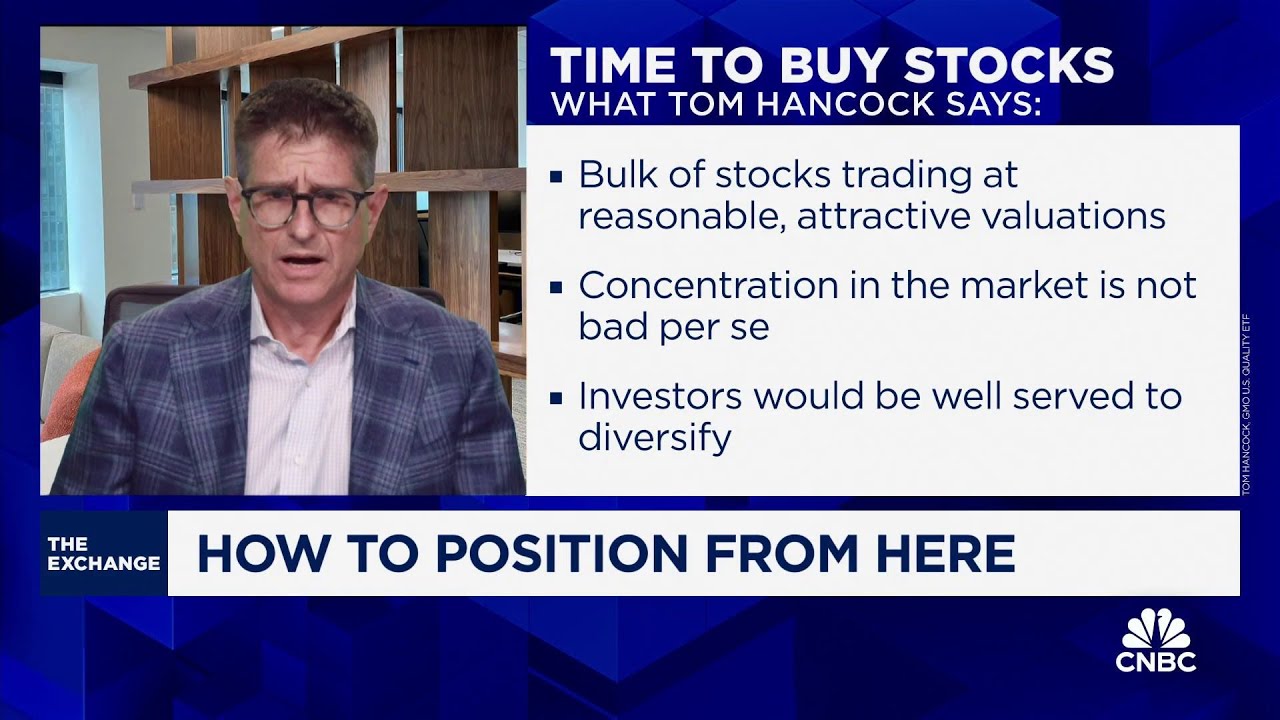
On January 12, 2026, Tom Hancock, Head of Focused Equity and portfolio manager at GMO (Grantham, Mayo, Van Otterloo & Co.), joined CNBC’s “The Exchange” program to discuss the current state of equity markets, identifying key catalysts and concerns that could shape investment outcomes in the coming months [1][2]. The timing of this appearance is particularly significant given that US equity indices are trading at or near all-time highs, creating an environment where risk assessment and valuation discipline become increasingly critical for institutional investors.
The US equity market demonstrated resilience on January 12, 2026, with the major indices posting modest gains amid mixed sector performance [0]. The S&P 500 closed at 6,983.41, representing a 0.57% daily increase, while the NASDAQ Composite advanced 0.93% to close at 23,796.00 [0]. The Dow Jones Industrial Average saw more modest movement, adding 0.09% to finish at 49,545.97, while the Russell 2000 posted a 0.74% gain to reach 2,633.55 [0]. This broad-based rally, extending approximately 1.3% over the preceding two weeks of trading, suggests investor sentiment remains cautiously optimistic despite emerging headwinds [0].
Today’s sector performance reveals notable dispersion that merits careful analysis [0]. Consumer Defensive stocks led the market with a 1.95% gain, followed by Technology at +0.99% and Utilities at +0.87% [0]. Conversely, Real Estate suffered the most significant decline at -2.30%, followed by Healthcare at -1.32% [0]. This rotation pattern indicates investors are adopting a defensive posture while simultaneously maintaining exposure to technology, particularly artificial intelligence-related segments that continue to attract capital flows.
The defensive rotation into consumer staples alongside continued strength in technology represents a nuanced market stance. Investors appear to be balancing growth aspirations with risk mitigation, a posture that aligns with Hancock’s expressed concerns about potential policy disruptions and valuation compression risks.
Hancock’s headline-generating concern centers on the potential for populist policies emanating from the Federal Reserve [1][2]. This theme aligns with broader institutional concerns about the intersection of monetary policy and political considerations. Specific areas of focus include potential political interference in monetary policy decisions, the risk that rate decisions could be influenced by political considerations rather than purely economic metrics, and uncertainty surrounding the upcoming Fed chair appointment under the new administration [2].
The concern about populism at the Fed represents a structural shift in how institutional investors are thinking about monetary policy risk. Historically, Fed policy debates centered on the Phillips curve, inflation expectations, and labor market dynamics. Hancock’s populism warning suggests a new variable has entered the equation—one that could introduce unpredictability into an institution that has historically prided itself on data-driven, non-political decision-making.
In recent public commentary, Hancock has highlighted concerns about the accelerating pace of AI infrastructure investment [3]. The GMO portfolio manager specifically noted that the Nvidia-OpenAI partnership demonstrates the “capital intensity” required to build out AI infrastructure at scale [3]. This observation carries significant investment implications as hyperscalers are expected to spend approximately $520 billion on AI infrastructure in 2026, representing over 30% year-over-year growth [4].
The capital intensity concern extends beyond mere spending levels to questions of commercial monetization. Commercial monetization of AI remains slow relative to investment levels, creating a gap between capital commitments and revenue generation that could become problematic if economic conditions deteriorate [3]. The emergence of $100 billion+ partnerships between AI leaders signals both the scale of opportunity and the dependency risks inherent in this investment cycle.
Multiple institutional sources confirm that US equity valuations are approaching historically elevated levels [4][5]. The S&P 500 forward price-to-earnings ratio of 22.5x is approaching the 1999 all-time high of 24.0x, a level that historically preceded significant market corrections [5]. High-yield bond spreads have compressed to near-historical lows, falling under 3%, which leaves little room for further spread compression as a支撑 for equity valuations [4].
The valuation environment creates a delicate backdrop for Hancock’s concerns. When markets are priced for perfection—as current levels suggest—any negative catalyst can trigger disproportionate market reactions. The combination of elevated valuations and policy uncertainty creates a risk profile that demands heightened vigilance from portfolio managers.
Hancock’s populism warning represents more than a philosophical concern about central bank independence; it signals a potential structural change in how markets need to think about monetary policy risk [1][2]. The intersection of political considerations with monetary policy decisions could introduce a new volatility regime that historical models may not adequately capture.
This insight aligns with broader institutional themes identified in 2026 outlook reports from multiple sources. Rabobank’s 2026 outlook specifically notes policy uncertainty, trade conflicts, and tariff impacts as creating stagflationary pressures that could fundamentally alter the economic operating environment [6]. The combination of potential Fed populism with broader trade policy uncertainty creates a compound risk environment that merits defensive positioning.
Hancock’s emphasis on AI capital intensity highlights an increasingly visible disconnect between investment levels and commercial returns [3]. While AI-related stocks have generated substantial returns for investors, the underlying economics remain dependent on continued capital inflows rather than organic revenue growth. This dynamic creates vulnerability to several potential shock scenarios, including slower-than-expected enterprise adoption, regulatory constraints on AI deployment, or capital market conditions that make continued funding more expensive.
The free cash flow depletion and falling free cash flow yields in AI-related sectors represent fundamental economic concerns that stock price appreciation alone cannot address [4]. Investors need to distinguish between companies with sustainable AI business models and those merely participating in a capital-intensive infrastructure buildout phase.
Despite near-term concerns, several institutional outlooks suggest the equity market rally could extend beyond US technology leaders into international and small-cap equities [7]. This leadership broadening represents both an opportunity set and a validation of Hancock’s defensive posture—if market strength is becoming more broad-based, the rally may have greater fundamental支撑 than headline valuations suggest.
The potential for leadership broadening also suggests that GMO and similar firms may be reducing exposure to highly-valued US technology names while increasing exposure to opportunities in international markets and smaller capitalization stocks that have not participated as fully in recent rallies.
This analysis is based on Tom Hancock’s appearance on CNBC’s “The Exchange” program on January 12, 2026, where the GMO portfolio manager discussed equity market catalysts and concerns [1][2]. Hancock’s primary warning centered on the potential market impact of a “rise in populism from the Federal Reserve,” highlighting concerns about potential political interference in monetary policy decisions.
Market data from January 12, 2026, shows US equity indices at or near all-time highs with the S&P 500 at 6,983.41 and NASDAQ at 23,796.00 [0]. Sector rotation is evident, with Consumer Defensive (+1.95%) and Technology (+0.99%) leading while Real Estate (-2.30%) and Healthcare (-1.32%) lag [0]. The S&P 500 forward P/E ratio of 22.5x approaches the 1999 all-time high of 24.0x, suggesting elevated valuation risk [5].
Hancock has additionally expressed concerns about AI infrastructure investment capital intensity, highlighting the gap between spending levels and commercial monetization [3]. This concern is reflected in institutional expectations of approximately $520 billion in AI infrastructure spending by hyperscalers in 2026 [4].
Key monitoring items include Federal Reserve communications and any signs of policy deviation, AI sector earnings and capital efficiency metrics, consumer spending and services inflation trends, and international equity opportunities as market leadership potentially broadens [4][6][7].
[0] Ginlix Analytical Database - Market Indices & Sector Performance Data
[1] CNBC - Concerned about impact of rise in populism from Fed, says GMO’s Tom Hancock
[2] YouTube - GMO’s Tom Hancock on The Exchange
[3] LinkedIn - GMO’s Tom Hancock on Nvidia-OpenAI Partnership
[4] State Street - Equity Outlook 2026: AI Optimism Trump Policy Concerns
[5] Manulife John Hancock - 2026 Global Market Outlook
[6] Rabobank - Global Outlook 2026: New Rules, Different Economy
Insights are generated using AI models and historical data for informational purposes only. They do not constitute investment advice or recommendations. Past performance is not indicative of future results.
About us: Ginlix AI is the AI Investment Copilot powered by real data, bridging advanced AI with professional financial databases to provide verifiable, truth-based answers. Please use the chat box below to ask any financial question.