
DOJ Criminal Investigation into Fed Chair Powell: Market Volatility and Fed Independence Crisis
Unlock More Features
Login to access AI-powered analysis, deep research reports and more advanced features
About us: Ginlix AI is the AI Investment Copilot powered by real data, bridging advanced AI with professional financial databases to provide verifiable, truth-based answers. Please use the chat box below to ask any financial question.
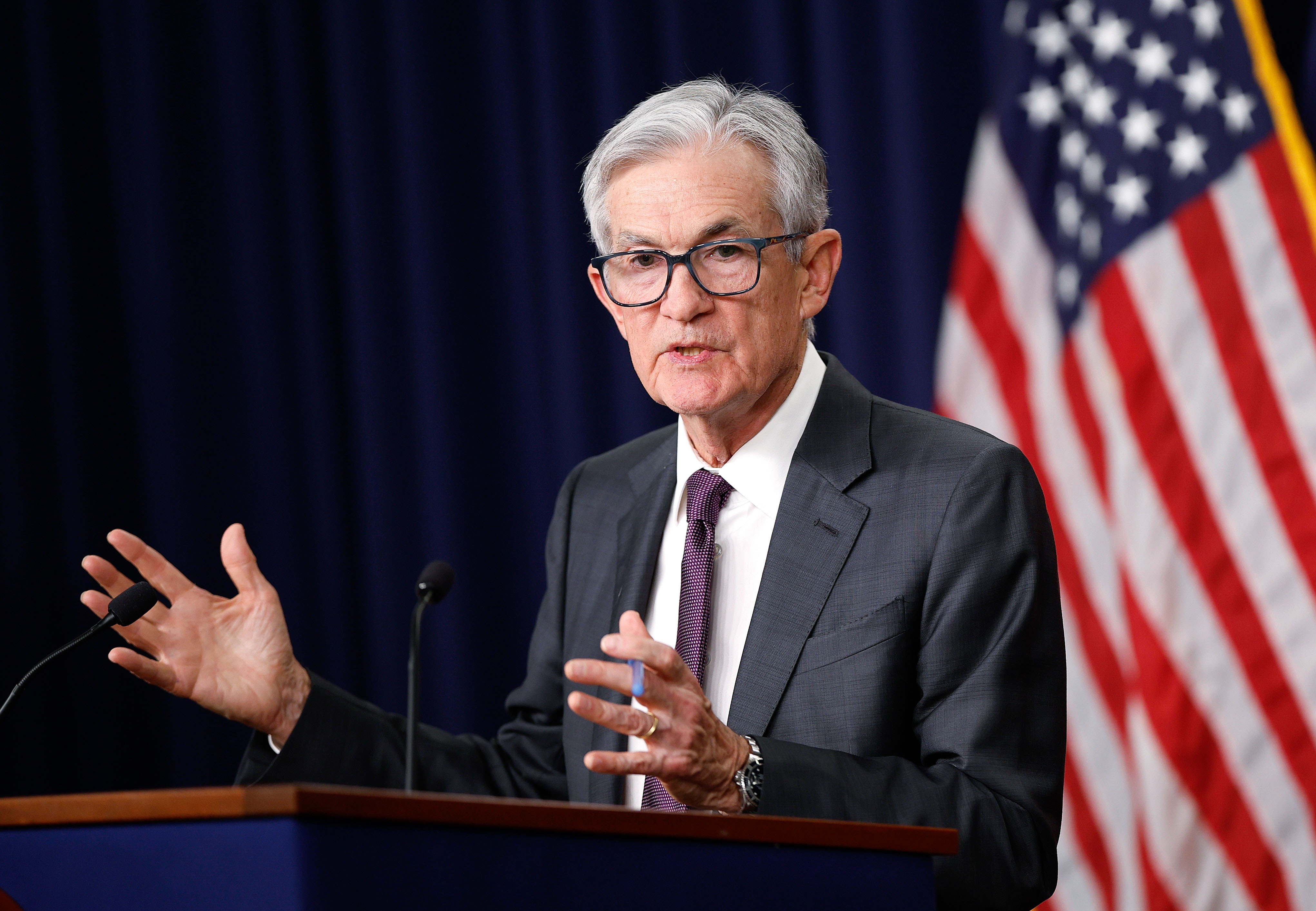
The criminal investigation announced on January 12, 2026, represents an unprecedented escalation in the ongoing tension between the Trump administration and the Federal Reserve, raising fundamental questions about the independence of U.S. monetary policy institutions. Federal prosecutors from the U.S. Attorney’s Office for the District of Columbia have opened an investigation examining whether Fed Chair Jerome Powell provided false testimony to the Senate Banking Committee in June 2025 regarding the $2.5 billion renovation of the Fed’s headquarters in Foggy Bottom, Washington, D.C. [1][2][3] The investigation was approved in November 2025, and the Federal Reserve received grand jury subpoenas on January 10, 2026, with Powell confirming the probe’s existence via video statement on January 11, 2026. [1][2]
The investigation centers on Powell’s congressional testimony in which he stated, “There’s no new marble… no special elevators… no water features” when describing the renovation project, despite costs having increased from an initial $1.9 billion to $2.5 billion. [1][4] This temporal gap between the alleged statements and the subsequent cost increases forms the factual basis for the inquiry into potential misrepresentation before Congress. Powell has vigorously contested the investigation’s legitimacy, stating that it represents “a consequence of the Federal Reserve setting interest rates based on our best assessment… rather than following the preferences of the President.” [2][7] The U.S. Attorney leading the investigation, Jeanine Pirro, was appointed by President Trump, adding a political dimension to the legal scrutiny that has drawn bipartisan concern from policy observers. [2][3]
The market reaction on January 12, 2026, reflected the gravity of institutional uncertainty, with the Dow Jones Industrial Average falling approximately 290 points at market open before partially recovering to a 90-point decline (0.18%), while the S&P 500 opened 0.4% lower before stabilizing near flat levels. [6][7] The Nasdaq demonstrated relative resilience, trading slightly positive after an initial 0.2% decline, suggesting that technology sector investors may be viewing the uncertainty as more directly impacting rate-sensitive industries rather than growth equities. [6][7] The Volatility Index (VIX) spiked approximately 5%, indicating elevated fear among options market participants, while the 10-year Treasury yield rose to approximately 4.2%, approaching one-month highs as bond investors digested potential implications for monetary policy trajectory. [8]
Currency and commodities markets exhibited pronounced safe-haven dynamics, with the Dollar Index (DXY) declining 0.3% as international investors reassessed U.S. monetary policy stability. [8] Precious metals experienced extraordinary moves, with gold advancing 3.1% to reach record levels around $4,600 per ounce and silver surging 8.5% to record highs, reflecting a significant shift of capital into hard assets perceived as insulated from potential institutional disruption. [8] Bank stocks came under particular pressure, compounding concerns from the Trump administration’s separate proposal to implement a 10% interest rate cap on credit cards, which would materially impact financial sector profitability. [6][7]
The timing of this investigation carries additional significance, occurring just two weeks before Supreme Court oral arguments regarding the Trump administration’s attempt to remove Fed Governor Lisa Cook, which will establish precedent for presidential authority over Fed leadership. [2] Powell’s term as Fed Chair expires in May 2026, creating a natural intersection between the investigation’s timeline and the potential renomination process, thereby amplifying the political stakes surrounding the inquiry’s resolution. Goldman Sachs economist Jan Hatzius captured the prevailing institutional concern, noting that “there are more concerns that Fed independence is going to be under the gun” as a result of these developments. [2]
The investigation represents not merely a legal matter but a fundamental stress test of the Federal Reserve’s institutional independence, a cornerstone of U.S. monetary policy framework established following the Federal Reserve Act of 1913 and reinforced through decades of central bank autonomy. Powell’s explicit characterization of the investigation as retaliation for independent rate-setting decisions signals the Fed’s position that this inquiry threatens the central bank’s capacity to make monetary policy decisions based on economic evidence rather than political considerations. [1][2] This framing transforms the investigation from a potential isolated ethics matter into a broader constitutional and governance question about the separation of monetary policy authority from executive influence.
The “Sell America” trade that emerged following the announcement reflects historical patterns observed during periods of U.S. institutional uncertainty, with investors liquidating positions across U.S. equities, bonds, and the dollar simultaneously. [8] This coordinated asset reallocation suggests that sophisticated market participants view the investigation not as a contained legal issue but as potentially indicative of systemic risk to U.S. institutional credibility. The magnitude of the gold and silver moves—particularly silver’s 8.5% surge—indicates that the market response extends beyond typical risk-off positioning toward a more fundamental reassessment of U.S. financial asset attractiveness.
The investigation’s proximity to the Supreme Court’s forthcoming arguments on Fed Governor removal authority creates a potentially interconnected legal landscape. [2] Should the Court establish broader presidential removal authority over Fed officials, combined with an adverse outcome for Powell, the precedent could fundamentally restructure the relationship between the executive branch and monetary policy formulation. Conversely, a strong judicial defense of Fed independence could limit the investigation’s practical impact on central bank autonomy.
The constitutional questions surrounding Fed Chair removal remain legally untested, as the Federal Reserve Act provides specific removal protections for Board of Governors members, but the Chair serves at the pleasure of the President in terms of the leadership designation. Post-SEIU v. Melrose precedent adds uncertainty to removal authority questions, creating legal ambiguity that both the investigation and concurrent litigation may help clarify. [2]
The investigation poses an existential threat to the Federal Reserve’s operational independence, which has been fundamental to U.S. monetary policy credibility since the Fed’s founding. Powell’s direct statement that “this is about whether the Fed will be able to continue to set interest rates based on evidence and economic conditions, or whether instead, monetary policy will be directed by political pressure or intimidation” captures the institutional stakes involved. [7] If market participants conclude that future Fed decisions will be influenced by political considerations rather than economic analysis, the transmission mechanism for monetary policy could be fundamentally impaired, potentially destabilizing inflation expectations and long-term interest rate formation.
The unprecedented nature of prosecuting a sitting Fed Chair creates legal and constitutional ambiguity with implications extending beyond the immediate investigation. Questions regarding whether a sitting Fed Chair can be indicted, how such prosecution would interact with the Fed’s governance structure, and what precedent this establishes for future oversight of independent agencies remain unresolved. The overlap between the investigation timeline and Powell’s May 2026 chair term expiration creates additional complexity regarding the investigation’s practical implications regardless of its ultimate legal outcome.
The combined pressure on bank stocks from both the investigation and the 10% credit card rate cap proposal exposes financial sector valuations to significant near-term uncertainty. [6][7] Portfolio managers with concentrated bank, real estate investment trust (REIT), or utility exposures should assess risk concentration given the rate-sensitive nature of these sectors and their direct connection to Fed policy credibility. The volatility in rate-sensitive sectors could trigger margin call scenarios for leveraged investors, potentially amplifying sell pressure beyond fundamental concerns.
The market dislocation has created short-term opportunities for investors with appropriate risk tolerance and liquidity to establish positions in defensive assets and precious metals at elevated prices. [8] The record levels in gold and silver may attract continued safe-haven flows if the investigation continues to generate uncertainty, though investors should calibrate position sizing appropriately given the speculative nature of trading on political outcomes.
For long-term investors, the investigation presents an opportunity to reassess the fundamental attractiveness of U.S. financial assets relative to international alternatives. If Fed independence is ultimately preserved through judicial or legislative action, current price dislocations may represent attractive entry points for U.S. equity exposure. Conversely, if institutional independence is compromised, a more fundamental reassessment of U.S. asset allocation may be warranted.
This analysis is based on the Fox Business report published on January 12, 2026, which reported that federal prosecutors had opened a criminal investigation into Fed Chair Jerome Powell regarding the central bank’s $2.5 billion headquarters renovation. [1] The investigation focuses on Powell’s June 2025 congressional testimony about the renovation’s scope, with the Fed receiving grand jury subpoenas on January 10, 2026. [1] Powell characterized the investigation as political pressure to influence monetary policy decisions, while markets responded with immediate volatility including stock declines, dollar weakness, and precious metals gains. [1][6][7][8]
The immediate market impact included the Dow Jones falling approximately 290 points at open before recovering to a 90-point decline, the S&P 500 opening 0.4% lower before stabilizing, and the Nasdaq showing relative resilience with modest gains. [6][7] The VIX spiked 5%, the 10-year Treasury yield rose to approximately 4.2%, the Dollar Index declined 0.3%, gold advanced 3.1% to record levels, and silver surged 8.5% to record highs. [8] Bank stocks came under particular pressure amid the broader uncertainty. [6][7]
Key dates to monitor include the Supreme Court oral arguments on Fed Governor removal authority scheduled for late January 2026, the FOMC meeting scheduled for January 28-29, 2026, and Apple earnings scheduled for January 29, 2026. [2][9] Powell’s term as Fed Chair expires in May 2026, creating a natural decision point regarding the investigation’s implications for his continued leadership. [2]
Insights are generated using AI models and historical data for informational purposes only. They do not constitute investment advice or recommendations. Past performance is not indicative of future results.
About us: Ginlix AI is the AI Investment Copilot powered by real data, bridging advanced AI with professional financial databases to provide verifiable, truth-based answers. Please use the chat box below to ask any financial question.