
Analysis of Price Stratification in Hainan's Hotel Industry and Consumption Trends Against the Background of Hainan Free Trade Port's Full Customs Closure Policy
Unlock More Features
Login to access AI-powered analysis, deep research reports and more advanced features
About us: Ginlix AI is the AI Investment Copilot powered by real data, bridging advanced AI with professional financial databases to provide verifiable, truth-based answers. Please use the chat box below to ask any financial question.
Related Stocks
Based on the information I have collected, I now present a systematic and comprehensive analysis report for you.
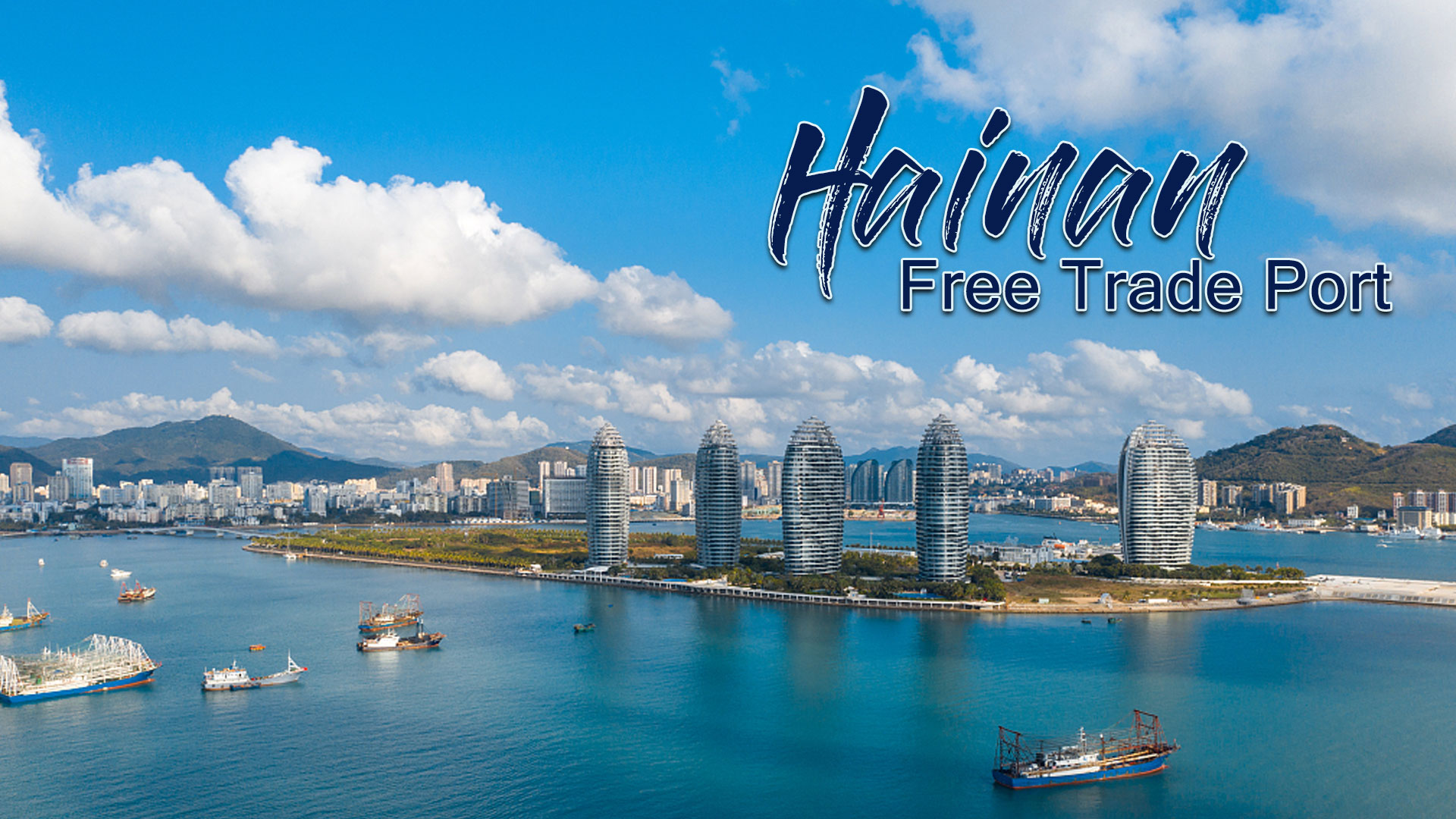
On December 18, 2025, the Hainan Free Trade Port officially launched full-island customs closure operation, which is a key milestone in the construction of the Hainan Free Trade Port [1]. The core connotation of the customs closure operation is to build the entire island of Hainan into a special customs supervision zone, implementing a liberalization and facilitation policy system characterized by
| Policy Area | Specific Measures | Consumption Impact |
|---|---|---|
| Tariff Preferences | The proportion of “zero-tariff” commodity lines jumps from 21% to 74% | Import commodity prices drop by about 30% |
| Duty-Free Shopping | Local residents can purchase 15 categories of “buy now, take now” products an unlimited number of times annually | Universal access to daily necessities consumption |
| Tax Incentives | Enterprises and core talents enjoy a 15% income tax preference | Attracts talents and investment |
| Personnel Mobility | Visa-free entry for 86 countries | International tourist arrivals increase by 45.1% |
In the first week after the policy implementation, duty-free sales in Sanya exceeded 100 million yuan for five consecutive days; during the New Year’s Day holiday, flight bookings in Haikou and Sanya increased by 19% and 51% respectively [3]. This indicates that the customs closure policy is rapidly transmitting to the tourism consumption market, driving the sustained rise of tourism popularity in Hainan.
After the launch of the Hainan Free Trade Port’s customs closure operation, policy optimizations on the consumption side released dividends first. The adjustment of the offshore duty-free policy implemented by the Ministry of Finance, General Administration of Customs, and State Taxation Administration on November 1, 2025, introduced a groundbreaking benefit for local residents —
Hotels around duty-free stores have performed particularly well. Take InterContinental Sanya Haitang Bay Resort as an example, which is a 5-6 minute walk from the duty-free mall; all room types from December 31, 2025, to January 2, 2026, were fully booked [3]. This consumption combination of “duty-free shopping + high-end accommodation” has become the core attraction of Hainan tourism.
According to the “2025-2030 In-Depth Evaluation and Investment Prospect Forecast Report of Hainan Hotel Market” by Zhongyan Puhua Industry Research Institute, Hainan’s hotel market shows a distinct
During the 2026 New Year’s Day holiday, luxury hotels in Sanya saw the return of “six-figure” room rates [3]:
| Hotel | Room Type | Price |
|---|---|---|
| Sanya Atlantis | Royal Suite | Over 100,000 yuan/night |
| The St. Regis Sanya Yalong Bay | 7-Bedroom Ocean View Pool Villa | 112,000 yuan/night |
| InterContinental Sanya Haitang Bay Resort | All Room Types (New Year’s Day Period) | Fully Booked |
As of December 31, 2025, the booking rate of five-star hotels in Sanya for the New Year’s Day holiday had reached about 80%, with a certain increase in room rates [3]. The synergistic effect between duty-free shopping and high-end accommodation has driven a V-shaped recovery in the high-end hotel market.
However, this recovery is a rebound based on the in-depth adjustment in 2024. Data shows that in 2024, the overall performance of domestic high-end hotels was poor, with average RevPAR (Revenue Per Available Room) dropping by 5.5%, and the decline in Sanya was the most significant, reaching 17.4% [3]. The implementation of the customs closure policy has become a key catalyst for the market reversal.
In sharp contrast to the high-end market, budget hotels in Hainan’s county-level areas are booming:
| Region | Price Range | Features |
|---|---|---|
| Wanning, Baoting, Lingshui | 70-200 yuan/night | Ocean view rooms in county towns |
| Boao, Qionghai | About 100 yuan/night | Ocean view rooms |
| Dongfang, Qiongzhong | 200-300 yuan/night | Complimentary access to swimming pools and projectors |
This “Sanya alternative vacation” model is becoming a new choice for young consumers. County-level cities with similar climates such as Ledong, Dongfang, Qiongzhong, Baoting, Wuzhishan, Lingshui, and Chengmai have gradually become alternative destinations to Sanya [3].
The opening of the Hainan Ring Tourist Road connects 12 coastal counties and cities, fueling the development of county-level tourism [3]. In 2025, the hotel and tourism markets in multiple counties and cities showed varying degrees of growth:
| Region | Number of Tourists Received | Year-on-Year Growth Rate | Total Tourism Revenue | Year-on-Year Growth Rate | Highlights |
|---|---|---|---|---|---|
| Qionghai | 9.9885 million | +6.43% | 9.507 billion yuan | +8% | The only county-level city listed on both rankings |
| Wanning | Nearly 10 million | +10% | Over 9 billion yuan | +12% | Number of homestays increased to 162 |
| Danzhou | Exceeded 12 million | +9% | 10 billion yuan | +12% | Node on the Hainan Ring Tourist Road |
The average occupancy rate of coastal resorts such as The Westin Shimei Bay Resort Wanning and Le Méridien Shimei Bay Resort Wanning reached 86% [3], indicating that high-end hotels in county-level areas also have strong competitiveness.
In 2025, China’s tourism consumption showed a prominent feature:
- Middle Class in First-Tier Cities: High living costs and great pressure lead to conservative consumption willingness; “it’s not that we can’t afford it, but we dare not spend” [5]
- Residents in Third- and Fourth-Tier Cities: Sound basic security and low living costs lead to stronger consumption willingness
- Young Groups: Pursue alternative solutions of “mid-range prices, high-end experiences” rather than simple consumption downgrading
As Ji Qi, founder of Huazhu Group, said, competition in China’s hotel market is no longer about comparing decoration or prices, but a precise game intertwined with
High-end hotels are shifting from a simple accommodation function to
| Hotel | Innovative Initiatives |
|---|---|
| Sanya Atlantis | Fire dance shows, New Year’s countdown, live band performances |
| Grand Hyatt Sanya Haitang Bay Resort and Spa | “Walking on Clouds” Sky Experience Room |
| Fairmont Sanya Haitang Bay Xitang | Celebrity Chef Grace Choy joins the hotel’s restaurant |
The young customer group aged 30 to 40 is rising rapidly. This group “has money and leisure time”, but due to long-term work and social pressure, they need more efficient ways to decompress, putting forward higher requirements for high-end hotels —
The “reverse tourism” trend has spawned a new format of county-level hotels in Hainan. The tourism concept of young consumers is changing —
This cost-effective experience meets young consumers’ core demand for a “vacation feeling”:
In 2025, the stratification characteristics of consumption demand became more prominent, promoting the hotel industry to form a multi-level development pattern of
| Consumption Tier | Core Demands | Development Characteristics |
|---|---|---|
| Luxury Market | Unique experiences, cultural immersion | Customized services, value premium |
| Middle-Class Market | Cost-effectiveness, personalization | Market share increased from 35% to 45% |
| Budget Market | Basic functions, smart features | Dimensionality reduction competition, chain operation |
Listed hotel enterprises such as Huazhu Group and Jinjiang International have formed a matrix of 20-30 segmented brands covering the full spectrum of needs [6]. International hotel groups such as Hilton and InterContinental have begun to lay out in county-level markets, and Huazhu Group even set the goal of “Huazhu in every county”, which is planned to be achieved by 2030 [3].
Hainan’s customs closure policy affects price stratification in the hotel industry through multiple mechanisms:
The opening of the Hainan Ring Tourist Road is of strategic significance —
The consumption stratification trend is reshaping the supply pattern of the hotel industry:
- High-End Hotels: Transform into destination-oriented properties, increase experiential consumption content
- Mid-Range Hotels: Enhance personalized service capabilities, strengthen brand differentiation
- Budget Hotels: Accelerate intelligent transformation, reduce costs and increase efficiency
This synergistic evolution of both supply and demand sides has driven Hainan’s and even the national hotel industry into a mature stage centered on “quality competition and experience innovation” [3].
The price stratification phenomenon in the hotel industry after the implementation of Hainan’s customs closure policy reflects the in-depth transformation of China’s consumer market:
- Consumption Rationalization: From “reluctance to spend” to “smarter spending”, consumers pay more attention to experience value rather than brand premium
- Demand Diversification: There are significant differences in consumption demands among different income groups and age levels, making single product strategies ineffective
- Normalization of Market Stratification: The parallel development of high-end experientialization, mid-range personalization, and budget smart-oriented services will become a long-term pattern
- Policy-Market Synergy: The customs closure policy has strengthened the consumption stratification effect through mechanisms such as duty-free shopping and personnel mobility
As “one of the regions with the highest density of international high-end hotel brands in the country”, Hainan is not only a gathering place for high-end hotel brands, but also a
With the continuous release of the dividends of the customs closure policy and the continuous improvement of consumption infrastructure, Hainan’s hotel industry is expected to form a healthier multi-level market ecosystem —
[1] Xinhua News Agency - All-Island Customs Closure of Hainan Free Trade Port: Things You Need to Know! (http://www.news.cn/sikepro/20251215/9c533e3c9d52454082840782d3b4a7e1/c.html)
[2] National Development and Reform Commission - Empowered by Customs Closure, Taking Off with Free Trade: Hainan Builds a “Consumption Highland” and “Talent Hotbed” (https://www.ndrc.gov.cn/wsdwhfz/202512/t20251224_1402605.html)
[3] Futu Information - Full-Island Customs Closure, Hainan Hotel Industry Enters the “Era of Stratification” (https://news.futunn.com/hk/post/66985536)
[4] National Information Center - CCTV News | All-Island Customs Closure of Hainan: Keep These Shopping and Employment Guides Handy (https://www.ndrc.gov.cn/wsdwhfz/202512/t20251225_1402620.html)
[5] Jinnü.com - 2025, China’s Tourism Consumption Has Changed Completely (https://news.pedaily.cn/202601/559701.shtml)
[6] KPMG - Breaking Through and Reborn: The Resilience Road of China’s Hotel Industry in 2025 (https://assets.kpmg.com/content/dam/kpmg/cn/pdf/zh/2025/11/the-resilience-road-of-china-s-hotel-industry-in-2025.pdf)
Insights are generated using AI models and historical data for informational purposes only. They do not constitute investment advice or recommendations. Past performance is not indicative of future results.
About us: Ginlix AI is the AI Investment Copilot powered by real data, bridging advanced AI with professional financial databases to provide verifiable, truth-based answers. Please use the chat box below to ask any financial question.