
Analysis of Kweichow Moutai's iMoutai Direct Sales Channel Expansion: Balancing Dealer Interests and Terminal Price System
Unlock More Features
Login to access AI-powered analysis, deep research reports and more advanced features
About us: Ginlix AI is the AI Investment Copilot powered by real data, bridging advanced AI with professional financial databases to provide verifiable, truth-based answers. Please use the chat box below to ask any financial question.
Related Stocks
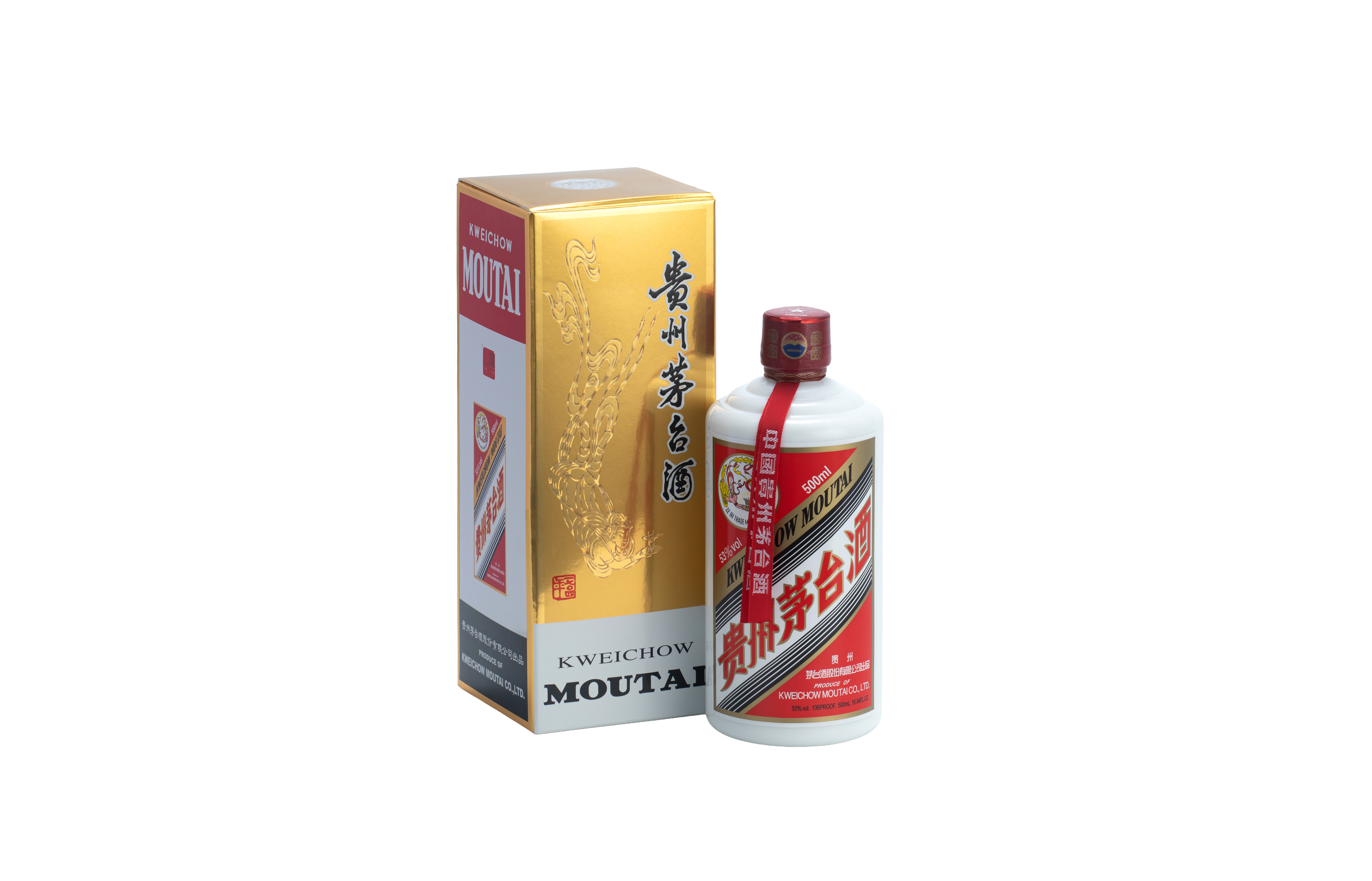
In January 2026, Kweichow Moutai took a key step in its direct sales channel strategy. According to the latest data, after the iMoutai APP launched the 53% ABV 500ml Feitian Moutai, the number of new users exceeded 2.7 million in just 9 days, with over 400,000 paying users, and its reach efficiency far surpasses that of offline channels [1]. This data marks a major breakthrough for Moutai in direct sales channel construction, while also sparking widespread market concern about the protection of dealer interests and the stability of the terminal price system.
Chen Hua, Secretary of the Party Committee and Chairman of Moutai Group, clearly stated at the 2026 National Distributors’ Association Gala for Moutai Liquor that “the fundamental purpose of iMoutai is to address reach and efficiency, and to identify the true boundary of consumption” [1]. This indicates that Moutai is transforming from the traditional channel distribution model to a consumer-centric market-oriented model, and this strategic shift will have a profound impact on the dealer interest structure and price system.
Looking at the financial data of the past three years, subtle changes are taking place in Kweichow Moutai’s channel structure:
| Channel Type | 2024 Revenue | YoY Growth Rate | 2023 Revenue | YoY Growth Rate |
|---|---|---|---|---|
| Wholesale & Agency | RMB 95.769 bln | +19.73% | RMB 79.986 bln | +7.52% |
| Direct Sales Channels | RMB 74.843 bln | +11.32% | RMB 67.233 bln | +36.16% |
The data shows that in 2024, the revenue growth rate of the wholesale & agency channel (19.73%) was significantly higher than that of the direct sales channel (11.32%), which is in sharp contrast to the pattern in 2023 where direct sales growth far outpaced wholesale [2]. This shift occurred after Zhang Deqin took office as chairman in May 2024, indicating that the new management is actively balancing direct sales expansion and dealer interests.
As the core carrier of Moutai’s direct sales strategy, the revenue of the iMoutai digital marketing platform shows a trend of first rising then stabilizing:
- 2023: Achieved sales revenue of RMB 22.374 billion, with a YoY growth of 88.29% [2]
- 2024: Achieved sales revenue of RMB 20.024 billion, with a YoY decline of 10.51% [2]
The slight decline in iMoutai’s revenue does not mean a contraction of the direct sales strategy, but rather a reflection of Moutai’s strategy of actively regulating market distribution to avoid excessive impact on the price system. With the official launch of Feitian Moutai on iMoutai in early 2026, the app has risen to the top of the free shopping app rankings on the Apple App Store, surpassing mainstream e-commerce platforms such as Douyin Mall and Pinduoduo [3], showing strong user growth momentum.
Moutai dealers have long enjoyed substantial profits brought by the “quota system”. The quota system means that if dealers want to obtain profitable Feitian Moutai, they need to match it with non-core products such as the Moutai 15 Series and Premium Moutai. In the past, when the market price of Feitian Moutai was consistently above RMB 2,000, this model could maintain balance. However, the current market environment has undergone fundamental changes:
- Feitian Moutai: The market price in some regions has fallen below the official guidance price of RMB 1,499, and the comprehensive break-even point for dealers is approximately RMB 1,600 per bottle [4]
- Bundled Products: The payment price for Premium Moutai is RMB 2,969 per bottle, while the market price has fallen below RMB 2,000; the payment price for Year of the Snake Zodiac Moutai is RMB 2,100 per bottle, with the market price falling below RMB 1,600; the Moutai 15 Series suffers particularly severe losses, with the payment price of RMB 5,399 per bottle dropping to RMB 3,600, resulting in a loss of over RMB 1,000 per bottle [4]
This “quota bundling” model has plunged dealers from the past “easy profit” situation into the current dilemma of “sustained losses”. According to industry research data, in the first half of 2025, 58.1% of baijiu dealers saw their inventories increase year-on-year, more than half faced price inversion issues, and over 40% of retailers were under cash flow pressure [4].
Facing the profound adjustment of the channel interest pattern, Moutai’s management has adopted a multi-pronged balancing strategy:
Currently, the price of Moutai liquor is facing downward pressure, which is not only a reflection of changes in market supply and demand but also an inevitable result of channel structure adjustment. Looking at the latest stock performance, the share price of Kweichow Moutai (600519.SH) fluctuated in the range of RMB 1,377 to RMB 1,462 from December 2025 to January 2026, showing a slight downward trend overall [5].
| Indicator | Value |
|---|---|
| Stock Price Range | $1,377.17 - $1,462.27 |
| Periodic Price Change | -1.91% |
| 20-Day Moving Average | $1,414.45 |
| Daily Volatility | 0.93% |
In response to price fluctuation risks, Moutai has proposed the idea of building a “pyramid” product structure and a “market-oriented” price system:
Kweichow Moutai’s promotion of channel market-oriented transformation has in-depth strategic considerations:
- Demand for Consumer Reach: Under the traditional distribution model, a large amount of Moutai liquor was backlogged in channel warehouses, forming false “inventory-based growth” without truly reaching end consumers [4]. The data that iMoutai gained 2.7 million new users in 9 days shows that online direct sales can reach a large number of real consumers that were difficult to cover through traditional channels [1].
- Price Discovery Function: Under the traditional distribution model, the price transmission chain is long, and price signals are lagging and distorted. Direct sales channels can more directly perceive changes in market demand and provide more timely market feedback for pricing decisions.
- Brand Value Maintenance: Through iMoutai’s real-name system and digital traceability system, it can ensure that the sold liquor has a complete digital chain, eliminating the risks of unclear authenticity and arbitrage through reselling in the aged liquor market from the source [3].
To seek a balance between direct sales expansion and dealer interests, Moutai has adopted the following strategies:
| Balance Dimension | Specific Measures | Expected Effect |
|---|---|---|
| Profit Distribution | Guarantee reasonable profits and eliminate expectations of excessive profits | Maintain channel enthusiasm and avoid excessive gaming |
| Role Transformation | Transform from distributors to service providers | Leverage the experience advantages of offline channels |
| Distribution Mechanism | Dynamic adjustment and precise distribution | Avoid price shocks caused by supply-demand imbalance |
| Assessment Orientation | Shift from sales volume to service capability | Guide channels to return to the essence of service |
According to the evaluation of financial analysis tools, Kweichow Moutai’s current financial status shows the following characteristics [5]:
- Financial Approach: Aggressive accounting treatment, low depreciation/capital expenditure ratio
- Cash Flow Status: Abundant free cash flow, with the latest annual FCF reaching RMB 87.785 billion
- Debt Risk: Low-risk classification, controllable financial leverage
From the perspective of DCF valuation, as the leading enterprise in the baijiu industry, Moutai enjoys a high brand premium. However, the short-term price fluctuation risks brought by direct sales channel expansion and the uncertainty of channel interest restructuring still need to be monitored.
Investors need to pay attention to the following risks:
- Risk of Sustained Terminal Price Decline: If the price of Feitian Moutai falls below RMB 1,400, it may trigger a chain reaction of dealer sell-offs
- Risk of Escalating Channel Conflicts: Direct sales expansion may trigger resistance from some dealers
- Risk of Macroeconomic Fluctuations: Baijiu consumption is highly correlated with the economic cycle
- Risk of Losing Young Consumers: Generational replacement may lead to a shrinkage of the baijiu consumer group
The rapid expansion of Kweichow Moutai’s iMoutai direct sales channel marks a key leap for Moutai from the era of channel distribution to the era of market-oriented transformation. The impressive data of 2.7 million new users in 9 days not only verifies the advantages of the direct sales model in reach efficiency and consumer coverage but also highlights Moutai’s strategic wisdom in balancing channel interests.
From a long-term perspective, Moutai’s channel reform aims to build a healthier and more sustainable ecosystem: direct sales channels are responsible for identifying consumption boundaries and achieving precise distribution, while dealer channels are responsible for providing experience services and maintaining customer relationships. This dual-drive model of “online reach, offline service” can not only improve overall channel efficiency but also protect the legitimate interests of all parties.
Looking forward, Moutai needs to continuously optimize the following aspects: first, improve the dynamic distribution mechanism to avoid sharp price fluctuations; second, accelerate dealer transformation to enhance service capabilities; third, strengthen brand culture construction to address the challenges of generational consumption replacement; fourth, promote the internationalization strategy to expand overseas market space.
During the adjustment cycle of the baijiu industry, Moutai’s channel reform provides an important reference for the industry. How to seek a balance between direct sales efficiency and channel stability, and how to unify price marketization and brand value maintenance will be the core propositions that Moutai and even the entire baijiu industry continue to explore.
[1] Sina Finance - “Over 2.7 Million New Users in 9 Days! Moutai Chairman: iMoutai’s Dynamic Distribution Delivers Products Directly to Consumers” (https://finance.sina.com.cn/jjxw/2026-01-10/doc-inhfukyx5241654.shtml)
[2] China Fund Journal - “New Signals in Kweichow Moutai’s 2024 Annual Report: Balancing Volume, Price and Dealer Relationships” (https://www.chnfund.com/article/AR27797425-195e-0cbb-eafc-3a19096e2f52)
[3] Huxiu - “The Outcome of Kweichow Moutai’s Sales Control Dispute: After 7 Years of Tug-of-War, It Finally Regains Control” (https://www.huxiu.com/article/4824572.html)
[4] Zhihu Column - “Falling Below the Official Guidance Price of RMB 1,499: Is Moutai Unsaleable?” (https://zhuanlan.zhihu.com/p/1984526752459018794)
[5] Jinling AI Financial Database - Stock Data and Financial Analysis of Kweichow Moutai (600519.SS)
Insights are generated using AI models and historical data for informational purposes only. They do not constitute investment advice or recommendations. Past performance is not indicative of future results.
About us: Ginlix AI is the AI Investment Copilot powered by real data, bridging advanced AI with professional financial databases to provide verifiable, truth-based answers. Please use the chat box below to ask any financial question.