
Investment Value Analysis of Grandpa's Farm's Hong Kong IPO
Unlock More Features
Login to access AI-powered analysis, deep research reports and more advanced features
About us: Ginlix AI is the AI Investment Copilot powered by real data, bridging advanced AI with professional financial databases to provide verifiable, truth-based answers. Please use the chat box below to ask any financial question.
Grandpa’s Farm International Holdings Co., Ltd. officially submitted a listing application to the Hong Kong Stock Exchange on January 5, 2026, aiming to become the “first stock of baby complementary food and snacks on the Hong Kong Stock Exchange”. As the second-largest leading enterprise in China’s baby complementary food and snack market, Grandpa’s Farm has achieved steady growth against the backdrop of declining birth rates, relying on its product philosophy of “real ingredients, minimal additives, nutritious”. In 2024, the company recorded revenue of RMB 875 million, representing a year-on-year growth of 40.6%, and ranked first in the organic baby complementary food and snack segment with a 23.2% market share. However, the company faces challenges such as slowing industry growth, concerns over the OEM model, and continuous contraction of consumer groups. Whether its dual-core strategy of “baby complementary food and snacks + family food” can support future growth space is worthy of in-depth discussion[1][2][3].
Grandpa’s Farm is a brand enterprise focusing on baby complementary food and snacks as well as family food. Co-founded in Guangzhou in 2015 by Yang Gang, Jiang Fuquan, He Jiannong, and Liu Haibo, its operating entity is Guangzhou Jiantewei Daily Necessities Co., Ltd. The company was initially registered in the Netherlands in 2015 and officially entered the Chinese market in 2018, launching two basic products: complementary food oil and rice flour[4][5].
The company’s actual controller is Yang Gang, whose wholly-owned YANGGANG Holdings is the controlling shareholder. Yang Gang also serves as the Chairman of the Board, Executive Director, and Chief Executive Officer. It is worth noting that Yang Gang is one of the founders of Mom Network, a well-known maternal and infant internet platform, which has laid a resource foundation for the company’s deep cultivation in maternal and infant channels[1][4].
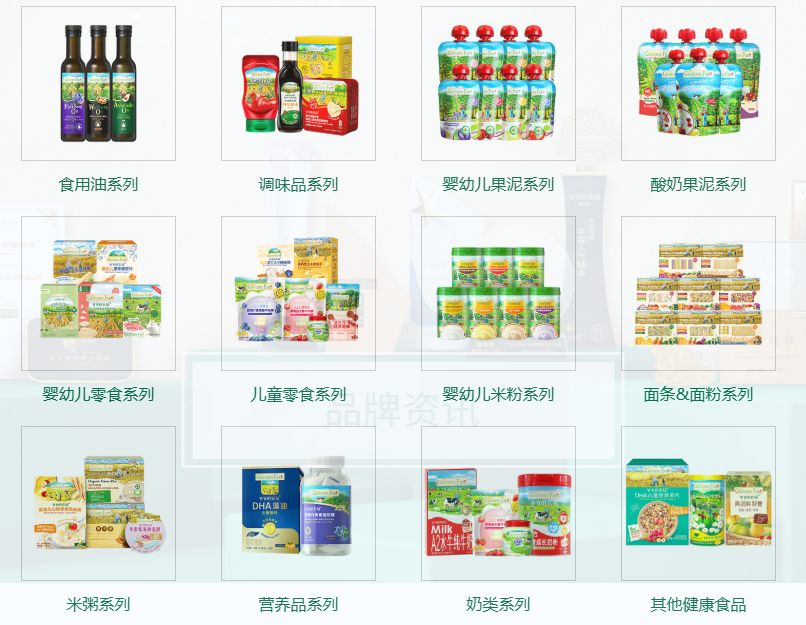
After years of development, Grandpa’s Farm has formed a dual-core business structure of “baby complementary food and snacks + family food”:
As of September 30, 2025, the company had a total of 269 SKUs, all of which are self-owned brand products. Compared with 158 at the end of 2023 and 170 at the end of 2024, nearly 100 new SKUs were added in the first nine months of 2025, demonstrating strong product expansion capabilities. Approximately one-third of the SKUs have obtained organic sales certification, and some products have obtained organic product certifications in more than two jurisdictions[1][2].
As a young brand, Grandpa’s Farm’s “origin” has attracted market attention. The company once claimed to be a Dutch brand, promoting labels such as “European original import”, “European national complementary food brand”, and “rooted in Europe”, with product packaging almost entirely in English. Starting from 2022, the company gradually stopped using the promotional slogan “European original import”, and after 2024, it completely abandoned the “originated in Europe” positioning, instead emphasizing “real ingredients, minimal additives, nutritious”[4].
According to the prospectus, the company is controlled by Esprit Enterprise Limited (Hong Kong, China), and conducts its mainland China business through Esprit (Guangzhou) Food Co., Ltd. Yang Gang and his wholly-owned YANGGANG Holdings are the controlling shareholders[1][4].
Grandpa’s Farm’s financial data has continued to improve over the past three years, demonstrating strong growth:
| Financial Indicator | 2023 | 2024 | First Three Quarters of 2025 |
|---|---|---|---|
| Operating Revenue (RMB 100 million) | 6.22 | 8.75 | 7.80 |
| Gross Profit (RMB 100 million) | 3.45 | 5.14 | 4.47 |
| Gross Margin | 55.5% | 58.8% | 57.3% |
| Adjusted Net Profit (RMB 100 million) | 0.76 | 1.03 | 0.90 |
| Net Profit Margin | 12.1% | 11.8% | 11.2% |
In 2024, the company’s revenue grew by 40.6% year-on-year, continuing its high-growth momentum. In the first three quarters of 2025, revenue reached RMB 780 million, representing a 23.2% increase compared to RMB 633 million in the same period of 2024, maintaining a steady growth pace[1][2][3].
The company’s gross margin remains at a high level, reaching 55.5%, 58.8%, and 57.3% in 2023, 2024, and the first three quarters of 2025 respectively. For comparison, Nongfu Spring, the most profitable company in the food and beverage industry, had gross margins of 59.5% and 58.1% in 2023 and 2024 respectively. Grandpa’s Farm’s gross margin is close to that of Nongfu Spring, demonstrating strong product premium capability[5][6].
By business segment, baby complementary food and snacks are the core revenue source, contributing RMB 627 million in revenue in the first three quarters of 2025 with a gross margin as high as 59.9%, becoming the “ballast stone” for the brand’s development. If only looking at the snack business, the gross margin even exceeds 60%. In contrast, the family food business has a relatively low gross margin, which has dragged down the overall gross margin level[5][6].
However, the company’s net profit margin has shown a slight downward trend, falling from 12.1% in 2023 to 11.2% in the first three quarters of 2025, mainly affected by the continuous rise in sales expense ratio. From 2023 to the first three quarters of 2025, sales expenses were RMB 201 million, RMB 306 million, and RMB 283 million respectively, with the sales expense ratio rising from 32.3% to 36.3%. Among them, e-commerce promotion expenses have continued to account for a higher proportion, reaching 72.3% in the first 9 months of 2025, highlighting the deep dependence on traffic from platforms such as Tmall and JD.com[4].
In terms of business proportion, baby complementary food and snacks remain the company’s core pillar, but the proportion of the family food business continues to increase:
| Business Segment | 2023 Revenue | Proportion | 2024 Revenue | Proportion | First Three Quarters of 2025 | Proportion |
|---|---|---|---|---|---|---|
| Baby Complementary Food and Snacks | RMB 579 million | 93.1% | RMB 770 million | 88.0% | RMB 627 million | 80.4% |
| Family Food | RMB 43 million | 6.9% | RMB 105 million | 12.0% | RMB 153 million | 19.6% |
The revenue scale and proportion of the family food business have continued to increase. From 2023 to the first three quarters of 2025, the revenue reached RMB 42.917 million, RMB 105 million, and RMB 153 million respectively, with its proportion of total revenue increasing from 6.9% to 19.6%, becoming an important second growth curve for the company[1][3].
China’s baby complementary food and snack market maintains steady growth, but the growth rate has shown signs of marginal slowdown. According to data from Frost & Sullivan:
It should be noted that there are significant differences in the forecasts of the scale of China’s baby complementary food market among different research institutions. Zhong Yan Pu Hua predicts that the scale of China’s complementary food market can exceed RMB 300 billion by 2030, and points out that the scale of China’s infant and young child complementary food market expanded from RMB 52.7 billion to approximately RMB 150 billion from 2022 to 2025. In contrast, Frost & Sullivan predicts that the scale of the baby complementary food market will be approximately RMB 51.2 billion by 2029[5][6].
Despite the continuous decline in birth rates, the growth driver of the baby complementary food and snack market is shifting from “quantity” to “quality”:
The core factors driving the continuous growth of the baby complementary food and snack market include:
According to Frost & Sullivan data, in 2024, Grandpa’s Farm ranked second in China’s baby complementary food and snack market in terms of GMV, with approximately RMB 1.5 billion and a market share of approximately 3.3%. It is the enterprise with the highest compound annual growth rate from 2022 to 2024 among the top five market participants[1][3].
Although Grandpa’s Farm has ranked among the top in the industry, it faces multiple competitive pressures:
The continuous decline in China’s birth rate poses long-term structural pressure on the baby complementary food and snack market. According to prospectus data, the number of infants and young children aged 0-6 in China decreased from 110.4 million in 2020 to 80.7 million in 2024, and is expected to further shrink to 60.9 million by 2029[4].
Data released by Nielsen IQ shows that the overall annual growth rate of maternal and infant products in 2024 decreased by 1.6% compared to the same period of the previous year, and the overall maternal and infant category and its sub-categories all showed a downward trend in sales volume. Among them, infant complementary food decreased by 15.7% year-on-year, with a significant decline[5][6].
Grandpa’s Farm adopts the Original Equipment Manufacturing (OEM) model, entrusting third-party manufacturers to produce its own brand products. The prospectus also warns that “due to weak control over the production process, we may face risks related to insufficient product output or non-compliant quality”[1][2].
Historical quality incidents have had an impact on the company’s brand: In July 2020, the Guangdong Provincial Market Supervision and Administration Bureau issued a notice on the verification and disposal of unqualified food. The infant multi-grain rice flour and infant multi-grain mixed fruit rice flour distributed by a wholly-owned subsidiary of Grandpa’s Farm were unqualified, resulting in a fine and confiscation of RMB 290,000. In addition, the Black Cat Complaint Platform shows that there are more than 100 complaints related to Grandpa’s Farm, mainly involving foreign objects in products, false propaganda, and food deterioration[1].
The company has begun to lay out self-built production capacity, building a multi-functional base in Zengcheng, Guangzhou, for independent production of selected products, R&D, quality control and testing, as well as logistics and warehousing. It began small-scale production of selected products, including fruit juice and edible oil, in October 2025[1][2].
The company is essentially an enterprise driven by brand marketing, and high marketing expenses continue to squeeze profit margins. The sales expense ratio rose from 32.3% in 2023 to 36.3% in the first three quarters of 2025, with e-commerce promotion expenses accounting for as high as 72.3%, forming a deep dependence on platform traffic[4].
This characteristic of “high gross profit, low net profit” reflects the company’s huge investment in brand building and channel promotion, but its sustainability remains to be observed. With intensified industry competition and rising traffic costs, the pressure of marketing expenses may further increase.
As of the end of September 2025, among the 195 baby complementary food and snack products, 16 out of 21 star products are produced in China, and 49 out of 62 OEM cooperative manufacturers are domestic enterprises. This means that the company’s products have quietly achieved “localization”[4].
The company’s early strategy of focusing on “European original import” successfully shaped a high-end imported image, but also triggered controversy over “fake foreign brands”. After completely abandoning the “originated in Europe” positioning in 2024, how to maintain brand premium capability under the new positioning is an important issue facing the company[4].
To address the growth bottleneck of the baby complementary food and snack market, Grandpa’s Farm has chosen to enter the family food track as its “second curve”. The company explains that the underlying logic of this strategy has two points: first, after establishing trust with families in the 6-month to 6-year-old stage, if a baby complementary food brand cannot provide follow-up products, it is likely to face customer churn; second, the baby complementary food market is constrained by birth rate trends, while the family food market has a larger capacity and higher consumption frequency[1][4].
Currently, the family food business has contributed approximately 20% of revenue, and products such as olive oil, A2 milk, and water buffalo milk are gradually opening up the market. However, this track is more competitive, facing the squeeze of channel and brand advantages from traditional food giants, as well as innovative impacts from emerging healthy food brands[4].
According to the prospectus, Grandpa’s Farm’s IPO proceeds will be mainly used for the following five aspects:
Grandpa’s Farm has demonstrated strong growth, with its compound annual growth rate from 2022 to 2024 ranking first among the top five market participants. The company continues to drive growth through product innovation and category expansion, with the number of SKUs increasing rapidly, and the proportion of family food business continuing to rise. However, constrained by slowing industry growth and shrinking consumer groups, future growth momentum may weaken marginally[1][3][4].
The company’s gross margin remains at a high level of 55%-59%, reflecting strong product strength and brand premium capability. However, the net profit margin is only about 12%, showing a slight downward trend, mainly affected by high marketing expenses. The gross margin under the OEM model is relatively high, but there are risks of quality issues and insufficient supply chain control[2][4][5].
Currently, the overall valuation of the consumer sector in the Hong Kong stock market is relatively reasonable, and the defensive characteristics of consumer goods have certain attractiveness amid market fluctuations. The Consumer Defensive sector rose 1.61% on January 13, 2026, leading all sectors, indicating capital attention to the defensive consumer sector[7].
Referring to peer valuations, Feihe Dairy, the leading enterprise in the infant formula milk powder industry, currently has a price-earnings ratio of about 8-10 times, while Kidswant, the leading maternal and infant channel enterprise, has a price-earnings ratio of about 15-20 times. Considering Grandpa’s Farm’s high growth and leading position in the niche track, it may obtain a certain valuation premium if it successfully lists.
Investors need to pay attention to the following risk factors: long-term structural pressure on the industry from continuous declining birth rates; food safety risks under the OEM model; erosion of profits by high marketing expenses; market share fluctuations caused by intensified industry competition; and management challenges during the transformation from the OEM model to self-built production capacity[1][2][4].
As the second-largest leading enterprise in China’s baby complementary food and snack market, Grandpa’s Farm has successfully sprinted for a Hong Kong IPO with its “organic” positioning and high-growth performance. Against the industry backdrop of declining birth rates, the company actively seeks breakthroughs through its dual-core strategy of “baby complementary food and snacks + family food”, demonstrating strong strategic resolve and execution capabilities.
From the perspective of track growth potential, although the baby complementary food and snack market is slowing down, the increase in penetration rate and per capita consumption upgrading still provide growth drivers for the industry. Zhong Yan Pu Hua predicts that the scale of China’s complementary food market may exceed RMB 300 billion by 2030, while Frost & Sullivan predicts that the scale of the baby complementary food market will reach approximately RMB 51.2 billion by 2029. The difference between the two forecasts mainly stems from different statistical calibers and definition scopes. In any case, the market has a high certainty of maintaining single-digit growth.
For Grandpa’s Farm, the IPO proceeds will strongly support its investments in product R&D, supply chain construction, channel expansion, etc., enhancing its long-term competitiveness
Insights are generated using AI models and historical data for informational purposes only. They do not constitute investment advice or recommendations. Past performance is not indicative of future results.
About us: Ginlix AI is the AI Investment Copilot powered by real data, bridging advanced AI with professional financial databases to provide verifiable, truth-based answers. Please use the chat box below to ask any financial question.