
In-Depth Analysis Report on Grandpa's Farm's Baby & Toddler Supplementary Food Business
Unlock More Features
Login to access AI-powered analysis, deep research reports and more advanced features
About us: Ginlix AI is the AI Investment Copilot powered by real data, bridging advanced AI with professional financial databases to provide verifiable, truth-based answers. Please use the chat box below to ask any financial question.
I have now collected sufficient information, so let me provide you with a systematic and comprehensive analysis report.
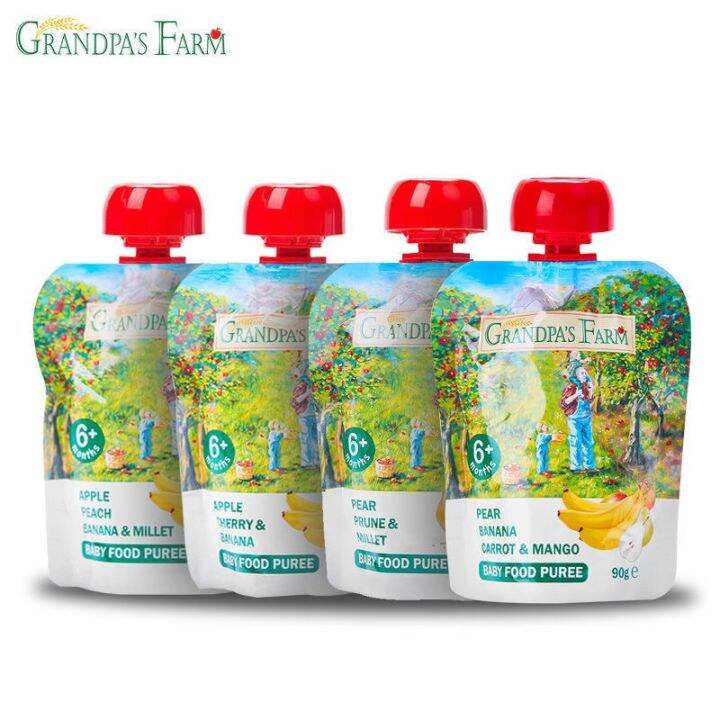
Grandpa’s Farm is an enterprise focusing on baby & toddler supplementary & snack foods, which is currently applying for a Hong Kong stock listing. According to its prospectus data,
| Period | Revenue Share of Baby & Toddler Supplementary & Snack Foods | Revenue Share of Family Foods | Total Company Revenue |
|---|---|---|---|
| 2023 | 93.1% | 6.9% | RMB 622 million |
| 2024 | 88.0% | 12.0% | RMB 875 million |
| First Three Quarters of 2025 | 80.4% | 19.6% | RMB 780 million |
The company was founded in 2015, entered the Chinese market in 2018, started with infant supplementary food products, and has gradually expanded its product line to the family food track in recent years. As of September 30, 2025, the company has 269 SKUs, with more than one-third of its products certified as “organic”. Calculated based on the total transaction value of China’s baby & toddler supplementary & snack food market, the company ranked second in 2024 with a market share of approximately 3.3%; in the segment of China’s organic baby & toddler supplementary & snack food market, it ranked first [1][2].
Grandpa’s Farm adopts a typical
- Production Dependence: Almost completely relies on OEM production, having established procurement relationships with 62 OEM manufacturers
- Employee Structure: As of September 30, 2025, the company has 640 full-time employees, of which only 27 are in the manufacturing segment, accounting for approximately 4.2%
- Self-Built Production Capacity: It only started a self-built factory in Zengcheng, Guangzhou in October 2025, but the designed annual production capacity of this factory is small, mainly used for in-house production of selected products, R&D, quality control and testing, as well as logistics and warehousing
- Procurement Model: Adopts a combination of global procurement and localized production. Ingredient sources include Northeast China rice, Guangxi water buffalo milk, Shandong pork liver powder, French walnut oil and avocado oil, Spanish olive oil, Australian grains, etc.; as of the end of September 2025, 16 out of 21 star products are originally produced in China [1][3]
From the perspective of enterprise operations, the OEM model has the following advantages:
| Advantage | Explanation |
|---|---|
| Capital Efficiency | Controls product costs and reduces the risk of heavy asset investment |
| Flexibility | Has the right to choose and bargaining power over the upstream industrial chain |
| Rapid Response | Can meet the demand for rapid product development |
| Cost Optimization | Utilizes the design and manufacturing resources of OEM factories |
However,
Grandpa’s Farm products
| Time | Regulatory Authority | Problem Product | Specific Issue | Handling Result |
|---|---|---|---|---|
| June 2019 | State Administration for Market Regulation | Infant Multi-Grain Mixed Fruit Rice Cereal, Apple Cherry Banana Puree | The detected total sodium content was less than 80% of the value indicated on the product packaging label | Notified for investigation |
| 2020 | Guangdong Provincial Administration for Market Regulation | Infant Multi-Grain Rice Cereal, Multi-Grain Mixed Fruit Rice Cereal | The detected contents of pantothenic acid and iodine were less than 80% of the values indicated on the product packaging label | Confiscated illegal gains of RMB 41,900 and imposed a fine of RMB 249,800 |
| April 2021 | General Administration of Customs | Infant Rice Cereal imported from Belgium | Calcium content did not meet national standard requirements | Entry refused [1][2] |
According to data from the Black Cat Complaint Platform, as of January 7, 2026, there are as many as
Notably, Grandpa’s Farm explicitly stated in its prospectus:
Consumers face severe information asymmetry under the OEM model:
-
Conflict between Brand Premium and OEM Cost: Taking hawthorn sticks as an example, consumers found that Grandpa’s Farm’s Baby Hawthorn Sticks (produced by Shandong Jinye via OEM, RMB 27.92/72g) have almost the same ingredients as Jinye’s own brand hawthorn sticks (RMB 26.9/308g) (only added concentrated apple juice), but the unit price differs significantly [1].
-
Pricing Dispute of Organic Products: Its Organic Baby Original Short Noodles have minimal differences in nutritional components from regular organic noodles on the market, but the former is priced as high as RMB 170 per 500g, while the latter is only RMB 23 per 500g [1].
-
Brand Identity Dispute: In its early promotion, it emphasized “from the Netherlands”, “rooted in Europe”, and “European original import”, but the actual shareholders, brand ownership, and actual operations are all mainland Chinese entities. It only gradually downplayed the emphasis on European origins in its promotions starting from 2021, which was accused of deliberate packaging even false propaganda [1][2].
Under the OEM model, the brand’s control over the supply chain is weak:
- Weak Control Over Production End: The brand does not directly participate in production, and its quality control over OEM factories is limited
- Reliance on Third-Party Testing System: The prospectus shows that although the company has a self-built factory for quality control and testing, its scale is small, and main products still rely on the testing system of OEM factories
- Lagging Response to Problems: It took as long as 6 years from the problem being notified in 2019 to the start of a small-scale self-built factory in 2025 [1][3]
| Indicator | 2023 | 2024 | First Three Quarters of 2025 |
|---|---|---|---|
| Sales and Distribution Expenses | RMB 201 million (32.3%) | RMB 306 million (35%) | RMB 283 million (36.3%) |
| R&D Investment | 2.8% | 3.2% | 2.2% |
| Expense Ratio | Approximately 11.5x | Approximately 10.9x | Approximately 16.5x |
- Strengthen OEM Supervision: Implement stricter review systems for OEM production of baby & toddler food, and establish a hierarchical management system for OEM factories
- Enhance Information Disclosure: Require brands to mark the actual manufacturer’s information in a prominent position on product packaging
- Increase Illegal Costs: Impose stricter market access restrictions on enterprises that violate regulations multiple times
- Supply Chain Upgrade: Transform from light assets to moderate heavy assets, and increase the proportion of self-built production capacity
- Quality Management System: Establish a full-chain quality traceability system
- Increase R&D Investment: Raise the proportion of R&D expenses to enhance the scientificity and differentiated competitiveness of products
- Open Communication: Avoid excessive marketing packaging, and win consumer trust with real, scientific product information
- Rationally View Brand Premium: Focus on the actual ingredients and nutritional components of products, rather than being attracted solely by the brand halo
- Check Production Information: Trace the actual manufacturer through the product batch number
- Pay Attention to Regulatory Announcements: Regularly review the sampling inspection results released by market regulatory authorities
- Actively Protect Rights: Keep evidence when encountering quality problems, and complain and report through formal channels
Grandpa’s Farm’s revenue share from baby & toddler supplementary food did exceed 90% (reaching 93.1% in 2023), and quality risks under the OEM model have become a key bottleneck restricting its sustainable development. Multiple regulatory penalties from 2019 to the present, over 200 consumer complaints, and the structural imbalance where sales expenses are 10 times that of R&D investment all reveal
For Grandpa’s Farm, which is applying for a Hong Kong stock listing, whether it can win market trust with real product strength will become a key test on its capitalization path. The prospectus shows that the proceeds from this IPO are planned to be used for product development, supply chain upgrade, etc., but it does not clearly mention the subsequent construction plan of its own factory, which will be a key risk point that investors need to focus on.
The baby & toddler food industry is related to the healthy growth of the next generation, and any quality risk may cause irreversible trust collapse. While pursuing scale expansion, enterprises must truly prioritize product quality and consumer rights over commercial interests to achieve sustainable development.
[1] Sina Finance - “Grandpa’s Farm Wants to Go Public, but OEM Can Hardly Support the High Premium of Children’s Snacks” (2026-01-12)
https://finance.sina.com.cn/roll/2026-01-12/doc-inhfziuy0048069.shtml
[2] Beijing Business Today - “Controversy Over Grandpa’s Farm IPO: Sales Expenses 10x R&D Expenses” (2026-01-07)
https://www.bbtnews.com.cn/2026/0107/581032.shtml
[3] Eastmoney - “In-Depth Analysis of Grandpa’s Farm IPO: Multiple Major Clients Also Serve as Suppliers, 30% of Revenue Used for Traffic Acquisition” (2026-01-09)
https://wap.eastmoney.com/a/202601093613208081.html
Insights are generated using AI models and historical data for informational purposes only. They do not constitute investment advice or recommendations. Past performance is not indicative of future results.
About us: Ginlix AI is the AI Investment Copilot powered by real data, bridging advanced AI with professional financial databases to provide verifiable, truth-based answers. Please use the chat box below to ask any financial question.