
DOJ Criminal Investigation into Fed Chair Powell: Institutional Crisis Analysis
Unlock More Features
Login to access AI-powered analysis, deep research reports and more advanced features
About us: Ginlix AI is the AI Investment Copilot powered by real data, bridging advanced AI with professional financial databases to provide verifiable, truth-based answers. Please use the chat box below to ask any financial question.
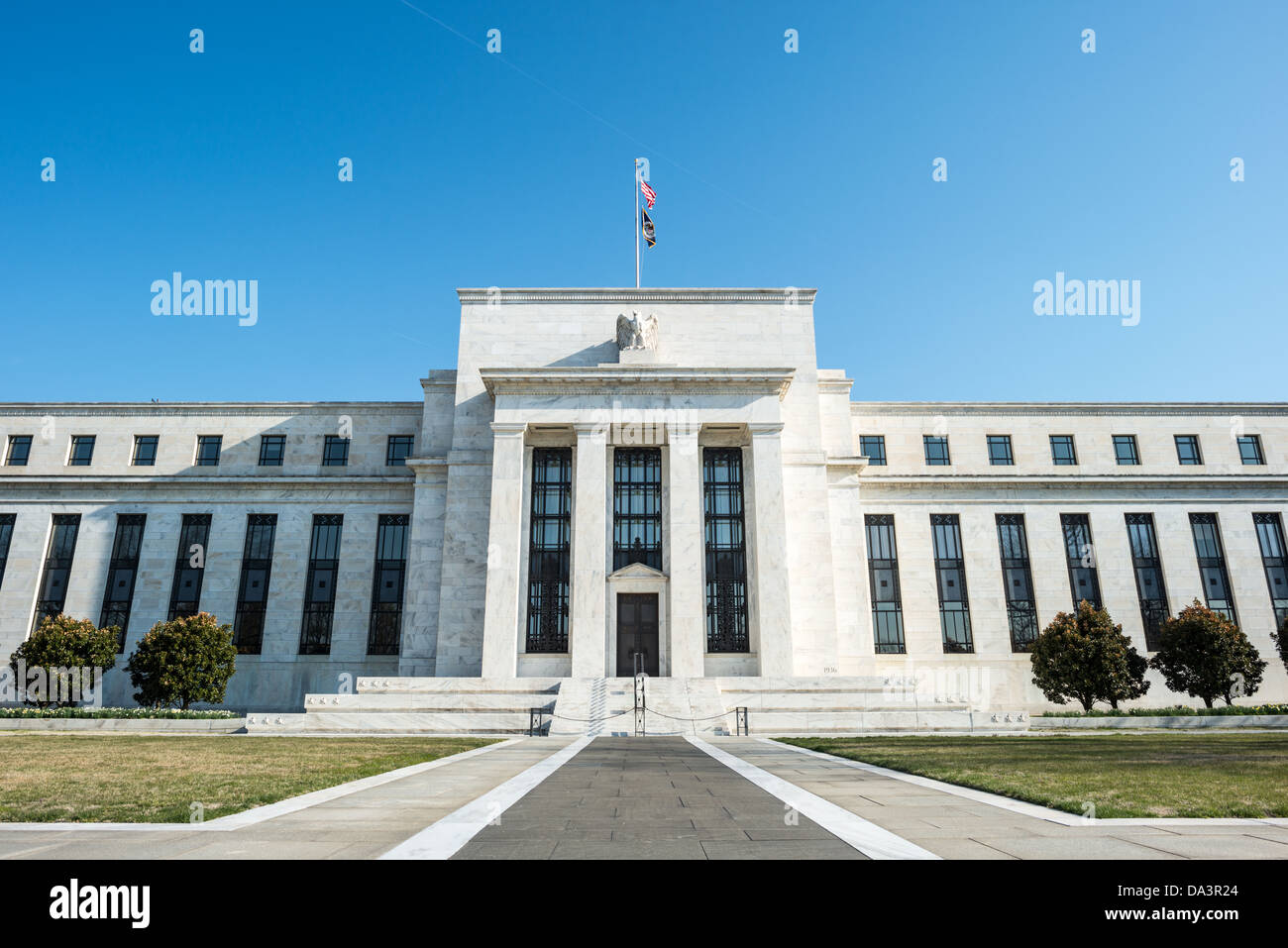
This analysis examines the unprecedented criminal investigation launched by the Trump Department of Justice against Federal Reserve Chair Jerome Powell, prompting a rare bipartisan defense from former top economic officials including former Fed Chairs Ben Bernanke, Alan Greenspan, and Janet Yellen, as well as former Treasury Secretaries Timothy Geithner and Henry Paulson. The investigation centers on Powell’s Senate testimony regarding a $2.5 billion Federal Reserve headquarters renovation, though Powell and his supporters allege the probe represents pretextual retaliation for the Fed’s resistance to political pressure to cut interest rates. The joint statement from these former officials characterizes the investigation as an “unprecedented attempt to use prosecutorial attacks to undermine Fed independence,” drawing parallels to “monetary policy practices in emerging markets with weak institutions” [1]. Market reaction has been relatively contained thus far, with equity indices showing modest movement, but the constitutional and institutional implications represent a significant development for U.S. economic governance [0].
The Department of Justice has initiated a criminal investigation into Federal Reserve Chair Jerome Powell, with grand jury subpoenas reportedly served as part of the inquiry. The investigation centers on testimony Powell provided to the Senate regarding the Federal Reserve’s $2.5 billion headquarters renovation project. While the ostensible focus is on questions surrounding this real estate matter, the timing and context of the investigation have raised substantial concerns among current and former economic policymakers [1][2].
Fed Chair Powell has publicly characterized the investigation as pretextual, alleging that it represents retaliation against the central bank for its resistance to political pressure to reduce interest rates. This assertion is significant because it frames the investigation not as a legitimate legal inquiry but as an instrument of economic policy coercion. The distinction carries profound implications for the independence of monetary policy institutions that have served as pillars of U.S. economic stability since the Federal Reserve Act of 1913 [2][3].
The investigation emerges at a particularly sensitive juncture. Powell’s term as Fed Chair is scheduled to conclude in May 2026, and the Trump administration has indicated it has identified a replacement, with Kevin Hassett reportedly identified as the front-runner for the position. Additionally, the Supreme Court is expected to hear arguments in approximately two weeks regarding the Trump administration’s attempt to remove Fed Governor Lisa Cook, creating a constellation of legal and institutional challenges to Fed governance occurring simultaneously [3].
The response from former Federal Reserve chairs and Treasury secretaries represents an extraordinary display of bipartisan unity in defense of central bank independence. The joint statement issued by these former officials carries particular weight given the diverse political affiliations and administrations they represented. The involvement of officials who served under both Democratic and Republican presidents signals that concerns about the investigation transcend partisan considerations [1][4].
Former Fed Chairs Ben Bernanke, Alan Greenspan, and Janet Yellen, alongside former Treasury Secretaries Timothy Geithner and Henry Paulson, collectively represent decades of experience in economic governance across multiple administrations. Their willingness to issue a public defense of Powell underscores the perceived severity of the threat to institutional norms. The statement’s characterization of the investigation as resembling practices typical of “emerging markets with weak institutions” reflects the magnitude of concern among seasoned economic policymakers regarding the precedent being established [1].
The inclusion of Henry Paulson, who served as Treasury Secretary under President George W. Bush, and Timothy Geithner, who served under President Barack Obama, demonstrates that the alarm extends across the political spectrum. These officials have witnessed various challenges to economic institutions throughout their careers, and their collective response indicates recognition that the current situation represents a qualitatively different threat to the framework of U.S. economic governance [1][4].
Initial market reaction to the investigation news has demonstrated notable resilience, though the relatively contained response may reflect the early stage of developments and uncertainty regarding the investigation’s ultimate scope. Market indices showed mixed movements following the revelation, with the S&P 500 advancing 0.39%, the Nasdaq Composite gaining 0.73%, and the Dow Jones Industrial Average declining 0.11% [0].
The muted market response should not be interpreted as indifference to the constitutional dimensions of the situation. Rather, it likely reflects several factors: the absence of immediate policy implications, the uncertainty surrounding the investigation’s trajectory, and the market’s tendency to focus on tangible economic data in the near term. However, sustained concerns about Fed independence could manifest in elevated volatility across financial markets, particularly in interest-rate-sensitive sectors and fixed-income markets [0][4].
The Federal Reserve’s independence represents a cornerstone of U.S. economic credibility in global financial markets. Central bank independence is widely regarded by economists and market participants as essential for effective monetary policy, as it allows policymakers to make decisions based on economic fundamentals rather than political considerations. Any perception that this independence has been compromised could have implications for Treasury yields, the dollar index, and investor confidence in U.S. economic institutions [3][4].
The investigation raises fundamental questions about the relationship between the executive branch and independent regulatory agencies. The Federal Reserve occupies a unique constitutional position, with its leadership protected from removal by the President except for cause. This structure was deliberately designed to insulate monetary policy decisions from political pressure and ensure that economic considerations rather than electoral calculations drive policy choices.
The Trump administration’s actions against Fed leadership—including the attempted removal of Governor Lisa Cook and the criminal investigation targeting Chair Powell—represent a stress test of these constitutional arrangements. The Supreme Court’s forthcoming hearing on the Cook removal case will likely address questions of presidential authority over independent agency heads that have implications extending well beyond the Federal Reserve [3].
The investigation also raises questions about the use of prosecutorial power as an instrument of economic policy. Legal experts and former officials have expressed concern that initiating criminal proceedings against a sitting Fed Chair based on allegations that appear connected to policy disagreements could establish a dangerous precedent. Such actions could potentially chill the ability of central bank officials to make independent judgments regarding appropriate monetary policy settings [2][3][4].
The current situation represents one of the most significant challenges to Federal Reserve institutional credibility in the central bank’s history. While the Fed has faced political criticism throughout its existence—including during the Nixon administration when President Nixon pressured the Fed to ease monetary policy ahead of the 1972 election—the current approach represents a qualitatively different level of confrontation. The utilization of criminal investigation mechanisms as a tool of economic policy pressure marks a departure from historical norms that have governed relations between the executive branch and independent central banks [1][3].
The bipartisan nature of the response from former economic officials highlights how this development is perceived as threatening foundational principles of U.S. economic governance rather than as a partisan issue. The joint statement from officials who served under both Democratic and Republican administrations reflects a shared recognition that the independence of apolitical economic institutions serves national interests that transcend electoral cycles [1][4].
The timing of the investigation merits careful attention. The emergence of the criminal probe weeks before Chair Powell’s term is scheduled to conclude raises questions about the investigation’s strategic purposes. Similarly, the proximity to the Supreme Court hearing on the Cook removal case suggests a coordinated approach to challenging the existing framework of Fed governance [3].
These temporal factors contribute to the perception among observers and former officials that the investigation may serve purposes beyond the ostensible legal inquiry into the headquarters renovation. The alignment of multiple legal and administrative actions against Fed leadership creates a pattern that some interpret as intended to pressure the central bank toward policy accommodation regardless of the ultimate investigation outcome [2][3].
The concerns expressed by former officials regarding parallels to “emerging market” monetary practices carry significant implications for U.S. standing in global financial markets. The United States has historically positioned itself as an advocate for institutional transparency, rule of law, and central bank independence in international economic governance. Any perception that domestic practices deviate from these principles could affect the dollar’s status as the primary global reserve currency and the willingness of foreign investors to hold U.S. Treasury securities [1][4].
The investigation occurs at a moment when the Trump administration has also pursued aggressive trade policies and questioned aspects of the post-World War II international economic order. Combined with these other developments, the Fed investigation contributes to an environment of uncertainty regarding U.S. economic policy direction that may influence international investment decisions and central bank reserve management choices [3][4].
The analysis reveals several risk dimensions that warrant attention from market participants and observers. First, the precedent being established regarding the use of prosecutorial power against independent regulatory officials carries implications for the broader framework of U.S. economic governance. If successful, this approach could potentially be replicated against other independent agencies, fundamentally altering the relationship between the executive branch and regulatory bodies established to operate outside direct political control [1][2].
Second, uncertainty regarding Fed leadership and institutional stability could affect market functioning. While immediate market reaction has been contained, sustained institutional tension could manifest in elevated volatility, particularly in fixed-income markets where Treasury yields reflect expectations regarding monetary policy trajectory. The dollar index may also experience pressure if international investors reassess the stability of U.S. economic institutions [0][4].
Third, the constitutional questions being tested carry uncertainty regarding ultimate outcomes. The Supreme Court’s forthcoming decision on the Cook removal case will clarify the scope of presidential authority over independent agency heads, but the resolution of these questions could have far-reaching implications for the structure of U.S. economic governance. The investigation of Chair Powell adds additional dimensions to these constitutional deliberations [3].
From an analytical perspective, the current situation creates opportunities for enhanced monitoring of institutional developments and their market implications. The heightened attention to Fed governance provides increased transparency regarding the functioning of monetary policy institutions and the dynamics between the central bank and the executive branch. Market participants may benefit from close tracking of Fed communications, DOJ statements, and congressional responses to these developments [3][4].
The bipartisan coalition defending institutional independence also suggests that there may be legislative or other institutional responses that could provide clarity regarding the boundaries of acceptable conduct in the relationship between the executive branch and independent agencies. Monitoring for such responses could provide insight into the ultimate resolution of the current tensions [1][4].
The following information synthesis is provided to support informed understanding of the situation without implying specific investment recommendations:
-
Investigation Status: The DOJ has launched a criminal investigation into Fed Chair Jerome Powell, with grand jury subpoenas reportedly served. The investigation relates to Powell’s Senate testimony about a $2.5 billion Federal Reserve headquarters renovation project [1][2].
-
Chair Powell’s Position: Powell has characterized the investigation as pretextual, alleging it represents retaliation for the Fed’s resistance to political pressure to reduce interest rates. His term as Fed Chair is scheduled to conclude in May 2026 [2][3].
-
Bipartisan Defense Response: Former Fed Chairs Ben Bernanke, Alan Greenspan, and Janet Yellen, along with former Treasury Secretaries Timothy Geithner and Henry Paulson, have issued a joint statement defending Powell and characterizing the investigation as an unprecedented threat to Fed independence [1].
-
Constitutional Context: The Supreme Court is expected to hear arguments in approximately two weeks regarding the Trump administration’s attempt to remove Fed Governor Lisa Cook, creating multiple simultaneous legal challenges to Fed governance [3].
-
Market Reaction: Initial market response has been relatively contained, with equity indices showing mixed movements (S&P +0.39%, Nasdaq +0.73%, Dow -0.11%) as of the latest data [0].
-
Key Concerns Expressed: Former officials have warned that the investigation mirrors “monetary policy practices in emerging markets with weak institutions” and represents an “unprecedented attempt to use prosecutorial attacks to undermine Fed independence” [1].
-
Leadership Succession: The Trump administration has indicated Kevin Hassett as a potential replacement for Powell as Fed Chair when his term concludes in May 2026 [3].
Insights are generated using AI models and historical data for informational purposes only. They do not constitute investment advice or recommendations. Past performance is not indicative of future results.
About us: Ginlix AI is the AI Investment Copilot powered by real data, bridging advanced AI with professional financial databases to provide verifiable, truth-based answers. Please use the chat box below to ask any financial question.