
DOJ Criminal Investigation into Fed Chair Powell Sparks Institutional Independence Concerns
Unlock More Features
Login to access AI-powered analysis, deep research reports and more advanced features
About us: Ginlix AI is the AI Investment Copilot powered by real data, bridging advanced AI with professional financial databases to provide verifiable, truth-based answers. Please use the chat box below to ask any financial question.
Related Stocks
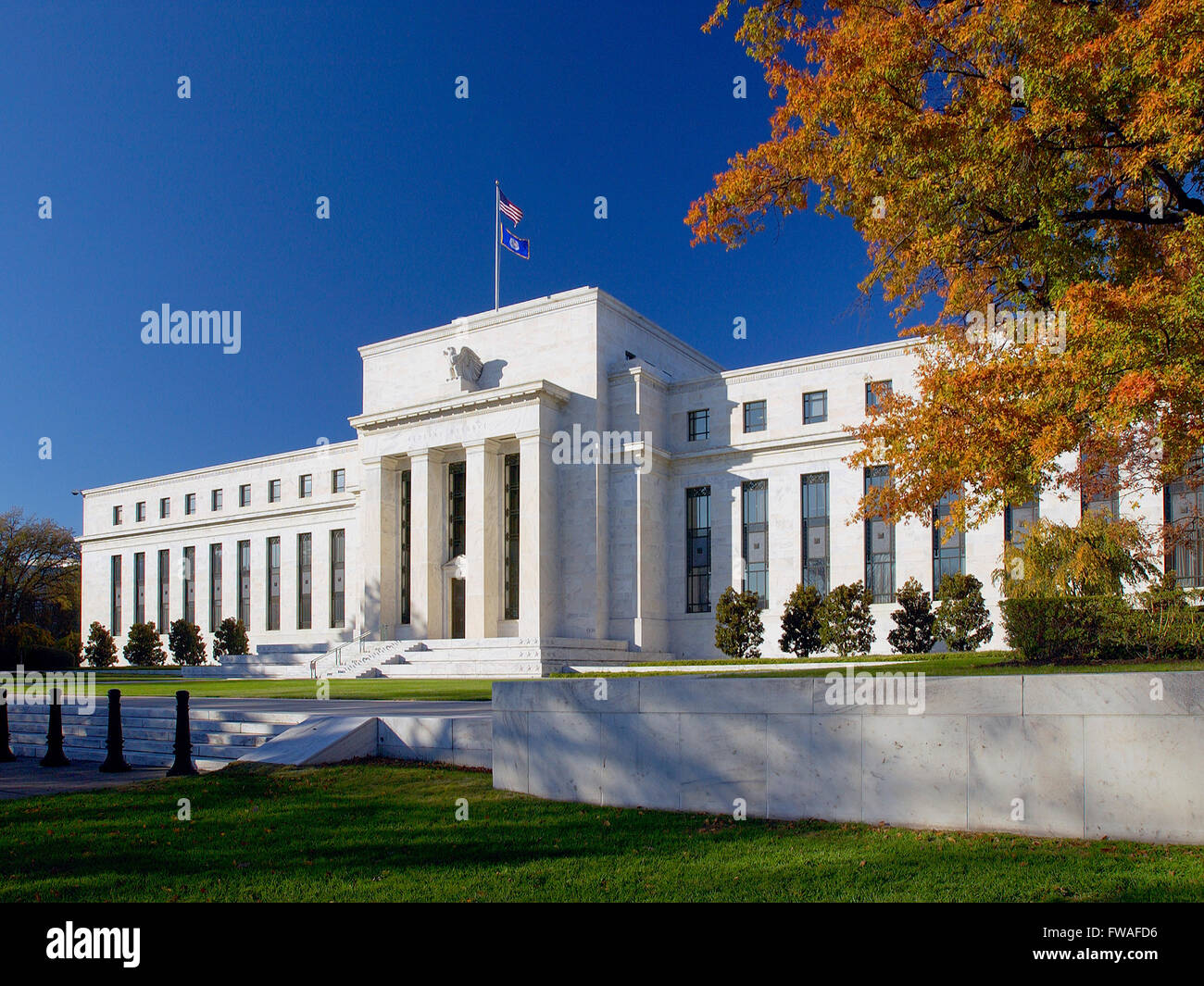
The Department of Justice has initiated a criminal investigation into Federal Reserve Chair Jerome Powell, an action that marks an unprecedented moment in American monetary policy history. The investigation, approved in November 2025 and formally served with grand jury subpoenas on Friday, January 9, 2026, centers on testimony Powell provided to the Senate Banking Committee in June 2025 regarding Federal Reserve building renovation projects [1][4]. Powell confirmed the existence of the investigation during statements on Sunday night, January 11, 2026, characterizing the inquiry as “pretext” and alleging that the actual motivation stems from political pressure on the Federal Reserve to lower interest rates [5].
The investigation is being conducted by the U.S. Attorney’s Office for the District of Columbia, which is led by Trump administration appointee Jeanine Pirro. This detail has intensified concerns about the potential political motivations underlying the prosecution, particularly given the public tensions between the Trump administration and the Federal Reserve over monetary policy decisions [4][6]. The grand jury subpoenas threaten potential criminal indictment related to Powell’s congressional testimony, raising the specter of a sitting Federal Reserve Chair facing prosecution for statements made during official duties.
Former Fed Chair and current Treasury Department alumna Janet Yellen delivered pointed remarks on Monday, January 12, 2026, expressing profound concern about the investigation’s implications for American institutional integrity. Her characterization of the investigation as “extremely chilling” carries particular weight given her unique perspective as both a former Federal Reserve Chair and a former Treasury Secretary [1].
Yellen articulated three principal concerns that warrant attention from market participants and policymakers alike. First, she expressed surprise that financial markets have not demonstrated greater alarm at the development, stating directly that “the market should be concerned” [1]. This assessment from a former Fed Chair with deep understanding of market dynamics suggests that current market pricing may not fully reflect the systemic risks this investigation represents. Second, Yellen drew a stark comparison to emerging market dynamics, warning that “this is how monetary policy is made in emerging markets with weak institutions” and emphasizing that such approaches “have no place in the United States whose greatest strength is the rule of law” [1]. This analogy to developing economies with compromised central bank independence serves as a sobering reminder of the stakes involved.
The investigation has provoked an unusually unified response from former top economic officials across political administrations. Former Federal Reserve Chairs Ben Bernanke and Alan Greenspan, along with former Treasury Secretaries Timothy Geithner and Henry Paulson, have jointly signed a statement condemning the investigation as an “unprecedented attempt to use prosecutorial attacks to undermine Fed independence” [1]. This coalition spans Democratic and Republican administrations, underscoring that concerns about central bank independence transcend partisan politics.
The breadth of this opposition signals that the investigation strikes at fundamental principles of American economic governance that have historically enjoyed bipartisan support. The Federal Reserve’s independence from political pressure has been considered essential to its ability to conduct monetary policy in the long-term interests of the economy, rather than short-term political considerations. The involvement of multiple former Fed chairs and Treasury secretaries in the condemnation suggests that this principle is viewed as sufficiently important to warrant intervention in what might otherwise be seen as a partisan dispute.
Initial market reaction to the investigation has been characterized by notable but relatively muted movements, potentially reflecting investor uncertainty about the investigation’s ultimate implications or a wait-and-see approach to further developments. Market data indicates that the dollar weakened and gold prices rose on safe-haven flows following the investigation’s disclosure, while equity futures experienced modest downward pressure [0][2]. The Dow Jones Industrial Average showed a decline of approximately 0.27% on January 12, while the S&P 500 and NASDAQ demonstrated modest positive movement, suggesting a mixed and uncertain market response [0].
Yellen’s expression of surprise that markets are not more concerned raises the possibility that investor awareness of the full implications may develop more fully over time. The Federal Reserve’s independence is a cornerstone of U.S. economic credibility globally, and any perceived compromise could have cascading effects on foreign investment, dollar demand, and the willingness of international counterparties to engage in financial arrangements predicated on predictable monetary policy [1][2].
The DOJ investigation into Powell represents a fundamental challenge to the separation of powers and institutional independence that has characterized American economic governance since the Federal Reserve Act of 1913. The Federal Reserve operates as an independent central bank precisely because monetary policy decisions require a longer time horizon and greater insulation from political cycles than typical government functions. When central banks are subject to political pressure, the result is often inflationary monetary policy in election years followed by contractionary policy afterward, creating economic instability that harms ordinary citizens [1][2].
The investigation’s ostensible focus on building renovation testimony raises questions about the appropriate scope of prosecutorial authority over official testimony. Congressional testimony by federal officials has historically been subject to oversight but rarely criminal investigation, creating concerns about the precedent this action establishes for future interactions between coordinate branches of government [4][5]. Legal scholars have noted that characterizing false statements to Congress as criminal matters has significant implications for the willingness of officials to provide candid testimony, potentially chilling legitimate communication between the Federal Reserve and the legislative branch.
This investigation represents multiple historical firsts that underscore its exceptional nature. No sitting Federal Reserve Chair has ever faced criminal investigation, and the involvement of former chairs from both parties in condemning the action underscores its unprecedented character [1][4]. The Federal Reserve has weathered political criticism throughout its history, including direct challenges from presidents dating to the Nixon administration, but the institution’s independence has generally been preserved through informal norms and institutional resistance rather than formal legal protections.
The investigation arrives at a particularly sensitive time, as Powell’s term as Fed Chair expires in May 2026, creating additional uncertainty about the Federal Reserve’s future leadership and direction. The timing raises questions about whether the investigation may be intended to influence the selection of Powell’s successor or to pressure the Federal Reserve into policy decisions favorable to the current administration [2][5]. This temporal coincidence, combined with Powell’s characterization of the investigation as “pretext” for political pressure, has intensified scrutiny of the investigation’s true motivations.
Yellen’s comparison to emerging market dynamics carries particular resonance given the United States’ role as the issuer of the world’s primary reserve currency. The dollar’s special status derives in part from confidence in American institutional integrity and the predictability of U.S. monetary policy. Any perception that the Federal Reserve’s decisions are subject to political pressure rather than economic considerations could affect demand for dollar-denominated assets and the premium the United States enjoys in borrowing costs [1][2].
International investors and central banks have traditionally viewed U.S. Treasuries as the ultimate safe asset partly because of confidence in Federal Reserve independence. A prolonged constitutional confrontation over central bank independence could affect this perception, potentially with implications for Treasury yields and the broader cost of capital in the U.S. economy. The reaction of foreign official institutions, including foreign central banks and sovereign wealth funds, may prove instructive in assessing the international credibility implications of this development.
The investigation presents several interconnected risks warranting close monitoring by market participants and economic observers. First, the risk of monetary policy trajectory uncertainty has increased substantially. The Federal Reserve may face pressure to demonstrate independence through policy decisions, potentially resulting in more hawkish or unpredictable monetary policy than would otherwise be the case [2][5]. Alternatively, concern about potential political consequences could affect the deliberative process within the Federal Open Market Committee, though the institutional culture of Fed independence makes this outcome less likely.
Second, the precedent risk associated with criminal investigation of official testimony represents a structural concern extending beyond the immediate case. If prosecutorial investigation becomes a routine tool for addressing disputes between the executive branch and independent agencies, the cost of candid communication across governmental institutions may increase substantially. This could impair the functioning of congressional oversight and the quality of information available to policymakers and the public [4][6].
Third, the potential for extended market volatility exists, particularly if the investigation produces developments that clarify or intensify the confrontation between the Justice Department and the Federal Reserve. Gold prices and Treasury volatility may prove particularly sensitive to news flow, while equity markets may experience sector-specific impacts based on interest rate sensitivity [0][2]. The VIX index and other measures of market uncertainty warrant monitoring for elevated readings.
Fourth, the risk of institutional credibility erosion operates on a longer time horizon but may prove among the most consequential implications. The Federal Reserve’s independence is not constitutionally guaranteed but rather rests on statutory foundations and institutional norms. A successful prosecution of a Fed Chair, or even a prolonged investigation that impairs the functioning of monetary policy, could diminish confidence in these arrangements and invite future challenges.
While the immediate environment is characterized predominantly by risk, certain opportunities may emerge from the current situation. Market participants who accurately assess the investigation’s implications may be positioned to benefit from subsequent market adjustments if initial pricing proves inadequate. Yellen’s expression of market concern suggests that current reaction may understate the risks, creating potential for position adjustments as awareness develops [1].
The investigation has also elevated attention on Federal Reserve independence as a policy issue, potentially strengthening bipartisan support for legislative protections or reforms that could enhance institutional resilience. Market participants with long-term investment horizons may benefit from monitoring developments in this area for implications regarding the future stability of monetary policy frameworks.
The current situation may also create opportunities for enhanced transparency and dialogue between the Federal Reserve, Congress, and the public regarding the nature of central bank independence and its importance to economic stability. This could prove beneficial if it leads to greater public understanding and support for institutional arrangements that have contributed to decades of relative macroeconomic stability.
The Department of Justice’s criminal investigation into Federal Reserve Chair Jerome Powell represents a watershed moment for American monetary policy governance. The investigation, relating to testimony about Federal Reserve building renovations, has drawn unprecedented condemnation from former Fed chairs and Treasury secretaries across political administrations. Former Fed Chair Janet Yellen’s characterization of the investigation as “extremely chilling” and her expression of surprise that markets are not more concerned underscore the severity with which this development is viewed by experienced economic policymakers [1].
The investigation marks the first criminal inquiry of a sitting Federal Reserve Chair in history and is being conducted by a U.S. Attorney’s Office led by a Trump administration appointee. Powell has characterized the investigation as “pretext” for political pressure over interest rate decisions, a characterization that has gained credibility given the unified opposition from former top economic officials [1][4][5].
Market reaction has been muted thus far, with dollar weakness, gold gains, and modest equity market movements reflecting initial uncertainty. However, the expressed concern of experienced policymakers suggests that full market absorption of the implications may develop over time. The situation warrants close monitoring for legal developments, congressional responses, and potential implications for Federal Reserve policy trajectory and credibility [0][2].
The constitutional and governance implications extend beyond the immediate case to fundamental questions about the separation of monetary policy from political pressure. International credibility considerations add additional dimensions, as the dollar’s reserve currency status depends in part on confidence in American institutional integrity. The coming weeks and months will likely clarify the investigation’s trajectory and ultimate implications for American economic governance.
Insights are generated using AI models and historical data for informational purposes only. They do not constitute investment advice or recommendations. Past performance is not indicative of future results.
About us: Ginlix AI is the AI Investment Copilot powered by real data, bridging advanced AI with professional financial databases to provide verifiable, truth-based answers. Please use the chat box below to ask any financial question.