
Analysis of the Strong Performance of Hangtian Nanhong (688552): A Leading Military Radar Enterprise Catalyzed by Geopolitical Factors
Unlock More Features
Login to access AI-powered analysis, deep research reports and more advanced features
About us: Ginlix AI is the AI Investment Copilot powered by real data, bridging advanced AI with professional financial databases to provide verifiable, truth-based answers. Please use the chat box below to ask any financial question.
Related Stocks
Hangtian Nanhong Electronic Information Technology Co., Ltd. (Stock Code: 688552) was added to the strong stock pool on January 12, 2026. This performance is not an isolated incident but the result of the resonance of multiple factors[1][2]. From a timeline perspective, the stock had already seen a significant rise on January 8, 2026, with a single-day gain ranging from 19.52% to 20%, and the intraday maximum gain once hit the daily limit, showing a typical momentum breakout trend[1][5].
From the perspective of external catalytic factors, on January 7, 2026, U.S. President Trump proposed a substantial increase in U.S. military spending for fiscal year 2027 to USD 1.5 trillion (equivalent to over RMB 10 trillion), a 66% increase from the previous figure[1]. This news directly ignited investment enthusiasm in the global defense and military industry sector, becoming an important external catalyst for the strong performance of Hangtian Nanhong. The collective strength of the defense and military industry sector provided a favorable market environment for the stock; the CSI National Defense Index rose 4.46% on the same day, and the Defense ETF (512670) rose 4.64%[1].
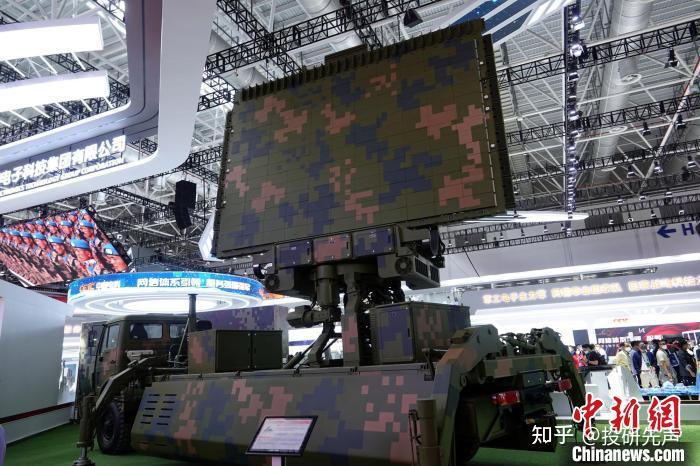
Founded in 1989, Hangtian Nanhong was listed on the STAR Market on May 18, 2023, and is a holding subsidiary of the 23rd Research Institute of the Second Academy of China Aerospace Science and Industry Corporation (Beijing Radio Measurement Institute)[6][7]. The company focuses on the R&D, production, sales, and services of air defense early warning radars, and is one of the major R&D and production entities of air defense early warning radars in China. Its products cover multiple military services, with customers mainly being the military and military industry groups.
From the perspective of technical barriers, the company holds 118 patents (including 37 invention patents) and masters 7 categories of core technologies such as phased array radar system design, software-defined radar, and adaptive anti-jamming. It has been recognized as a national-level specialized, sophisticated, unique, and new (“Little Giant”) enterprise[6]. In the domestic market, the company, together with the 14th Research Institute of China Electronics Technology Group, the 38th Research Institute of China Electronics Technology Group, and Chengdu CETC Jinjiang, forms the core force in the R&D of complete air defense early warning radar systems, with a high market position and competitive barriers.
However, the company also has obvious business structure characteristics. According to the prospectus, more than 99% of the company’s main business revenue comes from radars and supporting equipment, and the sales share of the top five customers has exceeded 97% for three consecutive years, with the highest related-party sales share reaching 30%[7]. Such a highly concentrated customer structure and relatively single product line not only reflect the company’s deep specialization in the military industry but also constitute potential business risks.
From a technical analysis perspective, Hangtian Nanhong exhibits the following characteristics: the MACD indicator has formed a golden cross signal, indicating bullish short-term momentum; a single-day gain of over 15% suggests obvious capital scrambling behavior; as a leading stock in a hot sector, its trading volume is expected to expand significantly[1]. The stock is a constituent of the STAR Composite Index, as well as the CSI National Defense Index and CSI General Aviation Theme Index, showing obvious sector linkage effects with the defense and military industry and general aviation sectors[3][5].
In terms of institutional capital flows, the Defense ETF and STAR Market index enhancement funds have allocated positions in this stock, reflecting institutional investors’ overall preference for the defense and military industry sector[1][2]. Institutions such as Guosheng Securities have clearly pointed out that the military industry is expected to gradually enter a recovery period in 2026. With backlogged orders from the 14th Five-Year Plan superimposed on increased military spending from the 15th Five-Year Plan, it is predicted that the military industry will show a significant upward trend from 2026 to 2028[1][2].
From a policy perspective, China’s national defense budget expenditure in 2025 was approximately RMB 1.78 trillion, a year-on-year increase of 7.20%[8]. Against the backdrop of the centenary goal of the founding of the People’s Liberation Army in 2027 and the launch of the 15th Five-Year Plan, a surge in military equipment procurement is expected. At the same time, the rapid development of commercial space has brought new opportunities for Hangtian Nanhong. Institutions point out that the core bottleneck of commercial space lies in rocket reusability technology, and the core of rocket reusability lies in engines plus electronic control systems, whose market value is being re-recognized by the market[2]. Hangtian Nanhong’s technical advantages in radar and electronic control fields enable it to benefit from this investment logic.
New threats such as low-altitude economy and drone swarms are spurring demand for new types of radars, and the dependence of informatized warfare on early warning radars continues to increase. These structural changes provide solid demand support for the company’s long-term development.
The strong performance of Hangtian Nanhong reveals the deep linkage mechanism between geopolitics and the capital market. The substantial increase in U.S. military spending not only affects the U.S. market but also transmits to the A-share military industry sector through the global industrial chain. The efficiency of such cross-market information transmission has improved significantly in the current environment, and investors’ policy sensitivity to international events has increased markedly.
From an industrial chain perspective, the investment logic of Hangtian Nanhong in commercial space is being revalued by the market. The company’s technical accumulation in the electronic control system field enables it to break through the valuation framework of traditional military radars, and the high growth expectations of commercial space provide new impetus for the company’s valuation expansion.
The defense and military industry sector is undergoing a transformation from theme-based investment to fundamental investment. Institutions are generally optimistic about the military industry’s recovery in 2026, and the consistency of such expectations has led to continuous capital inflows into the Defense ETF and related constituent stocks[1][2]. As a military radar assembly enterprise listed on the STAR Market, Hangtian Nanhong has a scarce positioning as the “first listed stock of complete military radar assembly”[6][7], and this scarcity has gained a higher valuation premium in the current market environment.
Hangtian Nanhong’s inclusion in the strong stock pool is the result of the combined effects of three factors: geopolitical catalysis, sector linkage effects, and company fundamentals. As a leading enterprise in China’s air defense early warning radar sector, the company has high technical barriers, a stable market position, and long-term growth logic benefiting from national defense modernization and commercial space development. However, risk factors such as high volatility of STAR Market stocks, valuation risks, order cyclicality, and concentrated business structure also require investors to conduct prudent assessments.
From a trading perspective, this stock has high short-term trading popularity and is suitable for investors with high risk tolerance to participate on the premise of setting strict stop-losses; conservative investors may wait for a pullback to build positions in batches and should not chase highs; risk-averse investors should mainly wait and see and consider entering after the trend stabilizes. Regardless of the strategy adopted, investors should closely monitor the sustainability of the sector, changes in the company’s fundamentals, and shifts in market sentiment.
Insights are generated using AI models and historical data for informational purposes only. They do not constitute investment advice or recommendations. Past performance is not indicative of future results.
About us: Ginlix AI is the AI Investment Copilot powered by real data, bridging advanced AI with professional financial databases to provide verifiable, truth-based answers. Please use the chat box below to ask any financial question.